
The Evidence Pack: How 'Forest Bathing' Measurably Lowers Cortisol and Boosts Immune Function
Decades of clinical research reveal that spending time in forested environments triggers measurable shifts in human biology, from lowering stress hormones to significantly elevating cancer-fighting immune cells.
By Factlen Editorial Team
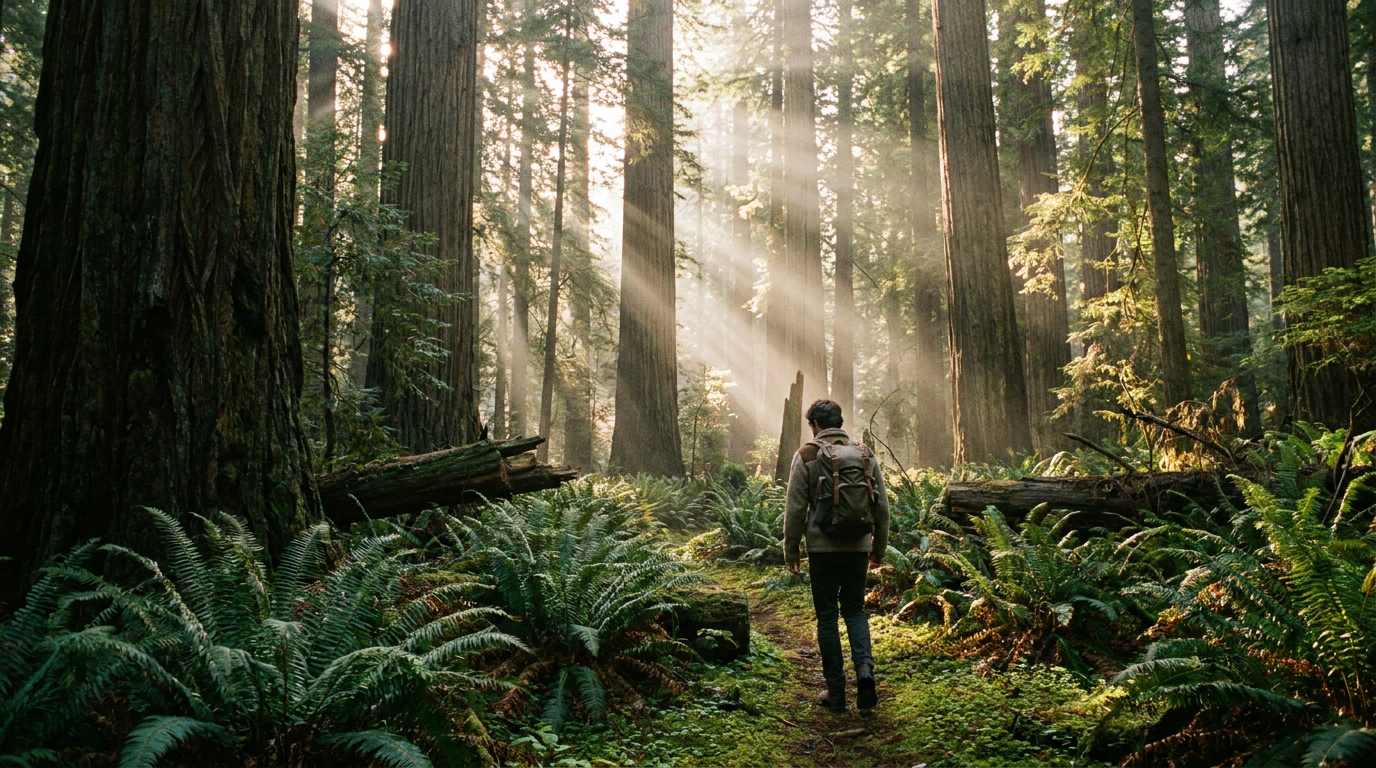
- Clinical Researchers
- Focuses on the measurable physiological endpoints of nature exposure, such as immune cell counts and hormone levels.
- Public Health Advocates
- Views nature access as a critical, low-cost intervention for population-level chronic disease and mental health management.
- Factlen Analysis
- Synthesizes the evolutionary mismatch theory with modern clinical data to explain why the human body requires natural environments.
What's not represented
- · Allergy and asthma specialists
- · Forestry management professionals
Why this matters
As chronic stress and indoor, sedentary lifestyles drive a surge in metabolic and autoimmune conditions, understanding the precise biological mechanisms of nature exposure offers a free, accessible, and scientifically validated tool for preventive health.
Key points
- Forest bathing, or Shinrin-yoku, is an evidence-based medical intervention that utilizes natural environments to trigger physiological healing.
- Inhaling tree-emitted compounds called phytoncides significantly increases the count and activity of cancer-fighting Natural Killer (NK) cells.
- Spending just 20 minutes in a forest lowers cortisol levels by 16% and shifts the nervous system into a restorative parasympathetic state.
- Healthcare systems are increasingly issuing 'nature prescriptions,' with data showing that 120 minutes of weekly exposure optimizes health benefits.
Modern humans spend approximately ninety percent of their lives indoors, a profound evolutionary mismatch that public health researchers increasingly link to the rise of chronic inflammation, autoimmune disorders, and metabolic syndrome. The physiological toll of this indoor, sedentary lifestyle has prompted medical science to look backward for solutions, investigating how the environments our bodies evolved in might serve as therapeutic interventions.[6]
At the forefront of this research is the Japanese practice of Shinrin-yoku, translated literally as 'forest bathing.' Coined in 1982 by the Japanese Ministry of Agriculture, Forestry, and Fisheries, the term was initially introduced as a national public health initiative to combat the extreme stress of the country's booming corporate culture. It was not designed as a strenuous hike or a cardiovascular workout, but rather as a practice of mindful, sensory immersion in a living forest ecosystem.[2]
What began as a poetic wellness trend has, over the last two decades, been subjected to rigorous clinical scrutiny. Researchers have moved beyond subjective questionnaires about mood and well-being, utilizing blood draws, continuous glucose monitors, and electrocardiograms to map the exact biological pathways triggered by forest environments. The resulting data has transformed Shinrin-yoku from a cultural pastime into a hard, evidence-based medical intervention.[6]
The core biological mechanism driving these benefits centers on a class of airborne chemicals called phytoncides. Trees and plants naturally emit these volatile organic compounds—such as alpha-pinene, beta-pinene, and d-limonene—to protect themselves from harmful bacteria, insects, and fungal infections. When humans walk through a forest, they are essentially inhaling the forest's own immune system.[1]

Upon inhalation, phytoncides act as a systemic biological signal within the human body. The olfactory system transmits these aromatic compounds directly to the brain's limbic system, while they simultaneously cross the blood-brain barrier and enter the systemic circulation through the lungs. This dual-pathway absorption triggers a cascade of measurable physiological responses.[1]
The most profound impact of phytoncide exposure occurs within the human immune system. Landmark studies conducted by Dr. Qing Li at Nippon Medical School in Tokyo demonstrated that inhaling these compounds significantly increases both the absolute count and the functional activity of Natural Killer cells in the bloodstream.[1]
Natural Killer, or NK, cells are a specialized type of white blood cell that serves as the rapid-response unit of the innate immune system. Unlike other immune cells that require prior exposure to a pathogen to recognize it, NK cells can independently identify and destroy tumor-infected cells and virus-infected cells, making them a critical defense mechanism against cancer and severe viral infections.[1]
The magnitude and duration of the forest bathing effect on these immune cells are striking. Clinical trials revealed that a three-day, two-night forest bathing trip increased NK cell activity by over fifty percent. Remarkably, this elevated immune function did not vanish upon returning to the city; blood tests showed that the heightened NK activity persisted for up to thirty days after the trip concluded.[1][2]
The magnitude and duration of the forest bathing effect on these immune cells are striking.
Subsequent research found that even a single day trip to a suburban park with dense tree cover yielded a measurable spike in NK cells and intracellular anti-cancer proteins that lasted for a full seven days. This suggests that frequent, shorter doses of nature exposure can effectively maintain a heightened state of immune readiness.[4]

Beyond immunity, forest bathing acts as a powerful regulator of the autonomic nervous system. The modern urban environment—characterized by screens, traffic noise, and artificial lighting—keeps the body locked in a state of sympathetic dominance, commonly known as the fight-or-flight response. Forest exposure rapidly shifts this balance toward parasympathetic dominance, the rest-and-digest state required for cellular repair.[2]
Clinical measurements show that spending just twenty minutes in a forested environment lowers salivary cortisol levels by an average of sixteen percent compared to walking in a city center. Cortisol is the body's primary stress hormone, and chronically elevated levels are heavily implicated in insulin resistance, weight gain, and cardiovascular disease.[4]
Cardiovascular metrics also show immediate improvement during nature immersion. Heart rate variability, a key indicator of physiological resilience and vagal tone, increases significantly when subjects enter a forest. Simultaneously, sympathetic nerve activity decreases, leading to a stabilization of blood pressure and a lower resting heart rate.[2][3]
Researchers emphasize that it is not solely the chemical phytoncides at work; visual and auditory mechanisms are also critical. The visual processing of natural fractals—the repeating geometric patterns found in fern leaves, branching trees, and flowing water—has been shown via electroencephalogram to induce alpha brain waves, which are associated with a state of relaxed alertness.[4]
The acoustic environment plays an equally vital role. The absence of anthropogenic noise, such as sirens and construction, combined with natural soundscapes like birdsong and rustling leaves, significantly lowers the cognitive load required for auditory filtering. This reduction in sensory processing demands allows the brain's prefrontal cortex to rest, rapidly reversing mental fatigue and restoring directed attention.[6]

Recognizing these hard clinical endpoints, healthcare systems globally are beginning to integrate nature exposure into standard medical care. Initiatives like ParkRx in the United States and similar programs in Canada and the United Kingdom allow physicians to literally prescribe time in national and local parks, treating nature as a zero-cost pharmaceutical.[3][5]
This shift toward clinical application has led researchers to investigate the optimal dosage of nature exposure. A massive epidemiological study analyzing data from the United Kingdom found that the health and well-being benefits of nature exposure peak at exactly one hundred and twenty minutes per week.[4]
Crucially, the data indicates that this two-hour threshold can be met in a single weekend block or broken up into shorter, fifteen-to-twenty-minute daily walks. This flexibility is vital for urban populations, proving that one does not need to travel to a remote wilderness to reap the biological benefits of the natural world.[4][6]
As global urbanization accelerates and chronic stress-related illnesses continue to mount, the science of forest bathing provides a compelling counter-narrative. It reframes time spent in nature not merely as a recreational amenity or a luxury, but as an essential, biologically necessary component of human healthspan and disease prevention.[5][6]
How we got here
1982
The Japanese Ministry of Agriculture, Forestry, and Fisheries coins the term 'Shinrin-yoku' as a national health initiative.
2004
The Japanese government funds a multi-million dollar research program to scientifically quantify the physiological effects of forest bathing.
2018
The ParkRx movement gains national traction in the United States, allowing physicians to formally prescribe park visits to patients.
2026
Nature exposure is increasingly integrated into global preventive medicine protocols as an evidence-based treatment for chronic stress and immune dysfunction.
Viewpoints in depth
Clinical Researchers
Focuses on the measurable physiological endpoints of nature exposure, such as immune cell counts and hormone levels.
For clinical researchers and immunologists, the value of forest bathing lies entirely in its quantifiable biological endpoints. This camp focuses heavily on the pharmacological properties of phytoncides and their direct interaction with the human olfactory and respiratory systems. They emphasize that the increases in Natural Killer (NK) cell activity and intracellular anti-cancer proteins are not placebo effects, but hard biochemical reactions to specific environmental stimuli. Their ongoing research aims to isolate which specific tree species and volatile organic compounds yield the highest therapeutic efficacy.
Public Health Advocates
Views nature access as a critical, low-cost intervention for population-level chronic disease and mental health management.
Public health officials and epidemiologists view forest bathing through the lens of population health and healthcare economics. As chronic stress, hypertension, and metabolic diseases place unprecedented strain on global medical systems, this camp advocates for nature exposure as a highly scalable, zero-cost preventive intervention. They focus on initiatives like ParkRx, arguing that integrating nature prescriptions into standard primary care can significantly reduce the long-term pharmaceutical burden and lower overall healthcare costs for urban populations.
Urban Design Experts
Argues that the health benefits of nature must be engineered directly into the environments where people live and work.
Urban planners and environmental psychologists argue that relying on weekend trips to national parks is insufficient for modern populations. This camp advocates for 'biophilic design,' pushing to integrate dense tree canopies, natural fractals, and green spaces directly into urban infrastructure. They use the clinical data from forest bathing studies to justify municipal budgets for urban forestry, arguing that daily, micro-doses of nature exposure are essential for maintaining the baseline autonomic nervous system health of city dwellers.
What we don't know
- Whether the immune-boosting effects of phytoncides can be fully replicated artificially through indoor essential oil diffusers.
- The exact minimum threshold of tree density and biodiversity required for an urban park to trigger the same physiological response as an old-growth forest.
- How long-term climate change and shifting forest compositions might alter the specific phytoncide profiles emitted by natural environments traditionally beneficial ecosystems.
Key terms
- Shinrin-yoku
- A Japanese term translating to 'forest bathing,' referring to the practice of mindful, sensory immersion in a natural forested environment for health benefits.
- Phytoncides
- Airborne essential oils and antimicrobial compounds emitted by trees that protect them from insects and disease, and which trigger immune responses in humans.
- Natural Killer (NK) Cells
- A type of white blood cell in the innate immune system that can rapidly identify and destroy tumor cells and virus-infected cells without prior exposure.
- Parasympathetic Nervous System
- The division of the autonomic nervous system responsible for the body's 'rest and digest' functions, promoting cellular repair and lowering heart rate.
- Heart Rate Variability (HRV)
- The measure of the variation in time between each heartbeat, used as a key clinical indicator of autonomic nervous system health and stress resilience.
Frequently asked
What exactly are phytoncides?
Phytoncides are antimicrobial volatile organic compounds emitted by trees and plants to protect themselves from disease. When humans inhale them, they trigger a reduction in stress hormones and an increase in immune cell activity.
How long do the immune benefits of forest bathing last?
Research shows that a single day trip to a forest can elevate Natural Killer (NK) cell activity for up to seven days, while a three-day trip can keep immune function elevated for up to 30 days.
Do I need to go to a deep forest to get the benefits?
No. While old-growth forests offer high concentrations of phytoncides, studies show that spending time in dense urban parks with significant tree cover still yields measurable reductions in cortisol and blood pressure.
What is the recommended 'dose' of nature?
Large-scale epidemiological studies suggest that 120 minutes of nature exposure per week is the optimal threshold for peak health benefits, which can be achieved in one block or spread across daily walks.
Sources
Source coverage
6 outlets
3 viewpoints surfaced






[1]PubMed CentralClinical Researchers
Effect of forest bathing trips on human immune function
Read on PubMed Central →[2]Environmental Health and Preventive MedicineClinical Researchers
The physiological effects of Shinrin-yoku (taking in the forest atmosphere or forest bathing): evidence from field experiments in 24 forests across Japan
Read on Environmental Health and Preventive Medicine →[3]Harvard Health PublishingPublic Health Advocates
A prescription for nature
Read on Harvard Health Publishing →[4]International Journal of Environmental Research and Public HealthClinical Researchers
Psychological and Physiological Benefits of Nature Exposure
Read on International Journal of Environmental Research and Public Health →[5]Global Wellness InstitutePublic Health Advocates
Nature Therapy and the Global Wellness Economy
Read on Global Wellness Institute →[6]Factlen Editorial TeamFactlen Analysis
Synthesis by Factlen editorial team
Read on Factlen Editorial Team →

More in health
See all 5 stories →Acromegaly
FDA Approves Paltusotine as the First Once-Daily Oral Treatment for Acromegaly
7 sources

Genetic Medicine
The Evidence Pack: How the FDA-Approved Gene Therapy Otarmeni Restores Hearing in Genetic Deafness
8 sources

Xenotransplantation
How Gene-Edited Pig Kidneys Are Moving From Experimental Surgery to Clinical Reality
7 sources

Every angle. Every day.
Get health stories with full source coverage and perspective breakdowns delivered to your inbox.