
CATL Begins Mass Production of Sodium-Ion EV Batteries, Targeting Cost and Extreme Cold Performance
The world's largest battery maker has officially moved sodium-ion technology from the lab to the assembly line, offering a cheaper, cold-resistant alternative to lithium.
By Factlen Editorial Team
- Battery Manufacturers
- Focus on scaling production to drive down costs and create a parallel supply chain independent of lithium.
- Automakers
- Focus on utilizing modular architectures to offer cheaper, cold-weather-resistant EVs without redesigning vehicle platforms.
- Cold-Climate Consumers
- Focus on the elimination of winter range anxiety and the reliability of EVs in freezing temperatures.
- Resource Analysts
- Focus on the geopolitical benefits of decoupling the energy transition from constrained lithium, cobalt, and nickel supplies.
What's not represented
- · Lithium mining operators facing potential demand shifts
- · Western automakers lagging in sodium-ion adoption
Why this matters
Sodium-ion batteries decouple electric vehicles from expensive, volatile lithium supply chains while solving the notorious problem of winter range loss. This breakthrough paves the way for genuinely affordable, cold-weather-reliable EVs and cheaper grid storage.
Key points
- CATL has officially begun mass production of its second-generation sodium-ion batteries in 2026.
- The new cells cost roughly $0.051 per watt-hour, approaching price parity with dominant LFP lithium batteries.
- Sodium-ion chemistry retains 90% of its capacity at -20°C, solving a major pain point for winter EV driving.
- The batteries have cleared a 15,000-cycle benchmark, translating to a 20-year operational lifespan.
- Up to 20,000 EVs from automakers like Changan and Chery will feature the technology by the end of the year.
- The shift reduces the auto industry's reliance on volatile lithium, cobalt, and nickel supply chains.
While the automotive world has spent years waiting for the elusive solid-state battery, a quieter, more pragmatic revolution has officially left the laboratory. Contemporary Amperex Technology Co. Limited (CATL), the world's largest battery manufacturer, confirmed in late May 2026 that it has overcome the final manufacturing bottlenecks for its second-generation sodium-ion cells. Rather than a distant roadmap, these batteries are actively rolling off production lines and into mass-market passenger vehicles.[1][5]
The scale of this rollout marks a definitive shift in the global electric vehicle supply chain. CATL executives announced that between 10,000 and 20,000 EVs equipped with sodium-ion packs will hit the roads before the end of the year, with automakers like Changan and Chery serving as the primary launch partners. This transition moves sodium from a niche experimental chemistry into a commercial reality, fundamentally altering the economics of entry-level electric vehicles and large-scale grid storage.[3][4]
To understand why the industry is pivoting, it requires looking at the fundamental mechanism of a sodium-ion (Na-ion) battery. Like traditional lithium-ion cells, sodium batteries generate power by moving ions between a positive cathode and a negative anode. However, they replace lithium—a relatively scarce and geographically concentrated metal—with sodium, one of the most abundant elements on Earth, easily extracted from rock salt and seawater. This elemental swap eliminates the need for volatile critical minerals like cobalt and nickel, which have long complicated the EV supply chain.[4][5]
The manufacturing architecture of these new cells also introduces a critical metallurgical shift. In standard lithium-ion batteries, the negative electrode requires a copper current collector—a heavy and increasingly expensive component. Because sodium does not alloy with aluminum at low potentials, engineers can replace the copper with dual aluminum foil current collectors. This substitution not only strips significant weight from the cell's structural components but also drastically reduces direct material costs without compromising the battery's core structural integrity.[1]

The primary claim driving this rapid industrialization is profound cost reduction. For years, the industry standard for affordable EVs has been the Lithium Iron Phosphate (LFP) battery. However, manufacturing data from the first quarter of 2026 reveals that raw sodium cell production costs have plummeted to roughly $0.051 per watt-hour. This places sodium within striking distance of the current LFP market benchmark of $0.050 per watt-hour, with industrial modeling projecting that continued scaling will give sodium complete cost dominance by the end of 2027.[1]
Beyond the factory floor, sodium's most aggressive claim centers on extreme climate performance. Traditional lithium-based batteries are notoriously sensitive to freezing temperatures, suffering severe range degradation and requiring energy-intensive thermal pre-conditioning just to accept a charge. Sodium's unique electrochemical properties make it inherently resistant to this winter penalty, offering a structural advantage for drivers in northern climates who have historically hesitated to adopt electric vehicles.[2][6]
Beyond the factory floor, sodium's most aggressive claim centers on extreme climate performance.
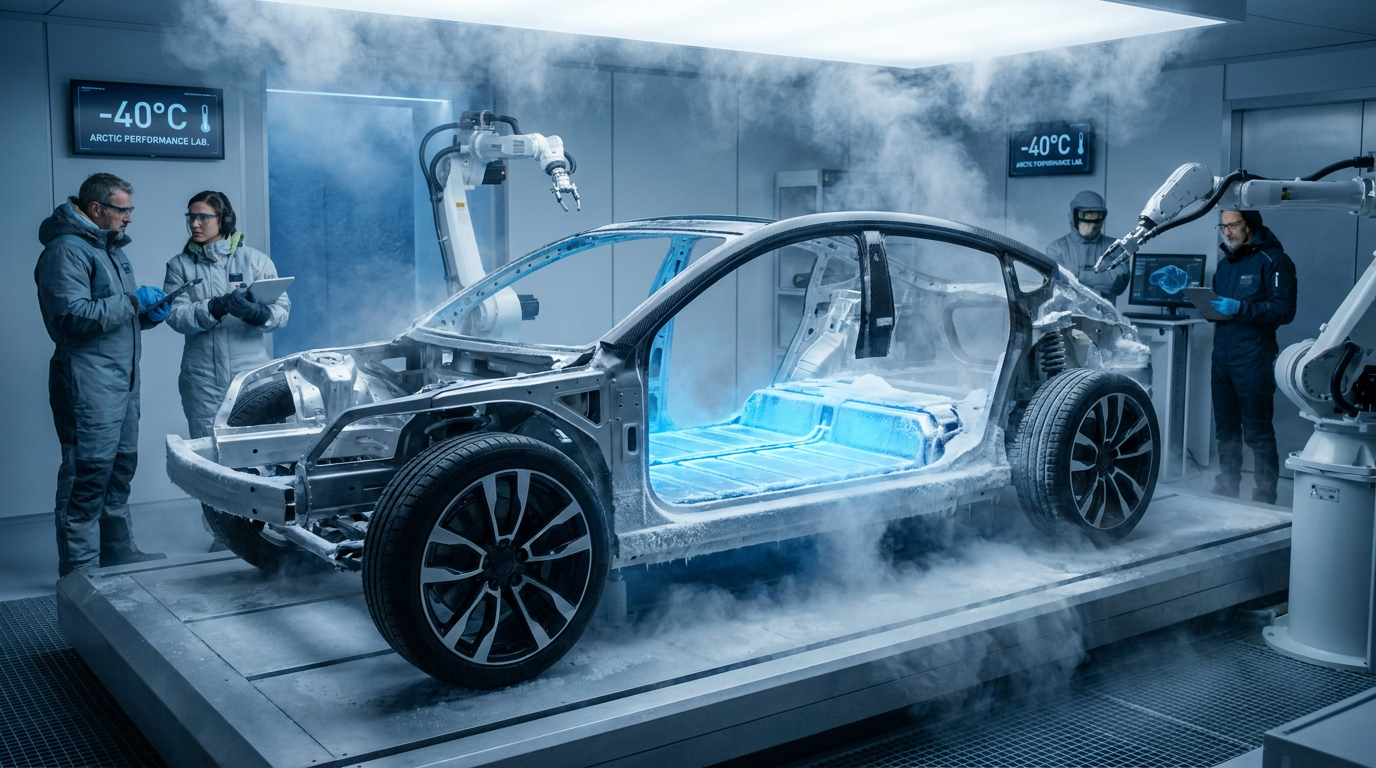
The evidence for this cold-weather resilience is now backed by commercial testing arrays. CATL's second-generation "Naxtra" cells maintain more than 90 percent of their nominal capacity at temperatures as low as -20 degrees Celsius (-4 degrees Fahrenheit). In identical ambient conditions, traditional LFP arrays frequently drop below an 80 percent retention threshold. Furthermore, the sodium cells remain fully operational down to -40 degrees Celsius, effectively eliminating the need for complex and heavy thermal management systems in extreme environments.[1][3]

Longevity represents another major breakthrough for the 2026 production lines. Independent verification and CATL's own testing confirm that these sodium-ion cells have cleared a 15,000-cycle benchmark. In practical automotive terms, this translates to an operational lifespan of roughly 20 years under high-frequency use. This durability significantly outpaces the typical degradation curve of LFP chemistries, meaning the battery pack is now highly likely to outlast the physical chassis of the vehicle it powers.[2]
To accelerate adoption without forcing automakers to completely redesign their vehicles, CATL has introduced a modular integration strategy dubbed the "One Shell, Two Cells" architecture. This standardized physical enclosure allows manufacturers to house either lithium-ion or sodium-ion cells within the exact same dimensional footprint. Fleet operators and automakers can seamlessly swap chemistries on the assembly line based on the target market's climate or price point, entirely bypassing the need to re-engineer the vehicle's chassis or software management systems.[2]
However, the shift to sodium is not without its uncertainties and inherent trade-offs, primarily regarding energy density. Energy density dictates how much power a battery can hold relative to its weight. CATL's second-generation sodium cells achieve up to 175 watt-hours per kilogram (Wh/kg). While this is a massive leap from early prototypes, it still falls short of the 200+ Wh/kg offered by advanced LFP cells, and well below the 250+ Wh/kg of premium Nickel-Manganese-Cobalt (NMC) batteries used in long-range luxury vehicles.[1][3]
Because of this density ceiling, sodium-ion technology is not poised to replace lithium in flagship, 500-mile-range highway cruisers. Instead, the initial wave of sodium-powered vehicles, such as the Changan Nevo A06, are targeting a modest but highly practical range of roughly 400 kilometers (250 miles). This positions the chemistry perfectly for entry-level city cars, daily commuters, and commercial delivery fleets where sticker price and durability heavily outweigh the need for extreme cross-country range.[3][5]

The lower energy density is entirely irrelevant in the sector where sodium is expected to make its most disruptive impact: stationary grid storage. When batteries are bolted to the ground to store solar and wind energy, weight is not a constraining factor, but cost and safety are paramount. Recognizing this, CATL recently launched the "Tener" Sodium Energy Storage System and secured a historic 60-gigawatt-hour supply contract, signaling that utility companies are eager to transition away from expensive lithium for their infrastructure needs.[3][4]
Ultimately, the mass production of sodium-ion batteries in 2026 rewrites the geopolitical and economic stakes of the energy transition. By proving that a high-performance, mass-market electric vehicle can be built without lithium, cobalt, or copper current collectors, the industry is establishing a vital pressure valve. If lithium prices spike again, automakers now have a viable, scalable alternative ready to deploy, ensuring that the push toward global electrification cannot be derailed by a single mineral bottleneck.[4][5]
How we got here
July 2021
CATL unveils its first-generation sodium-ion battery with a 160 Wh/kg energy density.
April 2023
Chery Auto is announced as the first launch customer for CATL's upcoming sodium-ion cells.
Early 2026
CATL's second-generation "Naxtra" cells clear the 15,000-cycle durability benchmark in independent testing.
May 2026
CATL confirms manufacturing bottlenecks are resolved, officially commencing mass production.
Late 2026
Up to 20,000 sodium-powered EVs are projected to hit consumer roads in the initial rollout.
Viewpoints in depth
Battery Manufacturers' View
Focus on scaling production to drive down costs and create a parallel supply chain that isn't reliant on lithium.
For battery giants like CATL and BYD, sodium-ion technology is a strategic hedge against volatile commodity markets. By utilizing abundant materials like sodium and aluminum, manufacturers can insulate themselves from the price spikes and geopolitical bottlenecks associated with lithium, cobalt, and nickel. Their primary goal is to scale production rapidly enough to achieve total cost dominance over traditional LFP cells by 2027, while simultaneously capturing the massive, weight-agnostic stationary grid storage market.
Automakers' View
Focus on the 'One Shell, Two Cells' architecture, allowing them to offer cheaper, cold-weather-resistant EVs without redesigning their platforms.
Car manufacturers view sodium-ion as the key to unlocking the true mass market. The technology allows them to build profitable, entry-level city cars that compete directly with cheap gasoline hatchbacks on sticker price. Crucially, CATL's modular pack design means automakers do not have to engineer entirely new chassis for sodium batteries; they can simply swap chemistries on the assembly line to tailor vehicles for specific regional climates or budget tiers.
Cold-Climate Consumers' View
Focus on the elimination of 'winter range anxiety,' as sodium cells maintain 90% capacity at -20°C without aggressive pre-conditioning.
For drivers in northern regions like Scandinavia, Canada, and the northern United States, EV adoption has been hindered by the severe range degradation lithium batteries suffer in freezing temperatures. Sodium-ion chemistry directly addresses this pain point. Because the cells function normally down to -40°C and retain 90% capacity at -20°C, consumers no longer have to rely on energy-draining thermal pre-conditioning systems just to start their morning commute.
What we don't know
- Whether Western automakers will adopt sodium-ion technology or continue to focus exclusively on lithium and solid-state research.
- How quickly the energy density of sodium cells can be improved to push beyond the current 175 Wh/kg ceiling.
- The long-term recycling economics of sodium batteries, given that the raw materials are so cheap to extract fresh.
Key terms
- Sodium-Ion (Na-ion) Battery
- A rechargeable battery that uses sodium ions as the charge carrier, replacing the lithium used in conventional EV batteries.
- Lithium Iron Phosphate (LFP)
- Currently the most common and affordable lithium-ion battery chemistry, known for durability but susceptible to cold weather degradation.
- Energy Density
- The amount of energy a battery can store relative to its weight, typically measured in watt-hours per kilogram (Wh/kg).
- Current Collector
- The conductive foil inside a battery cell that routes electrical current to external circuits; sodium allows the use of cheap aluminum instead of expensive copper.
- Thermal Pre-conditioning
- The energy-intensive process of using a vehicle's battery to heat itself up in cold weather before it can efficiently drive or charge.
Frequently asked
Can I buy a sodium-ion EV today?
The first mass-produced models, such as the Changan Nevo A06, are rolling out in late 2026, primarily targeting the Chinese entry-level market before expanding globally.
Will sodium batteries replace lithium entirely?
No. Because lithium batteries still hold more energy per pound, they will remain the standard for long-range luxury vehicles, while sodium will dominate affordable city cars and grid storage.
Why are sodium batteries better in the cold?
Sodium's unique electrochemical properties allow the ions to move freely even at freezing temperatures, retaining 90% of their capacity at -20°C without needing built-in heaters.
Do sodium batteries charge faster?
Yes, the chemistry allows for rapid charging even in freezing conditions, with some cells capable of reaching an 80% charge in just 15 minutes at room temperature.
Sources
Source coverage
6 outlets
4 viewpoints surfaced






[1]CarNewsChinaAutomakers
CATL hits 0.051 USD benchmark with 175 Wh/kg Changan sodium cells
Read on CarNewsChina →[2]NotebookCheckCold-Climate Consumers
CATL sodium-ion cells clear 15,000-cycle benchmark ahead of mass production
Read on NotebookCheck →[3]AutoEvolutionResource Analysts
CATL Announces Second-Generation Sodium-Ion Batteries That Work at Minus 40 Degrees
Read on AutoEvolution →[4]ElectriveBattery Manufacturers
CATL expects up to 20,000 EVs with sodium-ion batteries in 2026
Read on Electrive →[5]Battery-TechBattery Manufacturers
CATL will mass-produce sodium-ion batteries in 2026, overcoming key manufacturing bottlenecks
Read on Battery-Tech →[6]SodiumBatteryHubCold-Climate Consumers
CATL sodium-ion batteries boost cold weather EVs
Read on SodiumBatteryHub →
Every angle. Every day.
Get automotive stories with full source coverage and perspective breakdowns delivered to your inbox.