
EU's DSA Forces Platforms to Offer Non-Algorithmic Feeds, Challenging the Infinite Scroll
Under the Digital Services Act, major tech platforms are now legally required to offer European users chronological or non-personalized feeds. The regulation marks a historic shift from policing online content to regulating the addictive design of the platforms themselves.
By Factlen Editorial Team
- European Regulators
- Focus on mitigating systemic risks to mental health through architectural changes.
- Digital Rights Advocates
- Argue that algorithmic feeds exploit human psychology and demand true user autonomy.
- Platform Operators
- Emphasize compliance efforts while defending the value of personalized curation.
What's not represented
- · Content Creators reliant on algorithms
- · Non-EU users excluded from the changes
Why this matters
This regulatory shift gives users direct control over their digital diets, allowing them to bypass the engagement-driven algorithms that often prioritize outrage and addiction. It sets a global precedent for treating platform design—not just content—as a public health issue.
Key points
- The EU's Digital Services Act requires platforms with over 45 million users to offer non-personalized feeds.
- Users can now opt to view content chronologically or based on local popularity, bypassing behavioral algorithms.
- A Dutch court ruled that Meta violated the DSA by hiding its chronological feed behind 'dark patterns'.
- The European Commission is actively investigating TikTok for 'addictive design' features like the infinite scroll.
- Non-compliance with the DSA can result in fines of up to 6% of a company's global annual turnover.
The feeling of losing an hour to a social media feed is rarely an accident; it is the result of a meticulously engineered architecture designed to capture and hold human attention. But across Europe, the era of the bottomless feed is facing an existential threat. The European Union’s Digital Services Act (DSA) has transitioned from a theoretical legal framework into an aggressive enforcement mechanism, and its latest target is the algorithmic infinite scroll. By forcing the world’s largest tech companies to fundamentally alter how users consume content, the EU is attempting to dismantle the internet's most lucrative engagement loop.[1]
At the heart of this regulatory shift is a mandate requiring Very Large Online Platforms (VLOPs)—defined as services with more than 45 million active users in the EU—to offer a non-personalized feed option. Under Article 38 of the DSA, platforms like TikTok, Instagram, Facebook, and X can no longer force users into feeds dictated entirely by behavioral profiling. Instead, they must provide an alternative where content is ordered by chronological sequence or general local popularity, stripped of the predictive algorithms that usually decide what appears next.[1][6]
To understand the magnitude of this change, one must look at the mechanism of modern "recommender systems." As defined by the DSA, these are automated systems that prioritize information based on a user's past behavior. For years, these algorithms have optimized for engagement metrics—watch time, shares, and comments—creating highly personalized streams that surface whatever is most likely to keep a specific user on the app. The DSA’s mandate forces platforms to build a parallel infrastructure that ignores these lucrative behavioral signals entirely.[1][4]
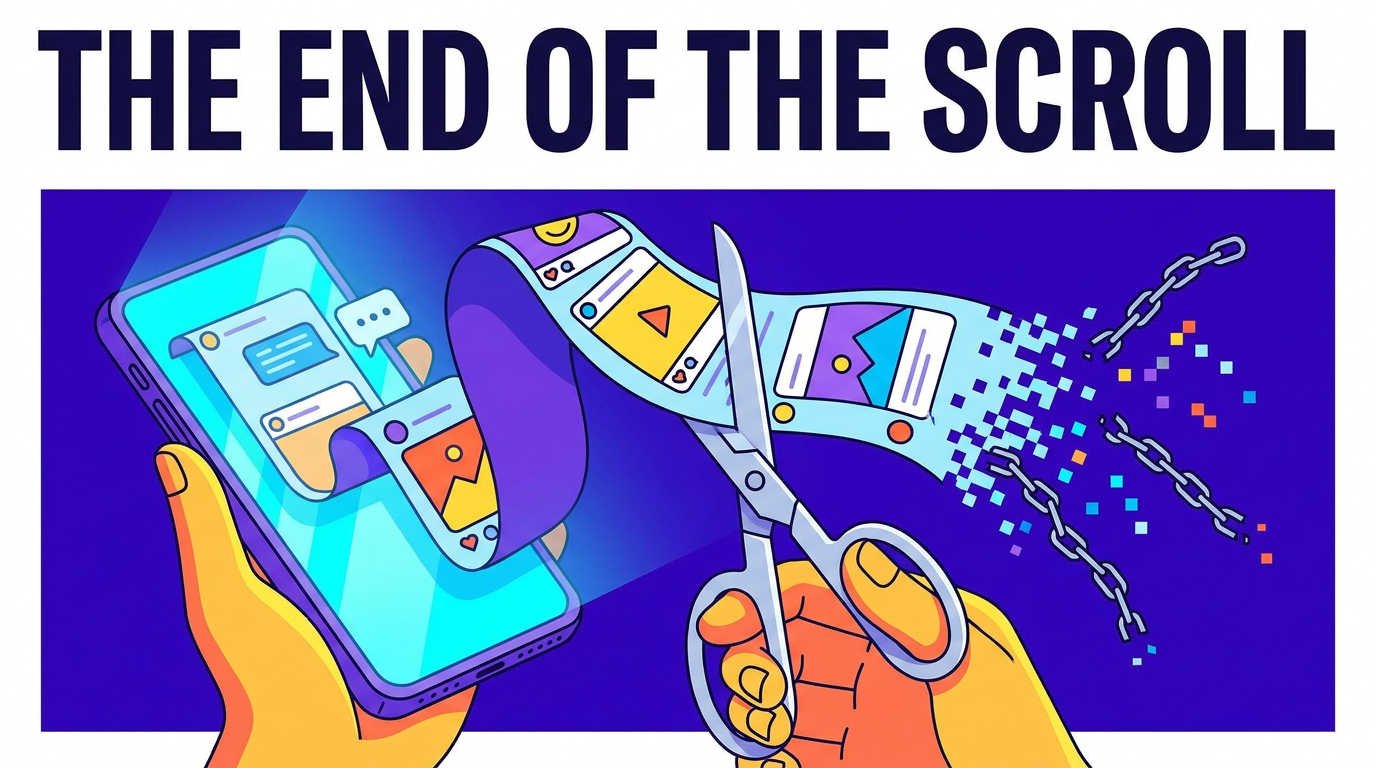
The psychological stakes of this architectural shift are profound. Behavioral scientists and digital rights advocates have long argued that the "infinite scroll"—the seamless loading of new content as a user swipes down—exploits the brain's variable reward system. By removing natural stopping cues, such as the end of a page or a "load more" button, the design creates a cognitive capture loop. The DSA aims to break this loop by restoring user agency, operating on the premise that a chronological feed introduces natural friction and allows users to consume content intentionally rather than compulsively.[3][7][8]

In response to the legislation, major platforms have begun rolling out compliance features, albeit with varying degrees of enthusiasm. TikTok introduced a toggle allowing European users to switch off personalization entirely. When activated, their primary feed defaults to globally and locally popular videos rather than hyper-targeted content, while their dedicated "Following" feed remains strictly chronological. Meta implemented similar changes, allowing users to select a chronological "Following" feed on Instagram and a dedicated "Lists" section on Facebook.[2][6]
However, the rollout has sparked fierce legal battles over how these choices are presented, specifically regarding the use of "dark patterns." Dark patterns are user interface designs crafted to trick or manipulate users into making choices that benefit the platform. In October 2025, the Amsterdam District Court issued a landmark ruling against Meta, finding that the company made the chronological choice effectively illusory for its users.[5][7]
The Dutch court noted that Meta buried the chronological option deep within submenus and systematically reverted users back to the algorithmic feed every time they refreshed or reopened the app. The judge ruled that this friction constituted a violation of the DSA's requirement for meaningful user choice, ordering Meta to make the non-profiled timeline easily accessible or face daily fines of €100,000. This precedent established that technical compliance is not enough; the alternative feed must be a genuine, persistent option rather than a hidden novelty.[5]
This precedent established that technical compliance is not enough; the alternative feed must be a genuine, persistent option rather than a hidden novelty.
The regulatory net is now expanding beyond simply offering a choice, moving toward actively dismantling addictive design. In February 2026, the European Commission launched preliminary findings against TikTok that specifically targeted its core architecture. The Commission argued that features like the infinite scroll, autoplaying videos, and push notifications constitute "addictive design" that violates the DSA's mandate to mitigate systemic risks to users' mental health, particularly for minors.[4][8]

This represents a profound shift in digital law. Regulators are no longer just policing the legality of the content hosted on a platform; they are policing the psychological impact of the platform's user interface. The Commission’s findings suggest that disclosing how an algorithm works is insufficient if the underlying design inherently erodes a user's capacity to disengage. If the Commission enforces its preliminary findings, platforms may be forced to introduce mandatory screen-time breaks or replace the infinite scroll with paginated feeds.[3][8]
The financial stakes of this architectural battle are massive. Non-compliance with the DSA carries fines of up to 6% of a company's global annual turnover. For tech giants like Meta and ByteDance, these penalties could reach into the billions of dollars, making the cost of maintaining illegal addictive designs higher than the revenue generated by the extra engagement they produce. The threat of these fines has forced compliance teams to fundamentally rethink product roadmaps that were previously untouchable.[1][2][4]

Despite these regulatory victories, a core uncertainty remains regarding actual user behavior. Even when presented with a persistent, easily accessible chronological feed, it is unclear how many users will permanently abandon the algorithmic stream. Algorithmic curation, for all its psychological pitfalls, is highly effective at surfacing entertaining and relevant content. If users find chronological feeds boring or cluttered with low-quality posts from accounts they follow, they may voluntarily opt back into the algorithmic capture loop.[6][7]
Furthermore, the global impact of this regulatory push remains heavily fragmented. While European citizens are gaining unprecedented digital rights and control over their attention, platforms have largely geofenced these non-algorithmic toggles. Outside the EU, users are still subjected to the standard infinite scroll, with chronological options either entirely absent or buried under layers of settings.[3][6]
Ultimately, the DSA's assault on the infinite scroll serves as a real-time experiment in digital autonomy. It tests whether legislation can successfully re-engineer the internet's attention economy by mandating friction and transparency. As platforms tweak their interfaces to avoid billion-dollar fines, the coming years will reveal whether users actually want to take back control of their feeds, or if the algorithmic scroll has already become an inescapable modern default.[4][7]
How we got here
Aug 2023
TikTok and Meta begin rolling out non-personalized feed options for European users.
Feb 2024
The Digital Services Act enters full enforcement for all Very Large Online Platforms.
Oct 2025
A Dutch court rules that Meta's hidden chronological feed constitutes a prohibited dark pattern.
Feb 2026
The European Commission launches an investigation into TikTok's addictive design and infinite scroll.
Viewpoints in depth
European Regulators
Focus on mitigating systemic risks to mental health through architectural changes.
Regulators argue that the core architecture of modern social media—specifically the infinite scroll and autoplay features—constitutes a systemic risk to public health. They maintain that platforms cannot simply disclose how their algorithms work; they must actively dismantle designs that foster compulsive engagement and cognitive capture, especially for minors.
Digital Rights Advocates
Argue that algorithmic feeds exploit human psychology and demand true user autonomy.
Privacy and digital rights groups celebrate the DSA's mandates but warn that platforms are using 'dark patterns' to undermine them. They argue that burying chronological feeds in submenus or forcing users to re-select them every time they open an app makes the choice illusory. For these advocates, true compliance means making the safest, non-profiled version of a platform the default setting.
Platform Operators
Emphasize compliance efforts while defending the value of personalized curation.
Tech companies highlight the massive engineering resources dedicated to DSA compliance, noting the rollout of new toggles and transparency hubs. However, they also defend algorithmic curation, arguing that personalized feeds are what users actually prefer because they surface highly relevant, entertaining content that would otherwise be lost in a purely chronological stream.
What we don't know
- Whether the majority of users will actually choose to keep their feeds chronological, or if they will revert to the algorithmic stream for entertainment.
- How platforms will redesign their core interfaces if the EU officially bans the infinite scroll entirely.
- Whether these non-algorithmic options will eventually be rolled out to users outside of the European Union.
Key terms
- Very Large Online Platform (VLOP)
- A designation under the DSA for platforms with over 45 million monthly active users in the EU, subjecting them to the strictest regulations.
- Recommender System
- An automated algorithm that predicts what content a user wants to see based on their past behavior and engagement.
- Dark Pattern
- A user interface designed to trick or manipulate users into making choices that benefit the platform, such as hiding privacy settings.
- Infinite Scroll
- A design feature that automatically loads new content as a user scrolls down, removing natural stopping points.
Frequently asked
Can I get a chronological feed outside the EU?
Currently, most platforms have geofenced these features, meaning users outside the European Union do not have easy access to non-algorithmic feeds.
Does the DSA ban algorithms entirely?
No. The DSA requires platforms to offer at least one non-profiled option and explain how their algorithms work, but it does not ban personalized feeds if users choose them.
What happens if a platform refuses to comply?
The European Commission can levy massive fines of up to 6% of a company's global annual turnover for severe DSA violations.
Sources
Source coverage
8 outlets
3 viewpoints surfaced








[1]European CommissionEuropean Regulators
The Digital Services Act: ensuring a safe and accountable online environment
Read on European Commission →[2]TikTok NewsroomPlatform Operators
Fulfilling our commitments under the Digital Services Act
Read on TikTok Newsroom →[3]AI4PolDigital Rights Advocates
A New Kind of Digital Harm: The EU's Case Against Addictive Design
Read on AI4Pol →[4]Canella CamaioraDigital Rights Advocates
Persuasive architectures and the construction of experience under the DSA
Read on Canella Camaiora →[5]AIACT BlogDigital Rights Advocates
Landmark Ruling: Meta Violates DSA with Hidden Chronological Feed
Read on AIACT Blog →[6]CheckFirstPlatform Operators
Your Feed, Your Choice: Non-Personalised Feeds Under the DSA
Read on CheckFirst →[7]UsercentricsDigital Rights Advocates
Shaping behavior through design: Algorithms and the DSA
Read on Usercentrics →[8]European Parliamentary Research ServiceEuropean Regulators
The DSA as a tool to redress online addictive design choices
Read on European Parliamentary Research Service →

Every angle. Every day.
Get culture stories with full source coverage and perspective breakdowns delivered to your inbox.