
Volkswagen Weighs Up to 100,000 Job Cuts and Four Plant Closures in Historic Restructuring
The German automaker is proposing the largest downsizing in its 89-year history to combat falling profits and intense competition from Chinese EV manufacturers.
By Factlen Editorial Team
- Corporate Management
- Argues that drastic cost-cutting and structural agility are required to survive the transition to electric vehicles.
- Labor Unions
- Opposes the closures, arguing that workers should not bear the cost of executive missteps in the EV transition.
- Industry Analysts
- Views the downsizing as an inevitable consequence of Chinese competition and the lower labor requirements of EV manufacturing.
What's not represented
- · Local municipalities in Germany facing the economic fallout of plant closures
- · Chinese automotive executives capturing Volkswagen's lost market share
Why this matters
Volkswagen's proposed overhaul is a stark indicator of the immense pressure facing legacy automakers as they transition to electric vehicles. The outcome of this restructuring will not only reshape one of the world's largest companies but also test the resilience of Europe's industrial economy against rising Chinese competition.
Key points
- Volkswagen is considering cutting up to 100,000 jobs globally, doubling its previous downsizing targets.
- The restructuring plan includes the potential closure of four major manufacturing plants in Germany.
- Management aims to save €11 billion in overhead costs to combat slowing demand and intense EV competition.
- The company is also exploring spinning off its core passenger car brand and components division into standalone entities.
- German labor unions and worker representatives have vowed to fiercely oppose the proposed closures.
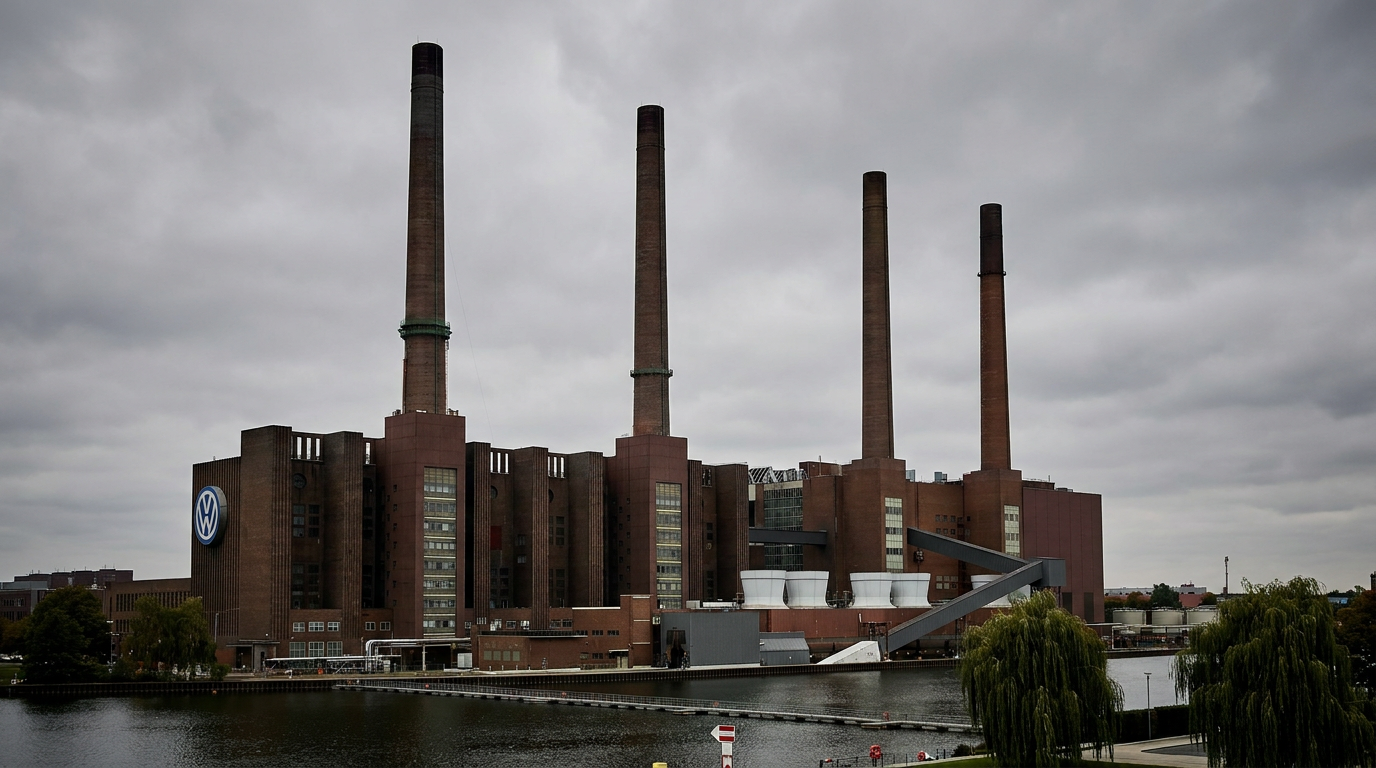
Volkswagen is reportedly preparing the most aggressive restructuring campaign in its 89-year history, with internal proposals targeting up to 100,000 global job cuts and the closure of four major German manufacturing plants. The sweeping overhaul, spearheaded by CEO Oliver Blume, is designed to aggressively slash costs as Europe's largest automaker battles a perfect storm of slowing demand, punitive tariffs, and fierce competition from Chinese electric vehicle manufacturers. The proposed measures would represent a dramatic reshaping of Volkswagen's domestic manufacturing footprint, signaling a definitive end to the era of unchecked expansion for legacy European automakers. If implemented, the cuts would fundamentally alter the industrial landscape of Germany, where the automotive sector has long served as the undisputed engine of economic growth.[1][6]
The proposed reductions would effectively double a previously agreed-upon downsizing target, underscoring the rapid deterioration of the company's market position. In late 2024, Volkswagen struck a hard-fought deal with labor unions to eliminate roughly 50,000 positions by the end of the decade to streamline operations. The new "Group Target Picture" for 2030, presented by Blume to senior executives this week, pushes that figure to 100,000—representing nearly 15% of the company's 657,000-strong global workforce. The expanded scope highlights the rapidly changing market conditions that have forced management to accelerate their timeline for structural reform. Executives are reportedly targeting €11 billion in overhead cost savings by the end of the decade to free up capital for crucial software and battery investments.[2][7]
At the center of the cost-cutting drive is a highly controversial plan to shutter four domestic facilities: the Volkswagen plants in Hanover, Zwickau, and Emden, alongside Audi's factory in Neckarsulm. Combined, these four sites employ more than 45,000 workers and represent a significant portion of the company's European production capacity. The Zwickau and Emden plants have been heavily involved in the company's recent electric vehicle production efforts, while the Neckarsulm facility primarily builds traditional combustion-engine and hybrid models. Closing these sites would mark a historic retreat for a company that has historically prided itself on maintaining a massive, highly unionized domestic manufacturing base regardless of broader global economic headwinds.[1][2]

Beyond workforce reductions, the restructuring envisions a fundamental rewiring of the Volkswagen Group's corporate architecture. According to internal documents leaked to German media, management is considering spinning off the core Volkswagen passenger car brand and the group's components division into separate, standalone entities. This structural pivot would theoretically make the divisions more agile and easier to list on public capital markets, reducing the sprawling conglomerate's bureaucratic drag. By separating the core brand from the wider group, executives hope to allow individual units to raise their own capital for future technological investments without being weighed down by the financial obligations of slower-growing legacy divisions.[2][7]
The urgency behind the overhaul stems from rapidly deteriorating financial metrics and a shifting global automotive landscape that has caught legacy manufacturers off guard. In the first quarter of 2026, Volkswagen's net profit plummeted by 28% year-on-year to €1.56 billion, while overall revenue edged down 2% to €75.7 billion. To stem the bleeding, the company is simultaneously attempting to trim its five-year capital expenditure budget by roughly 15%, bringing it down to €130 billion. The financial squeeze has left executives with little choice but to target fixed overhead costs, as the massive investments required to develop competitive electric vehicle platforms continue to drain the company's cash reserves.[1][6]
In the first quarter of 2026, Volkswagen's net profit plummeted by 28% year-on-year to €1.56 billion, while overall revenue edged down 2% to €75.7 billion.
The most severe pressure is emanating from China, historically Volkswagen's most lucrative and reliable market, where the brand once enjoyed undisputed dominance. During the first quarter, the automaker's sales in the region tumbled by 20%. Domestic Chinese manufacturers, led by BYD, have rapidly eroded Volkswagen's market share by offering highly advanced, lower-cost electric vehicles that appeal directly to local consumers' preferences for digital integration. Legacy European brands are increasingly struggling to compete on both price and software capabilities, forcing them to reevaluate their long-term viability in the world's largest auto market as domestic champions capture the transition to battery power.[1][4]

Geopolitical friction is compounding the company's structural challenges and accelerating the need for a leaner, more resilient operation. New U.S. tariffs on imported vehicles and components are currently costing Volkswagen an estimated €4 billion annually, severely cutting into North American profit margins and complicating the company's transatlantic supply chains. Meanwhile, in its home European market, the company is being squeezed by Stellantis on the legacy manufacturing side and a fresh wave of affordable Chinese EV imports on the electric front, creating a margin squeeze across all major product categories that cannot be solved through incremental efficiency gains alone.[1][6]
The proposed restructuring sets the stage for a monumental clash with Germany's powerful labor unions, who have historically fiercely protected domestic manufacturing jobs against corporate downsizing efforts. IG Metall and Volkswagen's General Works Council immediately issued a joint statement condemning the leaked plans, warning that they would deploy everything in their power to prevent them. Under Germany's co-determination laws, worker representatives hold exactly half the seats on Volkswagen's supervisory board, giving them effective veto power over major strategic shifts, factory closures, and mass layoffs. This unique governance structure means that management cannot simply dictate terms to the workforce.[1][3]

The boardroom math is further complicated by the German state of Lower Saxony, which holds a 20% voting stake in the automaker and relies heavily on the company for regional employment. The state government has historically allied with labor representatives to protect domestic jobs and regional economic stability, meaning Blume's executive team will face a steep uphill battle to secure approval for the domestic plant closures. A formal presentation to the supervisory board is scheduled for July 9, setting a hard deadline for backroom negotiations as management attempts to convince skeptical stakeholders that the cuts are a matter of corporate survival.[1][7]
Industry analysts view the proposed cuts not as an isolated corporate crisis, but as a bellwether for the broader European industrial base. As the transition away from internal combustion engines accelerates, legacy automakers are finding that electric vehicles require significantly fewer labor hours and components to assemble. When paired with the structural cost advantages of Chinese supply chains, European manufacturers are being forced into painful realignments to ensure their long-term survival in a fundamentally altered global market. Volkswagen's willingness to tackle its sacred domestic manufacturing footprint suggests that the era of European automotive exceptionalism is rapidly drawing to a close.[4][6]
How we got here
Late 2024
Volkswagen reaches an agreement with labor unions to eliminate approximately 50,000 jobs by 2030 to reduce costs.
Q1 2026
The company reports a 28% year-on-year drop in net profit and a 20% decline in sales in the critical Chinese market.
June 2026
CEO Oliver Blume presents a revised 'Group Target Picture' to senior executives, proposing up to 100,000 job cuts and four plant closures.
July 9, 2026
The restructuring proposals are scheduled to be formally presented to Volkswagen's supervisory board for debate.
Viewpoints in depth
Corporate Management
The restructuring is a painful but necessary step to ensure Volkswagen's survival in the electric vehicle era.
Executives argue that the company is carrying too much structural bloat to compete with highly efficient Chinese manufacturers and agile EV startups. By spinning off core brands and slashing overhead, management believes Volkswagen can unlock the capital needed to fund next-generation software and battery technology. They view the current manufacturing footprint as a relic of the combustion-engine era that is no longer financially viable.
Labor and Union Representatives
The proposed cuts are an unacceptable betrayal of the workforce that will devastate German industrial communities.
Union leaders, including IG Metall, argue that workers are being forced to pay the price for years of executive mismanagement and a botched software strategy. They maintain that closing domestic plants will hollow out Germany's industrial core and violate long-standing social contracts. Labor representatives plan to use their significant voting power on the supervisory board to block any forced redundancies or factory closures, demanding alternative cost-saving measures.
Industry Analysts
The downsizing reflects a broader, inevitable reckoning for Europe's legacy automotive sector.
Market observers note that electric vehicles inherently require fewer parts and less labor to assemble than traditional combustion cars. Analysts argue that Volkswagen's proposed cuts, while historic in scale, are merely aligning the company's workforce with the new realities of EV production. They warn that if legacy automakers fail to aggressively reduce costs now, they risk being permanently marginalized by heavily subsidized, low-cost imports from China.
What we don't know
- Whether the German state of Lower Saxony will side with labor unions to block the proposed domestic plant closures.
- The exact timeline for spinning off the core Volkswagen passenger car brand into a standalone entity.
- How much of the €11 billion in targeted savings will be reallocated to software development and battery technology.
Key terms
- Co-determination
- A German corporate governance practice where worker representatives hold seats on a company's supervisory board, giving them a direct say in major strategic decisions.
- Supervisory Board
- The group of individuals chosen by stockholders and employees to promote their interests and oversee the executive management of a corporation.
- Spin-off
- The creation of an independent company through the sale or distribution of new shares of an existing business or division of a parent company.
Frequently asked
Which Volkswagen plants are targeted for closure?
Internal proposals suggest closing three VW plants in Hanover, Zwickau, and Emden, as well as an Audi facility in Neckarsulm.
How many jobs is Volkswagen planning to cut?
The company is reportedly considering eliminating up to 100,000 positions globally, which represents roughly 15% of its total workforce.
Why is Volkswagen making these cuts now?
The automaker is facing a combination of declining sales in China, intense competition from lower-cost electric vehicle manufacturers like BYD, and the financial burden of new U.S. tariffs.
Can the CEO force these closures through?
Not easily. Under German law, labor representatives hold half the seats on the company's supervisory board, giving them significant power to block or alter the restructuring plans.
Sources
Source coverage
7 outlets
3 viewpoints surfaced







[1]QuartzIndustry Analysts
Volkswagen is considering cutting up to 100,000 jobs and shutting four German factories
Read on Quartz →[2]ElectriveLabor Unions
Volkswagen plans to cut up to 100,000 of its 657,000 jobs worldwide
Read on Electrive →[3]The GuardianLabor Unions
VW plans to cut up to 100,000 jobs and shut plants, report says
Read on The Guardian →[4]AxiosIndustry Analysts
Volkswagen is expected to cut 100,000 jobs in landmark downsizing
Read on Axios →[5]MintCorporate Management
Volkswagen job cuts: 100,000 jobs and 4 plant closures planned
Read on Mint →[6]ReutersCorporate Management
Volkswagen weighs 100,000 job cuts, four German plant closures in historic overhaul
Read on Reuters →[7]Manager MagazinCorporate Management
Volkswagen plant offenbar Schließung von vier Werken und Abbau von 100.000 Stellen
Read on Manager Magazin →
Every angle. Every day.
Get business stories with full source coverage and perspective breakdowns delivered to your inbox.