
Appeals Court Rejects Trump EPA Bid to Abandon Rule Restricting Deadly Soot Pollution
A federal appeals court unanimously struck down the Trump administration's attempt to roll back a 2024 regulation that tightened limits on deadly fine particulate matter. The ruling preserves a standard projected to prevent 4,500 premature deaths annually, dealing a blow to the EPA's deregulatory agenda.
By Factlen Editorial Team
- Public Health Advocates
- Prioritize strict, science-based pollution limits to minimize respiratory disease and premature deaths.
- Industry & Deregulation Proponents
- Focus on the economic burden of environmental regulations on manufacturing and energy sectors.
- State-Level Enforcers
- Seek to compel the federal government to maintain and enforce baseline environmental protections.
What's not represented
- · Local utility ratepayers
- · Coal industry workers
Why this matters
Fine particulate matter, or soot, is one of the deadliest forms of air pollution, penetrating deep into the lungs and bloodstream. By keeping the stricter 9-microgram limit in place, the court ensures that industrial facilities and power plants must continue investing in pollution controls, directly impacting both corporate compliance costs and the respiratory health of millions living near industrial zones.
Key points
- A federal appeals court unanimously rejected the Trump EPA's request to vacate a 2024 rule limiting fine particulate matter.
- The ruling leaves in place a stricter annual limit of 9 micrograms per cubic meter, down from the previous 12 micrograms.
- The EPA had argued the rule was overly costly to businesses and exceeded the agency's statutory authority.
- The 2024 standard is projected to prevent 4,500 premature deaths and 800,000 cases of asthma symptoms annually.
- A coalition of 25 Republican-led states and industry groups originally sued to block the standard.
- California and environmental groups successfully defended the rule in court after the federal government abandoned it.
A federal appeals court has unanimously struck down the Trump administration's attempt to abandon a stringent environmental regulation limiting deadly soot pollution. In a ruling issued Friday, the U.S. Court of Appeals for the District of Columbia Circuit rejected the Environmental Protection Agency's bid to vacate a 2024 rule that tightened the national air quality standard for fine particulate matter. The decision deals a significant blow to the administration's broader deregulatory agenda and its efforts to ease compliance costs for the fossil fuel and manufacturing sectors.[1][2]
The three-judge panel, led by Senior Judge Douglas Ginsburg, dismissed the EPA's arguments outright. The agency had claimed that the previous administration exceeded its statutory authority and acted unreasonably by failing to consider the economic burden on businesses when setting the standard. In the court's written decision, Ginsburg stated simply that the agency's arguments "lack merit," denying both the petition for review and the motion for vacatur.[1][3]
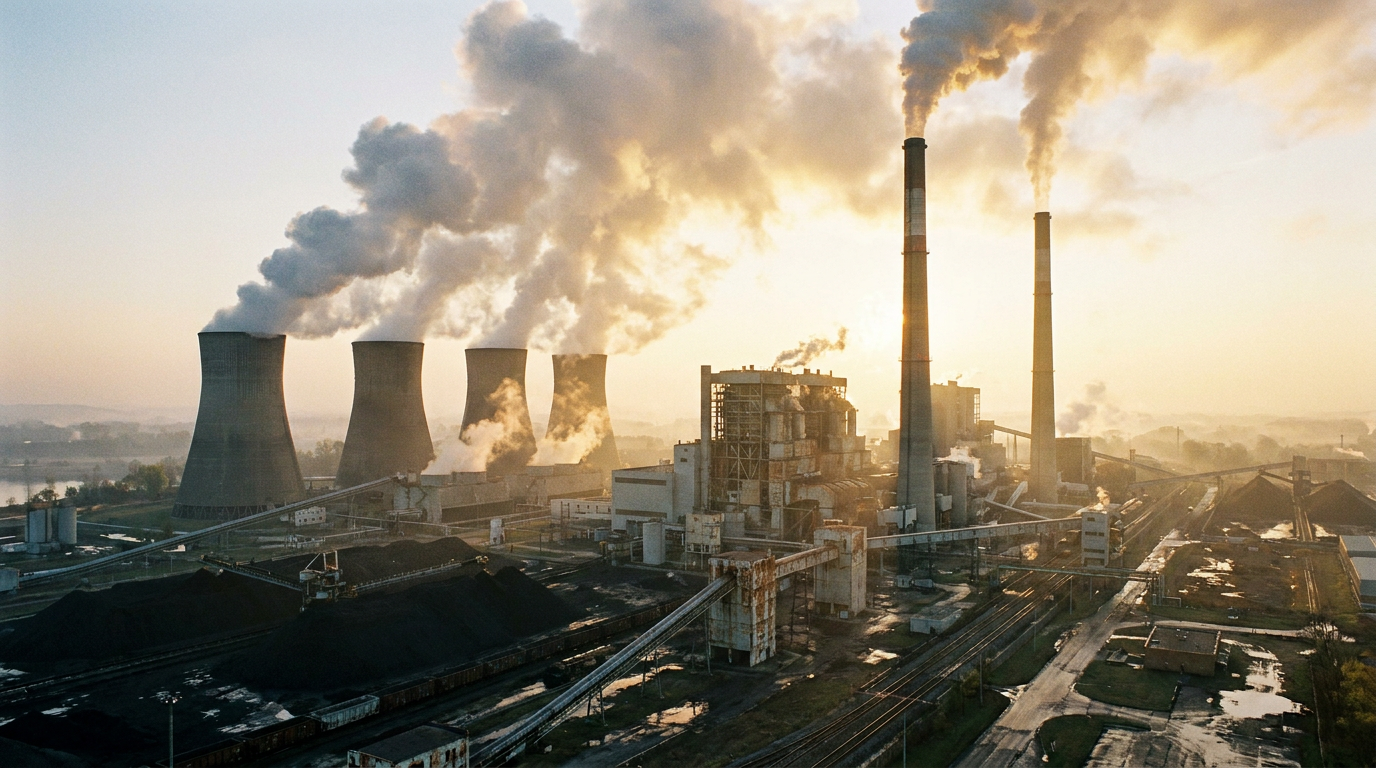
At the center of the legal battle is fine particulate matter, commonly known as PM2.5 or soot. These microscopic toxic particles—emitted by coal-fired power plants, factories, diesel vehicles, and wildfires—are small enough to lodge deep in the lungs and enter the bloodstream. The 2024 rule lowered the allowable annual concentration of PM2.5 from 12 micrograms per cubic meter of air to 9 micrograms, establishing a stricter baseline that states and counties are legally required to meet.[1][2][5]
The public health stakes tied to the standard are massive. According to the EPA's own estimates published when the rule was finalized in 2024, fully implementing the 9-microgram limit is projected to prevent 4,500 premature deaths annually. The agency also calculated that the tighter standard would avoid 800,000 cases of asthma symptoms, 5,700 new asthma diagnoses, and 2,000 emergency room visits each year, particularly benefiting vulnerable populations living near industrial corridors.[1][3][4]

The pushback against the regulation began almost immediately after it was finalized. A coalition of 25 Republican-led states, spearheaded by attorneys general from Kentucky and West Virginia, filed a lawsuit alongside various business groups to block the rule. They argued that forcing local industries to comply with the stricter limit would require exorbitant investments in new pollution control technologies, potentially stifling the construction of new manufacturing plants and raising utility rates for families.[1][2]
The pushback against the regulation began almost immediately after it was finalized.
When the Trump administration took office, the EPA under Administrator Lee Zeldin executed an unusual legal maneuver. Rather than defending the existing federal standard against the industry lawsuit, the EPA reversed its position. The agency aligned with the challengers, arguing that the rule would cost "hundreds of millions, if not billions of dollars to American citizens" and asked the D.C. Circuit to strike it down on narrow legal grounds without disputing the underlying health science.[3][6]
With the federal government abandoning the defense of its own rule, a coalition of blue states and environmental organizations stepped in to protect the standard in court. California Attorney General Rob Bonta led the state coalition, while groups including Earthjustice, the Environmental Defense Fund, and the Clean Air Task Force provided legal backing. They argued that the Clean Air Act requires the EPA to set National Ambient Air Quality Standards based strictly on public health science, regardless of corporate compliance costs.[4][5][6]
Environmental advocates celebrated Friday's ruling as a critical victory for communities disproportionately impacted by industrial pollution. Patrice Simms, vice president of Earthjustice, stated that the standard is a "critical advancement for public health" and demanded that the EPA stop catering to polluters. The Natural Resources Defense Council echoed the sentiment, noting that while the administration dragged its heels, millions of Americans continued to breathe unhealthy levels of soot.[1][3][6]

State officials also framed the court's decision as a rebuke of the administration's environmental strategy. Attorney General Bonta called the EPA's attack on the rule "meritless" and urged the federal government to follow the law. The ruling ensures that the 9-microgram limit remains the law of the land, forcing the EPA to either enforce it, initiate a lengthy formal rulemaking process to repeal it, or appeal the D.C. Circuit's decision to the Supreme Court.[4][5]
The fight over soot pollution is now expected to shift from the courtroom to the enforcement arena. Under the Clean Air Act, the EPA was legally mandated to formally identify which U.S. counties were violating the new 9-microgram standard by February 6, 2026. This designation is a crucial step, as it triggers a requirement for those local governments to draft and implement concrete pollution reduction plans.[5]
The Trump EPA missed that February deadline, effectively stalling the rule's real-world impact. In response, health groups and the California-led state coalition filed a separate, ongoing lawsuit to force the agency to issue the non-attainment designations. Friday's appellate ruling strengthens the plaintiffs' hand in that secondary lawsuit, as the underlying standard has now survived its primary legal challenge.[4][5]

As the EPA reviews the court's decision, the broader implications for the energy sector remain stark. The soot standard acts as a functional constraint on coal-fired power plants, which are major emitters of PM2.5. The Trump administration has repeatedly sought to boost the coal industry as a reliable energy source, but the D.C. Circuit's ruling ensures that these facilities will continue to face stringent federal pressure to clean up their emissions or face eventual closure.[1][2]
How we got here
2012
The EPA establishes the annual PM2.5 limit at 12 micrograms per cubic meter.
Feb 2024
The Biden administration tightens the standard to 9 micrograms, citing updated health science.
2024-2025
25 Republican-led states and industry groups sue to block the new standard.
Late 2025
The Trump EPA stops defending the rule and asks the D.C. Circuit to vacate it.
Feb 2026
The EPA misses a statutory deadline to identify areas violating the new standard, prompting a lawsuit from California.
Jun 26, 2026
The D.C. Circuit unanimously rejects the EPA's request, keeping the 9-microgram limit in place.
Viewpoints in depth
The Trump Administration & Industry Groups
Argue the stricter soot limits impose crippling costs on American manufacturing and energy production.
The Trump EPA, alongside 25 Republican-led states and various business coalitions, contends that the 2024 standard was implemented without adequate consideration of its economic toll. They argue that forcing states and counties to meet the 9-microgram limit will require expensive new pollution controls, which could block the construction of new manufacturing plants, raise utility rates for families, and penalize industries for background pollution like wildfires. The EPA asserted that the previous administration exceeded its statutory authority by ignoring these billion-dollar compliance costs.
Environmental & Public Health Advocates
Maintain that the science dictates stricter limits to prevent thousands of deaths and severe respiratory illnesses.
Groups like Earthjustice, the Environmental Defense Fund, and the Clean Air Task Force argue that PM2.5 is one of the most dangerous air pollutants, lodging deep in the lungs and entering the bloodstream. They point to the EPA's own 2024 data projecting that the tighter standard will save 4,500 lives annually. These advocates view the Trump administration's attempt to abandon the rule as a blatant capitulation to the fossil fuel industry, arguing that the Clean Air Act requires standards to be set based on public health science, not corporate compliance costs.
Defending States
Blue states argue the federal government has a legal obligation to enforce baseline air quality standards.
A coalition of states led by California stepped in to defend the rule when the federal government abandoned it. California Attorney General Rob Bonta and allied attorneys general argue that pollution crosses state lines, making strong federal baselines essential. They emphasize that the Trump EPA is already in violation of the Clean Air Act for missing a February 2026 deadline to designate which areas are failing to meet the new standard, and are pursuing separate litigation to force the agency to implement the law.
What we don't know
- Whether the Trump administration will appeal the D.C. Circuit's decision to the Supreme Court.
- How quickly the EPA will comply with the missed February 2026 deadline to designate non-compliant counties.
- Whether the EPA will initiate a new, formal rulemaking process to repeal the standard, which could take years.
Key terms
- PM2.5 (Fine Particulate Matter)
- Tiny inhalable particles or droplets that are 2.5 micrometers or smaller in width, often called soot, which can lodge deep in the lungs and enter the bloodstream.
- National Ambient Air Quality Standards (NAAQS)
- Federal limits established by the EPA under the Clean Air Act for harmful pollutants to protect public health and the environment.
- D.C. Circuit Court of Appeals
- A federal appellate court that frequently handles cases involving federal agency regulations and administrative law.
- Vacatur
- A legal order by a court that voids or cancels a previous ruling, order, or administrative rule.
Frequently asked
What is PM2.5 and why is it dangerous?
PM2.5, or soot, consists of microscopic particles from combustion sources like power plants, vehicles, and wildfires. Because the particles are so small, they can bypass the body's natural defenses, enter the bloodstream, and cause asthma, heart attacks, and premature death.
Why did the Trump EPA want to abandon the rule?
The agency argued that the 2024 rule would cost American businesses hundreds of millions, if not billions, of dollars to implement, and claimed the previous administration exceeded its authority by failing to weigh those costs.
What happens to the pollution standard now?
The 9-microgram limit remains in effect. The EPA is legally required to enforce it, which involves identifying counties that exceed the limit and requiring states to submit plans to reduce local pollution.
Sources
Source coverage
6 outlets
3 viewpoints surfaced






[1]Associated PressIndustry & Deregulation Proponents
Appeals court rejects Trump EPA bid to abandon rule restricting deadly soot pollution
Read on Associated Press →[2]The GuardianState-Level Enforcers
Appeals court rejects Trump EPA bid to abandon rule restricting deadly soot pollution
Read on The Guardian →[3]Insurance JournalIndustry & Deregulation Proponents
Appellate Court Rejects EPA Bid to Ease Regulations for Coal-Fired Power Plants
Read on Insurance Journal →[4]California Attorney GeneralState-Level Enforcers
Attorney General Bonta Applauds Court Decision Upholding Federal Soot Standard
Read on California Attorney General →[5]EarthjusticePublic Health Advocates
Court Upholds Life-Saving National Soot Air Quality Standard
Read on Earthjustice →[6]Environmental Defense FundPublic Health Advocates
Trump administration's unprecedented attempt to abandon stronger public health safeguard is rejected
Read on Environmental Defense Fund →
Every angle. Every day.
Get news politics stories with full source coverage and perspective breakdowns delivered to your inbox.