
Open-Source AI Models Close the Gap with Frontier Tech as MiniMax M3 and GLM-5.1 Launch
A wave of powerful open-weight AI models released in June 2026 has matched or exceeded the performance of proprietary systems on complex coding and agentic tasks. The releases signal a major shift toward decentralized, cost-effective AI development that developers can run locally.
By Factlen Editorial Team

- Open-Source Developers
- Celebrate the democratization of frontier capabilities, emphasizing privacy, local execution, and cost savings.
- Enterprise AI Providers
- Focus on deploying specialized, efficient models that solve production bottlenecks like latency and throughput.
- Global Tech Analysts
- Observe the market shifts as international labs release open-weight models that rival US proprietary systems.
What's not represented
- · Hardware Manufacturers
- · Regulatory Bodies
Why this matters
The rapid advancement of open-weight AI models means developers and businesses no longer have to rely on expensive, restrictive cloud APIs to access cutting-edge technology. This shift democratizes AI, allowing anyone to run powerful, private, and highly customized models on their own hardware, drastically lowering the barrier to entry for innovation.
Key points
- June 2026 saw a wave of powerful open-weight AI models that match or exceed proprietary systems.
- MiniMax M3 scored 59.0% on the SWE-Bench Pro coding benchmark, beating several closed-source leaders.
- Models are increasingly using Mixture-of-Experts architectures to reduce the computing power required for inference.
- JetBrains released Mellum2, a specialized 12-billion parameter model designed for fast, cost-effective enterprise workflows.
- Developers can now run frontier-tier AI locally, ensuring absolute data privacy for sensitive projects.
The artificial intelligence landscape experienced a seismic shift in June 2026 as a wave of highly capable open-weight models effectively closed the performance gap with proprietary, closed-source systems. For the past two years, the most advanced AI capabilities were largely locked behind expensive APIs controlled by a handful of massive tech conglomerates. However, a flurry of new releases—led by models like MiniMax M3, Z.ai’s GLM-5.1, and JetBrains’ Mellum2—has democratized access to frontier-tier technology. These models are not just matching the reasoning and coding capabilities of their closed counterparts; in several rigorous benchmarks, they are actively surpassing them. This democratization is empowering developers, researchers, and startups globally to build complex, autonomous systems without relying on third-party cloud infrastructure.[1][4]
The most notable breakthrough came on June 1 with the release of MiniMax M3, an open-weight model that immediately disrupted the coding benchmark leaderboards. On the rigorous SWE-Bench Pro evaluation—which tests an AI’s ability to solve real-world software engineering issues—MiniMax M3 scored an unprecedented 59.0%. This score allowed it to edge past highly touted proprietary models, including GPT-5.5 and Gemini 3.1 Pro, marking a watershed moment for the open-source community. The release proved that community-accessible models could handle long-horizon agentic engineering tasks that require sustained iteration over thousands of tool calls, a domain previously dominated by closed labs.[1][5]
What makes MiniMax M3 particularly groundbreaking is its architecture, which combines top-tier coding proficiency with a massive 1-million-token context window and native multimodality. Developers can now feed the model entire codebases, alongside image and video inputs, and have it operate a computer environment to test and debug software. Built on a novel Sparse Attention architecture, the model's weights and technical reports were committed to the public domain shortly after launch. This level of transparency and capability allows independent developers to fine-tune the model for highly specific, complex workflows that would be prohibitively expensive to run through a commercial API.[1][4]

The momentum continued throughout the month with other major releases, notably from Chinese AI labs that are aggressively pushing the open-weight frontier. Moonshot AI introduced Kimi K2.7-Code, a massive 1-trillion parameter model designed for agent swarms and long autonomous runs. Despite its staggering total size, Kimi K2.7-Code utilizes a Mixture-of-Experts (MoE) architecture, meaning it only activates about 32 billion parameters per inference. This selective activation allows the model to perform highly complex reasoning tasks—such as 4,000-step coordination across 300 sub-agents—while remaining computationally efficient enough to run on accessible hardware clusters.[1][4]
Global tech analysts point out that these releases arrive at a critical geopolitical juncture. As regulators in the United States and Europe debate stringent oversight and potential export controls on frontier models—such as Anthropic’s highly restricted Claude Mythos—international labs are flooding the market with powerful, unrestricted alternatives. When US access to certain proprietary models was recently throttled, companies like Z.ai immediately stepped in, launching their GLM-5.2 model as a free, downloadable alternative. This dynamic is rapidly decentralizing AI power, ensuring that developers worldwide maintain access to cutting-edge tools regardless of regional policy shifts.[4][6]
Global tech analysts point out that these releases arrive at a critical geopolitical juncture.
Beyond the race for the highest benchmark scores, the open-source movement is also solving practical production bottlenecks through specialized "focal models." While massive frontier models are versatile, they are often too slow and expensive for high-frequency, real-time enterprise tasks. Recognizing this, software development company JetBrains open-sourced Mellum2, a 12-billion parameter model engineered specifically to handle the latency and throughput demands of modern AI workflows. Trained entirely from scratch and released under the permissive Apache 2.0 license, Mellum2 represents a shift toward purpose-built AI components.[3]
Mellum2’s design highlights the industry's growing obsession with inference efficiency. Like the larger Kimi models, Mellum2 employs a Mixture-of-Experts architecture, activating a mere 2.5 billion parameters per token. By stripping away multimodal capabilities and focusing exclusively on natural language and code, the model achieves blazing-fast response times. Enterprise teams are now deploying these lightweight models as intelligent routers and sub-agents within their internal systems, handling intermediate reasoning steps and code completion at a fraction of the cost of querying a massive generalized model.[3][5]

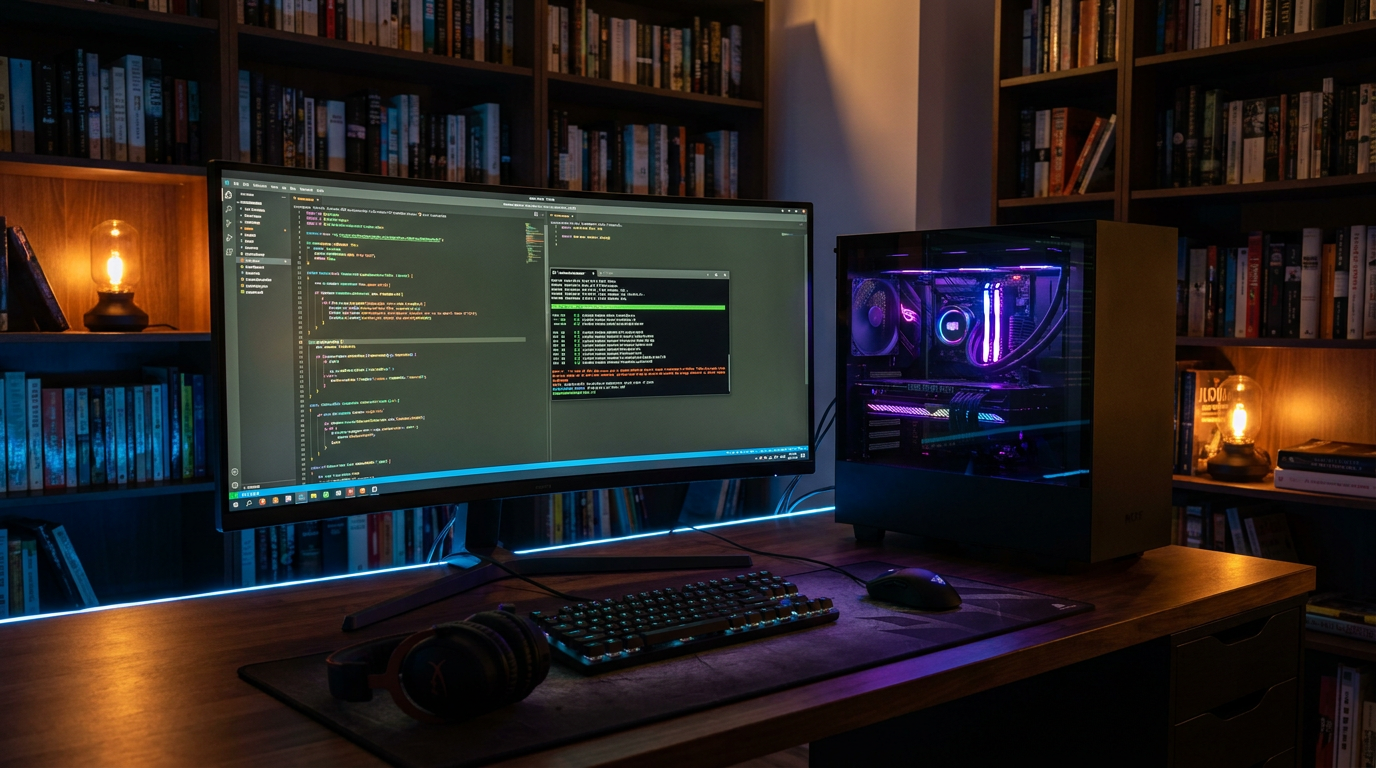
For everyday developers, the true power of these open-weight releases lies in local execution. Tools like Ollama have matured to the point where downloading and running a frontier-level model requires only a single terminal command. These platforms automatically handle the complex hardware detection and quantization processes, allowing models to run smoothly on standard consumer laptops and desktop GPUs. This frictionless deployment is transforming how software is built, enabling rapid prototyping and offline development without the need to manage complex cloud infrastructure or pay recurring subscription fees.[2]
Crucially, local execution solves one of the biggest hurdles to enterprise AI adoption: data privacy. Organizations handling highly sensitive information—such as healthcare providers analyzing patient records, or tech companies working on proprietary source code—have long been hesitant to send their data to external APIs. With models like MiniMax M3 and Mellum2 running entirely on local servers, the data never leaves the company's secure perimeter. This absolute privacy guarantee is unlocking AI use cases in heavily regulated industries that were previously sidelined by compliance concerns.[2][4]
Despite the widespread enthusiasm, the AI community continues to debate the exact definition of "open source" in this new era. While the weights (the trained parameters) of models like MiniMax M3 and Kimi K2.7-Code are freely available to download and modify, the massive datasets and specific pipelines used to train them remain closely guarded corporate secrets. Organizations like the Open Source Initiative argue that true open-source AI must include the training data. However, for the millions of developers who simply want to build, run, and commercialize AI applications without restrictions, the current open-weight paradigm provides all the freedom they need.[2]

The hardware ecosystem is also adapting to support this decentralized future. Major chipmakers are actively contributing to the open-weight community to ensure their hardware remains the platform of choice for local deployment. In early June, NVIDIA released the Nemotron 3 Ultra, a massive 550-billion parameter open-weight model specifically optimized for autonomous agents. By providing both the hardware and the foundational open models, these companies are accelerating the shift away from centralized cloud monopolies and empowering a broader ecosystem of independent innovators.[6]
As June 2026 draws to a close, the narrative around artificial intelligence has fundamentally shifted. The assumption that the future of AI would be dictated by a few well-funded labs operating behind closed doors has been shattered. Instead, a vibrant, decentralized ecosystem of open-weight models is proving that community-driven, locally hosted AI can match—and sometimes beat—the best proprietary systems in the world. For developers, researchers, and enterprises, this democratization promises a future where advanced AI is not a rented service, but a fundamental, owned piece of their technological infrastructure.[1][2][5]
How we got here
April 2026
Moonshot AI releases Kimi K2.6, setting a new high-water mark for open-weight coding models.
June 1, 2026
MiniMax launches M3, combining a 1-million token context with native multimodality and breaking the 59% barrier on SWE-Bench Pro.
June 4, 2026
NVIDIA releases the 550-billion parameter Nemotron 3 Ultra, expanding the open ecosystem for AI agents.
June 13, 2026
Z.ai announces GLM-5.2, providing a powerful open alternative just as US regulators tighten access to some proprietary models.
Viewpoints in depth
Open-Source Developers
Advocates for decentralized AI who prioritize local execution and data privacy.
For the open-source community, the June 2026 releases represent a declaration of independence from centralized cloud providers. Developers argue that relying on proprietary APIs creates unacceptable vendor lock-in and privacy risks, especially when handling sensitive corporate or personal data. By running models like MiniMax M3 locally, they maintain complete control over their infrastructure, avoid unpredictable API rate limits, and can fine-tune the models for highly specific use cases without sharing their proprietary training data with third parties.
Enterprise AI Strategists
Corporate leaders focused on integrating AI efficiently and cost-effectively into production.
Enterprise strategists view the rise of smaller, specialized open-weight models as the key to sustainable AI deployment. While massive frontier models are impressive in demonstrations, they are often too slow and expensive for high-volume, real-time business applications. This camp champions models like JetBrains' Mellum2, arguing that the future of enterprise AI lies in deploying swarms of these efficient, task-specific models that can route requests, analyze code, and manage sub-agents at a fraction of the computational cost of generalized proprietary systems.
Proprietary AI Labs
Developers of closed-source models who emphasize safety, alignment, and massive scale.
Despite the rapid gains of open-weight models, proprietary AI labs maintain that closed systems are essential for the safe development of artificial general intelligence (AGI). They argue that releasing the weights of highly capable models removes the ability to implement necessary safety guardrails, potentially allowing bad actors to misuse the technology for cyberattacks or disinformation. Furthermore, they contend that the next massive leaps in reasoning capabilities will require capital-intensive training runs that only well-funded, centralized labs can afford to execute and secure.
What we don't know
- Whether open-weight models will be able to match the next generation of trillion-parameter proprietary models currently in training.
- How upcoming government regulations regarding AI safety and export controls might restrict the distribution of future open-weight releases.
- The long-term financial sustainability of labs releasing state-of-the-art models for free without direct API revenue.
Key terms
- Open-weight model
- An AI model where the core parameters are publicly released for anyone to download and use, though the training data may remain secret.
- Mixture-of-Experts (MoE)
- An AI architecture that uses multiple specialized sub-networks, activating only the relevant 'experts' for a given task to save computing power.
- Context window
- The maximum amount of text or data an AI model can hold in its working memory at one time.
- SWE-Bench Pro
- A rigorous industry benchmark that tests an AI's ability to solve real-world software engineering issues.
Frequently asked
What does 'open-weight' mean in AI?
It means the trained neural network parameters (weights) are freely available to download and run, even if the original training data remains private.
Can I run these new models on my own computer?
Yes, many of these models are optimized to run locally on consumer hardware using tools like Ollama, ensuring complete data privacy.
How does MiniMax M3 compare to proprietary models?
On major coding benchmarks like SWE-Bench Pro, MiniMax M3 scored 59.0%, slightly outperforming several leading closed-source models.
Why are companies releasing smaller models like Mellum2?
Smaller, specialized models offer much faster response times and lower compute costs, making them ideal for high-volume production tasks like code routing.
Sources
Source coverage
6 outlets
3 viewpoints surfaced






[1]Kilo AI ResearchOpen-Source Developers
Best Open-Source Coding Models Ranked (2026)
Read on Kilo AI Research →[2]Thunder ComputeOpen-Source Developers
Understanding LLM Versioning and Open Source
Read on Thunder Compute →[3]JetBrains BlogEnterprise AI Providers
Mellum2 Goes Open Source: A Fast Model for AI Workflows
Read on JetBrains Blog →[4]AvidClan TechGlobal Tech Analysts
AI News, 16 June 2026
Read on AvidClan Tech →[5]LLM StatsEnterprise AI Providers
AI Model Releases
Read on LLM Stats →[6]ThursdAI NewsGlobal Tech Analysts
NVIDIA releases Nemotron 3 Ultra
Read on ThursdAI News →

More in ai
See all 6 stories →Content Provenance
How Content Provenance and AI Watermarking Are Actually Working in 2026
8 sources

Local AI
How Local AI Became Mainstream: Running LLMs on Your Own Hardware in 2026
8 sources
Large Action Models
The Rise of Large Action Models: How AI Agents Are Automating the Digital World
8 sources

On-Device AI
The Rise of On-Device AI: How Small Language Models Are Putting Chatbots in Your Pocket
7 sources

Every angle. Every day.
Get ai stories with full source coverage and perspective breakdowns delivered to your inbox.