
Climate-Tech Startups Achieve Commercial Price Parity for Carbon-Negative Concrete
A new wave of industrial startups has successfully scaled low-carbon cement production, matching the price of traditional materials and unlocking massive emissions reductions for the global construction industry.
By Factlen Editorial Team
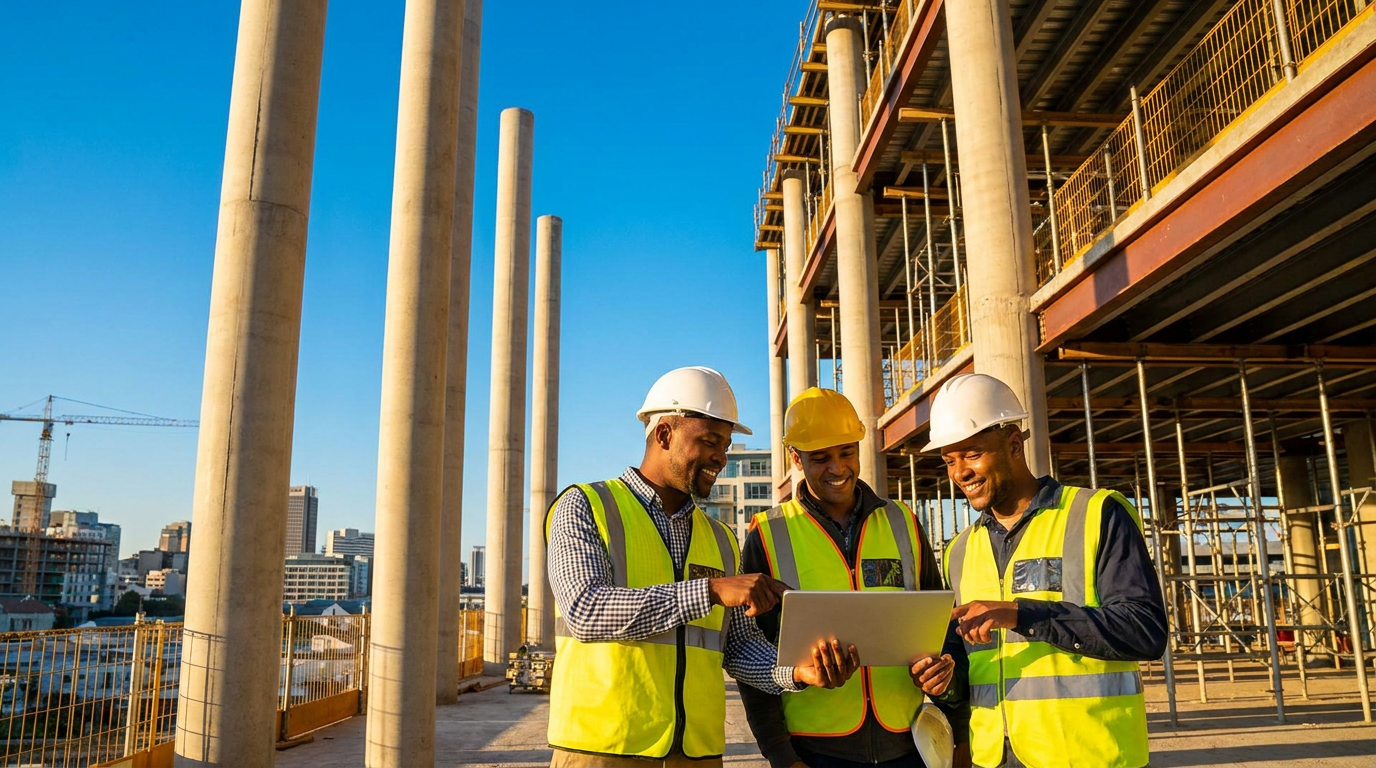
- Climate-Tech Innovators
- Argue that electrochemical and mineralization processes can completely replace traditional kilns within a decade.
- Incumbent Manufacturers
- View startups as vital R&D partners to help legacy companies meet their 2030 and 2050 net-zero commitments.
- Policy Makers & Regulators
- Focus on using government procurement and carbon tariffs to guarantee early demand for clean industrial materials.
- Clean Energy Analysts
- Highlight the financial viability of deep-tech hardware, noting that price parity is the ultimate driver of adoption.
What's not represented
- · Local communities near traditional cement kilns
- · Construction workers adapting to new materials on site
Why this matters
Cement production is responsible for roughly 8% of all global carbon emissions. Reaching price parity means real estate developers and cities can now build sustainably without financial penalties, fundamentally altering the climate trajectory of urban development.
Key points
- Climate-tech startups have scaled low-carbon cement production to match the price of traditional materials.
- New electrochemical processes eliminate the need for fossil-fueled kilns and prevent chemical CO2 release.
- Government grants and 'Buy Clean' procurement policies helped startups survive the hardware development phase.
- Legacy cement giants are investing heavily in these startups to integrate the technology into global supply chains.
- The milestone proves that deep-tech hardware startups can successfully commercialize heavy industrial solutions.
For decades, the recipe for modern civilization has carried a heavy, hidden cost. Cement, the binding agent in concrete, is the second most consumed material on Earth after water, but its production generates roughly 8% of all global carbon dioxide emissions.[2]
Now, a cohort of deep-tech startups has achieved what industrial chemists long considered a holy grail: scaling carbon-neutral and carbon-negative cement to commercial price parity.[1]
Reaching the critical threshold of roughly $110 per ton, these emerging companies are moving out of pilot phases and into full-scale commercial deployment, securing massive contracts with global real estate developers.[6]
The breakthrough fundamentally alters the economics of sustainable construction. Previously, developers faced a steep "green premium" to use environmentally friendly materials, limiting their use to boutique corporate headquarters or heavily subsidized public projects.[1]
To understand the magnitude of this shift, one must look at how traditional cement is made. The conventional process involves heating limestone in massive kilns to over 1,400 degrees Celsius, a step that requires burning immense amounts of fossil fuels.[3]

Even worse, the chemical reaction itself—calcination—releases trapped carbon dioxide directly from the limestone into the atmosphere, regardless of the energy source used to heat the kiln.[2]
Startups have bypassed this thermal bottleneck entirely by pioneering electrochemical processes. By running electricity through water and abundant non-carbonate rocks, they can extract the necessary reactive calcium at ambient room temperatures.[4]
Because the process operates at ambient temperatures, it can be powered entirely by intermittent renewable energy sources like wind and solar, completely eliminating the need for coal or natural gas kilns.[3]
Other startups in the ecosystem are tackling the problem through carbon mineralization. They capture industrial CO2 emissions and inject them into wet concrete, where the gas reacts with calcium ions to form a solid mineral, permanently trapping the carbon while actually making the concrete stronger.[4]
Other startups in the ecosystem are tackling the problem through carbon mineralization.
The journey to price parity was accelerated by a combination of aggressive venture capital funding and strategic government support. Over the past three years, the U.S. Department of Energy has deployed billions in grants specifically targeting industrial decarbonization.[5]

These non-dilutive funds allowed hardware-heavy startups to build their first commercial-scale demonstration plants without taking on ruinous amounts of debt or giving up total equity control.[5]
Simultaneously, regulatory frameworks have evolved to create guaranteed early markets. "Buy Clean" initiatives in states like California, Colorado, and New York mandate that public infrastructure projects prioritize low-carbon materials.[1]
The European Union’s Carbon Border Adjustment Mechanism has also played a crucial role. By placing a tariff on carbon-intensive imports, it has effectively leveled the playing field, making clean cement economically competitive against cheaper, dirtier alternatives.[6]
Rather than fighting the disruption, incumbent cement giants are actively participating in the transition. Companies like Holcim and Cemex have launched dedicated corporate venture arms to invest in these startups, recognizing that the intellectual property is too valuable to ignore.[7]
These partnerships offer a symbiotic relationship: startups provide the breakthrough chemistry, while legacy manufacturers offer the global supply chains, distribution networks, and regulatory expertise needed to scale rapidly.[7]

The success of these cement innovators is sending a broader signal to the venture capital ecosystem. For years, investors shied away from "deep tech" and hardware, preferring the rapid returns and low capital requirements of software-as-a-service startups.[1]
The commercial viability of electrochemical cement proves that hardware startups can indeed cross the infamous "valley of death"—the precarious phase between lab-scale prototypes and full commercial production.[6]
Challenges remain, particularly in the realm of raw material logistics. While non-carbonate rocks are abundant globally, establishing new supply chains to transport them to electrochemical processing facilities requires significant logistical coordination.[4]
Furthermore, the construction industry is notoriously conservative. Building codes and safety standards are written around the exact chemical properties of traditional Portland cement, meaning startups must undergo rigorous, multi-year testing to prove their materials are structurally identical.[7]

Despite these hurdles, the trajectory is clear. With price parity achieved and production capacity expanding, carbon-negative concrete is poised to transition from a niche environmental alternative to the global industry standard, paving the way for a truly sustainable built environment.[1]
How we got here
2020
Early electrochemical cement startups spin out of university labs at MIT and Stanford.
2022
Venture capital begins flowing heavily into deep-tech climate hardware, moving beyond software solutions.
2024
The U.S. Department of Energy awards billions in grants for industrial decarbonization demonstration plants.
2026
Leading startups hit the $110/ton price parity milestone, unlocking mass commercial adoption.
Viewpoints in depth
Climate-Tech Innovators
Founders and engineers believe electrochemical processes will render traditional kilns obsolete.
For the startup ecosystem, reaching price parity is the ultimate validation of the 'deep tech' thesis. Innovators argue that by fundamentally altering the chemistry of cement production to operate at ambient temperatures, they have decoupled construction from fossil fuels entirely. They view the current milestone not just as an environmental victory, but as a technological platform that will allow concrete to become a massive carbon sink in the coming decades.
Incumbent Cement Giants
Legacy manufacturers see startup partnerships as the most efficient path to meeting their net-zero pledges.
Rather than viewing startups as existential threats, major cement conglomerates are embracing them as outsourced R&D departments. Incumbents recognize that while startups have the chemical breakthroughs, they lack the global distribution networks, raw material supply chains, and regulatory relationships required to pour millions of tons of concrete globally. By investing via corporate venture arms, legacy players are ensuring they own a piece of the transition rather than being disrupted by it.
Green Procurement Advocates
Policy experts emphasize that government buying power was essential to creating the initial market.
Economists and policy makers point out that technological breakthroughs rarely scale on their own. They credit 'Buy Clean' initiatives and carbon tariffs for creating a guaranteed market for low-carbon materials when they were still more expensive than traditional options. These advocates argue that continued government procurement mandates are necessary to ensure the technology deploys rapidly across all public infrastructure projects, from highways to dams.
What we don't know
- How quickly global supply chains can pivot to sourcing the specific non-carbonate rocks required for electrochemical processes.
- Whether the technology can scale fast enough in developing nations where construction demand is highest but capital for new plants is scarce.
Key terms
- Calcination
- The chemical process of heating limestone to extract calcium, which inherently releases large amounts of trapped carbon dioxide.
- Green Premium
- The additional cost a buyer must pay to choose a clean or sustainable technology over a traditional, higher-emission alternative.
- Electrochemical Cement
- Cement produced by using electricity to separate calcium from rocks at room temperature, avoiding the need for fossil-fueled kilns.
- Carbon Mineralization
- The process of injecting captured CO2 into wet concrete, where it turns into a solid mineral and is permanently trapped.
Frequently asked
What makes traditional cement so bad for the environment?
Traditional cement requires heating limestone in kilns to over 1,400°C, which burns massive amounts of fossil fuels. Additionally, the chemical reaction of heating the limestone releases trapped CO2 directly into the air.
How do these startups make cement without emissions?
Many use an electrochemical process that runs electricity through water and non-carbonate rocks at room temperature, extracting the necessary calcium without heat or chemical CO2 release.
Is the new concrete as strong as the old kind?
Yes. Startups must pass rigorous building code certifications to prove their materials are structurally identical to, and sometimes stronger than, traditional Portland cement.
Why is price parity so important?
When clean cement costs the same as dirty cement ($110/ton), developers no longer have to pay a 'green premium,' allowing sustainable materials to become the default choice for all construction.
Sources
Source coverage
7 outlets
4 viewpoints surfaced







[1]Factlen Editorial TeamClimate-Tech Innovators
Synthesis by Factlen editorial team
Read on Factlen Editorial Team →[2]International Energy AgencyPolicy Makers & Regulators
Tracking Clean Energy Progress: Cement
Read on International Energy Agency →[3]MIT Technology ReviewClimate-Tech Innovators
How electrochemical cement is quietly revolutionizing the built environment
Read on MIT Technology Review →[4]Nature SustainabilityClean Energy Analysts
Life-cycle cost analysis of ambient-temperature carbon mineralization in concrete
Read on Nature Sustainability →[5]U.S. Department of EnergyPolicy Makers & Regulators
Industrial Demonstrations Program: Cement and Concrete Awards
Read on U.S. Department of Energy →[6]BloombergNEFClean Energy Analysts
Deep Tech and Industrial Decarbonization Investment Report Q2 2026
Read on BloombergNEF →[7]Global Cement and Concrete AssociationIncumbent Manufacturers
2026 Net Zero Roadmap Update: Accelerating Startup Integration
Read on Global Cement and Concrete Association →
Every angle. Every day.
Get business stories with full source coverage and perspective breakdowns delivered to your inbox.