
US-Iran Peace Talks in Switzerland Abruptly Cancelled Amid Renewed Regional Strikes
Direct negotiations between the United States and Iran to implement a 14-point ceasefire agreement have been suspended following sudden military escalations in Lebanon. The cancellation threatens a fragile 60-day window intended to secure global oil traffic and address Tehran's nuclear program.
By Factlen Editorial Team
- US Diplomatic & Political Voices
- Seeking to balance domestic skepticism with the need to stabilize global energy markets and cap nuclear enrichment.
- Israeli Defense Establishment
- Prioritizing immediate security threats on the northern border over international diplomatic timetables.
- Iranian State Leadership
- Viewing the military strikes as a bad-faith escalation designed to sabotage the negotiations.
- Regional & Humanitarian Observers
- Focused on the severe civilian toll and the lack of transparent casualty reporting amidst the geopolitical maneuvering.
- Global Economic Analysts
- Primarily concerned with the safe passage of maritime trade and the prevention of energy supply shocks.
What's not represented
- · Lebanese civilians in the strike zones
- · European Union mediators
Why this matters
The collapse of these talks risks reigniting a broader Middle Eastern conflict that has already disrupted global energy markets and drawn in US military assets. If the 14-point memorandum of understanding fails, oil prices could spike and the region could face a renewed, unconstrained nuclear escalation.
Key points
- Direct US-Iran talks scheduled in Switzerland have been abruptly cancelled.
- The summit was intended to implement a 14-point memorandum of understanding signed earlier in the week.
- The breakdown follows a sudden surge of Israeli military strikes against Hezbollah targets in southern Lebanon.
- US Vice President JD Vance delayed his planned trip to the Bürgenstock resort amid the escalating violence.
- The collapse threatens a fragile 60-day window designed to secure global oil traffic and cap Iran's nuclear program.
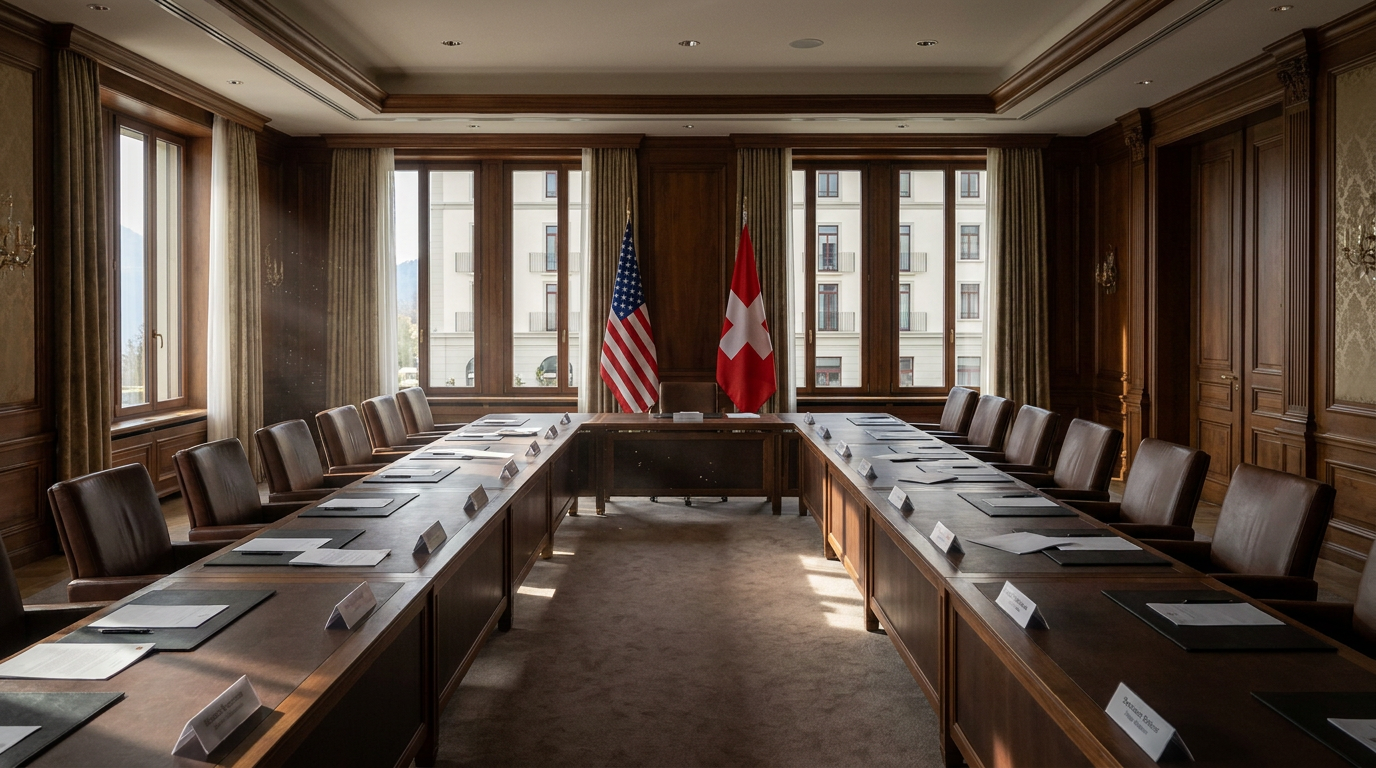
The fragile diplomatic window intended to halt the devastating US-Israeli war on Iran has abruptly slammed shut. Direct negotiations between the United States and Iran, scheduled to take place in the Swiss Alpine village of Obbürgen, were cancelled on Friday morning.[1]
The highly anticipated summit at the Bürgenstock resort was meant to be the first major implementation meeting for a newly signed 14-point memorandum of understanding. This preliminary agreement had established a 60-day cooling-off period to negotiate a permanent resolution to the conflict.[1][2]
However, the diplomatic framework fractured overnight following a sudden surge in military clashes in the Levant. Israeli forces launched a wave of strikes against Hezbollah targets in southern Lebanon, fundamentally altering the security environment just hours before diplomats were set to convene.[3]
The mechanism of the 14-point agreement was designed as a phased de-escalation. In exchange for an immediate cessation of hostilities, the framework opened a two-month window to secure safe passage for global oil traffic through the Persian Gulf and to establish verifiable caps on Iran’s nuclear enrichment program.[1][5]

For global energy markets, this 60-day clock was viewed as a critical lifeline. The broader conflict had already severely disrupted maritime trade, sending insurance premiums skyrocketing and forcing energy importers to brace for unprecedented supply shocks.[5]
The sudden cancellation of the Swiss talks leaves that economic stabilization plan in limbo. The Swiss foreign ministry officially confirmed the suspension of the summit, noting that the necessary conditions for high-level dialogue were no longer present.[1]
The immediate trigger for the collapse appears to be the renewed violence along the Blue Line, the UN-demarcated border between Israel and Lebanon. The Israel Defense Forces stated that the strikes were a direct and necessary response to repeated ceasefire violations by the Iran-backed militant group.[6]
According to Israeli military officials, Hezbollah operatives had attempted to reposition advanced weaponry near the border in violation of the unwritten terms of the regional pause. This prompted a preemptive aerial campaign to neutralize the perceived threat.[6]
This prompted a preemptive aerial campaign to neutralize the perceived threat.
Conversely, regional networks reported the strikes as a sudden and massive escalation that caught local populations off guard. Iranian state media quickly condemned the operation, framing it as a deliberate attempt by hardline factions to sabotage the diplomatic off-ramp before it could be formalized in Switzerland.[3][7]

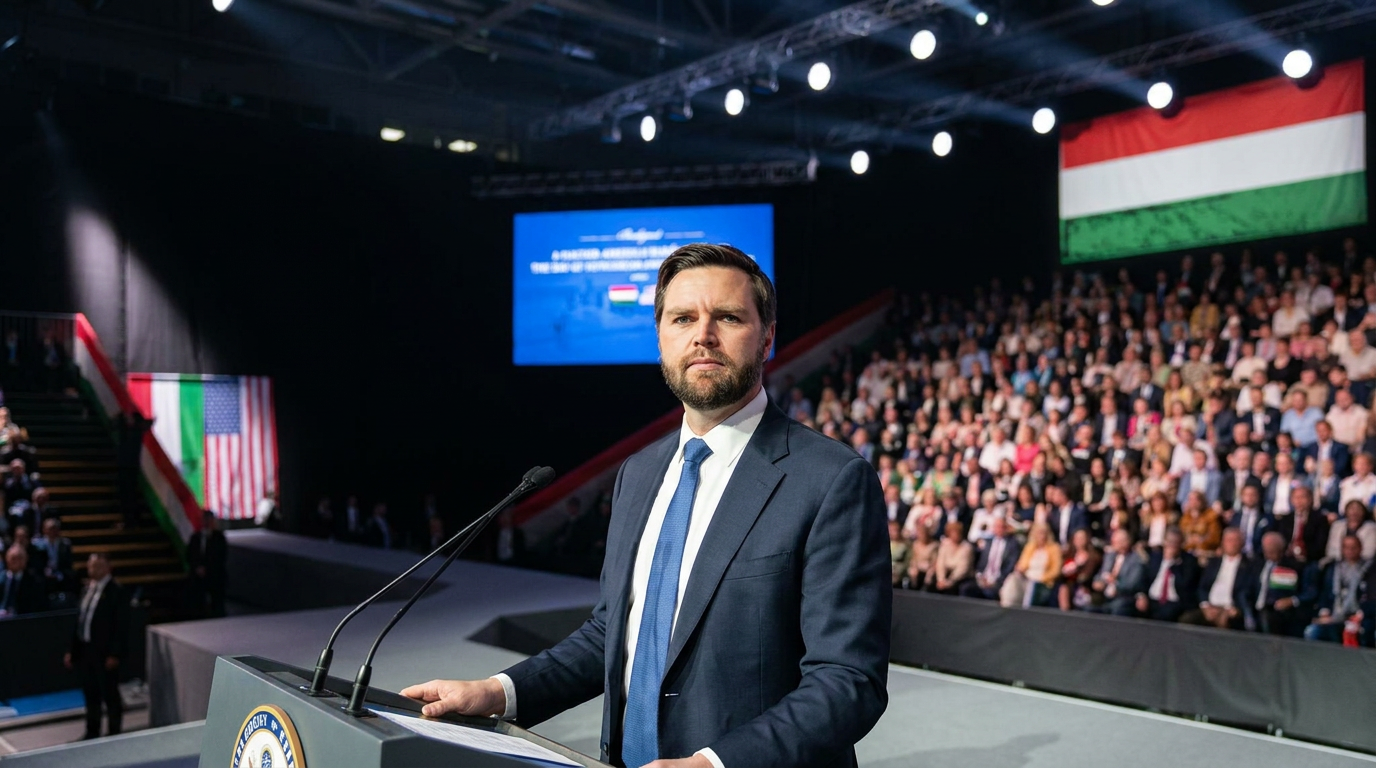
The political fallout in Washington was immediate. JD Vance, who was scheduled to lead the American delegation and attend a signing ceremony at the Swiss airbase, abruptly delayed and then cancelled his travel plans.[1][2]
Vance’s withdrawal underscores the immense domestic pressure surrounding the negotiations. Critics of the Iran deal within the US political establishment have been highly skeptical of the 14-point framework, demanding stricter, irreversible guarantees regarding Tehran’s nuclear infrastructure before any sanctions relief is discussed.[8]
Speaking to allies earlier in the week, Vance reportedly acknowledged the deep skepticism among deal critics, noting the complex balancing act required to secure both Israeli security and global economic stability.[1]
The collapse of the talks also brings renewed attention to the devastating human toll of the broader US-Israeli military campaign against Iran. While the diplomatic focus has been on nuclear limits and oil transit, the humanitarian crisis on the ground remains largely obscured.[4]

Experts warn that the true casualty figures from the conflict may never be fully known. Severe restrictions on internet access, media blackouts, and government censorship across the region have severely hampered independent reporting and casualty tracking.[4]
Humanitarian organizations estimate that thousands have been killed in the crossfire, but the destruction of telecommunications infrastructure means that verifiable data is virtually impossible to extract from the hardest-hit provinces.[4]
The immediate question now is whether the 14-point agreement is entirely dead, or merely suspended. Diplomatic backchannels in Oman and Qatar are reportedly working overtime to prevent a full-scale resumption of strategic bombing campaigns.[5][7]

However, the 60-day negotiation window established by the agreement continues to tick down. Without direct, high-level engagement, the complex technical annexes required to monitor Iran’s nuclear sites and secure maritime shipping lanes cannot be finalized.[1][5]
As the weekend approaches, the Middle East remains suspended in a dangerous liminal state. The failure to convene in Switzerland highlights the extreme fragility of the current ceasefire, proving that regional proxy conflicts can instantly derail even the most carefully orchestrated global diplomacy.[2][3]
How we got here
Early 2026
Escalation of the US-Israeli military campaign against Iranian targets and regional proxies.
June 17, 2026
Signing of the 14-point memorandum of understanding to pause hostilities.
June 18, 2026
Israeli forces launch renewed strikes against Hezbollah in southern Lebanon.
June 19, 2026
Switzerland officially announces the cancellation of the Obbürgen diplomatic talks.
Viewpoints in depth
US Diplomatic & Political Voices
Seeking to balance domestic skepticism with the need to stabilize global energy markets and cap nuclear enrichment.
American officials are caught between the urgent need to secure the Strait of Hormuz and intense domestic pressure from deal critics. While diplomats view the 60-day window as the only viable off-ramp to a wider war, political figures are demanding irreversible concessions on Iran's nuclear infrastructure before committing to any sanctions relief. The cancellation reflects the fragility of this balancing act.
Israeli Defense Establishment
Prioritizing immediate security threats on the northern border over international diplomatic timetables.
For Israeli military planners, the diplomatic timeline in Switzerland is secondary to immediate tactical threats. The IDF maintains that Iran-backed groups were using the regional pause to reposition advanced weaponry along the Blue Line. From this perspective, preemptive strikes are a necessary enforcement mechanism for the ceasefire, regardless of how they impact the broader diplomatic optics.
Iranian State Leadership
Viewing the military strikes as a bad-faith escalation designed to sabotage the negotiations.
Tehran has framed the renewed strikes in Lebanon as evidence that hardline factions in Israel and the US have no intention of honoring the 14-point agreement. Iranian state media argues that the military escalation was deliberately timed to force a collapse of the Obbürgen summit, warning that Iran may resume unconstrained nuclear enrichment if the diplomatic window fully closes.
What we don't know
- Whether the 14-point agreement is formally voided or if talks can be rescheduled within the 60-day window.
- The exact nature of the alleged ceasefire violations that triggered the renewed strikes in Lebanon.
- The true casualty count from the broader conflict, due to severe regional communication blackouts.
Key terms
- 14-point MOU
- A preliminary memorandum of understanding signed to pause hostilities and open a 60-day window for permanent nuclear and economic negotiations.
- Bürgenstock / Obbürgen
- The Swiss Alpine resort village designated as the neutral ground for direct US-Iran diplomatic talks.
- Blue Line
- The UN-recognized border demarcation between Lebanon and Israel, frequently the site of cross-border military clashes.
Frequently asked
Why were the talks in Switzerland cancelled?
The talks were suspended after a sudden surge in military clashes between Israel and Hezbollah in Lebanon, prompting US officials to cancel their travel.
What was the 14-point agreement supposed to do?
It established a 60-day window to negotiate permanent limits on Iran's nuclear program in exchange for securing global oil traffic and easing sanctions.
Is the ceasefire completely dead?
It remains unclear; diplomats suggest the talks are delayed rather than permanently abandoned, though the 60-day negotiation clock continues to tick.
Sources
Source coverage
8 outlets
5 viewpoints surfaced








[1]The GuardianUS Diplomatic & Political Voices
US-Iran talks in Switzerland abruptly called off
Read on The Guardian →[2]The New York TimesUS Diplomatic & Political Voices
Vance Delays Trip to Switzerland for Direct Talks on Iran Deal
Read on The New York Times →[3]Al JazeeraRegional & Humanitarian Observers
Israel strikes southern Lebanon in sudden clash surge with Hezbollah
Read on Al Jazeera →[4]BBCRegional & Humanitarian Observers
Thousands killed in US-Israeli war on Iran - but experts say true total may never be known
Read on BBC →[5]ReutersGlobal Economic Analysts
Oil markets brace as US-Iran diplomatic window narrows
Read on Reuters →[6]The Times of IsraelIsraeli Defense Establishment
IDF strikes Hezbollah targets following repeated ceasefire violations
Read on The Times of Israel →[7]Tehran TimesIranian State Leadership
Washington backtracks on Obbürgen summit as regional aggression continues
Read on Tehran Times →[8]Fox NewsUS Diplomatic & Political Voices
Vance cancels Switzerland trip, demands stronger guarantees on Iran nuclear limits
Read on Fox News →
More in news politics
See all 9 stories →Cognitive Resilience
Evidence Pack: Does 'Pre-Bunking' Actually Stop Political Misinformation?
7 sources

Climate Finance
UN Agencies Launch Urgent $202 Million Appeal as El Niño Threatens 8.8 Million People
8 sources

Automated Verification
How AI is Quietly Saving Local Fact-Checking from the Misinformation Flood
7 sources

14-Point Agreement
US-Iran Peace Talks in Switzerland Abruptly Cancelled Days After 14-Point Ceasefire Agreement
7 sources
Every angle. Every day.
Get news politics stories with full source coverage and perspective breakdowns delivered to your inbox.