
How Solid-State Batteries Are Moving From the Lab to the Highway in 2026
After decades of research, solid-state batteries are entering pilot production, promising 1,000-kilometer ranges, 10-minute charging, and the elimination of EV fire risks.
By Factlen Editorial Team
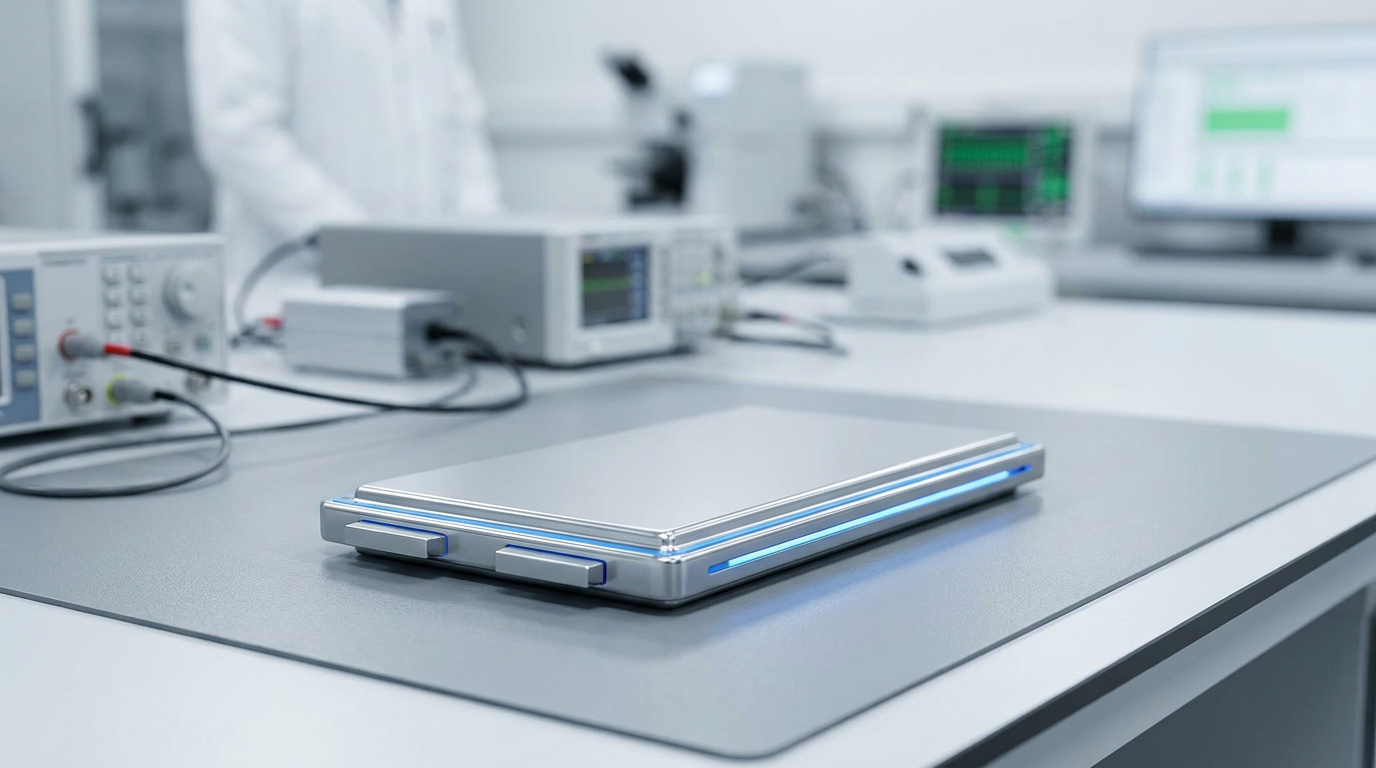
- Battery Innovators
- Push aggressive timelines and advocate for semi-solid batteries as an immediate stepping stone to full solid-state tech.
- Legacy Automakers
- Emphasize rigorous testing, safety, and a phased rollout targeting 2027-2028 for true solid-state vehicles.
- Scientific Realists
- Warn that true mass production remains years away due to unresolved engineering hurdles like cycle life and manufacturing costs.
What's not represented
- · Raw material suppliers
- · Independent repair shops
Why this matters
Solid-state batteries represent the most significant leap in energy storage since the invention of the lithium-ion cell. By drastically increasing range and safety while slashing charge times, this technology is poised to eliminate the final barriers to mass electric vehicle adoption.
Key points
- Solid-state batteries replace flammable liquid electrolytes with stable solid materials like ceramics or polymers.
- The technology enables lithium-metal anodes, potentially doubling the energy density of current EV batteries.
- Honda and QuantumScape announced a major joint research agreement in June 2026 to commercialize the technology.
- While fully solid-state EVs are targeted for 2027-2028, "semi-solid" batteries are entering the market now as a stepping stone.
For years, the electric vehicle industry has chased a singular, elusive holy grail: a battery that can drive from New York to Detroit on a single charge, refill in the time it takes to buy a coffee, and pose absolutely zero risk of catching fire. In 2026, that vision is finally crossing the threshold from laboratory science fiction into tangible, industrial reality. Solid-state batteries, long heralded as the technology that will render internal combustion engines obsolete, are officially entering pilot production. With major automakers breaking ground on dedicated electrolyte facilities and finalizing joint research agreements, the transition to the next generation of energy storage is happening in real time.[5]
The momentum accelerated significantly on June 18, 2026, when Honda announced a sweeping joint research agreement with QuantumScape, a leading developer of solid-state lithium-metal batteries. The multi-year partnership aims to commercialize the technology not just for passenger electric vehicles, but also for motorcycles and power equipment. Following an exhaustive, hands-on technical evaluation at its Research Center of Excellence, Honda concluded that the solid-state platform demonstrated compelling and unique advantages over existing technologies, prompting the automaker to move aggressively into the next phase of manufacturing development.[1][2]
This partnership is part of a broader industry mobilization. QuantumScape had already secured a major agreement with Volkswagen, which recently revealed a test vehicle utilizing the company's advanced cells. Meanwhile, Toyota—often criticized for its cautious approach to pure electric vehicles—is quietly building a massive supply chain for its own solid-state rollout. Alongside Japanese oil refiner Idemitsu Kosan, Toyota is currently constructing a large-scale solid electrolyte pilot plant. Slated for completion in 2027, the facility is designed to produce hundreds of tons of the advanced materials required to power Toyota's next-generation fleet.[1][7]
To understand why the world's largest automakers are pouring billions of dollars into this specific transition, one must look at the fundamental mechanism of current electric vehicle batteries. Traditional lithium-ion cells rely on a liquid electrolyte—typically a lithium salt dissolved in an organic solvent—to shuttle ions back and forth between the cathode and the anode during the charging and discharging cycles. While this liquid medium is highly conductive and relatively cheap to produce, it comes with severe inherent limitations regarding both safety and energy capacity.[3][4]

The primary vulnerability of liquid electrolytes is their chemical volatility. Under extreme stress—such as a severe physical impact from a car crash, an electrical overcharge, or exposure to extreme external heat—this organic liquid can ignite. When it does, it triggers a dangerous, self-sustaining chain reaction known as thermal runaway. Because the battery provides its own fuel and oxygen during this reaction, lithium-ion fires are notoriously difficult for emergency responders to extinguish, requiring massive amounts of water and specialized containment protocols.[3][5]
Solid-state batteries eliminate this critical vulnerability by completely removing the flammable liquid from the equation. Instead, they utilize a stable, non-flammable solid material—typically engineered from advanced ceramics, polymers, or sulfide-based compounds—to act as both the electrolyte and the physical separator between the positive and negative electrodes. This architectural shift fundamentally alters the battery's thermal profile, replacing a fragile, volatile core with a robust, heat-resistant foundation that is virtually immune to traditional thermal runaway. By removing the liquid, engineers have effectively engineered the fire risk out of the battery cell entirely.[3][4]
The safety implications of this material swap are staggering. Comparative thermal testing demonstrates the stark difference between the two architectures. While traditional lithium-ion batteries can begin experiencing dangerous thermal events at temperatures as low as 90 degrees Celsius, solid-state systems remain completely stable up to approximately 247 degrees Celsius. Even if a thermal incident were to occur at those extreme temperatures, the heat release rates in a solid-state cell are significantly lower, meaning any potential failure develops much more slowly and with far less intensity.[5]
The safety implications of this material swap are staggering.
Beyond the obvious safety benefits, the solid electrolyte unlocks a massive, generational leap in energy density. Because the solid ceramic or sulfide separator is highly rigid and resistant to physical piercing, battery engineers are no longer forced to use bulky graphite anodes. Instead, they can replace the standard graphite with a pure lithium-metal anode. This is a feat that is impossible in liquid batteries, as lithium metal tends to grow microscopic, needle-like structures called dendrites that easily pierce liquid separators and cause catastrophic short circuits.[3][4]
A lithium-metal anode can store significantly more energy in the exact same physical footprint, fundamentally changing the math of electric vehicle design. While today's best lithium-ion batteries max out at an energy density of roughly 200 to 250 watt-hours per kilogram (Wh/kg), the solid-state cells entering pilot production in 2026 are targeting 400 to 500 Wh/kg. This means automakers can either double the driving range of a vehicle without increasing the size of the battery pack, or they can cut the battery weight in half while maintaining current range metrics.[4][5][6]

For the everyday consumer, this translates to a transformative driving experience. A vehicle equipped with a mature solid-state battery will weigh hundreds of pounds less, resulting in better handling, reduced tire wear, and improved overall efficiency. More importantly, automakers like Toyota are explicitly targeting driving ranges of up to 1,000 kilometers—over 620 miles—on a single charge. This effectively eliminates range anxiety, allowing drivers to complete long interstate road trips with the same ease and confidence they currently enjoy with traditional internal combustion engines.[6][7]
Charging speeds and cold-weather performance are also seeing dramatic, paradigm-shifting improvements. Because solid electrolytes can handle vastly higher current densities without the risk of forming damaging dendrites, these advanced batteries can safely accept ultra-fast charging rates. Current pilot cells are demonstrating the ability to charge from 10 percent to 80 percent capacity in just 10 to 12 minutes. Furthermore, early winter testing in China has shown that some advanced solid-state architectures retain over 70 percent of their charge even in brutal, -30 degree Celsius temperatures, solving one of the most persistent complaints of EV owners in northern climates.[1][4][5]

Despite these incredible lab breakthroughs, the automotive industry is currently navigating a pragmatic transitional phase known as "semi-solid" batteries. Automakers like Dongfeng and MG are launching vehicles in 2026 that utilize an electrolyte that is roughly 95 percent solid and 5 percent liquid. This hybrid approach offers a highly effective compromise, delivering immediate gains in energy density and extreme-cold resistance while remaining much easier to manufacture on existing, slightly modified lithium-ion assembly lines. It serves as a vital stepping stone while the supply chain for pure solid-state materials matures.[6]
Scaling true, 100 percent all-solid-state batteries to a global gigawatt-hour level remains a formidable engineering challenge. The primary technical hurdle is maintaining perfect, microscopic contact between the solid layers as the battery naturally expands and contracts during its charging and discharging cycles. In a liquid battery, the fluid easily fills any microscopic gaps. In a solid battery, if the rigid layers separate even slightly, the cell loses its capacity to transfer ions, causing its overall cycle life and performance to plummet rapidly.[4][8]
Manufacturing costs also remain prohibitively high in these early stages of commercialization. Producing flawless solid electrolytes requires entirely new factory equipment, specialized powder-synthesis technology, and highly controlled manufacturing environments that prevent any moisture contamination. Because of these massive initial capital expenditures, early adopters like Toyota plan to introduce the technology in limited-batch, premium vehicles—likely under the luxury Lexus brand—before economies of scale allow the technology to trickle down to affordable, mass-market commuter cars. Industry analysts expect a significant price premium for the first generation of true solid-state vehicles.[7][8]

As 2026 unfolds, the gap between the pristine laboratory and the unforgiving highway is closing more rapidly than many skeptics predicted. While true mass-market adoption of affordable solid-state vehicles may still be three to five years away, the pilot plants breaking ground today and the joint ventures being signed this week signal a point of no return. The internal combustion engine's most formidable replacement is finally taking physical form, promising a future where electric vehicles are unequivocally safer, lighter, and more capable than anything on the road today.[7][8]
How we got here
2020
Toyota demonstrates an early solid-state battery prototype vehicle, though manufacturing challenges delay commercialization.
Late 2023
Major automakers publish updated roadmaps targeting 2027-2028 for their first commercial solid-state vehicle launches.
Jan 2026
Idemitsu Kosan breaks ground on a large-scale solid electrolyte pilot plant in Japan to supply Toyota.
June 2026
Honda and QuantumScape announce a joint research agreement to develop solid-state batteries for EVs and motorcycles.
2027-2028
Projected launch window for the first limited-batch production vehicles featuring fully solid-state batteries.
Viewpoints in depth
Legacy Automakers
Emphasize rigorous testing, safety, and a phased rollout targeting 2027-2028.
Companies like Toyota and Honda view solid-state technology as a long-term play that requires absolute perfection before mass deployment. They are investing heavily in pilot plants and supply chain partnerships, such as Toyota's work with Idemitsu Kosan, to ensure that when the batteries do launch, they meet stringent automotive-grade standards for durability and safety. They are willing to delay consumer launches to guarantee the technology works flawlessly at scale.
Battery Innovators
Push aggressive timelines and advocate for semi-solid batteries as an immediate stepping stone.
Startups like QuantumScape and several Chinese battery manufacturers argue that the market cannot wait for perfect all-solid-state cells. They are aggressively pushing "semi-solid" technologies—which use a small percentage of liquid electrolyte—to deliver immediate gains in energy density and cold-weather performance while simultaneously scaling up the manufacturing capabilities required for a fully solid future.
Scientific Realists
Warn that true mass production remains years away due to unresolved engineering hurdles.
Academic researchers and materials scientists caution against the hype of 2026 being the "year of mass production." They point out that while lab results are phenomenal, manufacturing solid-state batteries at a gigawatt-hour scale involves solving complex issues like maintaining microscopic layer contact during charge cycles and drastically reducing the cost of solid electrolyte materials. They argue that true commercialization will only arrive when these fundamental scientific problems are solved, not when marketing departments set a date.
What we don't know
- Exactly how much of a price premium the first generation of solid-state EVs will carry over traditional models.
- Whether the long-term cycle life of mass-produced solid-state cells will match the durability seen in laboratory testing.
- How quickly the global supply chain can scale the production of advanced solid electrolytes to meet mass-market demand.
Key terms
- Solid electrolyte
- A solid material, such as a ceramic or polymer, that conducts ions between a battery's anode and cathode, replacing flammable liquids.
- Lithium-metal anode
- A high-capacity negative electrode made of pure lithium, enabled by solid electrolytes, which drastically increases a battery's energy density.
- Dendrites
- Microscopic, needle-like metal structures that can grow inside a battery during charging, potentially causing short circuits and fires in liquid systems.
- Thermal runaway
- An unstoppable chain reaction within a battery cell where excess heat causes further heating, often leading to a severe and difficult-to-extinguish fire.
Frequently asked
Can I buy a car with a solid-state battery today?
As of 2026, fully solid-state EVs are not yet available in showrooms. However, some automakers are beginning to roll out "semi-solid" batteries in limited markets as a stepping stone.
Why are solid-state batteries safer?
They replace the flammable liquid electrolyte found in traditional lithium-ion batteries with a stable, non-flammable solid material, virtually eliminating the risk of thermal runaway and fires.
How fast will they charge?
Automakers and battery developers are targeting 10 to 12 minutes to charge a solid-state battery from 10% to 80% capacity.
Will they work better in cold weather?
Yes. Testing shows that solid-state and semi-solid batteries retain significantly more of their charge and range in sub-zero temperatures compared to current liquid-based technology.
Sources
Source coverage
8 outlets
3 viewpoints surfaced








[1]ElectrekLegacy Automakers
Honda, QuantumScape enter solid-state battery tie-up
Read on Electrek →[2]QuantumScapeBattery Innovators
QuantumScape Announces Agreement with Honda on Solid-State Battery Technology
Read on QuantumScape →[3]WikipediaScientific Realists
Solid-state battery
Read on Wikipedia →[4]OssilaScientific Realists
Solid-state Battery vs Lithium-ion Battery
Read on Ossila →[5]TO7 MotorBattery Innovators
Solid-state batteries electric vehicles 2026 explainer
Read on TO7 Motor →[6]EV Infrastructure NewsBattery Innovators
Solid-state battery development in 2026
Read on EV Infrastructure News →[7]CarScoopsLegacy Automakers
Toyota's 620-Mile Solid-State EV Plan Just Got A Major Boost From Big Oil
Read on CarScoops →[8]GasgooScientific Realists
Mass Production Declarations vs. Cautious Progress
Read on Gasgoo →
Every angle. Every day.
Get automotive stories with full source coverage and perspective breakdowns delivered to your inbox.