
U.S.-Iran Nuclear Talks in Switzerland Delayed Days After Historic Ceasefire Agreement
Vice President JD Vance postponed his trip to Switzerland for direct negotiations with Iran, pausing the diplomatic momentum of a newly signed 14-point memorandum of understanding. The delay follows reports of continued Israeli military strikes in Lebanon, which prompted Tehran to suspend its delegation's departure.
By Factlen Editorial Team
- U.S. Administration
- Prioritizes stabilizing the global economy and reopening shipping lanes while seeking strict, verifiable limits on Iran's nuclear program.
- Iranian Government
- Seeks immediate economic relief and the lifting of sanctions while remaining highly suspicious of U.S. and Israeli military intentions.
- Israeli Security Establishment
- Views the ceasefire and financial concessions as a dangerous capitulation that empowers Iran and its proxy networks.
- Global Markets & Mediators
- Focuses on the immediate reduction of geopolitical risk and the stabilization of global energy prices.
What's not represented
- · Lebanese civilians affected by ongoing strikes
- · European allies excluded from the bilateral framework
Why this matters
The delay in direct negotiations injects immediate uncertainty into a fragile ceasefire that halted months of direct conflict and reopened the critical Strait of Hormuz. If the diplomatic process collapses, the global economy faces renewed energy shocks, and the Middle East risks a rapid return to regional war.
Key points
- Vice President JD Vance delayed his trip to Switzerland for U.S.-Iran nuclear talks.
- The Swiss Foreign Ministry confirmed the initial negotiations are officially postponed.
- Reports indicate Iran delayed its delegation due to ongoing Israeli strikes in Lebanon.
- The U.S. military officially lifted its naval blockade on Iranian ports.
- Traffic has resumed in the Strait of Hormuz, causing global oil prices to drop.
- The 14-point MOU establishes a 60-day window to negotiate a permanent nuclear settlement.
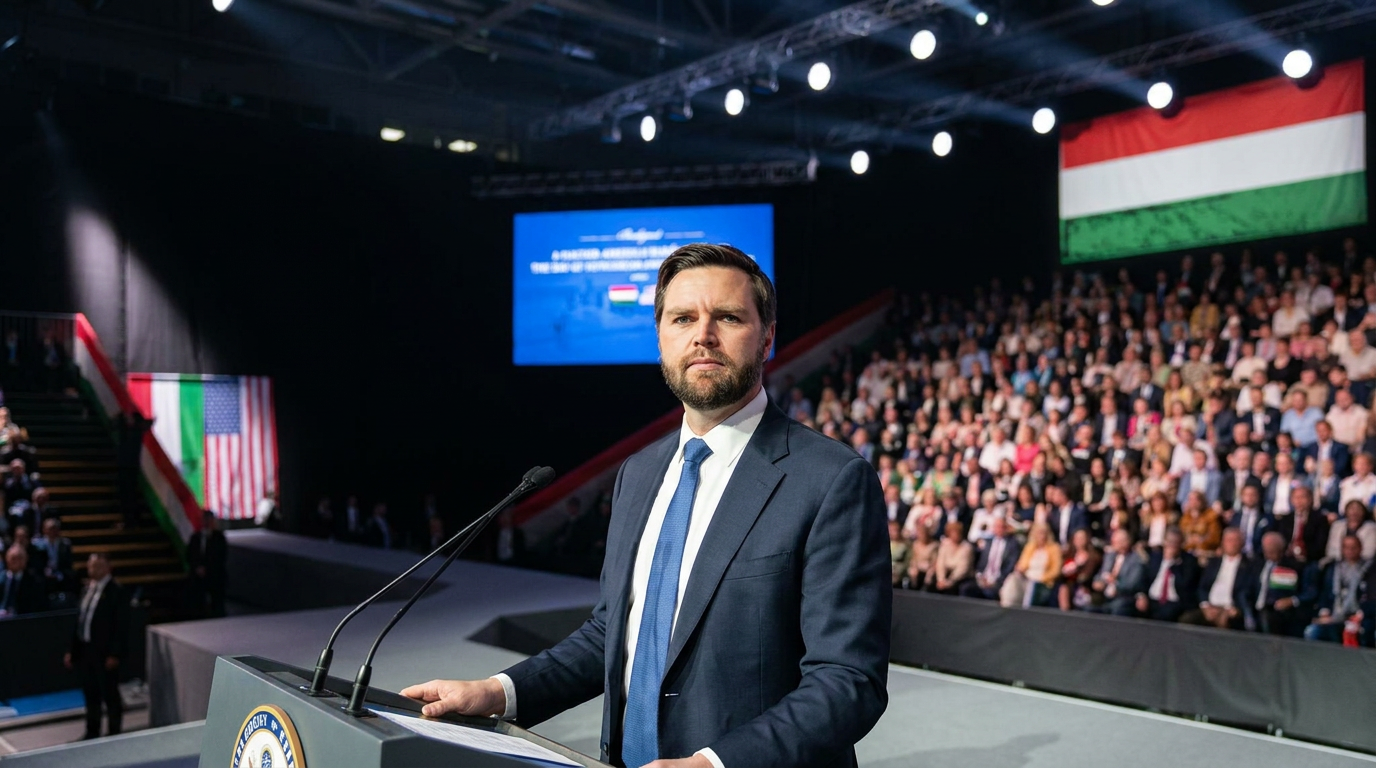
The diplomatic momentum following a historic U.S.-Iran ceasefire has hit an immediate logistical and political roadblock. Vice President JD Vance abruptly canceled his planned Thursday night departure for Switzerland, where he was scheduled to lead direct technical negotiations with Iranian officials. The White House cited the unpredictable logistics of the negotiations, stating that the U.S. delegation remains prepared to depart at the "first available opportunity."[1][2][6]
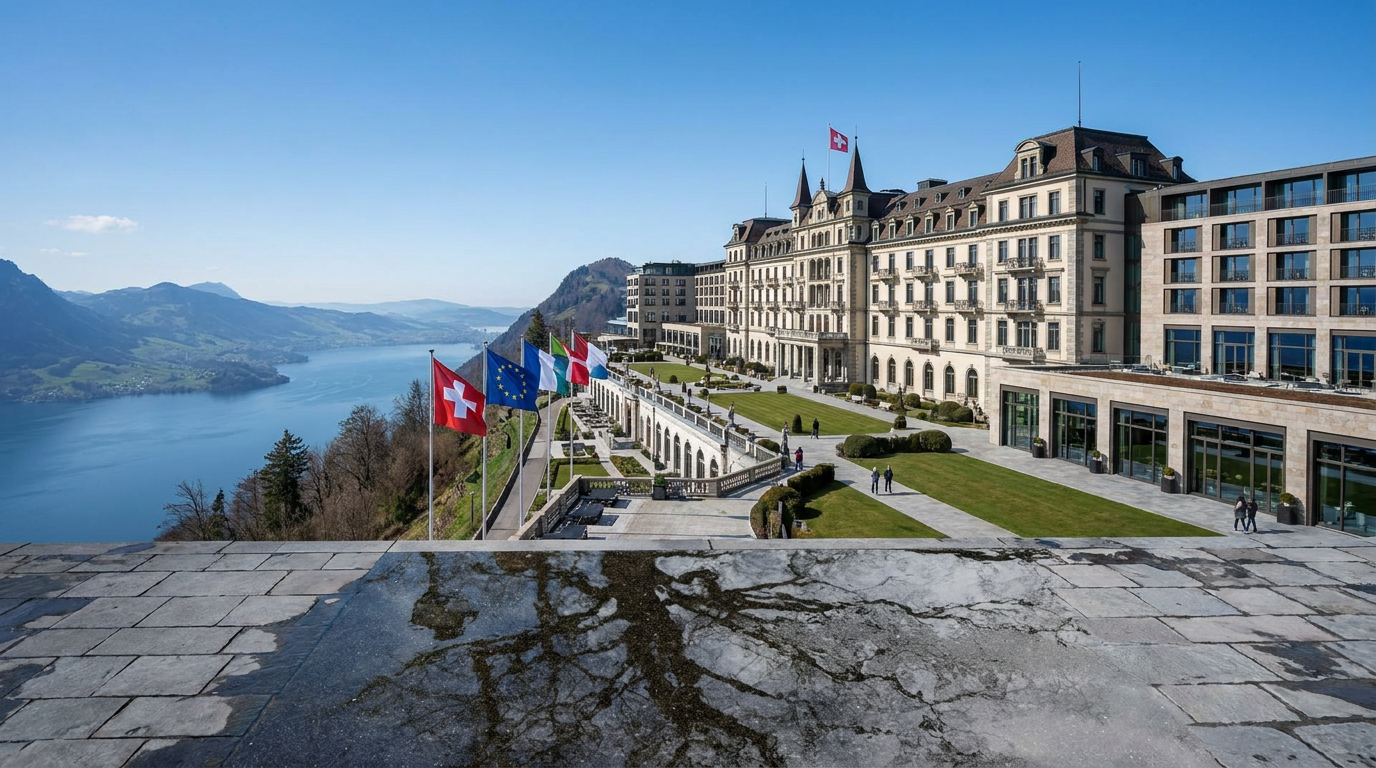
The Swiss Foreign Ministry confirmed on Friday morning that the initial negotiations, which were slated to take place at the Bürgenstock mountaintop resort, have been officially postponed. The talks were intended to be the first major step in implementing a 14-point memorandum of understanding (MOU) signed earlier this week by U.S. President Donald Trump and Iranian President Masoud Pezeshkian.[3][5][8]
The delay appears rooted in escalating regional violence that threatens to unravel the fragile truce. According to regional reports, Tehran suspended its delegation's departure in response to continued Israeli military strikes in southern Lebanon. Lebanon's state-run National News Agency reported that at least 16 people were killed in overnight Israeli airstrikes targeting Hezbollah, an Iranian proxy force.[3][8]
The 14-point MOU, often referred to as the Islamabad Memorandum of Understanding, is designed to serve as a 60-day ceasefire and a bridge to a permanent peace settlement. It mandates an immediate end to hostilities on all fronts, including Lebanon, and requires Iran to maintain the status quo on its nuclear program while negotiations proceed.[5][7]

In exchange, the United States agreed to significant immediate concessions to stabilize the global economy. The U.S. military officially lifted its naval blockade on Iranian ports on Thursday, a move confirmed by U.S. Central Command. The blockade, which had directed 146 vessels and disabled nine during its enforcement, was a major choke point for the Iranian economy.[5]
The lifting of the blockade is directly tied to the reopening of the Strait of Hormuz, a critical maritime chokepoint through which roughly 20 percent of the world's oil and gas supplies transit. Vice President Vance noted that 12.5 million barrels of oil passed through the strait on Wednesday night, marking a high since the start of the conflict and signaling that the initial phases of the agreement are functioning.[3][6]
The Joint Maritime Information Center subsequently reduced the maritime security threat level in the Strait of Hormuz, the Arabian Gulf, and the Gulf of Oman to "moderate." Oil prices, which had spiked during the blockade, fell below $80 a barrel for Brent crude in response to the resumed traffic.[3][4]

However, the core of the upcoming Swiss negotiations revolves around Iran's nuclear capabilities. The MOU stipulates that Iran must not procure or develop nuclear weapons, a commitment Tehran has made previously but which Western powers seek to verify through stringent oversight.[7]
However, the core of the upcoming Swiss negotiations revolves around Iran's nuclear capabilities.
Vice President Vance outlined the administration's hardline expectations for the final deal, stating it must bar uranium enrichment entirely, destroy Tehran's existing enriched uranium stocks, and cap the range of its ballistic missiles. "This is not the Obama deal," Vance told reporters, contrasting the current framework with the 2015 Joint Comprehensive Plan of Action (JCPOA), which allowed limited uranium enrichment.[2][6]
To facilitate this, White House Special Envoy Steve Witkoff informed congressional leaders that Iran plans to invite the International Atomic Energy Agency (IAEA) to inspect its nuclear sites. The IAEA would be tasked with identifying and uncovering Tehran's enriched material, much of which is believed to be stored in heavily fortified underground facilities. IAEA chief Rafael Mariano Grossi praised the MOU and confirmed the agency's readiness to participate in the technical conversations.[4][5]
The financial incentives for Iran to comply are massive, but highly controversial domestically in the United States. The framework reportedly includes the unfreezing of billions of dollars in Iranian assets and the potential creation of a $300 billion investment and reconstruction fund, financed largely by regional Gulf partners. Vance clarified that Tehran would not receive any direct U.S. taxpayer money and that access to sanctions relief or outside investment remains contingent on full compliance.[2][7]

The agreement has exposed a severe and highly public rift between the Trump administration and the Israeli government. Israeli Prime Minister Benjamin Netanyahu reiterated his "red line" that Iran must never possess nuclear weapons, while other Israeli cabinet members have openly criticized the MOU as a dangerous concession.[4][5]
In response, Vice President Vance delivered an unusually sharp rebuke to Washington's closest Middle Eastern ally. He warned Israeli leaders to "wake up and smell the reality" of their international isolation, pointedly noting that American taxpayers had funded two-thirds of the weapons used to defend Israel over the past three months.[5]
The diplomatic uncertainty is compounded by the ticking clock. The 60-day negotiation window established by the MOU is already underway, leaving a compressed timeline for diplomats to convert the broad framework into a binding, verifiable treaty.[3][6]
If the talks in Switzerland cannot be rescheduled promptly, the ceasefire risks collapsing under the weight of regional skirmishes. Iran's chief negotiator has already warned that Tehran will not tolerate any breaches of the MOU by Washington, while U.S. Defense Secretary Pete Hegseth stated the U.S. is "more than able to reimpose an ironclad blockade" if Iran fails to comply.[3][5]
For now, the status quo holds: oil is flowing, the blockade is lifted, and the guns are largely silent between U.S. and Iranian forces. But the empty negotiating tables at the Bürgenstock resort underscore how easily the path to a permanent peace could be derailed by the complex realities of the Middle East.[1][8]
How we got here
April 2026
An initial ceasefire is announced between the U.S. and Iran.
June 17, 2026
President Trump and President Pezeshkian sign the 14-point Islamabad Memorandum of Understanding.
June 18, 2026
The U.S. military lifts its naval blockade on Iranian ports; oil traffic resumes in the Strait of Hormuz.
June 18, 2026 (Evening)
The White House announces VP JD Vance is delaying his trip to Switzerland for technical talks.
June 19, 2026
Switzerland officially confirms the postponement of the U.S.-Iran negotiations.
Viewpoints in depth
The U.S. Administration's View
The Trump administration views the MOU as a pragmatic mechanism to stabilize the global economy while forcing Iran to dismantle its nuclear program.
Vice President JD Vance and the White House argue that the immediate reopening of the Strait of Hormuz is a massive win for the global market, preventing a worldwide depression. They maintain that the final deal will be far stricter than the 2015 JCPOA, demanding the total destruction of Iran's enriched uranium stockpile and strict limits on ballistic missiles, backed by the threat of reimposing an 'ironclad' naval blockade.
The Israeli Government's View
Israeli officials view the agreement as a dangerous capitulation that enriches Tehran without guaranteeing its disarmament.
Prime Minister Benjamin Netanyahu and his cabinet are deeply skeptical of the 60-day ceasefire, particularly as it lifts the naval blockade and promises massive financial relief to Iran. Israel fears that the $300 billion reconstruction fund and unfrozen assets will be funneled to proxy groups like Hezbollah. This skepticism has led to a rare and public diplomatic clash with the U.S. administration.
The Iranian Government's View
Tehran frames the agreement as a victory that broke the U.S. blockade, but remains highly suspicious of Washington's long-term commitments.
Iranian leaders, including President Masoud Pezeshkian, celebrate the lifting of the naval blockade and the resumption of oil exports as a triumph of Iranian resilience. However, Iran's negotiating team is heavily scrutinizing the U.S. commitment to the ceasefire, pointing to ongoing Israeli strikes in Lebanon as evidence that the U.S. cannot control its allies, which prompted Tehran to delay its trip to Switzerland.
What we don't know
- When the technical negotiations in Switzerland will actually be rescheduled.
- Whether Israel will agree to halt its military operations in Lebanon to preserve the broader U.S.-Iran ceasefire.
- How the IAEA plans to verify the destruction of Iran's deeply buried enriched uranium stockpiles.
Key terms
- Islamabad Memorandum of Understanding
- The 14-point framework agreement signed by the U.S. and Iran establishing a 60-day ceasefire and outlining terms for nuclear negotiations.
- Strait of Hormuz
- A narrow, strategically critical waterway between the Persian Gulf and the Gulf of Oman through which roughly 20 percent of the world's oil passes.
- Naval Blockade
- A military operation in which the U.S. Navy prevented commercial and military vessels from entering or exiting Iranian ports.
- IAEA
- The International Atomic Energy Agency, the UN watchdog responsible for inspecting and verifying a country's nuclear activities.
- Uranium Enrichment
- The process of increasing the concentration of the U-235 isotope in uranium, which can be used for civilian nuclear power or, at high levels, nuclear weapons.
Frequently asked
Why were the Switzerland talks delayed?
The White House cited logistical issues, while regional reports indicate Iran suspended its delegation's departure in protest of continued Israeli military strikes against Hezbollah in southern Lebanon.
Has the U.S. lifted its blockade on Iran?
Yes. U.S. Central Command confirmed that the naval blockade on all maritime traffic entering and exiting Iranian ports was lifted on Thursday.
What does the U.S. want in the final deal?
Vice President JD Vance stated the final agreement must completely bar uranium enrichment, destroy Iran's existing enriched uranium stockpiles, and cap the range of its ballistic missiles.
Will Iran receive U.S. taxpayer money?
No. While the framework includes unfreezing Iranian assets and a proposed $300 billion reconstruction fund, U.S. officials state the fund would be financed by regional Gulf partners, not U.S. taxpayers.
Sources
Source coverage
8 outlets
4 viewpoints surfaced








[1]The GuardianGlobal Markets & Mediators
US-Iran talks in Switzerland abruptly called off
Read on The Guardian →[2]The New York TimesU.S. Administration
Vance Delays Trip to Switzerland for Direct Talks on Iran Deal
Read on The New York Times →[3]Al JazeeraIranian Government
Iran war live: JD Vance delays trip to Switzerland for talks with Tehran
Read on Al Jazeera →[4]Fox NewsU.S. Administration
Trump team halts Vance's Switzerland trip as Iran issues stark warning over deal
Read on Fox News →[5]The Washington PostIsraeli Security Establishment
Vance slams Israeli reaction to Iran deal as U.S. military lifts blockade
Read on The Washington Post →[6]CBS NewsU.S. Administration
Live Updates: U.S.-Iran deal signing sets stage for nuclear negotiations, but Vance did not travel Thursday night for talks
Read on CBS News →[7]The Times of IsraelIsraeli Security Establishment
Multiple reports say agreement includes $300 billion fund for investment and reconstruction in Iran
Read on The Times of Israel →[8]The HinduGlobal Markets & Mediators
U.S.-Iran talks planned for June 19 are off: Switzerland
Read on The Hindu →
More in news politics
See all 9 stories →Cognitive Resilience
Evidence Pack: Does 'Pre-Bunking' Actually Stop Political Misinformation?
7 sources

Climate Finance
UN Agencies Launch Urgent $202 Million Appeal as El Niño Threatens 8.8 Million People
8 sources
Automated Verification
How AI is Quietly Saving Local Fact-Checking from the Misinformation Flood
7 sources

14-Point Agreement
US-Iran Peace Talks in Switzerland Abruptly Cancelled Days After 14-Point Ceasefire Agreement
7 sources
Every angle. Every day.
Get news politics stories with full source coverage and perspective breakdowns delivered to your inbox.