
Mushroom vs. Plant Leather: The Trade-Offs in Next-Gen Sustainable Fashion
As the fashion industry moves away from animal hides, lab-grown mycelium and agricultural plant leathers offer competing visions for a sustainable, plastic-free future.
By Factlen Editorial Team
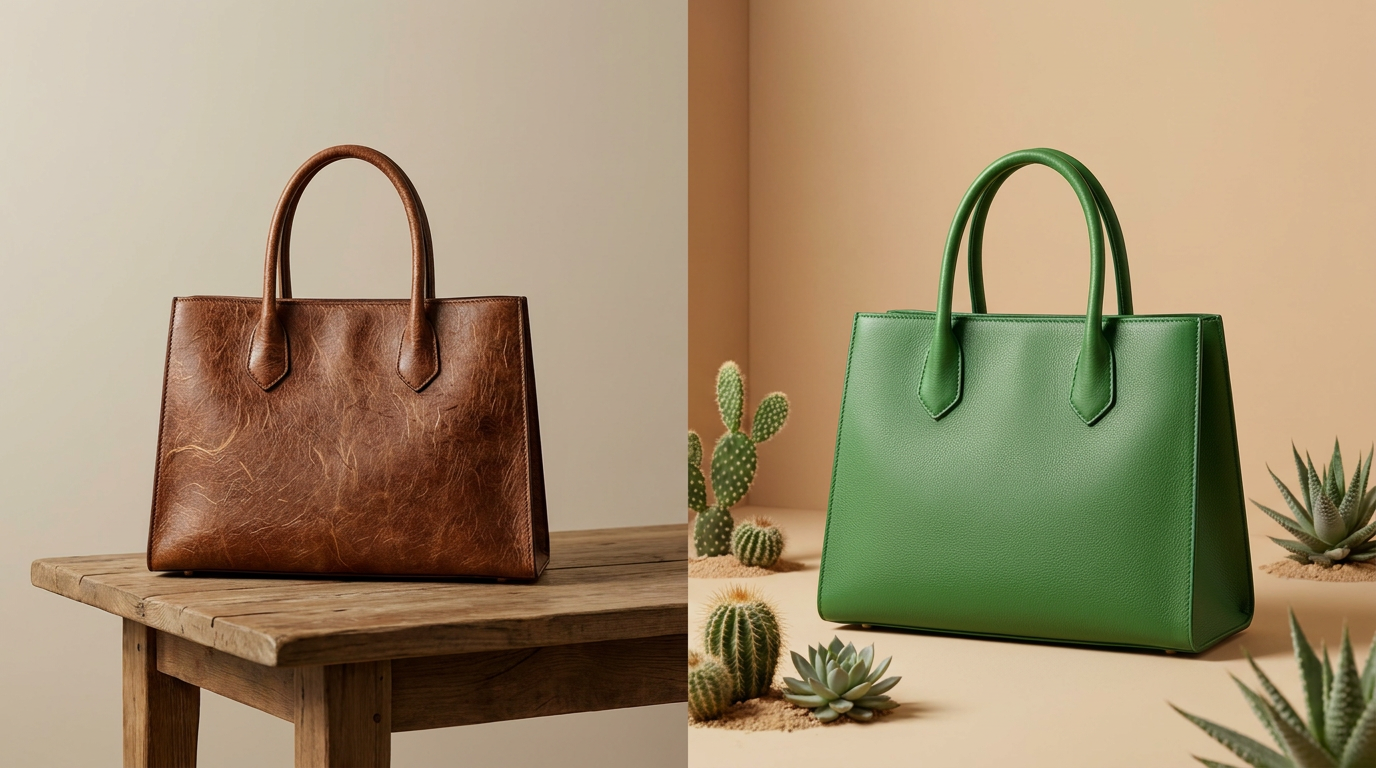
- Mycelium Innovators
- Advocates for lab-grown fungal networks as the ultimate plastic-free, highly durable replacement for animal hide.
- Agri-Waste Upcyclers
- Champions of utilizing existing agricultural byproducts like cactus and pineapple to create accessible, low-water materials.
- Material Skeptics
- Critics who warn that many plant-based leathers still rely on fossil-fuel-derived polyurethane coatings to maintain durability.
What's not represented
- · Traditional Leather Artisans
- · Livestock Farmers
Why this matters
As the fashion industry moves away from animal hides and petroleum plastics, consumers are faced with a confusing array of 'plant-based' claims. Understanding the chemical realities behind mushroom and cactus leathers ensures you invest in materials that actually reduce environmental harm rather than just greenwashing a plastic product.
Key points
- The sustainable leather market is divided into lab-grown mycelium and agricultural plant-waste materials.
- Mycelium leather grows its own structural network, allowing some versions to contain less than 1% synthetic plastic.
- Plant-based leathers upcycle existing waste like cactus and apple peels, offering immediate scalability and low water use.
- Many fruit-based leathers still require up to 50% synthetic polyurethane binders to prevent the fragile fibers from disintegrating.
- High-quality cactus leather can last up to 10 years, bridging the gap between sustainability and everyday durability.
For decades, consumers seeking an ethical alternative to animal leather faced a grim compromise: wrap themselves in petroleum-derived plastics. Traditional animal leather, while exceptionally durable and capable of lasting for generations, carries a heavy environmental burden, with the global livestock sector responsible for roughly 14% of all greenhouse gas emissions from human activity. Conversely, older 'vegan leathers' made from polyvinyl chloride (PVC) or polyurethane (PU) merely traded animal welfare concerns for fossil fuel reliance, toxic manufacturing processes, and microplastic pollution. Now, a new generation of bio-fabricated materials has arrived to break the stalemate, offering genuine sustainability without sacrificing performance.[1][2][6]
The sustainable materials market has fractured into two distinct and highly competitive camps: lab-grown mycelium leathers derived from fungi, and plant-based leathers engineered from agricultural waste like cactus, apples, and pineapples. Both promise the tactile warmth, flexibility, and durability of cowhide without the environmental hangover. Yet, beneath their eco-friendly marketing and sleek runway debuts, these two approaches rely on fundamentally different supply chains, chemical compositions, and ecological trade-offs. Understanding these differences is crucial for consumers who want to ensure their purchases are actually driving environmental progress rather than funding a new iteration of plastic greenwashing.[3][6]
To understand the stakes, one must look at how these materials are physically constructed from the ground up. Mycelium leather is grown from the vegetative root structure of fungi, a natural biological process that can be carried out in controlled indoor environments. Cultivated in climate-controlled trays on a diet of sawdust or agricultural byproducts, the fungal threads weave themselves into a dense, interlocking mat over a matter of weeks. Once harvested, this organic mat is tanned, compressed, and dyed into a flexible sheet that remarkably mimics the cellular structure and breathability of animal skin, all without requiring years of livestock rearing.[2][4]

The argument for mycelium centers on its purity and unparalleled resource efficiency. Because the material grows its own complex structural network, it does not inherently require heavy plastic binders to hold it together. The evidence supporting this is compelling: peer-reviewed life cycle assessments of premium mycelium leathers show a carbon footprint of just 2.76 kilograms of CO2 equivalent per square meter—roughly 8% of the footprint of conventional animal leather. Furthermore, some leading mycelium textiles boast less than 1% synthetic polymer content, making them nearly entirely bio-based and significantly closer to true biodegradability than their competitors.[1][6]
Against mycelium, however, is the harsh reality of manufacturing scale and intensive capital expenditure. Growing fungi in precise laboratory conditions requires significant upfront investment in vertical farming infrastructure, climate control, and specialized biotechnology. As a result, the material remains expensive to produce and is largely confined to luxury fashion houses that can absorb the premium costs of limited production runs. Furthermore, while the biological growth process is fast, standardizing the tensile strength, thickness, and aesthetic finish across massive commercial batches has proven technologically demanding, keeping mycelium out of the reach of everyday fast-fashion consumers.[1][4][6]
On the other side of the divide are plant-based leathers, which take a radically different approach by upcycling existing agricultural waste. Rather than growing an entirely new material from scratch in a laboratory, manufacturers harvest the fibrous leftovers of the global food industry—such as discarded pineapple leaves, apple peels and cores from juice factories, or mature nopal cactus pads. These organic fibers are dried, crushed into a fine powder or pulp, and then spread onto a woven textile backing, creating a versatile material that can be embossed to mimic the exact grain of traditional cowhide.[3][5]
The argument for plant-based leathers is rooted in immediate commercial scalability and brilliant agricultural synergy. By utilizing existing waste streams, these materials provide an additional, much-needed revenue stream for farmers and require virtually no new arable land. The evidence for their environmental efficiency is particularly strong in the case of cactus leather. The nopal cactus thrives in arid Mexican climates without any artificial irrigation, surviving solely on natural rainwater and morning dew. Harvesting only the mature leaves allows the core plant to remain intact and regenerate fully every six to eight months, creating a highly renewable cycle.[3][5]

The argument for plant-based leathers is rooted in immediate commercial scalability and brilliant agricultural synergy.
Against plant-based leathers is the controversial and often hidden 'binder problem.' Because fruit and plant fibers lack the natural interlocking cellular structure of animal hide or fungal mycelium, they are inherently fragile on their own. To transform apple pulp or pineapple leaves into a durable handbag that can withstand daily use, manufacturers must mix the organic matter with a chemical resin or binder. The evidence reveals a frustrating compromise: some popular fruit-based leathers require a mixture containing 40% to 50% traditional fossil-based polyurethane just to hold the material together and prevent it from rapidly disintegrating.[3][5][6]
This heavy reliance on plastic binders significantly complicates the sustainability claims of plant-based options. While they are undoubtedly better for the planet than 100% virgin plastic leathers, the blending of organic matter with synthetic polymers creates a 'monstrous hybrid'—a material that is incredibly difficult to recycle and prevents the organic components from fully biodegrading in a landfill. Critics argue that until plant-based leathers can completely phase out fossil-fuel coatings in favor of natural resins, they remain a transitional technology rather than the ultimate closed-loop solution the fashion industry desperately needs.[1][4]
Durability remains the ultimate, unforgiving test for any leather alternative. Traditional animal leather, when properly conditioned and maintained, can last for decades, developing a rich, desirable patina over time. Standard plastic vegan leathers, by contrast, typically succumb to hydrolysis—a chemical breakdown caused by humidity that leads to ugly peeling and cracking within two to five years of regular use. If a sustainable material requires the consumer to replace their shoes or bags twice as often, the initial carbon and water savings achieved during manufacturing are entirely negated by the accelerated replacement cycle.[1][4]
In the durability arena, the evidence shows a split depending on the specific formulation. High-quality cactus leathers, which utilize advanced water-based and bio-based polyurethane coatings rather than cheap fossil plastics, have demonstrated high resistance to humidity and hydrolysis, boasting an expected lifespan of up to 10 years. Mycelium leathers, while structurally sound and highly resistant to tearing thanks to their interwoven roots, are still relatively new to the commercial market. This means their multi-decade aging process and ability to develop a natural patina have yet to be definitively proven in real-world wardrobes over the long term.[2][5]

This brings consumers and designers to a complex end-of-life trade-off. There is an inherent, unavoidable tension between a material's ability to biodegrade quickly in the earth and its ability to withstand years of abrasive daily use, rain, and sunlight. The fashion industry is currently racing to develop 100% bio-based coatings that can protect these next-generation materials from the elements without leaving toxic microplastics behind. Until that chemical holy grail is achieved at scale, buyers must weigh the immediate environmental benefits of a material against its projected lifespan in their closet.[1][6]
When evaluating these options, the trade-offs dictate clear and distinct use cases. Mycelium leather fits well when the priority is a near-zero plastic, luxury-grade material that closely mimics the structural integrity and tactile warmth of animal hide. It is the ideal choice for high-end footwear, premium watch straps, and investment accessories where consumers are willing to pay a premium for uncompromising material purity and cutting-edge biotechnology. For those seeking the closest true biological replacement to cowhide, laboratory-grown fungi currently stand alone at the top of the market.[2][6]
Conversely, mycelium does not fit when budget is the primary constraint or when mass-market volume is required immediately. The highly controlled lab environments needed to cultivate fungal networks currently bottleneck global production, keeping prices artificially high and availability limited to exclusive capsule collections. Brands looking to produce thousands of affordable units for a global retail rollout will find the mycelium supply chain too constrained and expensive to support large-scale, accessible fashion lines. Until the infrastructure for vertical fungal farming expands significantly, mycelium will remain a boutique solution rather than a ubiquitous replacement for everyday synthetic leathers.[4][6]
Plant-based leather fits well when brands want an accessible, highly water-efficient alternative that upcycles existing agricultural waste into durable everyday items. Cactus leather, in particular, excels in demanding applications like automotive interiors, furniture upholstery, and mid-tier fashion, offering a highly scalable, cruelty-free option that significantly reduces water consumption compared to both cattle farming and water-intensive crops like corn. For consumers who want to support the circular economy and reduce agricultural waste without breaking the bank, plant-based leathers offer an excellent, immediate compromise.[3][5]

However, plant-based leather does not fit when consumers are strictly avoiding any synthetic polymers in their wardrobe. Because many fruit and leaf-based options still rely heavily on polyurethane blends to prevent peeling and ensure longevity, purists seeking a fully biodegradable, plastic-free lifecycle will find these hybrid materials fall short of their ultimate environmental goals. For those shoppers, the presence of fossil-fuel binders—even in reduced quantities—remains a dealbreaker, pushing them either toward premium mycelium or back to responsibly sourced, vegetable-tanned animal leather.[1][6]
How we got here
2013
Initial development and patenting of mycelium-based leather technologies by biomaterial startups.
2015
Piñatex, a leather alternative made from pineapple leaves, is introduced to the commercial market.
2019
Desserto debuts the world's first highly durable vegan leather made entirely from the nopal cactus.
2021
Major luxury houses, including Stella McCartney and Hermès, debut prototype garments using lab-grown mushroom leather.
2026
Next-generation leathers reach broader commercial scale, with a focus on eliminating residual polyurethane binders.
Viewpoints in depth
Mycelium Innovators
Advocates for lab-grown fungal networks as the ultimate plastic-free replacement for animal hide.
This camp argues that true sustainability requires moving away from agricultural land use entirely. By growing mycelium in controlled vertical farms, manufacturers can produce a leather-like material in weeks rather than years, with a fraction of the carbon footprint. They point to the structural integrity of fungal roots, which naturally interlock, drastically reducing the need for synthetic plastic binders. For these innovators, the high upfront costs of lab infrastructure are a necessary hurdle to achieve a genuinely biodegradable, premium material.
Agri-Waste Upcyclers
Champions of utilizing existing agricultural byproducts to create accessible, low-water materials.
Proponents of plant-based leathers emphasize the immediate, scalable benefits of the circular economy. Rather than building expensive new laboratories, they argue for utilizing the millions of tons of pineapple leaves, apple peels, and cactus pads already generated by the food industry. This approach provides supplementary income to farmers and requires virtually no new water or land. They acknowledge the current reliance on polyurethane binders but view it as a necessary transitional step to provide consumers with affordable, cruelty-free alternatives today.
Material Skeptics
Critics who warn that many plant-based leathers still rely heavily on fossil-fuel-derived coatings.
This perspective focuses on the end-of-life reality of next-generation textiles. Skeptics point out that blending organic matter with up to 50% synthetic polyurethane creates a 'monstrous hybrid'—a material that can neither be easily recycled nor safely composted. They caution consumers against greenwashing, arguing that a plastic bag infused with apple dust is still fundamentally a plastic bag. Until the industry can formulate fully bio-based, non-toxic coatings that withstand years of wear, this camp argues that traditional, high-quality animal leather might still be the more durable, long-term investment.
What we don't know
- How mycelium leathers will age over multiple decades of real-world use compared to traditional cowhide.
- When the industry will successfully scale 100% bio-based, plastic-free binders that can make fruit leathers fully compostable.
Key terms
- Mycelium
- The vegetative, root-like network of fungi that can be grown into dense, structural mats.
- Polyurethane (PU)
- A synthetic plastic polymer commonly used as a coating in vegan leathers to provide durability and water resistance.
- Hydrolysis
- A chemical breakdown caused by water or humidity, which leads to the peeling and cracking of low-quality synthetic leathers.
- Life Cycle Assessment (LCA)
- A scientific methodology used to evaluate the total environmental impact of a product from raw material extraction to disposal.
- Bio-PU
- A newer class of polyurethane where the carbon is derived from renewable plant sources rather than fossil fuels.
Frequently asked
Is vegan leather always better for the environment than real leather?
Not necessarily. While it avoids the heavy emissions of livestock farming, many older vegan leathers are made entirely from petroleum-based plastics that do not biodegrade.
Does mushroom leather actually smell like mushrooms?
No. The mycelium is treated, tanned, and dyed during the manufacturing process, resulting in a neutral scent similar to traditional leather.
How long will a cactus leather bag last?
High-quality cactus leathers treated with advanced bio-based coatings are engineered to last up to 10 years with proper care.
Can plant-based leathers be recycled?
Currently, recycling is difficult. Because many plant leathers blend organic fibers with synthetic plastic binders, separating the materials at the end of their life remains a major technological hurdle.
Sources
Source coverage
6 outlets
3 viewpoints surfaced






[1]The GuardianMycelium Innovators
From cork to pineapple to mushrooms: the truth about vegan leather
Read on The Guardian →[2]Nature SustainabilityMycelium Innovators
Leather-like material biofabrication using fungi
Read on Nature Sustainability →[3]Green QueenAgri-Waste Upcyclers
The Ultimate Guide to Plant-Based and Fungi Leathers
Read on Green Queen →[4]Fashion IndexMaterial Skeptics
Sustainability Throughout the Supply Chain: Creating a Greener Future in Fashion
Read on Fashion Index →[5]SOULMATTEAgri-Waste Upcyclers
Breaking Down 4 Vegan Leathers: Sources, Strengths, and Realities
Read on SOULMATTE →[6]Factlen Editorial TeamMaterial Skeptics
Synthesis by Factlen editorial team
Read on Factlen Editorial Team →



Every angle. Every day.
Get shopping stories with full source coverage and perspective breakdowns delivered to your inbox.