
How Quantum Error Correction is Finally Making Quantum Computers Useful
Recent breakthroughs in logical qubits and error correction have pushed quantum computing past its biggest physical hurdle, marking the dawn of the fault-tolerant era.
By Factlen Editorial Team
- Quantum Hardware Developers
- Focus on achieving fault tolerance through logical qubits and sub-threshold error correction scaling.
- Enterprise Integrators
- View quantum as a specialized accelerator within hybrid classical-quantum cloud workflows.
- Cybersecurity Strategists
- Warn that accelerated fault tolerance makes 'harvest now, decrypt later' attacks an immediate threat.
What's not represented
- · Cryptographers developing post-quantum encryption standards
- · Pharmaceutical researchers awaiting quantum simulation capabilities
Why this matters
The transition to fault-tolerant quantum computing unlocks the ability to simulate complex molecules and optimize global logistics—breakthroughs that will accelerate drug discovery, revolutionize materials science, and fundamentally change how we process information.
Key points
- Quantum computing has officially entered the 'fault-tolerant foundation era,' moving past the noisy experimental phase.
- Hardware developers proved that adding more physical qubits exponentially decreases the logical error rate.
- Quantum Error Correction uses entanglement to fix errors without destroying the fragile quantum state.
- Commercial quantum computing will rely on hybrid systems, pairing classical supercomputers with quantum cloud accelerators.
- The accelerated timeline makes migrating to post-quantum cryptography an urgent national security priority.
For the past decade, quantum computing has been trapped in a frustrating paradox. The technology is theoretically capable of solving the universe's most complex mathematical problems, yet practically, it has been too fragile to run a simple algorithm without crashing. This perpetual state of "almost there" has led to widespread skepticism about whether quantum systems could ever leave the laboratory. But the narrative is shifting. The industry is quietly retiring the era of raw, noisy experiments and entering a phase of rigorous, scalable engineering.[6]
This fragility defined what physicists call the "Noisy Intermediate-Scale Quantum" (NISQ) era. Qubits—the fundamental building blocks of quantum computers—are notoriously sensitive to their environment. A stray photon, a microscopic temperature fluctuation, or even residual gas molecules inside a vacuum chamber can cause them to lose their delicate quantum state. This fatal flaw, known as decoherence, meant that any calculation lasting more than a fraction of a second would be overwhelmed by errors, rendering the results useless for real-world applications.[4]
In 2026, the industry officially crossed a threshold that researchers have chased for thirty years. We have entered what the scientific community is now calling the "fault-tolerant foundation era." This transition marks the moment when quantum computing stopped being a theoretical physics problem and became a scalable engineering discipline. By proving that errors can be systematically suppressed, the industry has fundamentally changed the timeline for commercial viability, moving from isolated lab experiments to the blueprinting of industrial-scale machines.[3]
The breakthrough isn't just about building bigger quantum computers with more raw components; it is about building reliable ones. For the first time, hardware developers have definitively proven that adding more qubits to a system actually reduces the overall error rate, rather than amplifying the noise. This counterintuitive achievement is the holy grail of quantum mechanics, proving that large-scale, error-free quantum computation is physically possible and that the noise barrier can be permanently overcome through intelligent system design.[1]

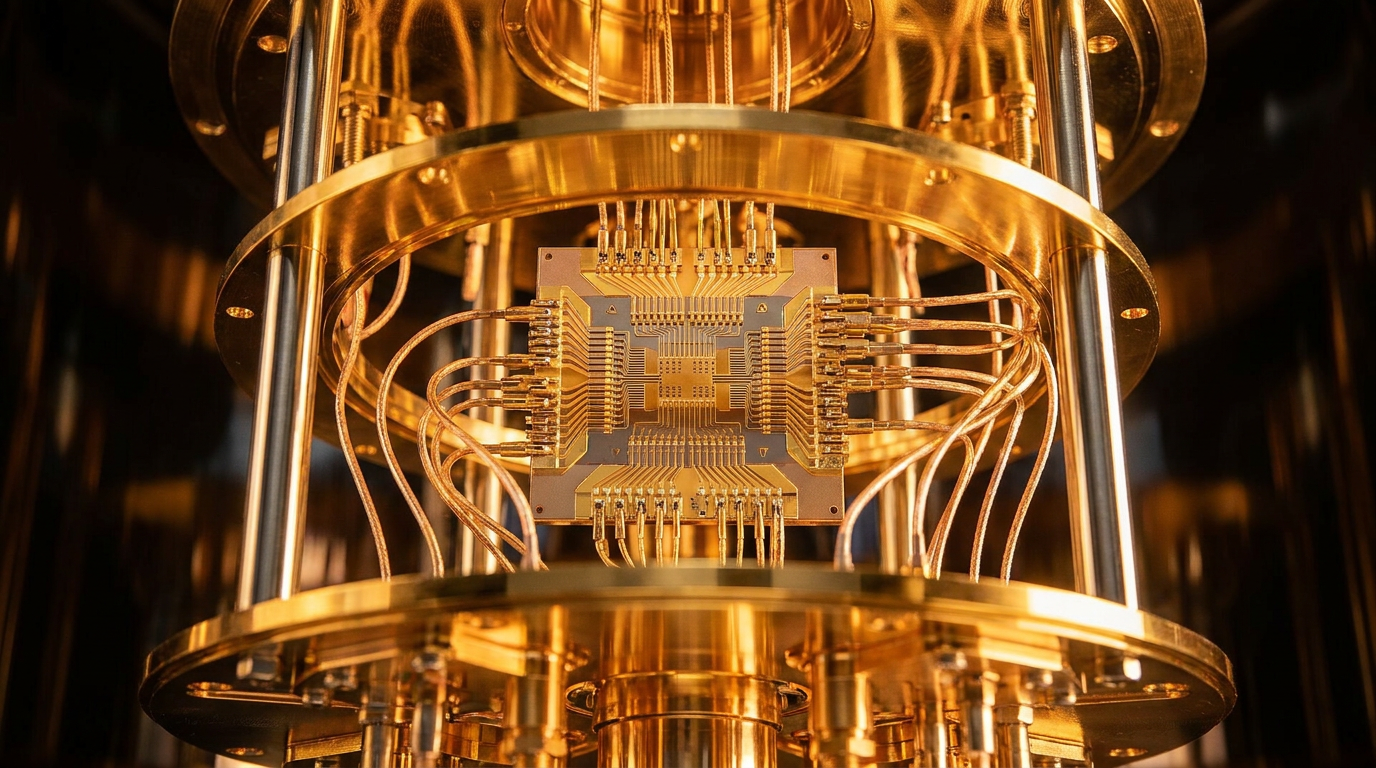
To understand this milestone, one must understand the critical difference between a "physical" qubit and a "logical" qubit. A physical qubit is the actual, tangible hardware component—whether that is a microscopic superconducting circuit, a magnetically trapped ion, or a neutral atom suspended by lasers. Because these physical components are so inherently error-prone, engineers realized decades ago that they could never rely on them individually to perform complex calculations.[5]
The solution is a complex framework known as Quantum Error Correction (QEC). QEC utilizes the bizarre physics of quantum entanglement to weave the information of a single, stable "logical" qubit across dozens or even hundreds of noisy physical qubits. Instead of duplicating data—which is physically impossible under the laws of quantum mechanics—the system distributes the information so that the failure or corruption of one physical component does not destroy the overall encoded state, preserving the integrity of the calculation.[4]
If a physical qubit flips its state due to environmental noise, the system can detect the anomaly through a highly specialized process called "syndrome measurement." This technique allows the computer's control systems to diagnose and correct the error without ever directly observing the fragile quantum data itself. Directly measuring the data would instantly collapse the quantum state and ruin the computation, making syndrome measurements a delicate and essential balancing act.[4]
Directly measuring the data would instantly collapse the quantum state and ruin the computation, making syndrome measurements a delicate and essential balancing act.
Until recently, Quantum Error Correction was a theoretical catch-22. The classical circuitry and operations required to detect and correct errors were so complex that they often introduced more noise into the system than they actually fixed. But recent hardware milestones have shattered this barrier, demonstrating that error correction can provide a net benefit in real-world, operating quantum processors. This proves that the overhead of error correction is a solvable engineering challenge rather than a fatal physical flaw.[3]
Google's Quantum AI division demonstrated this "sub-threshold" scaling using their Willow processor, which relies on superconducting circuits. By expanding their surface-code lattice, Google proved that the logical error rate dropped by a factor of 2.14 with each step up in the lattice size. This was the first definitive hardware-scale proof that fault-tolerant quantum computing obeys the scaling curves that theorists predicted decades ago.[1]

Simultaneously, Atom Computing achieved sustained, multi-round error correction using a completely different hardware architecture: neutral atoms trapped in an invisible grid of optical tweezers. They successfully created and entangled 24 logical qubits out of 112 physical qubits, running continuous error correction cycles while a computation was actively processing. This proved that the system could actively heal itself without interrupting the algorithm.[2]
Microsoft has taken yet another path, introducing the Majorana 1 chip. This architecture relies on "topological" qubits, which use exotic states of matter to provide inherent, hardware-level resistance to errors. By building stability directly into the physics of the chip, Microsoft aims to bypass the massive overhead required by traditional Quantum Error Correction, potentially allowing them to scale to millions of qubits much faster.[5]
What does this mean for the real world? It means the timeline for quantum utility is accelerating rapidly. The transition to fault tolerance allows software developers to start writing complex algorithms with the confidence that the hardware will actually be able to execute them. The focus is shifting from proving that quantum computers work, to figuring out how to integrate them into existing enterprise infrastructure to solve problems that classical supercomputers simply cannot handle, such as advanced materials discovery.[3]
However, the commercialization of this technology will not look like the personal computing revolution. You will never own a quantum smartphone, and businesses will not use quantum processors to run their payroll or host their websites. Classical computers are perfectly suited for general-purpose tasks. Instead, the industry standard for the foreseeable future is hybrid quantum-classical supercomputing.[3]
In these hybrid workflows, classical supercomputers handle the bulk of the orchestration, data storage, and standard processing. They only outsource the most exponentially complex mathematical bottlenecks—like simulating the exact molecular binding of a new pharmaceutical drug or optimizing a global shipping network—to the quantum processing unit via the cloud. This allows industries to extract immense value without needing a standalone quantum mainframe.[5]

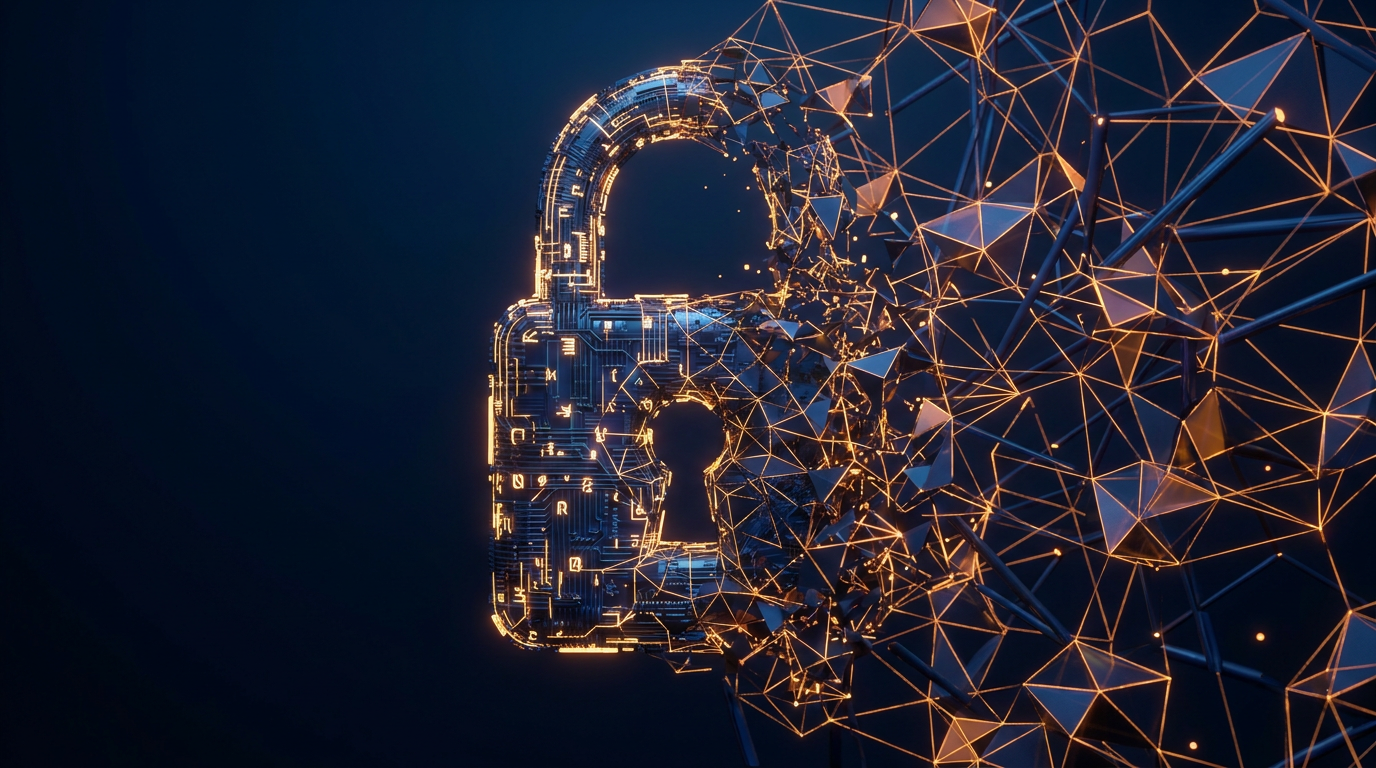
The arrival of fault-tolerant quantum computing also triggers a ticking clock for global cybersecurity infrastructure. Mature logical qubits will eventually be capable of running Shor's algorithm, a mathematical formula which can easily break RSA encryption. This is the cryptographic standard that currently secures everything from online banking and secure messaging to classified government communications. Because of this, the transition to fault tolerance is not just a commercial milestone, but a pressing matter of national security that requires immediate attention.[4]
This reality has sparked an urgent race toward post-quantum cryptography. Intelligence agencies and security analysts warn of "harvest now, decrypt later" attacks, where adversaries steal heavily encrypted data today with the explicit intention of unlocking it when fault-tolerant quantum hardware matures. Because data stolen today can be decrypted tomorrow, the migration to quantum-resistant encryption is no longer a future hypothetical; it is an immediate infrastructural mandate that organizations must begin implementing immediately to protect long-term secrets.[4]
The 2026 milestones do not mean that quantum supremacy is fully realized today. Scaling from dozens of logical qubits to the thousands required for commercial dominance will take years of grueling, expensive engineering. But the fundamental physics risk has been retired. The path to a fault-tolerant quantum future is no longer a question of if the technology will work, but simply a matter of execution, capital deployment, and scaling the manufacturing pipelines to meet the demands of the next computing revolution.[6]
How we got here
Pre-2024
The NISQ era dominates, with quantum computers limited to noisy, error-prone physical qubits that cannot sustain long calculations.
Late 2024
Google announces its Willow processor achieved below-threshold error correction, proving that scaling up physical qubits reduces logical errors.
2025
Microsoft unveils the Majorana 1 chip, introducing topological qubits designed for inherent hardware-level error resistance.
Mid 2026
Atom Computing demonstrates sustained, multi-round error correction on a neutral-atom architecture, solidifying the shift to the fault-tolerant era.
Viewpoints in depth
Hardware Developers' Focus
Prioritizing the physics and engineering of error correction.
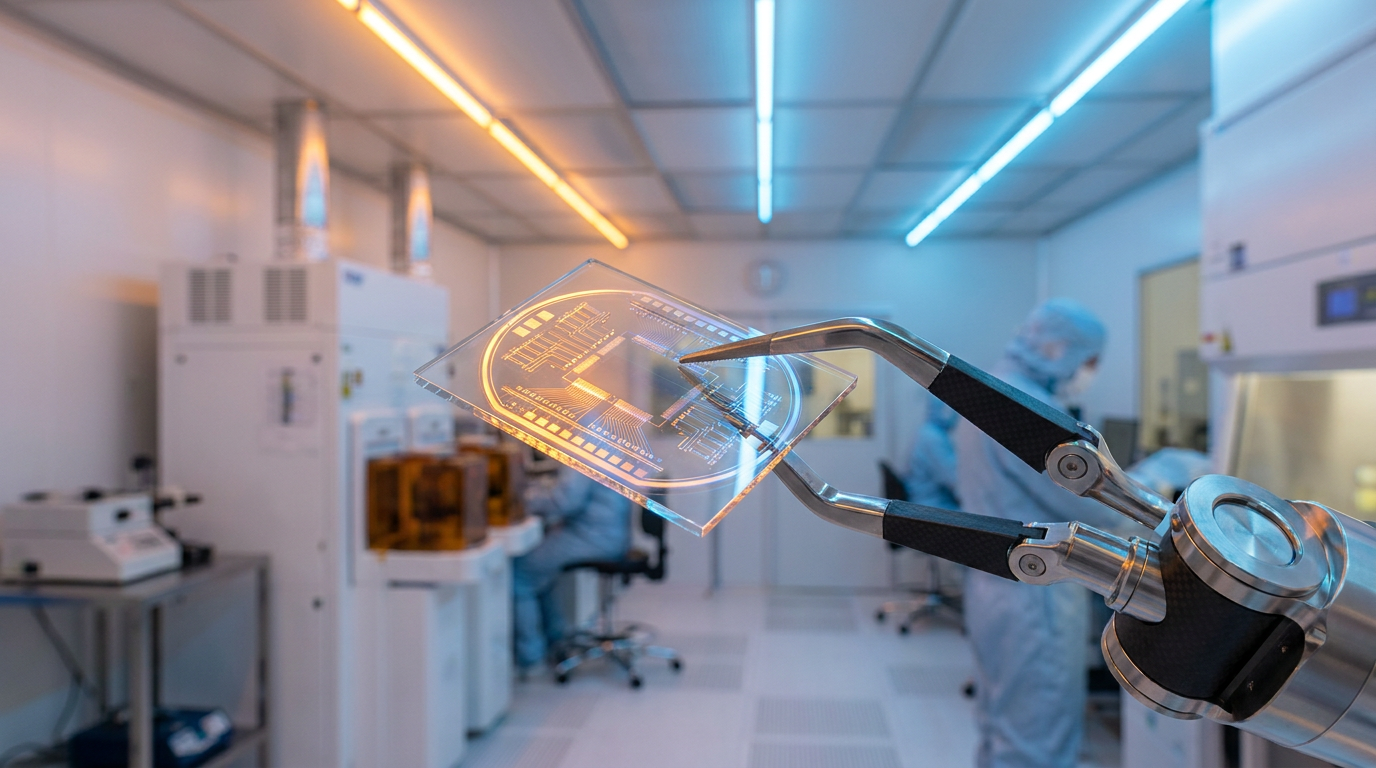
For the teams building these machines, the primary metric of success is no longer raw qubit count, but the logical error rate. By demonstrating sub-threshold scaling, hardware developers have proven that the fundamental physics of quantum error correction work. Their focus is now entirely on engineering: improving fabrication yields, managing the massive cooling requirements, and optimizing the classical control electronics that orchestrate the syndrome measurements.
Enterprise Integrators' Strategy
Preparing for hybrid quantum-classical cloud workflows.
Commercial adopters are not waiting for standalone quantum mainframes. Instead, enterprise integrators are building software pipelines that treat quantum processors as highly specialized cloud accelerators. In this hybrid model, standard supercomputers handle 99% of a workload, outsourcing only the most intractable mathematical bottlenecks—like molecular binding simulations—to the quantum hardware. This pragmatic approach allows industries to extract value from quantum systems long before they reach millions of logical qubits.
Cybersecurity's Urgent Warning
Accelerating the transition to post-quantum cryptography.
While the scientific community celebrates these milestones, cybersecurity experts view them as a ticking clock. The arrival of stable logical qubits accelerates the timeline for when quantum computers will be able to break RSA encryption. Security strategists are urging governments and financial institutions to migrate to post-quantum cryptographic standards immediately, warning that adversaries are already harvesting encrypted data today to decrypt it once fault-tolerant hardware comes online.
What we don't know
- Exactly how many physical qubits will be required to create a single logical qubit at commercial scale.
- Which underlying hardware architecture (superconducting, neutral atom, trapped ion, or topological) will ultimately dominate the market.
- The precise year when a quantum computer will successfully break standard RSA encryption.
Key terms
- Qubit
- The basic unit of quantum information, capable of existing in multiple states simultaneously, unlike a classical bit which is strictly a 0 or a 1.
- Decoherence
- The process by which a qubit loses its fragile quantum state due to interference from its surrounding environment, causing calculation errors.
- Quantum Error Correction (QEC)
- A set of algorithms that use entanglement to detect and fix errors in quantum computations without destroying the underlying quantum data.
- Syndrome Measurement
- A targeted diagnostic check that reveals whether a quantum error has occurred without directly observing the data, preserving the quantum state.
- Fault Tolerance
- The ability of a computer system to continue operating reliably even when individual hardware components fail or produce errors.
Frequently asked
Will a quantum computer replace my laptop or smartphone?
No. Classical computers are perfectly suited for everyday tasks. Quantum computers will be used as specialized accelerators in the cloud to solve exponentially complex mathematical problems.
What is the difference between a physical and logical qubit?
A physical qubit is the actual hardware component, which is highly prone to errors. A logical qubit is a stable, virtual qubit created by entangling multiple physical qubits together using error correction.
What is a 'harvest now, decrypt later' attack?
It is a cybersecurity threat where adversaries steal encrypted data today, storing it until fault-tolerant quantum computers are powerful enough to break the encryption in the future.
Sources
Source coverage
6 outlets
3 viewpoints surfaced






[1]Google Quantum AIQuantum Hardware Developers
Quantum error correction on a hexagonal lattice
Read on Google Quantum AI →[2]Quantum Computing ReportQuantum Hardware Developers
Atom Computing Reaches Quantum Error Correction Milestone with Toric Code Demonstration
Read on Quantum Computing Report →[3]BQP SimulationEnterprise Integrators
2026 Qubit Breakthroughs: Quantum Computing Enters the Fault-Tolerant Foundation Era
Read on BQP Simulation →[4]BlueQubitCybersecurity Strategists
Quantum Error Correction in 2026: Recent Advancements
Read on BlueQubit →[5]Wissen ResearchEnterprise Integrators
Quantum Computing in 2026: Breakthroughs and Hybrid Systems
Read on Wissen Research →[6]Factlen Editorial TeamCybersecurity Strategists
Synthesis by Factlen editorial team
Read on Factlen Editorial Team →
Every angle. Every day.
Get technology stories with full source coverage and perspective breakdowns delivered to your inbox.