
How Creator-Led Teams Thawed the 'Esports Winter' and Built a Sustainable Future
After a devastating period of venture capital flight, a new breed of esports organizations owned by massive content creators has proven that community-driven business models can turn a profit.
By Factlen Editorial Team
- Creator-Led Organizations
- Argues that community engagement, co-streaming, and direct-to-consumer merchandising are the keys to financial independence in esports.
- Industry Analysts
- Focuses on the market correction, noting that the shift from VC funding to diversified media-tech models was necessary for the industry's survival.
- Academic Researchers
- Views the esports winter as a structural stress test that highlighted the need for better labor conditions, legal literacy, and holistic sustainability.
What's not represented
- · Independent Tournament Organizers
- · Esports Players' Associations
Why this matters
The survival of competitive gaming relies on sustainable economics. By shifting from VC-backed cash burns to creator-led merchandise and co-streaming empires, esports has found a blueprint that doesn't depend entirely on fickle sponsorships, ensuring the industry's long-term viability.
Key points
- The 'esports winter' forced a market correction, ending the era of unsustainable venture capital cash burns.
- Creator-led organizations have emerged as a highly profitable and resilient business model.
- Teams leverage 'co-streaming' to bring millions of built-in fans directly to their matches.
- Merchandising and live events provide direct-to-consumer revenue that insulates teams from sponsorship volatility.
- French organization Karmine Corp achieved break-even status in just three years, generating €2.5M from merchandise alone.
The peak of the esports bubble and its subsequent crash left the industry reeling. In 2022, team valuations soared, with organizations like TSM reaching estimated values of $540 million amid a flood of venture capital. But as interest rates rose and investor priorities shifted from rapid growth to actual profitability, the industry entered a brutal period known as the "esports winter."[2]
Once-valuable franchises faced a stark reality: their business models, which relied heavily on speculative investment and cash burns, were fundamentally unsustainable. High-profile organizations were forced to downsize, merge, or exit the space entirely, leaving fans and players questioning the future of competitive gaming.[2]
However, academic researchers and industry analysts now view this period not as a collapse, but as a necessary "stress test." The market correction stripped away the fragile, hype-driven structures and revealed which parts of the ecosystem were genuinely resilient. Out of this recalibration, a highly successful and sustainable model emerged: the creator-led esports organization.[1][6]
Rather than relying solely on traditional sponsorships and prize money, these new organizations are built around the massive, pre-existing audiences of top-tier internet personalities. Creators like Kameto (Karmine Corp), Ibai Llanos (KOI), and Charles "MoistCr1TiKaL" White (Moist Esports) have leveraged their personal brands to bypass the traditional hurdles of audience acquisition.[1]

The mechanism driving this success is "co-streaming." When a creator-owned team competes, the founder often broadcasts the match live on their own Twitch or YouTube channel, providing personalized commentary. This strategy brings millions of dedicated fans directly into the esports ecosystem, generating viewership numbers that rival traditional sports broadcasts.[4]
This strategy brings millions of dedicated fans directly into the esports ecosystem, generating viewership numbers that rival traditional sports broadcasts.
The data underscores the power of this approach. Teams backed by content creators consistently draw significantly higher viewership than their traditional counterparts. For example, 100 Thieves, founded by Matthew "Nadeshot" Haag, reached a staggering peak viewership of 1.71 million concurrent viewers during a League of Legends World Championship. Similarly, European powerhouses Karmine Corp and KOI regularly pull in over 800,000 peak viewers.[4]
This massive, highly engaged audience translates directly into sustainable revenue streams, particularly through merchandising. French organization Karmine Corp provides a striking case study in financial viability. In 2023, the club reported €7.01 million in revenue, achieving break-even status in just three years of operation—a rare feat in the esports sector.[3]
A staggering 40% of Karmine Corp's revenue, roughly €2.5 million, came from merchandising alone. The organization sold over 40,000 jerseys in a single year, a volume that surpasses some professional soccer clubs in France's Ligue 1 and dwarfs traditional European esports rivals. This direct-to-consumer success insulates the team from the volatility of the broader sponsorship market.[3]

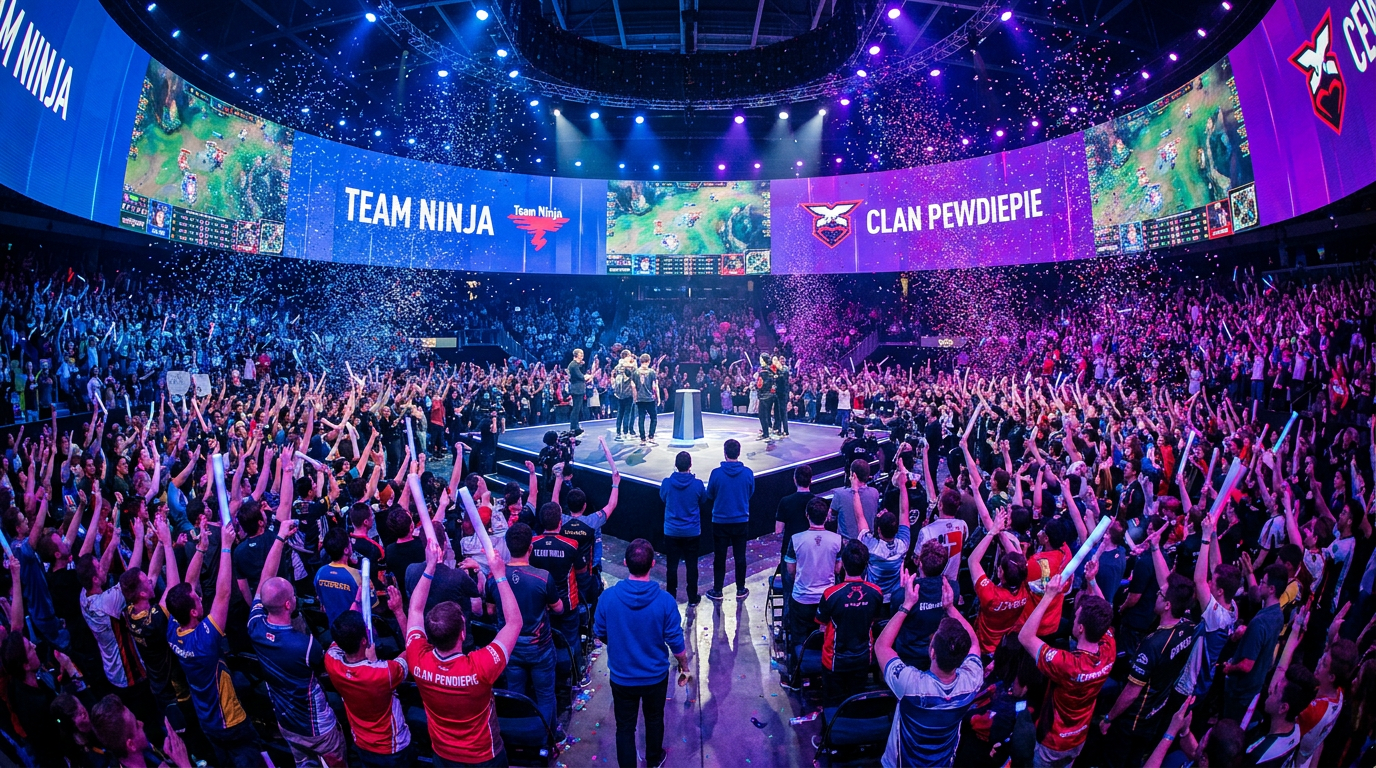
Beyond apparel, creator-led teams are transforming into multifaceted media-tech companies. They host massive, ticketed live events—such as the Karmine Corp Experience (KCX), which fills entire arenas—and operate as lifestyle brands rather than just competitive rosters. This diversification ensures that even if a team underperforms in a tournament, the organization remains culturally relevant and financially stable.[3][5]
Brands and marketers have quickly recognized the value of this model. Sponsoring a creator-owned team allows advertisers to tap into the deep, parasocial trust that fans have with the influencer, offering clearer return-on-investment metrics than traditional esports sponsorships. The creator's ecosystem props up the brand, and the brand funds the competitive roster.[1][5]

Despite these successes, the model is not entirely immune to industry challenges. Creator-led teams still rely on sponsorship deals as a critical component of their lifeblood, and the broader ecosystem remains largely under the control of game publishers. Sustainability requires ongoing coordination between creators, tournament organizers, and publishers to ensure the ecosystem remains open and viable.[1][6]
Ultimately, the rise of creator-led organizations proves that the esports winter was an evolution, not an extinction event. By prioritizing community engagement, transparent monetization, and diversified revenue streams, these teams have thawed the industry's chill and established a robust blueprint for the next decade of competitive gaming.[5][6]
How we got here
2022
Esports valuations peak, with top organizations valued at over $200 million amid heavy VC investment.
2023
The 'esports winter' begins as interest rates rise, sponsorships dry up, and major teams are forced to downsize or exit.
2024
Creator-led teams like Karmine Corp and Moist Esports prove the viability of community-driven, merchandise-heavy business models.
2025-2026
The industry stabilizes as surviving organizations transition into diversified media-tech companies.
Viewpoints in depth
Creator-Led Organizations
Argues that community engagement and direct-to-consumer merchandising are the keys to financial independence.
Founders of creator-led teams argue that the traditional esports model was fundamentally flawed because it relied on borrowing audiences rather than owning them. By utilizing co-streaming, creators bring their massive, pre-existing fanbases directly to the broadcasts. This deep parasocial connection translates into high merchandise sales and sold-out live events, allowing the organization to operate independently of fickle venture capital and unpredictable tournament prize pools.
Industry Analysts
Focuses on the market correction, noting that the shift from VC funding to diversified media-tech models was necessary.
Market analysts view the 'esports winter' not as a tragedy, but as a necessary market correction that purged unsustainable business practices. They point out that early esports organizations were valued like high-growth tech startups but operated with the fragile revenue streams of niche sports clubs. The surviving entities are those that successfully pivoted to operate as multifaceted media-tech companies, offering brands measurable ROI through highly targeted influencer integrations.
Academic Researchers
Views the esports winter as a structural stress test that highlighted the need for holistic sustainability.
Researchers studying the economics of competitive gaming emphasize that financial sustainability is only one piece of the puzzle. They argue that the esports winter exposed deep structural vulnerabilities, including poor labor conditions, lack of legal literacy among players, and an over-reliance on game publishers who control the underlying intellectual property. For long-term viability, they advocate for stronger support structures, better player protections, and more equitable revenue-sharing agreements between publishers and teams.
What we don't know
- Whether creator-led teams can maintain their massive viewership numbers if the founding influencer steps back from active streaming.
- How game publishers will adapt their league structures to better accommodate or monetize the co-streaming model.
- If traditional esports organizations can successfully pivot to the media-tech model without a massive built-in creator audience.
Key terms
- Co-streaming
- When a content creator broadcasts a live esports match on their own channel, adding their own commentary and reactions for their personal audience.
- Esports Winter
- An industry-wide economic downturn characterized by reduced venture capital investment, layoffs, and the collapse of unsustainable business models.
- Venture Capital (VC)
- Financing provided by investors to startup companies and small businesses that are believed to have long-term growth potential, which heavily funded early esports teams.
- Concurrent Viewers
- The number of people watching a live broadcast at the exact same time, a key metric for measuring an esports event's popularity.
Frequently asked
What was the 'esports winter'?
A period of market correction in 2023 and 2024 where venture capital funding dried up, valuations plummeted, and several major esports organizations were forced to downsize or close.
How do creator-led teams make money?
They rely heavily on their massive built-in audiences to drive merchandise sales, host ticketed live events, and secure sponsorships tied directly to the creator's personal brand.
Are traditional esports teams dead?
No, but they have been forced to adapt. Many are restructuring to operate more like media-tech companies rather than traditional sports clubs relying solely on prize money and VC funding.
Sources
Source coverage
6 outlets
3 viewpoints surfaced






[1]DigidayIndustry Analysts
Why creator-owned esports teams are the industry's new sponsorship darling
Read on Digiday →[2]ForbesIndustry Analysts
To Survive The 'Esports Winter,' Teams Had Three Choices: Get Smaller, Get Together Or Get Out
Read on Forbes →[3]Sheep EsportsCreator-Led Organizations
Karmine corp: a look back at the club's first 3 financial years
Read on Sheep Esports →[4]Esports ChartsCreator-Led Organizations
Most popular esports teams owned by content creators and streamers
Read on Esports Charts →[5]Shikenso AnalyticsIndustry Analysts
The esports winter hit hard. What we're seeing now isn't recovery. It's evolution.
Read on Shikenso Analytics →[6]Frontiers in Sports and Active LivingAcademic Researchers
Editorial: Navigating sustainability: addressing esports winter challenges
Read on Frontiers in Sports and Active Living →
Every angle. Every day.
Get gaming esports stories with full source coverage and perspective breakdowns delivered to your inbox.