
The Landlords of the AI Boom: How Data Center REITs Are Financing the Future
As artificial intelligence drives a $50 billion surge in data center construction, Real Estate Investment Trusts (REITs) have emerged as the critical financiers of the digital age.
By Factlen Editorial Team
- Infrastructure Bulls
- View the AI boom as a generational catalyst that will drive decades of sustained data center growth.
- Yield-Seeking Investors
- Focus on the stable, dividend-paying nature of REITs as a safe way to play the volatile tech sector.
- Cautious Analysts
- Warn about the risks of overexpansion, supply chain bottlenecks, and severe power grid constraints.
What's not represented
- · Local Communities
- · Environmental Advocates
Why this matters
For everyday investors, data center REITs offer a backdoor into the artificial intelligence boom, providing exposure to tech growth and dividend income without the volatility of picking individual software stocks.
Key points
- Data center construction spending has hit a record $50 billion annualized rate, driven by the AI boom.
- Real Estate Investment Trusts (REITs) are the primary landlords providing the physical infrastructure for cloud computing.
- AI workloads require specialized high-density racks and liquid cooling, forcing a redesign of modern facilities.
- Power availability and grid access have become the biggest bottlenecks and competitive moats in the industry.
- REITs offer everyday investors a way to profit from AI growth while earning steady dividend income.
The cloud is not in the sky; it is firmly bolted to the ground. Every time a generative artificial intelligence model writes a line of code, generates a photorealistic image, or processes a complex financial dataset, it relies on a vast, physical network of specialized computers. For decades, the internet operated on standard servers that could be housed in relatively generic warehouses. But the modern AI era has fundamentally changed the physical footprint of the digital economy, requiring massive, purpose-built facilities to house the hardware that makes machine learning possible.[6]
As artificial intelligence adoption accelerates across enterprise and consumer markets in 2026, the digital economy is colliding with the physical world in unprecedented ways. The sheer computational power required to train and run next-generation large language models has triggered a historic infrastructure boom. Technology giants are racing to secure computing capacity, transforming data centers from a niche commercial real estate asset class into critical national infrastructure. This supply-led expansion is reshaping the construction industry, as developers scramble to find suitable land, secure heavy-duty power access, and build the physical shells that will house the future of computing.[2]
The scale of this buildout is staggering. According to recent market data, annualized spending on data center construction in the United States has skyrocketed to a record $50 billion. This represents a massive 437% increase since the beginning of 2021, when the annualized rate stood at a mere $9 billion. In a historic real estate reversal, the capital flowing into data center development has now eclipsed traditional office building investment, highlighting a permanent shift in how the modern economy allocates its commercial real estate dollars.[2]

But who actually owns the buildings where the artificial intelligence revolution is taking place? While companies like Amazon, Google, and Microsoft build some of their own facilities, they increasingly rely on third-party landlords to scale quickly. The dominant players in this space are Real Estate Investment Trusts, or REITs. These specialized financial entities have quietly become the foundational financiers of the digital age, bridging the gap between Wall Street capital and Silicon Valley's insatiable demand for computing power.[4]
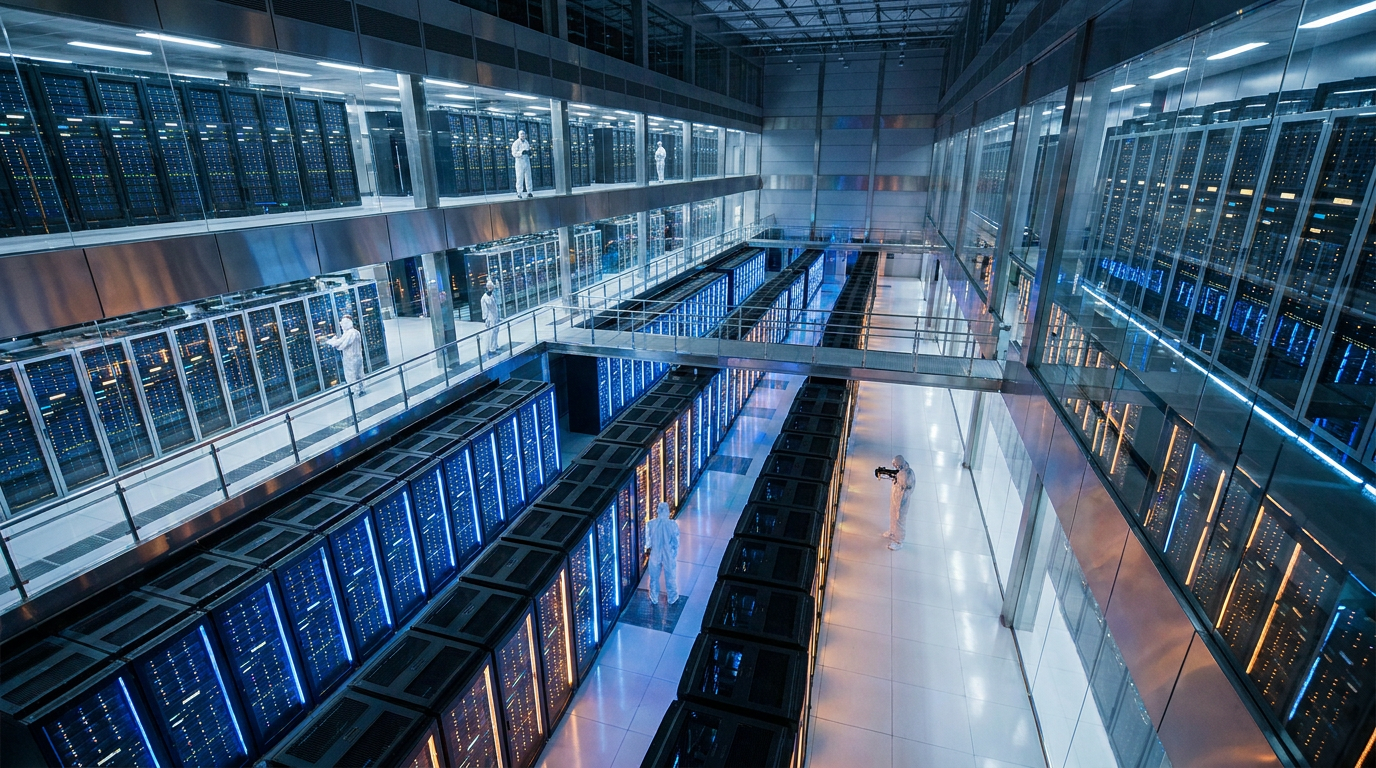
A data center REIT is a publicly traded company that owns, operates, and manages the highly secure, heavily engineered facilities that house servers and networking equipment. Rather than building their own server farms from scratch in every market, technology giants and enterprise companies sign long-term leases to rent space, power, and cooling from these landlords. The REIT provides the physical building shell, the uninterruptible power supplies, the industrial air-cooled chillers, and the physical security, while the tenant brings their own proprietary servers and data.[4]
By structuring their businesses as Real Estate Investment Trusts, these companies are mandated by federal law to distribute at least 90% of their taxable income to shareholders in the form of dividends. For retail and institutional investors alike, this creates a highly attractive financial vehicle. It offers a real estate asset that generates steady, recurring revenue from long-term corporate leases, while simultaneously providing direct, dividend-paying exposure to the hyper-growth of the technology sector without the volatility of picking individual software stocks.[4][6]
Two heavyweights currently dominate the public markets in this space: Equinix and Digital Realty. Both operate massive, global portfolios of carrier-neutral data centers, acting as the critical landlords for the world's largest cloud service providers—often referred to in the industry as hyperscalers. Together, these two companies control a significant percentage of the leased data center power in the United States, managing hundreds of facilities across dozens of major metropolitan areas to ensure data is processed as close to the end-user as possible.[1][2]

Two heavyweights currently dominate the public markets in this space: Equinix and Digital Realty.
To meet the insatiable demand of the artificial intelligence boom, these companies are deploying capital at a historic pace. Equinix, for instance, expects to spend between $4 billion and $5 billion annually through 2029 to expand its footprint. The company's leadership recently stated their ambition to double their total capacity by the end of the decade, effectively bringing as much new infrastructure online in the next five years as they did in the previous 27 years combined.[1]
Digital Realty is executing a similarly aggressive expansion strategy, recently closing its inaugural U.S. hyperscale data center fund with $3.25 billion in total equity commitments. Backed by a diverse coalition of public pensions, sovereign wealth funds, and university endowments, the fund specifically targets AI data center development in major connectivity hubs like Northern Virginia, Dallas, and Atlanta. This influx of institutional capital underscores how mainstream data center investments have become for large-scale asset managers seeking defensive growth.[5]
The transition to artificial intelligence workloads is fundamentally changing how these buildings are engineered from the ground up. Traditional cloud computing relies on standard server racks that draw predictable amounts of electricity and can be cooled with standard air conditioning. However, AI training and inference require specialized hardware—massive clusters of graphics processing units (GPUs) that feature parallel processing capabilities and lightning-fast data transfer speeds. These next-generation computing clusters run incredibly hot and draw unprecedented amounts of electricity per square foot, forcing landlords to completely rethink their architectural designs.[1][6]
As a result, data center REITs are actively retrofitting existing facilities and designing new greenfield builds with advanced liquid cooling systems and ultra-high-density power configurations. Instead of just blowing cold air down an aisle of servers, modern AI data centers use direct-to-chip liquid cooling to manage the extreme thermal output of modern processors. This specialized infrastructure allows operators to pack more computing power into a smaller physical footprint, but it requires massive upfront capital expenditures to install the necessary plumbing and industrial chillers.[6]

This intense requirement for electricity brings the industry to its most significant bottleneck: power availability. The biggest wildcard for the data center boom is no longer tenant demand, but rather grid access, construction timelines, and local zoning easements. Supply chain disruptions for heavy electrical equipment, such as industrial transformers and backup generators, have resulted in longer lead times, complicating construction schedules and forcing developers to plan years in advance just to secure the necessary components. In dense markets like Northern Virginia, securing the rights to draw massive amounts of power from the local utility has become the hardest part of the development process.[1][3]
Because local utilities cannot always deliver new substation capacity fast enough to support AI training campuses that require hundreds of megawatts of power, existing grid access has become a massive competitive moat. REITs that secured power purchase agreements and grid interconnects before the AI surge now command premium valuations. They are highly valued not necessarily because their physical buildings are vastly superior, but because they control scarce, irreplaceable electrical capacity in a market where power is the ultimate limiting factor for technological progress.[3][6]
Analysts at major financial institutions like Morgan Stanley recently initiated coverage on the sector with an optimistic outlook, noting that AI and hybrid cloud adoption are dialing up the need for heavy-duty infrastructure. However, they also caution that operators must execute a high-stakes balancing act. Data center landlords must ramp up construction fast enough to satisfy the massive demand from tech giants, while carefully avoiding overexpansion that could flood the market with excess capacity if the pace of AI adoption eventually slows down.[3]

For everyday investors, data center REITs represent a classic "picks and shovels" approach to the artificial intelligence gold rush. Instead of trying to guess which software company will build the most successful AI model, or which semiconductor firm will design the fastest chip, investors can simply own the physical infrastructure that every technology giant must rent in order to compete. It is a foundational investment in the digital economy, backed by hard assets and long-term corporate leases.[4][6]
As hyperscaler capital expenditures are projected to reach a staggering $700 billion in 2026, the symbiotic relationship between technology innovators and real estate operators will only deepen. The companies building the future of artificial intelligence simply cannot do it without the physical space, advanced cooling, and massive power allocations provided by these specialized landlords. Data center REITs have evolved far beyond passive property managers; they are now the critical, dividend-paying financiers of the digital future, ensuring that the cloud has a reliable place to live on the ground.[5][6]
How we got here
1960
The U.S. Congress creates the Real Estate Investment Trust (REIT) structure to allow everyday investors to buy shares in commercial real estate portfolios.
Late 1990s
The first major carrier-neutral data centers are established to support the early internet and dot-com boom.
2021
Annualized U.S. data center construction spending sits at a relatively modest $9 billion.
2023-2024
The generative AI boom triggers a massive scramble for computing power, fundamentally altering data center demand.
March 2026
Digital Realty closes a $3.25 billion hyperscale fund, signaling massive institutional appetite for AI infrastructure.
June 2026
Data center construction spending hits a record $50 billion annualized rate, eclipsing traditional office real estate.
Viewpoints in depth
Institutional Investors
View data centers as a defensive growth hedge with stable, long-term cash flows.
For sovereign wealth funds, pensions, and large asset managers, data center REITs offer a rare combination of real estate stability and technology-like growth. Because hyperscalers sign leases spanning 5 to 15 years, these assets generate highly predictable, recurring revenue. Institutions view this as a defensive hedge: even if a specific AI software company fails, the underlying infrastructure will simply be leased to the next competitor, ensuring the rent continues to be paid.
Hyperscale Cloud Providers
Rely on REITs to outsource the massive capital requirements of physical infrastructure.
Companies like Amazon, Microsoft, and Google possess immense capital, but building data centers requires navigating local zoning laws, securing utility interconnects, and managing multi-year construction projects. By partnering with REITs, hyperscalers can offload the real estate development risk and preserve their own capital for research, development, and purchasing expensive GPU hardware. To them, REITs are essential partners that speed up their time-to-market.
Grid Operators & Utilities
Express concern over the unprecedented electrical demands of AI infrastructure.
Local utilities and grid operators view the data center boom with a mix of opportunity and alarm. A single modern AI training campus can require over 100 megawatts of power—equivalent to the energy needs of a small city. Utilities warn that the grid cannot always scale fast enough to meet this demand, leading to concerns about local power shortages, the need for massive transmission upgrades, and the environmental impact of keeping these energy-hungry facilities running 24/7.
What we don't know
- Whether the current pace of AI infrastructure spending will face a cyclical downturn if software monetization lags.
- How local municipalities will regulate the massive water and electricity usage of next-generation data centers.
- If emerging technologies like small modular nuclear reactors (SMRs) will eventually be required to power these facilities off-grid.
Key terms
- REIT (Real Estate Investment Trust)
- A company that owns, operates, or finances income-producing real estate and is legally required to distribute at least 90% of its taxable income as dividends.
- Hyperscaler
- Massive cloud service providers like Amazon Web Services, Google Cloud, and Microsoft Azure that dominate the digital infrastructure market.
- Colocation
- A data center model where multiple customers rent space, power, and cooling within the same facility to house their own servers.
- Liquid Cooling
- An advanced thermal management system that uses liquid coolants directly on computer chips to dissipate the extreme heat generated by AI processors.
- Megawatt (MW)
- A unit of electrical power equal to one million watts, commonly used to measure the total capacity and size of a data center.
Frequently asked
Do data center REITs own the servers inside the buildings?
Generally, no. The REIT owns the physical building, the cooling systems, and the power infrastructure. The tenants (like tech companies) own and operate the actual servers and data.
Why are data center REITs considered a good dividend investment?
By law, REITs must pay out at least 90% of their taxable income to shareholders. Because they sign long-term leases with major tech companies, this revenue stream is highly stable, resulting in reliable dividends.
How does AI change the way a data center is built?
AI requires massive clusters of specialized chips that run much hotter and draw significantly more electricity than traditional servers. This requires data centers to be built with reinforced floors, high-density power grids, and advanced liquid cooling systems.
What is the biggest risk to data center REITs?
The primary risks are overexpansion if the AI boom slows down, and the physical limitations of the electrical grid, as utilities struggle to provide enough power for these massive facilities.
Sources
Source coverage
6 outlets
3 viewpoints surfaced






[1]S&P GlobalCautious Analysts
Digital Realty, Equinix ramp up datacenters as AI drives demand
Read on S&P Global →[2]BenzingaInfrastructure Bulls
Equinix, Digital Realty REITs In Focus As AI Frenzy Drives $50 Billion Data Center Construction Surge
Read on Benzinga →[3]FinimizeCautious Analysts
Morgan Stanley sees long-term growth ahead for data center giants
Read on Finimize →[4]The Motley FoolYield-Seeking Investors
Best Data Center REITs for 2026 and How to Invest
Read on The Motley Fool →[5]The AI Consulting NetworkInfrastructure Bulls
Digital Realty Closes $3.25B U.S. Hyperscale Data Center Fund
Read on The AI Consulting Network →[6]Factlen Editorial TeamYield-Seeking Investors
Synthesis by Factlen editorial team
Read on Factlen Editorial Team →
Every angle. Every day.
Get real estate stories with full source coverage and perspective breakdowns delivered to your inbox.