
How Parametric Insurance is Rewiring Climate Resilience with Instant Payouts
By replacing lengthy claims adjustments with automated data triggers, parametric insurance is providing immediate financial lifelines to farmers, businesses, and governments facing climate disasters.
By Factlen Editorial Team
- Climate Resilience Advocates
- Focus on how rapid, automated payouts provide immediate liquidity to vulnerable communities and sovereign states after a disaster.
- Insurtech & Data Providers
- Emphasize the technological revolution—satellites, IoT sensors, and AI—that makes objective, tamper-proof triggers possible.
- Market Analysts & Reinsurers
- View parametric models as a high-growth commercial solution to the mounting administrative costs of traditional indemnity insurance.
What's not represented
- · Local claims adjusters facing industry disruption
- · Policyholders who suffered losses due to basis risk gaps
Why this matters
Traditional insurance often takes months to pay out after a disaster, leaving vulnerable people bankrupt while they wait. This data-driven model ensures funds arrive in days, empowering communities to survive shocks and rebuild immediately.
Key points
- Parametric insurance pays out automatically based on objective data triggers, such as wind speed or rainfall, rather than physical damage assessments.
- The model eliminates the lengthy claims adjustment process, allowing funds to be disbursed to policyholders within days of a disaster.
- Advances in satellite imagery, IoT sensors, and artificial intelligence have made the data triggers highly accurate and tamper-proof.
- The global market for parametric policies is projected to nearly double by 2030, driven by the need for rapid climate resilience funding.
For centuries, the insurance industry has operated on a simple but agonizingly slow premise: when disaster strikes, you file a claim, an adjuster visits to assess the damage, and eventually, a check arrives. But in an era of accelerating climate volatility, that timeline is breaking down. When a flood wipes out a small business or a drought scorches a season's harvest, waiting months for a claims adjuster is not just an inconvenience—it is an existential threat. Traditional indemnity insurance, which reimburses policyholders for the exact cost of verified losses, is increasingly viewed as too slow and too administratively heavy to serve as a frontline defense against rapid-onset climate disasters.[7]
Enter parametric insurance, a model that is quietly rewiring the global risk landscape. Instead of paying out based on a subjective assessment of physical damage, a parametric policy pays a pre-agreed sum automatically when a specific, measurable threshold is crossed. There are no claims forms to fill out, no adjusters to wait for, and no lengthy negotiations over the value of a ruined crop. If the data confirms the event happened, the money moves. It is a fundamental shift from insuring the physical damage to insuring the event itself.[3]
The mechanics of a parametric policy are built entirely on objective triggers. A buyer and an insurer agree in advance on a specific parameter—such as sustained wind speeds exceeding 100 miles per hour, an earthquake registering above 6.5 on the Richter scale, or rainfall dropping below 50 millimeters during a crucial 30-day planting window. If that exact threshold is met, the payout is triggered instantly. This binary approach eliminates the friction of traditional loss adjustment, transforming a complex legal negotiation into a simple algorithmic execution.[3]

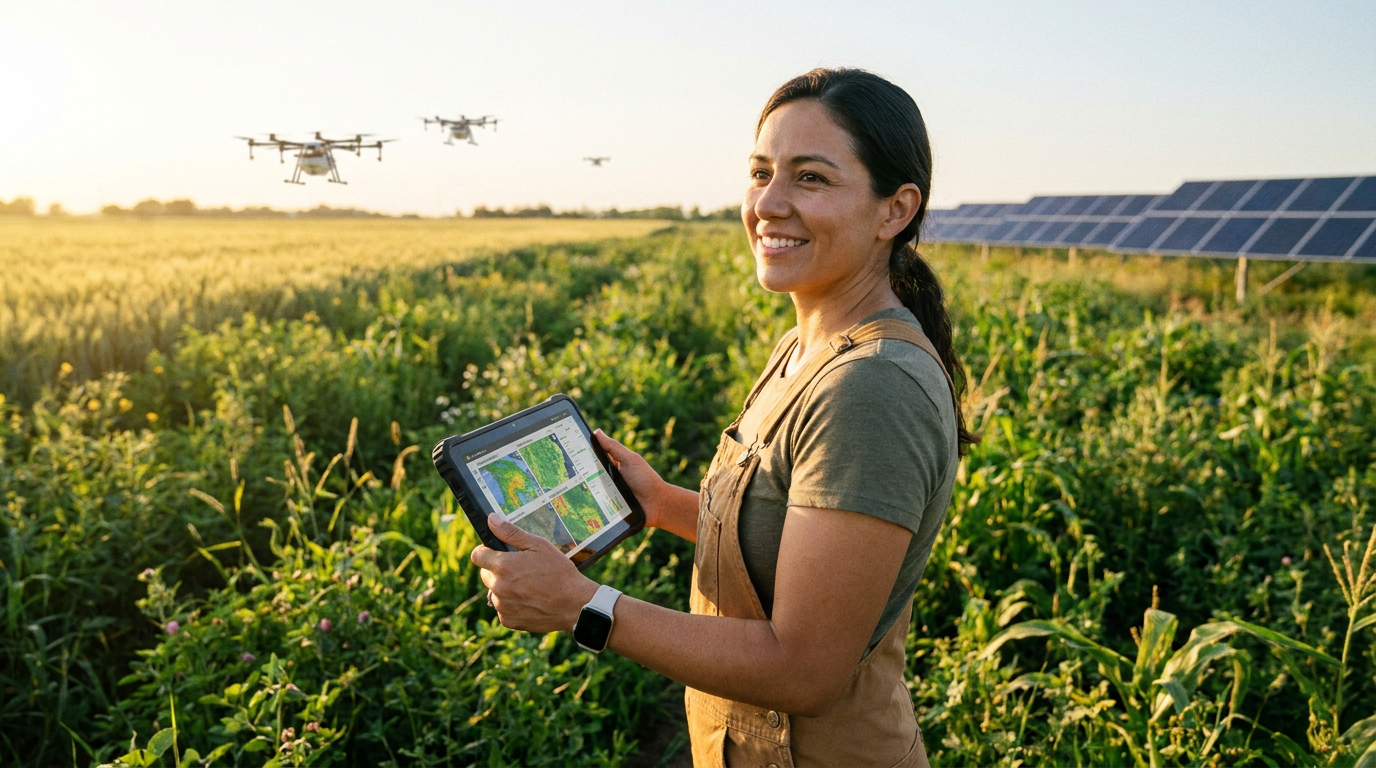
This model is not entirely new, but it has been supercharged by a recent revolution in global data collection. The entire parametric system hinges on the availability of precise, tamper-proof, third-party data. Today, insurers can tap into a vast network of low-earth orbit satellites, hyper-local weather stations, soil moisture sensors, and independent data providers to verify conditions in real-time. Because the data is objective and independently verifiable, neither the insurer nor the policyholder can dispute the outcome, allowing funds to be released within days rather than seasons.[2]
The impact is most profound in the developing world, where traditional insurance has historically failed to reach smallholder farmers. In countries like Kenya, Rwanda, and Tanzania, organizations are bundling parametric micro-insurance with essential farm inputs. If a severe drought triggers the policy, a payout is sent directly to the farmer's mobile money account. This immediate injection of capital allows them to buy new seeds for replanting or secure food for their families, preventing a single bad harvest from spiraling into a multi-generational cycle of poverty and debt.[2]
The speed of parametric payouts is also proving vital at the sovereign level. Following the devastation of Hurricane Melissa in 2025, the Caribbean Catastrophe Risk Insurance Facility (CCRIF) delivered a record $91.9 million in payouts to the Government of Jamaica. Because the policies were triggered automatically by the cyclone's wind speed and excess rainfall data, the funds were disbursed within a strict 14-day window. For a national government facing a sudden crisis, that rapid liquidity is the difference between stabilizing essential services immediately and waiting on sluggish international aid.[5]
The speed of parametric payouts is also proving vital at the sovereign level.
Beyond agriculture and hurricanes, the flexibility of the parametric model is unlocking coverage for risks that were previously considered uninsurable. The World Economic Forum notes that parametric policies are now being deployed to cover income losses for outdoor workers in India during extreme heatwaves, providing them with a daily wage replacement when temperatures make it too dangerous to work. Similar triggers are being used to fund the immediate rehabilitation of coral reefs after severe storms, and to protect renewable energy companies against "wind droughts" that temporarily halt turbine power generation.[4]
Driven by these expanding use cases, the financial footprint of the parametric sector is surging. Industry analysts project the global parametric insurance market will grow from roughly $21 billion in 2025 to nearly $39 billion by 2030, representing a compound annual growth rate of over 13 percent. This rapid expansion is fueled by a growing recognition that climate resilience requires immediate cash flow, and that traditional insurance markets are retreating from high-risk areas due to mounting losses and administrative complexities.[6]

Major global reinsurers are aggressively backing the shift. Companies that once viewed parametric products as a niche offering for developing nations now see them as a core pillar of future risk management. By eliminating the heavy administrative costs associated with claims adjustment, insurers can offer coverage in remote or highly exposed regions while maintaining long-term commercial viability. For the broader financial system, parametric models offer a cleaner, more predictable way to price and trade climate risk on the open market.[1]
However, the model is not without its blind spots. The primary vulnerability of parametric insurance is known as "basis risk"—the gap between the data trigger and the reality on the ground. If a policy is designed to pay out when wind speeds hit 100 miles per hour, and a storm destroys a facility with 99-mile-per-hour winds, the policyholder receives nothing. Conversely, a trigger might be met in a region where a specific farm miraculously avoided damage, resulting in a payout despite no actual loss.[1][7]
To close this gap, the industry is leaning heavily into artificial intelligence and higher-resolution modeling. By integrating machine learning with dense networks of Internet of Things (IoT) sensors, insurers are designing highly localized triggers that accurately reflect the micro-climates of individual farms or city blocks. As predictive analytics become more sophisticated, the margin of error in basis risk shrinks, making the policies more reliable for the end-user without sacrificing the speed of the automated payout.[6][7]

Ultimately, parametric insurance is not expected to entirely replace traditional indemnity policies, but rather to serve as a critical first responder. Risk managers increasingly advocate for a blended approach: using a parametric policy to secure immediate liquidity for survival and cleanup in the days following a disaster, while relying on a traditional policy to cover the complex, long-term costs of rebuilding infrastructure. Together, they form a more resilient financial safety net.[7]
As climate volatility accelerates, the ability to recover quickly will become just as important as the ability to rebuild. By stripping away the bureaucracy of claims adjustment and anchoring payouts to undeniable data, parametric insurance is transforming how society absorbs environmental shocks. It offers a rare, proactive bright spot in the climate conversation: a scalable, transparent mechanism that empowers vulnerable communities to survive the worst days and immediately begin planning for the next.[4][7]
How we got here
Early 2000s
First sovereign parametric risk pools are established to help developing nations manage natural disaster fallout.
2010s
Advances in satellite imagery and mobile money enable micro-insurance pilot programs for smallholder farmers in Africa.
2023
Global economic losses from natural disasters top $313 billion, accelerating the insurance industry's shift toward alternative risk models.
2025
The parametric insurance market surpasses $21 billion as AI and IoT sensors dramatically improve trigger accuracy.
Viewpoints in depth
Climate Resilience Advocates
Focus on how rapid, automated payouts provide immediate liquidity to vulnerable communities and sovereign states after a disaster.
For development organizations and sovereign risk pools, the primary value of parametric insurance is survival liquidity. When a hurricane strikes a Caribbean nation or a drought hits East Africa, waiting months for traditional aid or insurance adjusters can lead to economic collapse and mass starvation. By guaranteeing funds within days of a verified event, these advocates argue that parametric policies empower communities to stabilize supply chains, buy emergency provisions, and begin rebuilding immediately, fundamentally altering the trajectory of disaster recovery.
Insurtech & Data Providers
Emphasize the technological revolution—satellites, IoT sensors, and AI—that makes objective, tamper-proof triggers possible.
Technology companies and specialized underwriters view parametric insurance as a triumph of modern data infrastructure. They argue that traditional insurance is bogged down by human subjectivity and administrative bloat. By leveraging low-earth orbit satellites, hyper-local weather stations, and blockchain-based smart contracts, these providers are creating a frictionless system where payouts execute like code. Their current focus is on deploying artificial intelligence to refine predictive models, thereby shrinking 'basis risk' and allowing for highly customized policies that cover everything from crop yields to renewable energy output.
Market Analysts & Reinsurers
View parametric models as a high-growth commercial solution to the mounting administrative costs of traditional indemnity insurance.
Major financial institutions and reinsurers see parametric products as a necessary evolution to keep the insurance industry commercially viable in an era of climate change. As natural disasters become more frequent, the cost of sending human adjusters to assess millions of individual claims is becoming unsustainable. Analysts argue that parametric models offer a cleaner, more predictable way to price risk and trade it on capital markets. While they acknowledge the model cannot replace traditional property insurance entirely, they view it as a highly profitable, scalable complement that opens up previously uninsurable markets.
What we don't know
- How effectively the industry can eliminate 'basis risk' for hyper-local weather events that evade broader sensor grids.
- Whether parametric micro-insurance can scale globally without heavy subsidies from governments or international development organizations.
Key terms
- Parametric Insurance
- A policy that pays a set amount automatically when a predefined metric is met, regardless of actual physical damage.
- Indemnity Insurance
- Traditional insurance that reimburses policyholders for the exact value of their verified losses after a claims assessment.
- Basis Risk
- The risk that the insurance trigger is not met even though the policyholder experienced a loss, or vice versa.
- Trigger
- The specific, measurable threshold (such as a 40°C temperature for three days) that activates an automatic payout.
Frequently asked
Does parametric insurance replace traditional property insurance?
No, it usually acts as a complement. While traditional insurance covers the exact, long-term costs of rebuilding, parametric policies provide immediate cash flow to survive the immediate aftermath of a disaster.
How do insurers know if a trigger was met?
They rely on independent, third-party data sources like government weather stations, satellite imagery, and seismic sensors to verify the event objectively, preventing disputes.
Can individuals buy parametric insurance?
While historically used by governments and large corporations, micro-insurance versions are increasingly available to individual farmers, and consumer products now exist for events like flight delays.
Sources
Source coverage
7 outlets
3 viewpoints surfaced







[1]Swiss ReMarket Analysts & Reinsurers
Parametric insurance protects vulnerable farmers against climatic disasters globally
Read on Swiss Re →[2]OpenWeatherInsurtech & Data Providers
Parametric insurance represents a significant step forward in building climate resilience
Read on OpenWeather →[3]Descartes UnderwritingInsurtech & Data Providers
Parametric Insurance for the Agricultural Industry
Read on Descartes Underwriting →[4]World Economic ForumClimate Resilience Advocates
What is parametric insurance and how is it building climate resilience?
Read on World Economic Forum →[5]CCRIFClimate Resilience Advocates
CCRIF continues to strengthen its role as the Caribbean's development insurer
Read on CCRIF →[6]Research and MarketsMarket Analysts & Reinsurers
Parametric Insurance Global Market Report 2026
Read on Research and Markets →[7]Factlen Editorial TeamMarket Analysts & Reinsurers
Synthesis by Factlen editorial team
Read on Factlen Editorial Team →

More in finance
See all 8 stories →Assumable Mortgages
The 3% Mortgage Hack: How Assumable Loans Are Unlocking Homeownership in 2026
5 sources

Fed Watch
How Kevin Warsh is Rewriting the Federal Reserve's Playbook
8 sources
Wealth Building
The 529-to-Roth IRA Rollover: How Families Are Using the 2026 Limits to Build Generational Wealth
9 sources

Tech M&A
SpaceX Acquires AI Coding Startup Cursor for $60 Billion in Post-IPO Tech Mega-Deal
6 sources

Every angle. Every day.
Get finance stories with full source coverage and perspective breakdowns delivered to your inbox.