
How AI and the Microbiome Are Ending the Era of the One-Size-Fits-All Diet
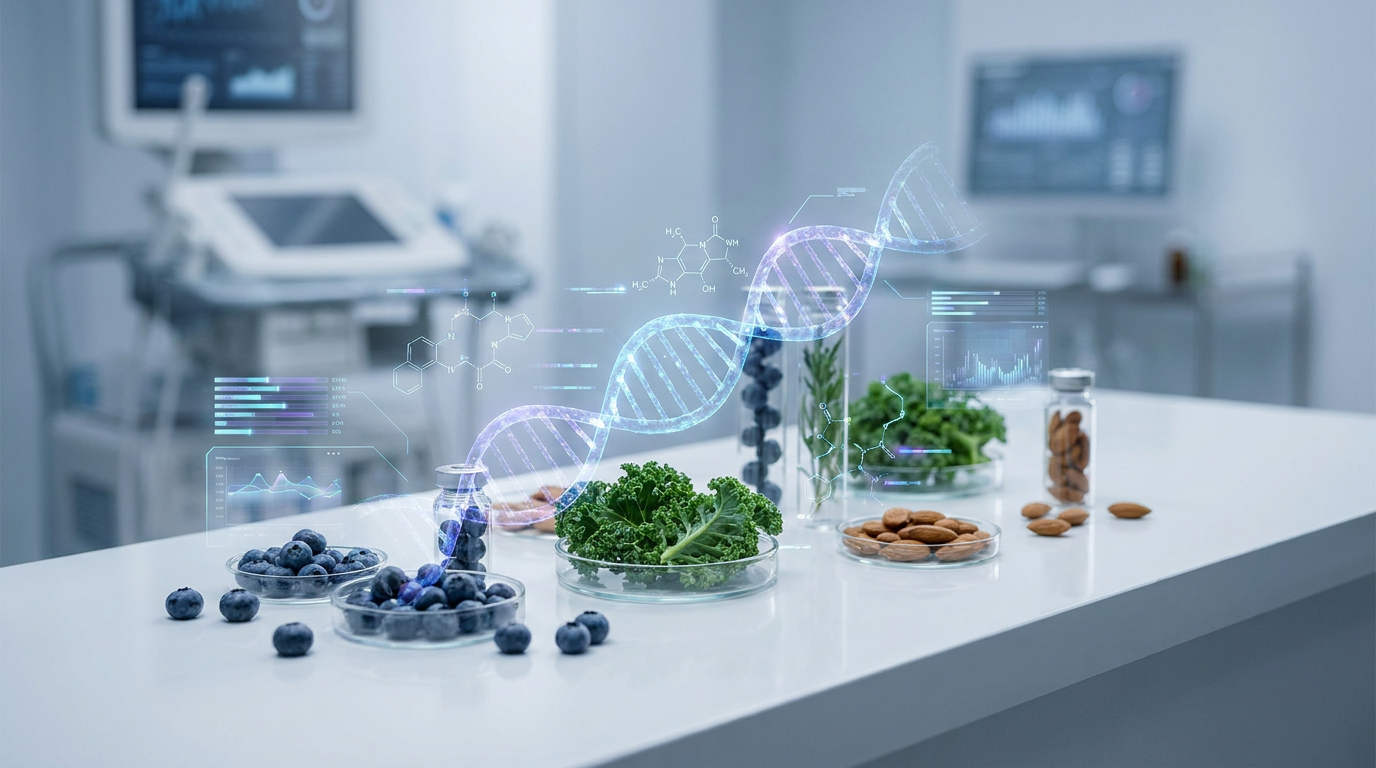
Advances in artificial intelligence and microbiome sequencing are allowing researchers to replace generic dietary guidelines with highly personalized nutrition plans.
By Factlen Editorial Team
- Precision Nutrition Researchers
- Argue that AI and multi-omics will soon allow diets to be tailored to individual metabolic and microbial profiles.
- Clinical Specialists
- Focus on deploying targeted nutritional interventions as medical treatments alongside traditional therapies.
- Public Health Advocates
- Emphasize that while personalization is the future, broad dietary shifts toward whole and fermented foods remain the foundation of gut health.
What's not represented
- · Agricultural producers adapting to personalized food demands
- · Health insurance providers evaluating coverage for dietary interventions
Why this matters
As artificial intelligence and microbiome sequencing mature, dietary advice is shifting from broad, generic guidelines to highly personalized prescriptions. This transition offers readers new, data-driven tools to prevent chronic disease, optimize their energy, and understand exactly how their unique body responds to food.
Key points
- Precision nutrition uses individual biological data to replace generic dietary guidelines with personalized meal plans.
- The gut microbiome plays a central role in determining how a person's body metabolizes specific foods.
- Artificial intelligence is being used to analyze complex microbiome and genetic data to predict dietary responses.
- The NIH has invested $170 million to study how 10,000 diverse participants respond to different diets.
- Clinical trials are testing targeted nutrition as a way to improve outcomes for cancer patients undergoing immunotherapy.
For decades, dietary advice has been dispensed as a universal prescription. From the food pyramids of the 1990s to modern macronutrient guidelines, the underlying assumption has been that human metabolism operates on a standardized engine. Yet, anyone who has ever adopted a popular diet alongside a friend knows the reality: a regimen that causes one person to thrive can leave another fatigued, inflamed, or entirely unchanged.[8]
The scientific community is now acknowledging what frustrated dieters have long suspected: there is no such thing as a perfect, one-size-fits-all diet. The way a human body processes a bowl of oatmeal or a slice of avocado is not a fixed equation of calories in and calories out. Instead, it is a highly individualized reaction dictated by a complex web of genetics, lifestyle, and—most importantly—the trillions of microorganisms residing in the digestive tract.[8]
This realization has birthed the rapidly accelerating field of "precision nutrition." Rather than issuing broad population-level guidelines, researchers are working to tailor dietary recommendations to the unique biological fingerprint of the individual. It is a paradigm shift that aims to move nutrition out of the realm of generalized wellness and into the rigorous, data-driven domain of personalized medicine.[8]
The primary engine driving this shift is a deeper understanding of the gut microbiome. This bustling ecosystem of bacteria, fungi, and viruses does much more than simply digest food. It acts as an active chemical factory, fermenting dietary fibers and producing essential metabolites like short-chain fatty acids, which regulate everything from immune response to cognitive function.[3][8]

Because no two people share the exact same microbial makeup, their bodies extract different nutrients and generate different metabolic responses from the exact same meal. Recent studies have even shown that individuals eating a diet optimized for their specific gut microbiome can absorb up to 116 fewer calories per day, simply because their microbes divert the energy differently.[7]
The profound impact of diet on this microbial ecosystem was recently highlighted by researchers at the University of Chicago. In a 2025 study, they investigated how the microbiome recovers after being decimated by a course of antibiotics. The results were stark: subjects fed a typical Western diet—high in processed foods and sugar, low in fiber—were unable to rebuild a diverse, healthy microbiome and remained highly susceptible to infections.[3]
Conversely, those fed a diet mimicking the Mediterranean approach—rich in plant-based fibers, whole grains, and legumes—rapidly restored a resilient microbial community. The food provided the necessary physical architecture and fuel for the beneficial bacteria to recolonize, proving that diet is the foundational building block of immune resilience.[3]
Conversely, those fed a diet mimicking the Mediterranean approach—rich in plant-based fibers, whole grains, and legumes—rapidly restored a resilient microbial community.
However, mapping the interactions between thousands of different foods and trillions of microbes is a task far too complex for traditional statistical analysis. This is where artificial intelligence has entered the nutritional landscape. Machine learning algorithms are now being deployed to make sense of the massive datasets generated by continuous glucose monitors, genetic sequencing, and stool samples.[5]

Researchers at Baylor University have recently proposed the concept of the "digital gut twin." This AI-powered tool acts as a dynamic, virtual representation of a patient’s digestive system. By feeding the algorithm clinical test results and microbiome profiles, doctors could simulate how a patient’s gut will respond to specific dietary interventions or drug treatments before they ever take a bite or swallow a pill.[4]
The potential of this technology has triggered massive institutional investment. The National Institutes of Health (NIH) has launched the "Nutrition for Precision Health" consortium, backed by $170 million in funding. The initiative is recruiting 10,000 diverse participants from the existing "All of Us" research program to build the largest and most comprehensive dietary dataset in history.[1]
The NIH’s goal is to develop predictive algorithms that can accurately forecast individual responses to food. By tracking participants' diets alongside their genetic and microbial data, the program hopes to eventually provide clinicians with the tools to prescribe highly specific, evidence-based meal plans that prevent or manage chronic diseases.[1]
This "Food as Medicine" approach is already showing clinical promise. At Stanford University, a landmark trial demonstrated that adding fermented foods—such as yogurt, kimchi, and kombucha—to a daily diet steadily increased microbiome diversity and decreased more than two dozen markers of systemic inflammation in healthy adults.[2]

The implications extend far beyond general wellness and into acute medical care. In the field of oncology, researchers are investigating how targeted nutrition can improve the efficacy of cancer treatments. An estimated 70% of lung cancer patients experience malnourishment during treatment, which can severely reduce their ability to tolerate life-saving therapies.[6]
Clinical trials like the NutriCare study are currently testing whether providing patients with specific, evidence-based meals and dietary counseling can reduce treatment-related toxicities. Furthermore, because the gut microbiome heavily influences the immune system, oncologists are exploring how high-fiber diets might actually prime a patient's body to respond more robustly to immunotherapy drugs.[6]
Despite the immense promise, precision nutrition remains in a translational stage. Experts caution that artificial intelligence models are only as accurate as the data they are trained on. If the datasets lack diversity in age, ethnicity, and socioeconomic background, the resulting algorithms could fail to provide accurate recommendations for large segments of the population.[5]

There is also a persistent risk that the excitement around microbiome science will be co-opted by the supplement industry. While the market is flooded with expensive probiotic pills promising customized gut health, clinical evidence consistently shows that consuming a diverse array of whole, fiber-rich foods is a far more effective way to cultivate a resilient microbiome.[8]
Ultimately, the transition away from the one-size-fits-all diet represents a fundamental maturation of nutritional science. As AI algorithms become more sophisticated and our understanding of the microbiome deepens, the future of healthcare may look less like a standardized prescription pad and more like a highly personalized grocery list.[8]
How we got here
2021
Stanford researchers publish a landmark trial showing fermented foods increase microbiome diversity and reduce inflammation.
Jan 2022
The NIH awards $170 million to launch the Nutrition for Precision Health consortium.
Mar 2024
Clinical trials like NutriCare begin testing specific dietary interventions to improve immunotherapy outcomes in cancer patients.
May 2025
University of Chicago researchers demonstrate that Mediterranean diets rapidly restore the microbiome after antibiotic use.
Sep 2025
Baylor University researchers outline the concept of the 'digital gut twin' powered by artificial intelligence.
Viewpoints in depth
Precision Nutrition Researchers
Advocating for data-driven, individualized dietary algorithms.
This camp, heavily backed by NIH funding and academic institutions, believes the era of the 'food pyramid' is over. By leveraging artificial intelligence to analyze continuous glucose monitors, genetic sequencing, and stool samples, they argue we can map exactly how a specific body will react to a specific food. Their ultimate goal is to generate algorithms that predict individual post-meal glucose spikes and inflammatory responses, allowing for diets that are as personalized as a fingerprint.
Clinical Specialists
Using food as a targeted medical intervention.
Oncologists and chronic disease specialists view precision nutrition through the lens of 'Food as Medicine.' Rather than just optimizing general wellness, they are running clinical trials to see if specific diets can act as adjuvant therapies. For example, researchers are investigating how high-fiber diets might alter the gut microbiome to make cancer patients more responsive to immunotherapy, or how targeted meals can prevent the severe malnourishment that affects 70% of lung cancer patients during treatment.
Public Health Advocates
Balancing high-tech personalization with foundational whole-food access.
While acknowledging the promise of AI and digital gut twins, public health experts emphasize that the baseline rules of nutrition still apply to the vast majority of the population. They point to studies showing that simply shifting from a highly processed Western diet to a fiber-rich Mediterranean diet drastically improves microbiome resilience. Their concern is that hyper-personalized nutrition could become a luxury for the wealthy, distracting from the broader societal need to improve access to fresh, whole foods.
What we don't know
- Whether AI dietary models trained on current datasets will accurately predict responses for diverse, underrepresented populations.
- How quickly health insurance providers will be willing to cover the cost of personalized microbiome sequencing and dietary counseling.
- The long-term clinical outcomes of using highly restrictive, personalized diets compared to broad, balanced eating patterns.
Key terms
- Gut Microbiome
- The trillions of bacteria, fungi, and other microorganisms living in the digestive tract that influence metabolism and immunity.
- Precision Nutrition
- An emerging field that tailors dietary recommendations to an individual's unique genetics, microbiome, and lifestyle, rather than using broad guidelines.
- Digital Gut Twin
- A computer-based AI model of an individual's gut microbiome used to simulate how their body will respond to specific foods or drugs.
- Short-Chain Fatty Acids (SCFAs)
- Beneficial compounds produced when gut bacteria ferment dietary fiber, known to reduce inflammation and regulate metabolism.
Frequently asked
Why do some diets work for some people but not others?
Individual responses to food are heavily influenced by unique factors like genetics, metabolism, and the specific makeup of a person's gut microbiome.
What are the best foods for the microbiome?
Current research heavily favors diets high in plant-based fibers (like the Mediterranean diet) and fermented foods like kefir, kimchi, and kombucha.
Will AI tell me what to eat?
In the near future, AI algorithms trained on your personal health data and microbiome profile could provide highly specific dietary recommendations to optimize your health.
Sources
Source coverage
8 outlets
3 viewpoints surfaced







[1]National Institutes of HealthPrecision Nutrition Researchers
Nutrition for Precision Health, powered by the All of Us Research Program
Read on National Institutes of Health →[2]Stanford UniversityClinical Specialists
Data-driven diet research: Food as Medicine
Read on Stanford University →[3]University of ChicagoPublic Health Advocates
Food as medicine: How diet shapes gut microbiome health
Read on University of Chicago →[4]Baylor UniversityPrecision Nutrition Researchers
AI-driven Precision Nutrition Could Transform Cancer Treatment
Read on Baylor University →[5]AI2MedPrecision Nutrition Researchers
Artificial intelligence is becoming one of the main drivers of precision nutrition
Read on AI2Med →[6]International Lung Cancer NewsClinical Specialists
Food as Medicine: Research Aims to Understand the Power of Nutrition in Treating Cancer
Read on International Lung Cancer News →[7]Center for Health & WellbeingPublic Health Advocates
Food as Medicine: How to Feed Your Gut Microbiome
Read on Center for Health & Wellbeing →[8]Factlen Editorial TeamPublic Health Advocates
Synthesis by Factlen editorial team
Read on Factlen Editorial Team →
More in health
See all 11 stories →Vaccine Tech
FDA Committee Unanimously Backs First mRNA Flu Vaccine Following Landmark Trial
7 sources

Brain Health
Why Scientists Are Repurposing a Popular Muscle Supplement for Brain Health
7 sources

Psychobiotics
How Psychobiotics and the Gut-Brain Axis Are Reshaping Mental Health
6 sources
Depression Treatment
The New Clinical Consensus: Why Exercise is Now a First-Line Prescription for Depression
6 sources

Every angle. Every day.
Get health stories with full source coverage and perspective breakdowns delivered to your inbox.