
VLC Creator Launches Kyber to Solve the Latency Bottleneck in Physical AI
Jean-Baptiste Kempf, the developer behind VLC Media Player, has raised $5 million for Kyber, an open-source infrastructure layer designed to control robots and drones with ultra-low latency.
By Factlen Editorial Team
- Open-Source Technologists
- Advocates for a unified, free standard for the physical world.
- Physical AI Investors
- Focused on the infrastructure bottleneck limiting market growth.
What's not represented
- · Hardware Manufacturers
- · Legacy Network Providers
Why this matters
As artificial intelligence moves from digital screens into physical robots and drones, the network delay between a command and an action becomes a critical safety hazard. Standardizing a low-latency control layer could rapidly accelerate the deployment of autonomous systems in manufacturing, medicine, and daily life.
Key points
- Kyber is a new startup building low-latency infrastructure for controlling robots and drones.
- The company was founded by Jean-Baptiste Kempf, the creator of VLC Media Player.
- Kyber aims to reduce network latency to 8 milliseconds, replacing legacy protocols like WebRTC.
- The platform uses an open-core model, offering free foundational tools alongside paid enterprise features.
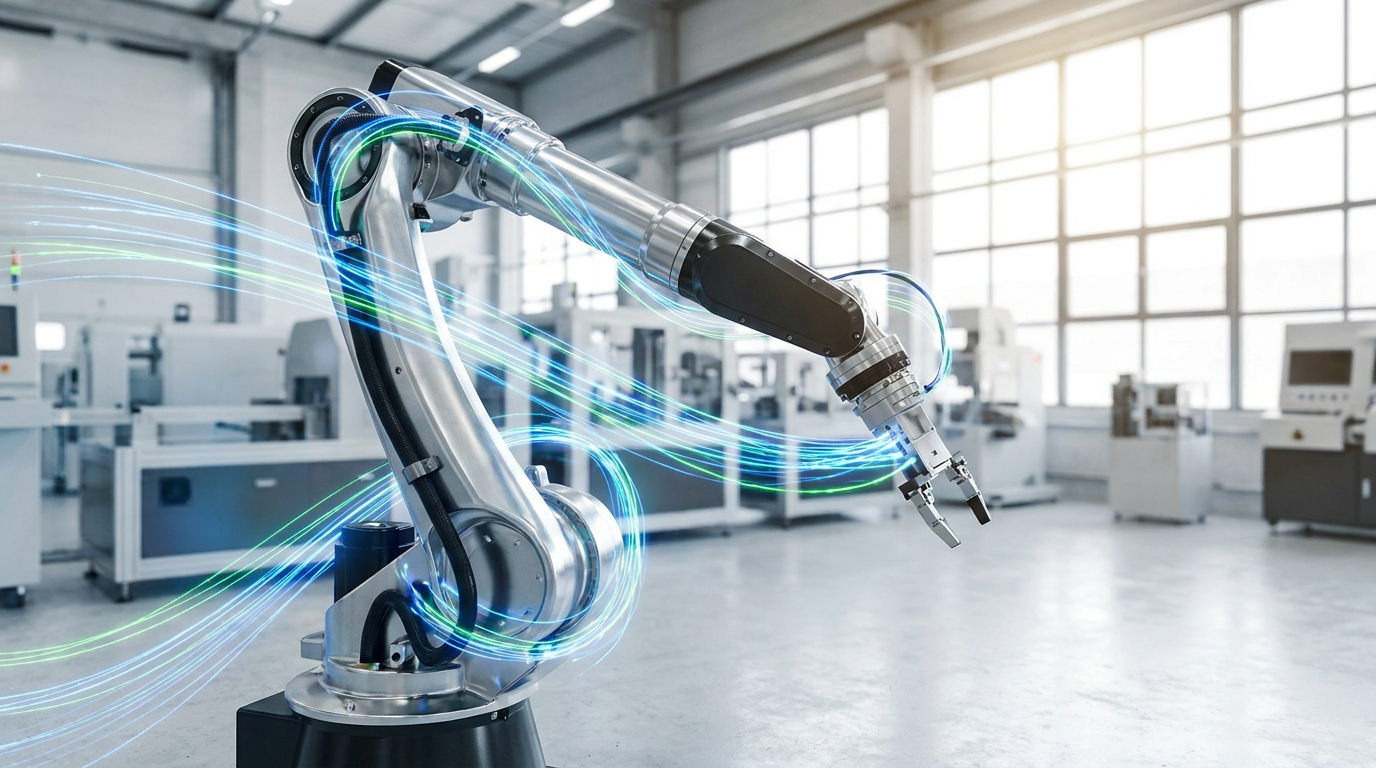
Artificial intelligence has spent the last decade mastering the digital realm, generating text, writing code, and rendering images with unprecedented speed. But as the technology industry attempts to push these capabilities into the physical world—powering autonomous drones, industrial robots, and self-driving vehicles—it has collided with a fundamental law of physics. Between an AI model capable of making a complex decision and a machine capable of executing it, there is a network. When the "brain" is located in a remote data center and the "body" is navigating a busy warehouse, the time it takes for data to travel back and forth becomes a critical bottleneck. This delay, known as latency, is the invisible ceiling currently limiting the deployment of physical AI at scale.[1][2]
To solve this infrastructure gap, the technology sector is turning to an unlikely source: the architect behind one of the most ubiquitous pieces of consumer software in history. Jean-Baptiste Kempf, the lead developer of the VLC Media Player—famous for its orange traffic-cone icon and over six billion downloads—has emerged from stealth with a new venture. His Paris-based startup, Kyber, is building a dedicated infrastructure layer designed specifically for the real-time remote control of physical devices.[3][4]
Kyber recently secured a $5 million seed funding round led by Lightspeed Venture Partners, with participation from OVNI Capital and Kima Ventures. The investment underscores a growing realization among venture capitalists that the AI boom has disproportionately focused on models and compute power, while neglecting the "last mile" of physical execution. As Lightspeed noted in its investment thesis, physical AI is ultimately only as effective as the underlying networking systems that run it.[1][6]
To understand why a new infrastructure layer is necessary, one must look at how remote machines are currently operated. Most existing systems rely on communication protocols originally developed for the consumer internet, particularly WebRTC. WebRTC is the foundational technology behind modern video conferencing, designed to facilitate communication between humans. For a video call, a latency of 200 to 300 milliseconds is entirely acceptable; the human brain easily smooths over the slight delay in conversation.[2][5]

However, translating human-centric latency to machine operations yields catastrophic results. In the physical world, a few hundred milliseconds of lag can represent several meters of travel for a drone or an autonomous vehicle before a steering command is actually executed. In industrial manufacturing, robotic surgery, or military applications, these delays are not just inconvenient—they are operationally unacceptable and potentially dangerous. If a remote operator or an AI agent cannot see what a robot is doing in true real-time, they cannot safely control it.[2][3]
However, translating human-centric latency to machine operations yields catastrophic results.
Kyber addresses this by abandoning legacy video-conferencing protocols in favor of a unified software development kit (SDK) engineered from the ground up for machine control. The platform synchronizes high-definition video, spatial audio, complex sensor data, and control inputs into a single, cohesive data stream. By adapting highly optimized transmission protocols originally designed for cloud gaming and high-performance media, Kyber claims it can reduce end-to-end latency to as little as eight milliseconds.[2][5]
This architectural decoupling is a significant shift for the robotics industry. Historically, robotics companies have been forced to build their own proprietary, custom communication stacks from scratch. This fragmented approach is expensive, difficult to scale, and often results in subpar performance when deployed across diverse geographic regions with varying network conditions. Kyber's solution separates the operator, the compute environment, and the physical action, allowing them to exist in entirely different locations without sacrificing responsiveness.[4][5]
Kempf’s strategy for Kyber borrows heavily from the playbook that made VLC and FFmpeg foundational pillars of the digital video ecosystem. Neither of those projects became major businesses through direct consumer monetization. Instead, they were released as open-source software, which encouraged widespread, frictionless integration by developers around the world. Over time, they became the de facto technical standards embedded in millions of applications, streaming services, and connected devices.[2][3]

Kyber is adopting a similar "open-core" business model to drive rapid adoption across the highly fragmented robotics sector. The foundational software development kit and core transmission protocols will be released as open-source software, allowing engineers, researchers, and startups to freely integrate the low-latency technology into their prototypes and commercial hardware. Meanwhile, Kyber plans to monetize the platform by offering advanced enterprise features, comprehensive fleet management tools, and dedicated commercial support for massive multinational companies operating at scale. This ensures the technology remains accessible while building a sustainable revenue stream.[2][5]
This dual approach is particularly attractive to investors looking to capture value in the early stages of a new technology cycle. In software markets, the companies that establish the underlying technical standards often become the most valuable entities in the ecosystem. By providing a free, highly performant baseline, Kyber aims to become the default communication layer for the entire physical AI industry, regardless of which hardware manufacturers ultimately sell the most robots.[2][4]
The startup, which maintains a lean team of roughly twenty-five professionals across hubs in Paris, San Francisco, and Singapore, is not waiting for the future to arrive. Kyber's infrastructure is already being deployed in active commercial environments. Early adopters include organizations in the defense sector, telecommunications, and enterprise IT, where the software is being used to supersede legacy virtualization tools for remote access.[3][5]

Ultimately, the success of Kyber will serve as a bellwether for the broader robotics industry. If autonomous systems are to scale from isolated pilot programs featuring a few thousand units to global networks of hundreds of millions of connected devices, they will require a standardized, ultra-reliable nervous system. By bridging the gap between digital intelligence and physical action, Kyber is attempting to build the exact infrastructure that will allow the next generation of machines to safely navigate the real world.[1][5]
How we got here
2001
VLC Media Player is released, eventually becoming a global standard with over 6 billion downloads.
2024
Jean-Baptiste Kempf begins developing the low-latency protocols that would become Kyber while working at cloud gaming startup Shadow.
June 2026
Kyber emerges from stealth, announcing a $5 million seed round to build the infrastructure layer for physical AI.
Viewpoints in depth
Open-Source Technologists
Advocates for a unified, free standard for the physical world.
This camp argues that just as FFmpeg and VLC became the invisible backbone of digital video, the robotics industry desperately needs a shared, open-source protocol. They point out that proprietary, fragmented control systems slow down the entire industry, forcing every hardware startup to reinvent the wheel. By making the core SDK open-source, they believe Kyber can standardize machine communication and accelerate the deployment of autonomous systems globally.
Physical AI Investors
Focused on the infrastructure bottleneck limiting market growth.
Investors in this space argue that the broader AI boom has focused too heavily on digital models and data center compute, neglecting the 'last mile' of physical execution. They view reliable, low-latency communication as the critical unlock required to scale autonomous fleets from thousands of pilot units to millions of commercial devices. For them, the company that owns the underlying control layer will capture immense value, regardless of which hardware manufacturer wins the robotics race.
What we don't know
- Whether Kyber's open-core model will achieve the same ubiquitous adoption in enterprise robotics as VLC did in consumer video.
- How the platform will perform under the extreme network degradation found in remote or contested geographic environments.
Key terms
- Physical AI
- Artificial intelligence systems designed to interact with the real world, such as robots, drones, and autonomous vehicles.
- Latency
- The time it takes for data to pass from one point on a network to another; in robotics, high latency causes delayed reactions.
- SDK (Software Development Kit)
- A set of tools and programs provided by vendors that developers use to build applications for specific platforms.
- WebRTC
- A widely used open-source project that provides real-time communication via simple APIs, primarily designed for human video calls.
- Open-core
- A business model where the core features of a software product are offered for free as open-source, while advanced enterprise features are sold commercially.
Frequently asked
What is Kyber?
Kyber is a software infrastructure layer designed to control remote devices, robots, and drones in real time with ultra-low latency.
Who founded Kyber?
The company was founded by Jean-Baptiste Kempf, the lead developer behind the widely used VLC Media Player.
Why can't robots just use existing video streaming tech?
Current protocols like WebRTC were built for human communication, where a slight delay is acceptable. For fast-moving robots, a delay of a few hundred milliseconds can result in a crash.
Is Kyber free to use?
Kyber uses an 'open-core' model, meaning its foundational technology is open-source and free, while enterprise management tools require a commercial license.
Sources
Source coverage
6 outlets
2 viewpoints surfaced





[1]TechCrunchOpen-Source Technologists
He made your free video player run smoothly. Now he’s doing that for robots.
Read on TechCrunch →[2]Startup.euPhysical AI Investors
France-based Kyber raises $5 million seed round to build real-time infrastructure for robots, drones and other Physical AI systems
Read on Startup.eu →[3]The Next WebOpen-Source Technologists
The developer behind VLC's 6 billion downloads now wants to connect hundreds of millions of robots
Read on The Next Web →[4]WhalesbookPhysical AI Investors
Kyber Raises $5 Million To Build Robot Control Platform
Read on Whalesbook →[5]Hyper.aiOpen-Source Technologists
VLC Media Player creator Jean-Baptiste Kempf is pivoting from global video playback to the physical computing frontier
Read on Hyper.ai →[6]Morgan LewisPhysical AI Investors
Morgan Lewis Advises Lightspeed Venture Partners in $5 Million Investment in Kyber
Read on Morgan Lewis →

Every angle. Every day.
Get technology stories with full source coverage and perspective breakdowns delivered to your inbox.