
The Rise of the Solo Analyst: How Independent Creators Are Building Micro-Media Empires
Armed with specialized knowledge and AI tools, independent financial and tech analysts are leaving traditional institutions to build lucrative, subscription-based businesses. This shift is democratizing market intelligence and redefining the creator economy.
By Factlen Editorial Team
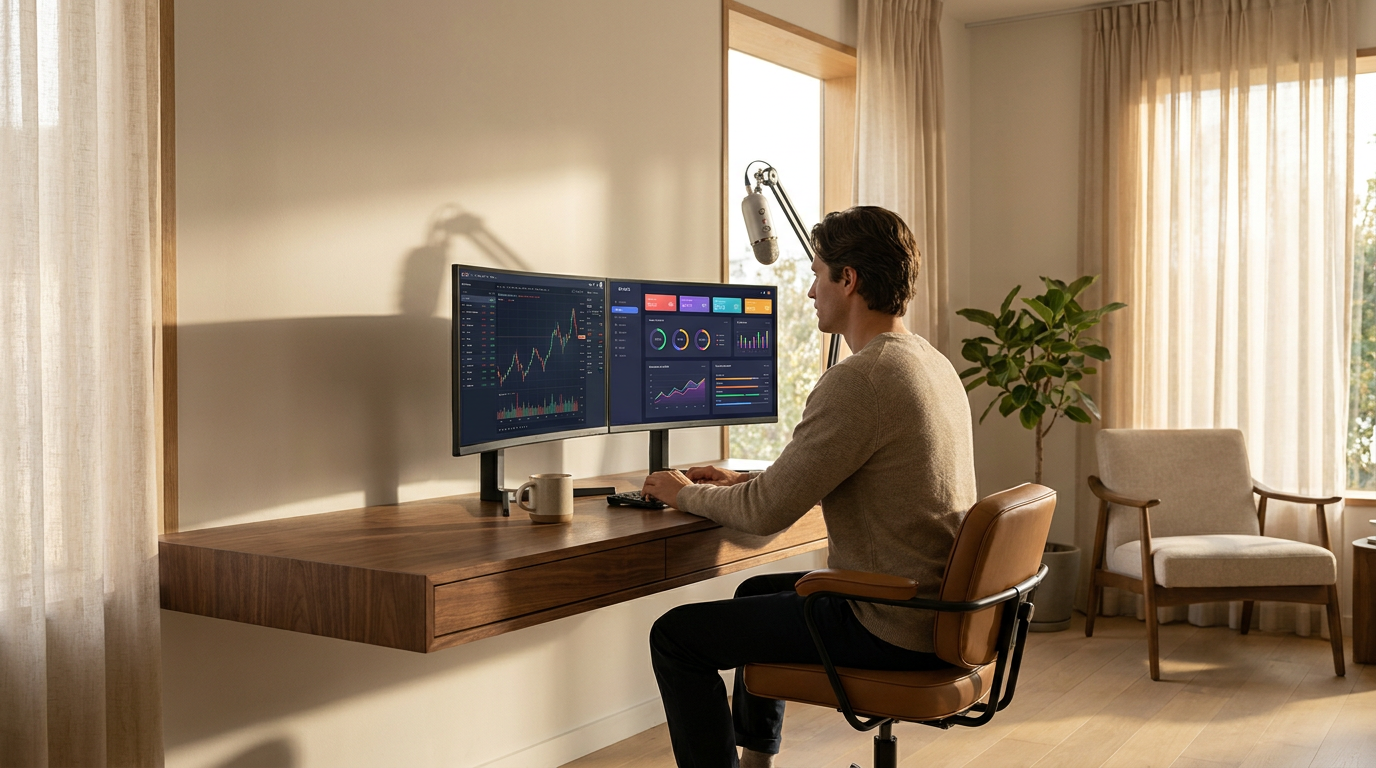
- Independent Creators
- Value autonomy, direct audience relationships, and the ability to monetize niche expertise without institutional constraints.
- Institutional Publishers
- Emphasize the importance of scale, editorial oversight, compliance, and established brand trust in delivering market intelligence.
- Platform Providers
- Focus on building the infrastructure and payment rails that enable the creator economy, seeking to maximize ecosystem growth.
What's not represented
- · Traditional financial compliance officers
- · Retail investors consuming the content
Why this matters
For professionals and investors, this trend means access to highly specialized, unvarnished insights that legacy institutions often cannot provide. For aspiring entrepreneurs, it proves that deep niche expertise—paired with modern distribution and AI—can scale into a highly profitable standalone business without traditional gatekeepers.
Key points
- Independent analysts are leaving traditional institutions to build solo, subscription-based media businesses.
- Platforms like Substack provide the necessary distribution and payment infrastructure out of the box.
- Artificial intelligence tools allow single operators to perform the work of an entire research desk.
- The 'knowledge creator' segment boasts exceptionally high profit margins and low churn rates.
- Solo operators face challenges including burnout, platform reliance, and discovery in a crowded market.
- Many creators are forming decentralized collectives to simulate the scale of traditional media companies.
The traditional architecture of financial and technological analysis is undergoing a quiet but profound structural shift. For decades, the most valuable market intelligence was locked inside institutional research desks, legacy media conglomerates, and specialized consulting firms. Today, that monopoly is fracturing. A new class of solo entrepreneurs—armed with deep domain expertise and modern distribution platforms—is unbundling the research desk and selling insights directly to a willing audience.[6]
This phenomenon was recently highlighted when Bloomberg convened a panel of prominent Substack creators to discuss how independent analysts are covering an increasingly complex market era. These creators, who operate as one-person media companies, are navigating a landscape dominated by artificial intelligence breakthroughs and shifting macroeconomic realities. Their success underscores a broader migration of talent from institutional payrolls to independent, subscription-based models.[1][2]
The mechanics of this shift are rooted in the fundamental economics of the internet, but they have been supercharged by recent technological leaps. Historically, building a media or research business required significant capital for distribution, compliance, and editorial infrastructure. Now, platforms provide the distribution and payment rails out of the box, allowing analysts to focus entirely on generating high-signal content.[6]
We can define this emerging model as the "Micro-Media Company." Unlike the broader influencer economy, which relies on mass reach and advertising, these solo analysts operate on a high-conviction, low-volume model. They monetize through direct, premium subscriptions, often charging hundreds or thousands of dollars annually for specialized insights that directly impact their readers' investment or business decisions.[4][6]
The financial scale of this transition is substantial. Research from Goldman Sachs projects that the broader creator economy could approach half a trillion dollars by the end of the decade. While much of that figure is driven by entertainment, the "knowledge creator" segment is capturing a disproportionately lucrative slice of the pie due to its high-margin, recurring-revenue nature.[3]

A critical catalyst for the recent explosion in solo analyst businesses is the rapid advancement of artificial intelligence. As discussed by the creators on the Bloomberg panel, AI has effectively become a synthetic junior analyst for the solo operator. Tasks that once required a team—scraping SEC filings, summarizing earnings call transcripts, and building initial financial models—can now be executed by a single person using advanced large language models.[2][6]
A critical catalyst for the recent explosion in solo analyst businesses is the rapid advancement of artificial intelligence.
This technological leverage is fundamentally altering the barrier to entry. The U.S. Small Business Administration has tracked a steady rise in nonemployer businesses—companies with no paid employees other than the owner. In the digital knowledge sector, this structure is no longer a stepping stone to building a larger agency; it is the desired end-state. Solo operators can achieve unprecedented revenue-per-employee metrics by keeping their overhead near zero.[5]

For the consumer—often a retail investor, a startup founder, or a corporate strategist—the appeal of the solo analyst lies in unvarnished authenticity. Institutional research is frequently constrained by compliance departments, banking relationships, and the need to appeal to a broad, generalized audience. Independent creators have no such mandates. They can afford to be highly opinionated, deeply niche, and entirely transparent about their biases.[1][6]
Furthermore, the relationship between the creator and the subscriber is inherently more intimate than the relationship between a reader and a faceless institution. This parasocial dynamic fosters intense loyalty, which translates into exceptionally low churn rates for top-tier independent analysts. Subscribers feel they are investing in a specific person's intellectual journey rather than just buying a data feed.[4]
However, the solo entrepreneurship model is not without significant structural risks. The most pressing challenge is the psychological and operational toll of being a single point of failure. The "always-on" nature of market analysis means that independent creators face high rates of burnout. Without a newsroom to share the load, a week off can mean a direct hit to subscriber retention and revenue.[6]
There is also the looming threat of platform risk. While current infrastructure providers offer favorable economics to attract top talent, the history of the internet is littered with platforms that eventually squeezed their creators to satisfy their own margin requirements. If a dominant newsletter platform were to significantly alter its take-rate or algorithm, solo analysts could see their businesses disrupted overnight.[4][6]

Additionally, the proliferation of independent voices creates a discovery problem. As the barrier to entry drops to zero, the market is flooded with noise. Academic analyses regarding the passion economy note that while the middle class of creators is growing, the ecosystem still exhibits power-law dynamics. A small fraction of analysts captures the vast majority of subscription revenue.[4]
To combat this, successful solo analysts are increasingly forming decentralized collectives. They cross-promote each other's work, bundle subscriptions, and occasionally collaborate on deep-dive reports. This allows them to simulate the scale and network effects of a traditional media company while retaining their individual equity and editorial independence.[6]
Ultimately, the rise of the solo analyst represents a permanent restructuring of the knowledge economy. It proves that highly specialized expertise, when paired with zero-marginal-cost distribution and AI leverage, is a viable and highly profitable standalone business. As traditional institutions continue to navigate their own structural challenges, the center of gravity for market intelligence will increasingly shift toward these agile, independent operators.[1][6]
How we got here
2017
Substack launches, providing a frictionless platform for writers to monetize email newsletters directly.
2020-2021
The pandemic accelerates the 'passion economy,' leading to a surge of professionals leaving traditional jobs to become independent creators.
2023
Goldman Sachs projects the creator economy will approach half a trillion dollars by 2027.
2024-2025
Advanced AI tools become widely accessible, allowing solo analysts to automate complex data processing and research tasks.
2026
Independent financial analysts establish themselves as primary sources of market intelligence, rivaling legacy institutional research desks.
Viewpoints in depth
Independent Creators
Value autonomy, direct audience relationships, and the ability to monetize niche expertise without institutional constraints.
For the solo analyst, the independent model offers unparalleled editorial freedom and uncapped financial upside. By removing the institutional middleman, creators capture the full value of their expertise. They argue that traditional research desks are often compromised by the need to maintain corporate banking relationships or appeal to a generalized audience. In contrast, the independent creator can afford to be highly opinionated, deeply specialized, and entirely transparent with their subscribers, fostering a level of trust and loyalty that legacy media struggles to replicate.
Institutional Publishers
Emphasize the importance of scale, editorial oversight, compliance, and established brand trust in delivering market intelligence.
Legacy financial institutions and traditional media conglomerates argue that while solo analysts offer unique perspectives, they lack the rigorous compliance and editorial oversight necessary for institutional-grade intelligence. They point out that a solo operator is a single point of failure, susceptible to personal biases and blind spots without a team of editors or peer reviewers to challenge their assumptions. Furthermore, institutions argue they provide a breadth of coverage and a scale of data access that no single individual, regardless of their AI tools, can match.
Platform Providers
Focus on building the infrastructure and payment rails that enable the creator economy, seeking to maximize ecosystem growth.
The technology companies providing the infrastructure for this shift—newsletter platforms, payment processors, and AI developers—view the rise of the solo analyst as a validation of their business models. Their primary objective is to lower the barrier to entry as much as possible, providing enterprise-grade tools to individual operators. They argue that by handling the complexities of distribution, security, and monetization, they free the creator to focus entirely on content generation, thereby expanding the overall size of the digital knowledge economy.
What we don't know
- How platform algorithms will evolve to prioritize or suppress independent financial content.
- Whether subscription fatigue among consumers will eventually cap the growth of solo analysts.
- How traditional financial institutions will adapt their compensation models to retain top analytical talent.
Key terms
- Creator Economy
- The class of businesses built by independent content creators, curators, and community builders, encompassing software and finance tools designed to help them grow and monetize.
- Micro-Media Company
- A highly specialized, low-headcount media business that focuses on a specific niche and monetizes primarily through high-value subscriptions rather than mass-market advertising.
- Nonemployer Business
- A business that has no paid employees other than the owner, a structure increasingly common among digital knowledge workers.
- Platform Risk
- The danger a business faces when it relies heavily on a third-party platform (like a newsletter host or social network) for distribution or revenue, leaving it vulnerable to policy changes.
Frequently asked
What is a solo analyst entrepreneur?
A solo analyst is an independent professional who builds a one-person media or research company, typically monetizing their specialized expertise through direct, premium subscriptions rather than advertising.
How has AI impacted independent creators?
AI has acted as a massive productivity multiplier. Tools like large language models allow solo operators to automate data scraping, summarize earnings calls, and perform tasks that previously required a team of junior analysts.
What are the main risks of this business model?
The primary risks include creator burnout due to the 'always-on' nature of the work, platform risk if distribution networks change their algorithms or fees, and the challenge of standing out in a crowded market.
Sources
Source coverage
6 outlets
3 viewpoints surfaced





[1]BloombergIndependent Creators
How Substack Creators Are Covering This Strange Markets Era
Read on Bloomberg →Odd Lots: How Substack Creators Are Thinking About AI (Podcast)
Read on Bloomberg →[3]Goldman Sachs ResearchPlatform Providers
The creator economy could approach half a trillion dollars by 2027
Read on Goldman Sachs Research →[4]Harvard Business ReviewInstitutional Publishers
The Passion Economy and the Future of Work
Read on Harvard Business Review →[5]U.S. Small Business AdministrationPlatform Providers
The Growth of Nonemployer Businesses in the Digital Age
Read on U.S. Small Business Administration →[6]Factlen Editorial TeamIndependent Creators
Synthesis by Factlen editorial team
Read on Factlen Editorial Team →
Every angle. Every day.
Get business stories with full source coverage and perspective breakdowns delivered to your inbox.