
Smart Ring vs. Smartwatch: How to Choose the Right Health Wearable in 2026
As the wearable market splits into two distinct form factors, consumers must weigh the passive, sleep-focused benefits of smart rings against the active, fitness-driven features of smartwatches.
By Factlen Editorial Team
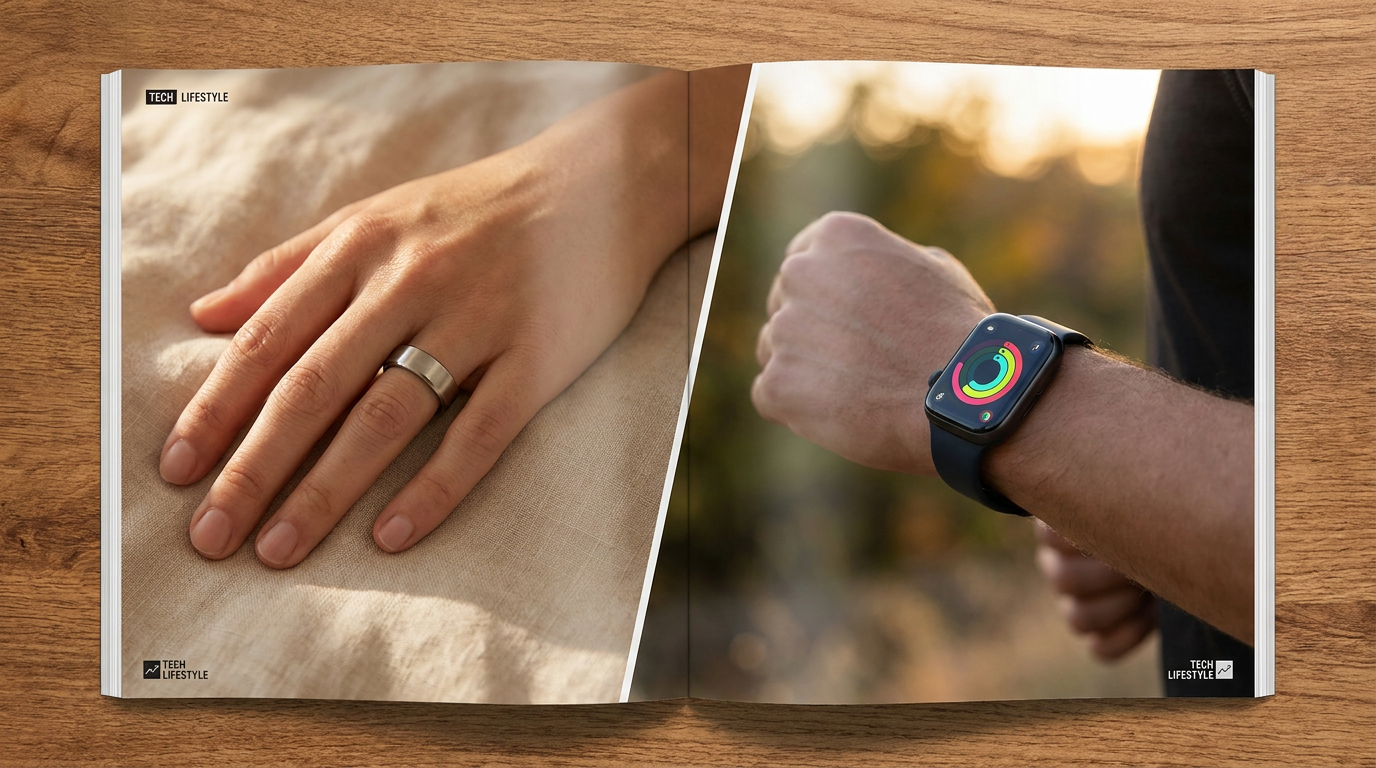
- Passive Monitoring Advocates
- Prioritizes invisible, continuous health tracking with minimal screen time and maximum comfort.
- Active Fitness Enthusiasts
- Values real-time workout data, GPS tracking, and on-demand metrics during intense physical activity.
- Holistic Ecosystem Users
- Seeks a balance of smart features, medical-grade sensors, and everyday utility from their wearables.
What's not represented
- · Traditional mechanical watch collectors who use rings to track health without giving up wrist real estate.
- · Medical professionals evaluating consumer wearables for clinical patient monitoring.
Why this matters
Choosing the wrong wearable can result in hundreds of wasted dollars and abandoned health goals. Understanding the distinct strengths of rings versus watches ensures you invest in a device that actually matches your daily habits and fitness needs.
Key points
- Smart rings utilize finger-based sensors that provide superior accuracy for overnight sleep tracking and heart rate variability.
- Smartwatches remain the undisputed choice for active workouts, offering built-in GPS and real-time pacing on a screen.
- Battery life heavily favors smart rings, which last up to nine days compared to the daily charging required by watches.
- Many premium smart rings require monthly subscriptions for full data access, whereas smartwatches typically do not.
The wearable health technology market in 2026 has reached a fascinating crossroads, leaving consumers with a complex purchasing decision. For years, the default answer to tracking daily health was strapping a miniature computer to your wrist, with devices like the Apple Watch dominating the landscape. Today, a new paradigm has emerged, splitting the market into two distinct form factors: the active, screen-based smartwatch and the passive, screenless smart ring. As major technology companies expand their wearable portfolios, shoppers are no longer just choosing a brand; they are choosing a fundamental philosophy of how they want to interact with their personal health data. This divergence has sparked intense debate among fitness enthusiasts and medical professionals alike, as each device offers distinct advantages and inherent compromises that drastically alter the user experience.[1][2]
This division between rings and watches is not merely about aesthetics or fashion; it represents a fundamental difference in how we engage with our biometric data. Smartwatches are explicitly designed for active engagement, serving as a powerful extension of the smartphone that demands attention through haptic notifications, pacing alerts, and glowing OLED screens. They are built to keep you connected and informed in real time. Smart rings, by contrast, act as silent, ambient sentinels. They collect thousands of data points in the background without ever buzzing or lighting up, requiring users to intentionally open a companion app on their phone to view their health metrics. For those seeking to reduce screen time and digital distractions, the ring offers a compelling alternative to the constant connectivity of a wrist-based computer.[3][4]
When it comes to overnight monitoring and recovery analysis, the smart ring has established a decisive advantage over its wrist-worn counterparts. This superiority stems directly from human anatomy and sensor placement. The finger contains dense capillary networks that sit incredibly close to the skin's surface, allowing the ring's optical photoplethysmography (PPG) sensors to capture a remarkably strong and clean pulse signal directly from the digital arteries. Because the ring wraps entirely around the finger, it shields the sensors from ambient light leaks that can degrade data quality. Medical reviewers and sleep scientists consistently note that this anatomical advantage allows smart rings to track subtle cardiovascular changes with exceptional precision, making them the premier choice for nocturnal health monitoring.[4][6]

Wrist-mounted sensors, while highly advanced and continually improving, are inherently more susceptible to what engineers call "motion artifact." As sleepers toss, turn, or bend their wrists during the night, the watch can temporarily lose perfect flush contact with the skin, introducing noise and gaps into the data stream. Consequently, smart rings consistently outperform smartwatches in capturing accurate overnight Heart Rate Variability (HRV)—a critical metric for assessing nervous system recovery—and precise sleep stage classification. The stable, secure fit of a ring ensures that the sensors remain perfectly aligned with the blood vessels regardless of how much the user moves in their sleep, providing a more reliable baseline for morning readiness scores.[2][6]
Beyond the technical accuracy of the sensors, the practical reality of physical comfort dictates the long-term success of any sleep tracker. A typical premium smartwatch weighs between 30 and 50 grams and features a rigid metal chassis that many users find distracting or uncomfortable when pressing against their face or the mattress in bed. In stark contrast, a modern titanium smart ring weighs just 2 to 4 grams and sits entirely unobtrusively on the finger. This massive difference in physical footprint leads to significantly higher nightly compliance among ring users. Wearable data analysts frequently point out that the most accurate sleep tracker in the world is useless if it sits on a nightstand because the user finds it too bulky to wear to bed.[3][4]
However, the moment the sun comes up and a dedicated workout begins, the smartwatch emphatically reclaims its crown as the superior wearable. For active fitness enthusiasts, runners, and cyclists, the smartwatch remains the undisputed champion of athletic performance tracking. Devices like the Apple Watch Series 11 and high-end Garmin wearables feature built-in, multi-band GPS antennas, allowing athletes to leave their heavy smartphones at home while accurately mapping their outdoor routes, calculating stride length, and measuring elevation changes. Smart rings simply do not possess the internal space for GPS hardware, meaning they must remain tethered to a nearby smartphone to capture any location-based workout data, which is a significant drawback for outdoor athletes.[1][2]
During intense exercise, the presence of a screen transforms the wearable from a passive data recorder into an active, dynamic coach. Smartwatches provide crucial real-time feedback, allowing users to glance at their wrist to check their current heart rate zones, adjust their running pace, or monitor their interval timing. Smart rings cannot offer this live guidance; they merely record the biometric data for post-workout analysis, which often takes several minutes to sync and process once the user opens the app. For anyone who uses their health data to actively modify their effort mid-workout, the lack of a display on a smart ring makes it fundamentally inadequate for serious athletic training.[1][5]
During intense exercise, the presence of a screen transforms the wearable from a passive data recorder into an active, dynamic coach.
Furthermore, the finger is actually a suboptimal location for tracking heart rate during specific types of intense physical activity. Activities that require heavy gripping—such as weightlifting, rowing, rock climbing, or gripping bicycle handlebars—restrict the natural blood flow to the fingers. This physiological reality frequently causes smart rings to drop heart rate readings entirely or report artificially low numbers during strength training. Wrist sensors, while occasionally challenged by heavy wrist flexion, generally maintain a much more consistent connection to the radial artery during vigorous movement. Consequently, smartwatches provide a far more accurate picture of cardiovascular exertion across a wider variety of exercise modalities.[1][3]
The architectural differences between the two form factors also dictate their endurance, creating vastly different charging habits for users. Powering a high-resolution OLED screen, continuous GPS tracking, and cellular radios requires immense amounts of energy. As a result, most mainstream smartwatches require daily charging, typically lasting between 18 and 36 hours under normal use. This frequent charging cycle creates inevitable gaps in 24/7 data collection, often forcing users into a frustrating daily compromise: they must choose between tracking their sleep overnight or having a fully charged battery to get through the following workday. This friction is one of the primary reasons smartwatch users eventually abandon sleep tracking altogether, as the logistics of finding an hour to charge the device every single day becomes too burdensome.[1][5]

Smart rings, unburdened by power-hungry screens, vibration motors, or GPS chips, boast vastly superior battery life that fundamentally changes the user experience. Premium models from industry leaders like Oura, Samsung, and RingConn routinely deliver five to nine days of continuous use on a single, rapid charge. This exceptional longevity allows the device to truly fade into the background of daily life, capturing uninterrupted, round-the-clock baseline metrics. Consistent, gap-free data is crucial for the algorithms that power accurate illness detection, stress monitoring, and holistic recovery scoring. The ability to wear a device for a full week without thinking about a charger is frequently cited as the smart ring's most liberating feature.[2][5]
Despite the ring's impressive battery advantage, smartwatches still hold a strict monopoly on certain medical-grade health features that can literally save lives. The larger physical footprint of a watch allows manufacturers to include sophisticated, FDA-cleared electrocardiogram (ECG) sensors. These sensors allow users to take on-demand readings that can detect atrial fibrillation (AFib) and other dangerous irregular heart rhythms. Due to extreme size constraints and the complexities of electrical circuitry on a curved finger, no consumer smart ring currently offers on-demand ECG capabilities. For older adults or individuals with specific cardiovascular concerns, this medical-grade functionality makes the smartwatch an irreplaceable health monitoring tool.[1][6]
The financial trade-offs between the two devices extend far beyond the initial retail purchase price, introducing hidden costs that shoppers must carefully evaluate. While premium smartwatches typically cost between $250 and $500 upfront, they rarely require ongoing subscription payments to access your basic health and fitness data. Conversely, some of the most popular premium smart rings mandate a monthly subscription—such as Oura's $5.99 monthly fee—to unlock comprehensive sleep staging and recovery insights. Over a three-year lifespan, this subscription model drastically alters the long-term value proposition, though newer competitors like RingConn and Samsung are actively challenging this norm by offering subscription-free ring ecosystems.[3][4]
When evaluating the smart ring, the argument for it centers on unparalleled sleep comfort, superior overnight HRV accuracy, and multi-day battery life. The argument against it highlights the complete lack of real-time workout feedback, poor heart rate tracking during grip-heavy exercises, and occasional subscription fees. The evidence clearly shows that finger-based sensors capture superior resting data. Ultimately, a smart ring fits well when your primary goals are optimizing sleep, tracking long-term recovery trends, and reducing daily screen time. It does not fit well if you demand real-time workout pacing, frequently train without your smartphone, or want to receive text messages on the go.[2][4]

Conversely, the argument for the smartwatch is built on its active coaching abilities, built-in GPS independence, and medical-grade ECG sensors. The argument against it focuses on its bulky form factor during sleep, the friction of daily charging, and the potential for digital distraction. The evidence confirms that wrist-based sensors maintain better contact during heavy physical movement. Therefore, a smartwatch fits well when you are an active athlete who relies on live performance metrics and seamless smartphone ecosystem integration. It does not fit well if you suffer from notification fatigue, find wrist wearables uncomfortable at night, or struggle with the discipline of daily charging.[1][5]
Recognizing these distinct strengths and inherent limitations, a growing segment of health enthusiasts in 2026 has abandoned the idea of a single winner. Instead, they are adopting a pragmatic hybrid approach to wearable technology. These users wear a highly capable smartwatch or a stylish traditional mechanical watch during the day for connectivity, contactless payments, and active workout tracking. When evening arrives, they place the watch on its charger and slip on a smart ring for unobstructed, highly accurate sleep monitoring. By leveraging the specific strengths of both form factors, they achieve a truly comprehensive, 24/7 health tracking ecosystem without compromise.[3][6]
How we got here
2015
The original Apple Watch launches, establishing the wrist as the default home for health tracking.
2018
Oura introduces its Gen 2 ring, proving that finger-based sleep tracking can rival clinical sleep studies.
2022
Smartwatches introduce medical-grade features like ECG and temperature sensing for cycle tracking.
2024
The smart ring market explodes with new entrants like Ultrahuman and RingConn challenging Oura's dominance.
2026
Major tech giants, including Samsung, fully enter the ring category, cementing the two-device paradigm.
Viewpoints in depth
The Sleep & Recovery Camp
Advocates who prioritize overnight metrics and invisible technology.
This viewpoint argues that the most valuable health data is gathered while we sleep. Proponents emphasize that because rings are lightweight and lack glowing screens, users are far more likely to wear them consistently every night. They point to the superior accuracy of finger-based PPG sensors for capturing Heart Rate Variability (HRV), arguing that a device you actually wear to bed is infinitely more useful than a highly advanced watch sitting on a charger.
The Active Training Camp
Athletes and fitness enthusiasts who demand real-time performance data.
For this camp, a wearable's primary job is to actively coach the user through physical exertion. They argue that smart rings are fundamentally flawed for serious athletes because they cannot display live heart rate zones, pacing, or GPS maps. Furthermore, they highlight that gripping motions during weightlifting or cycling cause rings to lose their sensor connection, making the smartwatch the only reliable choice for active training.
The Hybrid Adopters
Users who utilize both form factors to cover all aspects of their health.
Rather than choosing a side, this growing demographic argues that rings and watches serve entirely different purposes. They utilize smartwatches during the day for notifications, contactless payments, and workout tracking, then switch to a smart ring at night for unobstructed sleep monitoring. This camp views the devices not as competitors, but as complementary tools in a comprehensive health tracking ecosystem.
What we don't know
- Whether future smart rings will be able to overcome severe size constraints to incorporate FDA-cleared ECG sensors.
- How long the subscription-based business model for premium rings will survive as more hardware-only competitors enter the market.
- If Apple will eventually release a smart ring to complement its dominant Apple Watch ecosystem, a move that could disrupt the entire category.
Key terms
- PPG Sensor (Photoplethysmography)
- An optical sensor that uses light to measure changes in blood volume, used by wearables to track heart rate.
- HRV (Heart Rate Variability)
- The variation in time between each heartbeat, a key metric used to determine physical recovery and stress levels.
- SpO2
- An estimate of the amount of oxygen in the blood, tracked overnight to detect breathing disturbances.
- Motion Artifact
- Errors in sensor data caused by physical movement, which frequently affects wrist-based wearables during exercise.
Frequently asked
Can a smart ring track my outdoor runs using GPS?
No. Smart rings lack built-in GPS hardware and must remain tethered to a connected smartphone to map outdoor routes and calculate distance.
Do all smart rings require a monthly subscription fee?
No. While Oura charges a monthly fee for full data access, brands like RingConn and Samsung offer comprehensive health tracking without ongoing subscriptions.
Which device is better for detecting irregular heart rhythms?
Smartwatches are superior for this medical need. Devices like the Apple Watch feature FDA-cleared ECG sensors for AFib detection, which rings currently lack.
Is it redundant to wear both a smart ring and a smartwatch?
Not necessarily. Many users wear a smartwatch during the day for notifications and workouts, then switch to a ring at night for comfortable sleep tracking.
Sources
Source coverage
6 outlets
3 viewpoints surfaced






[1]ForbesActive Fitness Enthusiasts
Oura Ring Vs. Apple Watch: Which Wearable Is Right For You?
Read on Forbes →[2]NBC NewsActive Fitness Enthusiasts
Oura Ring vs. Apple Watch: A comprehensive 2026 comparison
Read on NBC News →[3]TechRadarHolistic Ecosystem Users
Smart ring vs smartwatch: Which fitness tracking wearable is best for you?
Read on TechRadar →[4]BGRPassive Monitoring Advocates
Why smart rings are better than smartwatches for sleep tracking
Read on BGR →[5]SamsungHolistic Ecosystem Users
Smart ring vs smartwatch: what are the key differences?
Read on Samsung →[6]Wearable Wellness GuidePassive Monitoring Advocates
Stress Tracker Comparison 2026: Ring vs Watch
Read on Wearable Wellness Guide →


Every angle. Every day.
Get shopping stories with full source coverage and perspective breakdowns delivered to your inbox.