
The Solid-State Battery Era Arrives: How 2026 Became the Tipping Point for EV Range and Safety
After decades of research, solid-state batteries are officially moving from laboratories to production lines in 2026, promising to double electric vehicle ranges and cut charging times to under 15 minutes.
By Factlen Editorial Team
- Battery Technology Developers
- Focused on rapid commercialization and licensing next-generation chemistry.
- Legacy Automakers
- Prioritizing long-term durability, safety, and massive manufacturing scale over being first to market.
- Industry Analysts
- Cautiously optimistic about the technology but wary of the immediate cost premiums.
What's not represented
- · Raw material mining operators
- · Battery recycling facilities
Why this matters
Range anxiety and battery safety remain the two largest psychological barriers to widespread electric vehicle adoption. By fundamentally changing the chemistry of the battery, the auto industry is unlocking lighter, safer cars that refuel almost as fast as gas-powered vehicles.
Key points
- Solid-state batteries replace flammable liquid electrolytes with stable solid materials, eliminating the risk of thermal runaway.
- The new technology allows for energy densities of 400 to 500 Wh/kg, effectively doubling the range of current electric vehicles.
- Charging times are drastically reduced, with next-generation cells capable of reaching 80% capacity in under 15 minutes.
- While early production is beginning in 2026 for motorcycles and pilot programs, mass-market passenger cars are targeted for 2027 and 2028.
For the better part of a decade, solid-state batteries have been the automotive industry's white whale—a theoretical 'holy grail' of energy storage that was perpetually promised to be just five years away. But in 2026, that elusive timeline has finally collapsed into the present. Across the globe, from the research parks of Silicon Valley to the manufacturing hubs of Shenzhen, next-generation battery cells are officially rolling off pilot production lines and making their way into real-world vehicles. This transition marks the most significant and highly anticipated leap in energy storage since the commercialization of the lithium-ion battery in the 1990s, fundamentally rewriting the rules of electric mobility.[7]
The shift is monumental because it directly addresses the fundamental physical limitations of current electric vehicles. Today's EVs rely almost exclusively on traditional lithium-ion batteries, which use a liquid electrolyte solution to shuttle lithium ions back and forth between the cathode and the anode during the charging and discharging cycles. While this liquid architecture has successfully powered the first major wave of global electrification, it has inherent chemical bottlenecks that engineers have struggled to bypass, placing a hard ceiling on how far a car can drive and how fast it can safely recharge.[7]
Beyond performance limits, the liquid architecture carries inherent safety vulnerabilities. The organic solvents used in standard liquid electrolytes are highly flammable and sensitive to temperature fluctuations. If a battery cell is punctured in a severe crash, or if it overheats due to a rare manufacturing defect, the liquid can ignite. This triggers a dangerous chain reaction known as thermal runaway, resulting in the intense, difficult-to-extinguish chemical fires that have occasionally made international headlines and fueled consumer skepticism about electric vehicle safety.[7]
Solid-state batteries, as the name implies, completely eliminate this vulnerability by replacing the volatile liquid with a solid material—typically a specialized ceramic, polymer, or sulfide glass separator. This solid barrier still allows lithium ions to pass through efficiently, but it is entirely non-flammable. Comparative testing demonstrates a staggering difference in thermal stability: while traditional lithium-ion cells can begin to experience dangerous thermal events at around 90 degrees Celsius (194 degrees Fahrenheit), solid-state systems remain completely stable up to nearly 250 degrees Celsius, virtually eliminating the risk of spontaneous battery fires.[7]

But unparalleled safety is only half of the solid-state equation; the other half is a massive leap in sheer performance. Because the solid electrolyte is physically rigid, it acts as a structural barrier that prevents the formation of 'dendrites.' Dendrites are microscopic, needle-like metallic structures that naturally grow inside liquid batteries over thousands of charging cycles. If left unchecked, these metallic whiskers can eventually pierce the internal separator and cause a catastrophic short circuit, which is why liquid batteries require heavy, conservative engineering to remain safe.[7]
By successfully suppressing dendrite growth, battery engineers can safely swap out the traditional graphite anode for one made of pure lithium metal. This single material swap is the key to unlocking the technology's true potential, as it dramatically increases the battery's energy density—the metric that dictates exactly how much electrical power a cell can store relative to its physical weight and volume. For automakers, higher energy density is the ultimate prize, allowing them to build lighter cars that travel significantly further.[4]
The numbers emerging from 2026 production lines represent a generational leap over existing technology. The absolute best lithium-ion batteries on the market today deliver an energy density of roughly 250 to 300 watt-hours per kilogram (Wh/kg). In stark contrast, the solid-state cells currently entering pilot production are consistently hitting 400 to 500 Wh/kg. This effectively doubles the amount of energy a vehicle can carry without adding a single pound of weight to the chassis, fundamentally altering the physics and design constraints of automotive engineering.[7]

For the everyday consumer, this engineering triumph translates directly into unprecedented range and convenience. Vehicles equipped with these next-generation batteries are projected to comfortably exceed 600 miles (roughly 1,000 kilometers) on a single charge, making cross-country road trips entirely seamless and eliminating the need for constant charging stops. Furthermore, because the solid architecture can handle significantly higher voltages without degrading or overheating, charging times are plummeting to levels previously thought impossible for electric vehicles. Drivers will no longer need to plan their journeys around hour-long charging sessions.[8]
Industry leaders are already demonstrating pilot cells that can charge from 10 percent to 80 percent capacity in under 15 minutes. This rapid replenishment brings the electric vehicle charging experience remarkably close to the time it takes to fill a traditional car with gasoline. By matching the convenience of the internal combustion engine, solid-state technology effectively neutralizes 'range anxiety' for good, removing the final psychological barrier for consumers who have been hesitant to make the switch to electric mobility.[4]
Industry leaders are already demonstrating pilot cells that can charge from 10 percent to 80 percent capacity in under 15 minutes.
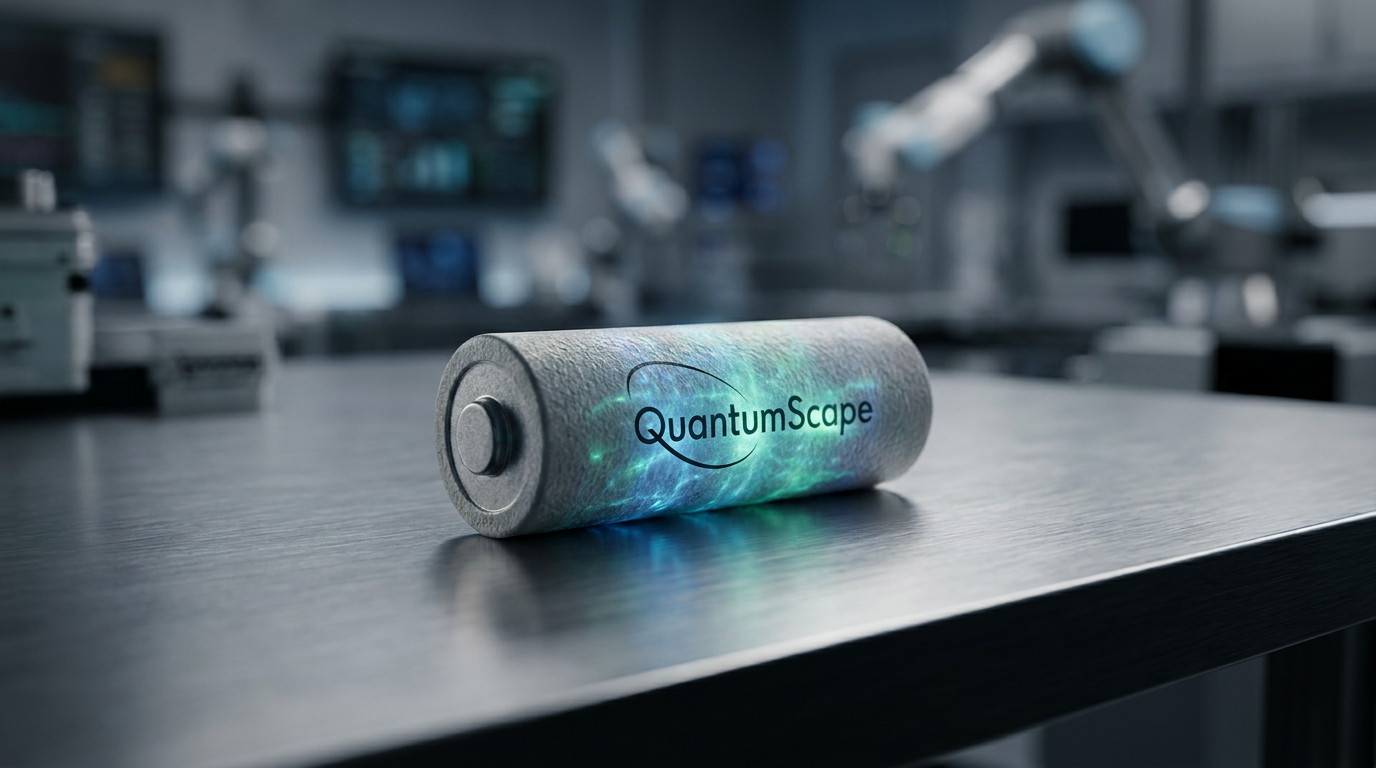
The commercial landscape in 2026 reflects a frantic, high-stakes race to scale this technology for the mass market. In June, QuantumScape, a prominent Silicon Valley battery developer backed by years of intensive research, announced a major joint research agreement with Honda to advance its solid-state platform. The partnership represents a crucial validation of the technology, as Honda conducted an in-depth, hands-on technical study of the platform before committing to a multi-year development plan aimed at bringing the cells to automotive scale.[1][3]
QuantumScape has also recently executed a strategic pivot in its business model to accelerate deployment. Rather than attempting to build massive, capital-intensive battery factories from scratch, the company is now positioning itself as a technology licensor. It plans to license its proprietary innovations—including its flagship QSE-5 cell, which boasts an impressive energy density of 844 Watt-hours per liter—directly to major automakers and established battery manufacturers. This approach replaces capital-heavy manufacturing with a more agile royalty stream, allowing legacy brands to integrate the breakthrough chemistry into their existing supply chains much faster.[4]
Meanwhile, the push for commercialization is moving at breakneck speed in China. Greater Bay Technology (GBT), a battery manufacturer backed by the GAC Group, recently announced that its A-sample all-solid-state battery cells have successfully rolled off the production line. The company reported that the cells passed rigorous needle penetration and thermal shock tests without a single fire or explosion. GBT is aggressively targeting gigawatt-hour-level mass production by the end of 2026, aiming to be the first supplier to equip mass-market passenger vehicles with the technology.[1]
Interestingly, the very first consumers to actually ride on solid-state technology aren't driving passenger cars at all. In early 2026, Verge Motorcycles, in partnership with battery developer Donut Lab, began delivering the world's first production electric motorcycles powered entirely by all-solid-state batteries. This milestone proved that the technology could survive the rigors of public roads, moving the conversation permanently away from theoretical lab results and into the realm of tangible consumer products. The bikes are already in the hands of early adopters, showcasing the immediate benefits of the new chemistry.[5]

The motorcycle form factor serves as an ideal, high-stakes proving ground for the new cells. Space and weight are at an absolute premium on two wheels, making the highly energy-dense solid-state batteries incredibly advantageous. Verge's new bikes reportedly charge in less than 10 minutes and offer up to 600 kilometers of range on a single charge. By successfully deploying the technology in motorcycles, developers are gathering invaluable real-world data on cycle life and thermal management before scaling up to larger, more complex automotive battery packs.[5]
Legacy automakers are taking a slightly more measured, but equally massive, approach to the transition. Toyota, which currently holds over 1,000 patents related to solid-state batteries—the most of any company in the world—recently broke ground on a large-scale solid electrolyte pilot plant in collaboration with Japanese oil giant Idemitsu Kosan. The facility is designed to produce the highly specialized materials required to manufacture the batteries at a global scale, ensuring a stable supply chain for the automaker's future lineup.[2]
Toyota's official roadmap targets the launch of its first solid-state electric vehicles for the 2027 to 2028 timeframe. Rather than rushing to be first, the company is focusing intensely on perfecting the durability and cycle life of the cells. Automotive-grade batteries must be able to survive extreme weather conditions, thousands of rapid fast-charging cycles, and decades of physical vibration without experiencing significant degradation. Toyota's strategy is to ensure that when its solid-state vehicles do hit the market, they possess the legendary reliability the brand is known for.[6]
Despite the immense progress witnessed in 2026, significant hurdles remain before solid-state batteries can completely replace traditional lithium-ion cells across the entire automotive industry. The primary challenge is manufacturing scale and precision. Building these advanced cells requires entirely new factory equipment and highly controlled environments, as the solid electrolytes can be extremely sensitive to moisture and impurities during the assembly process. Achieving high manufacturing yields without defects is a complex engineering puzzle that will take years to fully optimize.[4]
Cost is also a major determining factor in the technology's rollout. Early solid-state cells are expected to carry a manufacturing premium of 10 to 20 percent over traditional batteries. As a result, they will almost certainly debut in high-end luxury vehicles, performance sports cars, and heavy-duty commercial applications where buyers can absorb the higher price tag. It will likely take several years of scaled production and supply chain maturation before the economies of scale bring the price down enough to equip entry-level, budget-friendly electric vehicles.[6]

Beyond the automotive sector, the implications of this breakthrough are vast and transformative. The high energy density and extreme safety profile of solid-state batteries make them highly attractive for demanding aerospace applications, including commercial drones, defense technology, and electric vertical takeoff and landing (eVTOL) aircraft. In aviation, battery weight has historically been the ultimate dealbreaker, severely limiting flight times and payload capacities. The lighter, more powerful solid-state cells could finally overcome these physics, making short-haul electric flights and advanced aerial mobility a commercially viable reality before the end of the decade.[3]
As 2026 unfolds, the global narrative surrounding electric vehicles is fundamentally shifting. The debate is no longer centered on whether EVs can eventually match the convenience and range of internal combustion engines, but rather how quickly the industry can manufacture the solid-state batteries that will allow them to definitively surpass it. With the technology finally moving out of the laboratory and onto the assembly line, the next great era of electric mobility has officially arrived, promising a cleaner, safer, and vastly more efficient future for transportation.[7]
How we got here
2020
Toyota demonstrates an early solid-state battery prototype, highlighting the need for improved cycle life.
2024
QuantumScape shifts to a licensing model and begins shipping its QSE-5 B-sample cells to automotive partners.
Jan 2026
Verge Motorcycles and Donut Lab launch the world's first production electric motorcycles powered by solid-state batteries.
June 2026
Honda and QuantumScape announce a joint research agreement to integrate solid-state tech into passenger vehicles.
2027-2028
Toyota and Idemitsu Kosan project the launch of their first mass-market solid-state electric vehicles.
Viewpoints in depth
Battery Technology Developers
Focused on rapid commercialization and licensing next-generation chemistry.
These pure-play technology companies argue that the fundamental science of solid-state batteries is now solved. Their primary focus has shifted from laboratory chemistry to manufacturing scale and strategic partnerships. By licensing their technology rather than building capital-intensive gigafactories, they believe they can accelerate global adoption and allow legacy automakers to integrate the cells into existing vehicle architectures.
Legacy Automakers
Prioritizing long-term durability, safety, and massive manufacturing scale over being first to market.
Traditional automotive giants view solid-state batteries as a long-term strategic advantage rather than a quick win. Companies like Toyota emphasize that while prototype cells perform well, automotive-grade batteries must survive extreme temperatures, thousands of fast-charging cycles, and decades of vibration without degrading. They are investing heavily in supply chains—such as solid electrolyte manufacturing plants—to ensure that when they do launch solid-state vehicles in 2027-2028, they can produce them by the millions with zero defect tolerance.
Industry Analysts
Cautiously optimistic about the technology but wary of the immediate cost premiums.
Industry analysts acknowledge the massive performance benefits of solid-state batteries but caution that the transition will not be instantaneous. They point out that early solid-state cells will carry a significant cost premium, meaning they will initially be restricted to luxury vehicles, high-performance motorcycles, and aerospace applications. Analysts project that traditional lithium-ion and lithium-iron-phosphate (LFP) batteries will remain the dominant, cost-effective choice for entry-level EVs well into the 2030s.
What we don't know
- How quickly manufacturing yields can be improved to bring the cost of solid-state cells down to parity with traditional lithium-ion batteries.
- Whether the solid electrolytes will face unforeseen degradation issues after a decade of real-world, extreme-weather driving.
- How the global supply chain will adapt to the increased demand for pure lithium metal required for the new anodes.
Key terms
- Solid-state battery
- A battery technology that uses a solid electrode and a solid electrolyte, instead of the liquid or polymer gel electrolytes found in lithium-ion batteries.
- Electrolyte
- The medium that allows ions to flow between the cathode and anode of a battery, enabling it to charge and discharge.
- Energy density
- The amount of energy a battery can store relative to its weight or volume, typically measured in watt-hours per kilogram (Wh/kg).
- Thermal runaway
- A dangerous chain reaction within a battery cell where an increase in temperature changes the conditions in a way that causes further temperature increases, often leading to a fire.
- Dendrites
- Microscopic, needle-like metallic structures that can grow inside liquid batteries over time, potentially piercing the separator and causing a short circuit.
Frequently asked
When will I be able to buy a car with a solid-state battery?
While electric motorcycles with solid-state batteries hit the market in early 2026, mass-market passenger cars from major automakers like Toyota and Honda are projected to launch between 2027 and 2028.
Are solid-state batteries really fireproof?
They are significantly safer than current batteries. Because they replace flammable liquid electrolytes with stable solid materials, they are highly resistant to thermal runaway and do not catch fire under normal crash or overheating conditions.
Will solid-state batteries make electric cars cheaper?
Not immediately. The initial manufacturing costs for solid-state batteries are higher, meaning they will debut in premium vehicles. However, as production scales up over the next decade, costs are expected to drop significantly.
Sources
Source coverage
8 outlets
3 viewpoints surfaced








[1]ElectrekIndustry Analysts
China ramps up solid-state EV battery production
Read on Electrek →[2]Green Car ReportsLegacy Automakers
Toyota will ramp up EV production to at least one million units in 2026
Read on Green Car Reports →[3]QuantumScapeBattery Technology Developers
QuantumScape Announces Agreement with Honda on Solid-State Battery Technology
Read on QuantumScape →[4]Battery TechnologyBattery Technology Developers
QuantumScape Updates Solid-State Battery Strategy
Read on Battery Technology →[5]Donut LabBattery Technology Developers
The Future of Powering Electric Vehicles Is Here Today with Donut Lab
Read on Donut Lab →[6]EV WorldLegacy Automakers
Toyota's solid-state battery program is progressing steadily
Read on EV World →[7]TO7 MotorIndustry Analysts
Solid-state batteries are no longer simply lab experiments
Read on TO7 Motor →[8]CBT NewsLegacy Automakers
Toyota to launch solid-state battery production by 2026
Read on CBT News →
Every angle. Every day.
Get automotive stories with full source coverage and perspective breakdowns delivered to your inbox.