
Office-to-Apartment Conversions Hit Record Highs in 2026, Reshaping American Downtowns
A record 90,300 office-to-apartment conversions are underway across the U.S. in 2026, up 28% from last year as developers increasingly turn vacant commercial buildings into much-needed housing.
By Factlen Editorial Team
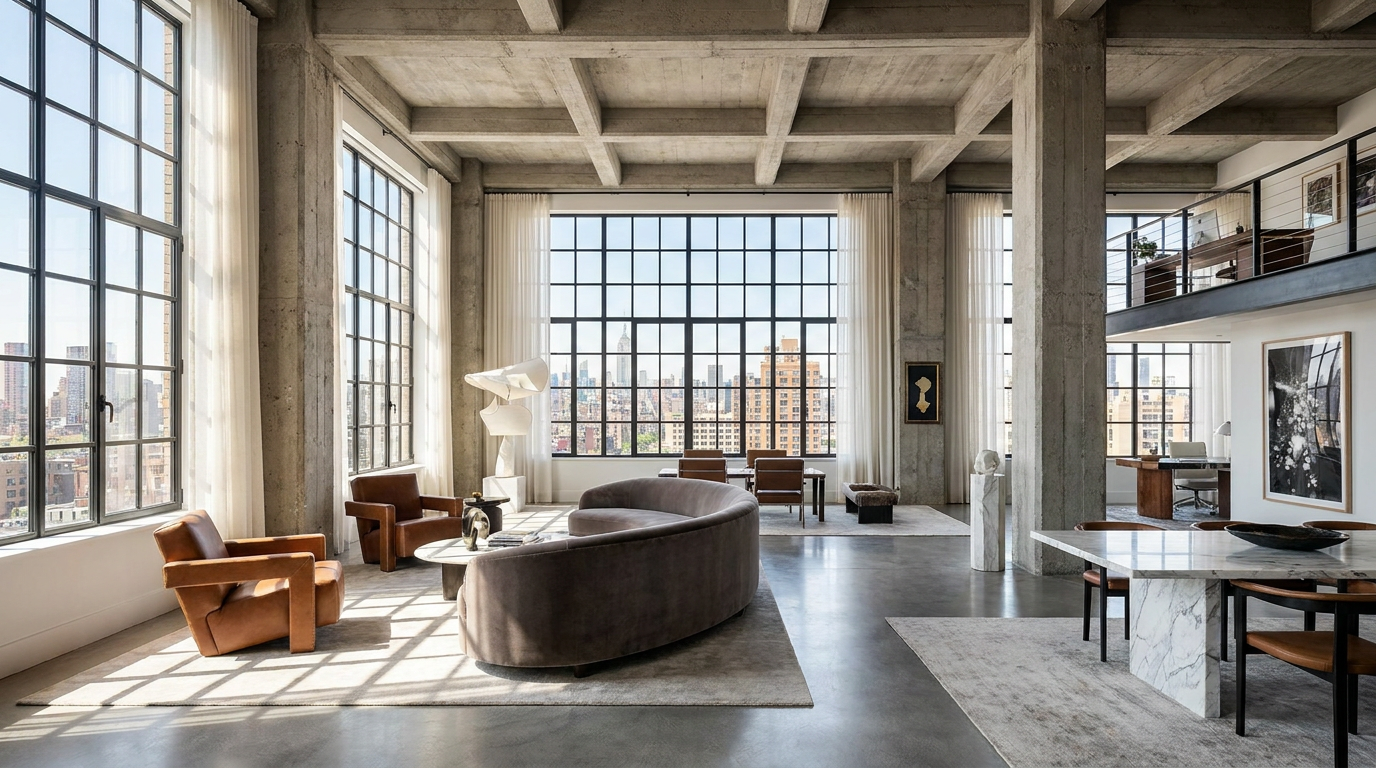
- Urban Developers
- Focus on the financial viability, speed to market, and the opportunity to acquire distressed commercial assets at a discount.
- City Planners & Policymakers
- View conversions as a vital tool to solve the housing shortage, restore downtown foot traffic, and stabilize municipal tax bases.
- Construction & Engineering Sector
- Emphasize the physical and structural realities of adaptive reuse, including the challenges of floor plates, plumbing, and HVAC retrofits.
What's not represented
- · Current commercial tenants facing relocation due to building conversions
- · Affordable housing advocates monitoring the price points of the new units
Why this matters
By transforming obsolete office buildings into residential apartments, cities are simultaneously addressing the post-pandemic commercial real estate crisis and the nationwide housing shortage. For renters, this trend promises an influx of new, centrally located housing options in previously commercial-only downtowns.
Key points
- The U.S. office-to-apartment conversion pipeline reached a record 90,300 units in early 2026, a 28% year-over-year increase.
- Office conversions now make up nearly half of all adaptive reuse projects in the country.
- New York City, Washington D.C., and Chicago lead the nation in planned conversion units.
- Conversions can be completed up to 30% faster and cost 15% to 30% less than ground-up construction.
- Structural challenges, such as deep floor plates and centralized plumbing, mean only a fraction of vacant offices are economically viable for conversion.
- Municipalities are increasingly offering tax incentives and zoning exemptions to make difficult conversion projects financially feasible.
The post-pandemic shift to hybrid work left millions of square feet of American office space sitting empty. Now, developers are turning that commercial distress into a residential boom. As of early 2026, a record-breaking 90,300 office-to-apartment conversions are in the development pipeline across the United States, representing a massive architectural and demographic shift for the nation's downtowns.[1][2]
The pace of adaptive reuse is accelerating rapidly. The 2026 pipeline figure marks a 28% jump from the previous year and a staggering 291% increase since 2022. According to industry data from Yardi Matrix and RentCafe, office conversions now account for 47% of all future adaptive reuse projects nationwide, easily overtaking hotel and industrial repurposing.[1][7][8]
New York City remains the undisputed epicenter of the conversion movement. The metropolitan area currently boasts 16,358 units in its backlog—a 97% year-over-year increase. High-profile projects, such as the redevelopment of the 350,000-square-foot office tower at 845 Third Avenue into a 529-unit residential building, are proving that large-scale transformations are financially viable in high-demand markets.[1][2]

However, the trend is no longer confined to coastal gateways. Washington, D.C. ranks second nationally with 8,479 planned units, driven largely by the need to house workers returning to the city's core. Chicago follows closely with 4,360 units, where nearly 100-year-old structures like the Wacker Place high-rise are being reborn as luxury apartments. Midwestern cities including Cleveland and Cincinnati have also cracked the top 10, utilizing conversions to reinvigorate their urban centers.[2][6][8]
The primary claim driving this boom is that adaptive reuse is highly efficient. Industry research indicates that, under the right conditions, converting an existing structure can be completed up to 30% faster than ground-up construction. Furthermore, it is typically 15% to 30% less expensive due to massive savings on demolition, foundational concrete, and structural steel.[4]
The primary claim driving this boom is that adaptive reuse is highly efficient.
Environmentally, the evidence strongly supports adaptive reuse. Repurposing a building's existing shell saves thousands of tons of embodied carbon that would otherwise be released during demolition and new material manufacturing. This sustainability factor has made conversions highly attractive to environmentally conscious investors and city planners looking to meet strict municipal climate goals.[4][5]
Despite the enthusiasm, the evidence also highlights significant structural constraints. Not every vacant office building is a viable candidate for residential life. The feasibility of a project depends heavily on a building's physical dimensions—specifically its "floor plate." Deep, sprawling office floors often lack sufficient access to natural light, making it impossible to carve out legal bedrooms without cutting massive, expensive light wells into the center of the structure.[1][3]

Plumbing and HVAC systems present another major hurdle. Commercial buildings are typically designed with centralized restrooms and climate control on each floor. Converting these spaces into dozens of individual apartments requires core drilling through concrete slabs to install decentralized plumbing, kitchens, and individual HVAC units—a process that can quickly erode the projected cost savings.[1][4]
Because of these physical limitations, analysts estimate that while 1.9 billion square feet of U.S. office space (about 24% of the total inventory) is theoretically suitable for conversion, the actual number of economically viable buildings is much smaller. Properties built between the 1960s and 1990s are currently seeing the most conversion activity, as their layouts often strike the right balance between structural integrity and adaptability.[2][3][6]
To bridge the financial gap for more difficult projects, local governments are stepping in with aggressive policy interventions. Cities are streamlining zoning approvals, offering tax abatements, and providing infrastructure grants to incentivize developers. In Los Angeles, an expanded Adaptive Reuse Ordinance has removed code barriers, allowing a wider range of commercial buildings to be converted through administrative approval rather than lengthy public hearings.[5][7]

Federal support is also entering the equation. Proposals like the Revitalizing Downtowns and Main Streets Act aim to provide tax credit subsidies to conversion projects that include a percentage of affordable housing. Researchers at the Brookings Institution note that means-testing these highly desirable, transit-accessible locations could significantly increase economic integration in urban cores.[5]
Ultimately, the 2026 data proves that office-to-residential conversion is no longer a niche architectural experiment—it is a mainstream development strategy. By removing difficult-to-lease commercial space from the market and replacing it with high-demand housing, developers are actively rebalancing the real estate ecosystem and ensuring that American downtowns remain vibrant, 24-hour neighborhoods.[3][8]
How we got here
1999
Los Angeles adopts its Adaptive Reuse Ordinance, pioneering large-scale office-to-residential conversions in its downtown.
2020–2021
The COVID-19 pandemic normalizes remote work, leading to a historic spike in commercial office vacancies.
2022
The conversion pipeline begins to accelerate as developers recognize the long-term nature of hybrid work.
2025
Office conversions officially overtake hotel conversions as the most popular form of adaptive reuse in the U.S.
Early 2026
The national pipeline hits a record 90,300 units, representing a 291% increase over four years.
Viewpoints in depth
Urban Developers
Focus on the financial viability, speed to market, and the opportunity to acquire distressed commercial assets at a discount.
For commercial real estate developers, the math behind adaptive reuse is becoming increasingly attractive. With traditional ground-up construction hampered by high interest rates, expensive materials, and lengthy zoning battles, converting an existing structure offers a faster path to revenue. Developers note that acquiring distressed Class B and C office buildings at a steep discount allows them to absorb the high costs of residential retrofitting. Furthermore, because the building's shell and foundation already exist, projects can be brought to market up to 30% faster, significantly reducing the carrying costs of construction loans.
City Planners & Policymakers
View conversions as a vital tool to solve the housing shortage, restore downtown foot traffic, and stabilize municipal tax bases.
Municipal leaders view the office vacancy crisis as an existential threat to downtown tax revenues and local retail ecosystems. For city planners, incentivizing developers to convert these empty towers is a silver bullet that solves two problems at once: it removes blighted, un-leasable commercial space from the market and injects thousands of new residents into the urban core. These new residents support local restaurants, transit systems, and services, effectively transitioning downtowns from 9-to-5 business districts into vibrant, 24-hour mixed-use neighborhoods. To accelerate this, many cities are actively rewriting zoning codes and offering tax abatements.
Construction & Engineering Sector
Emphasize the physical and structural realities of adaptive reuse, including the challenges of floor plates, plumbing, and HVAC retrofits.
Architects and structural engineers caution that the conversion process is rarely as simple as throwing up drywall. The primary hurdle is the "floor plate"—the physical depth of the building. Because residential building codes require bedrooms to have operable windows, deep office buildings often have massive, un-leasable dark spaces in their centers. Furthermore, commercial buildings rely on centralized utility cores. Decentralizing the plumbing, electrical, and HVAC systems to service hundreds of individual apartments requires extensive, costly core drilling through concrete floors. Engineers stress that only a specific subset of older buildings—typically those built before the 1990s with narrower footprints—are truly viable candidates without massive public subsidies.
What we don't know
- How many of the 90,300 planned units will successfully secure the complex financing required to complete construction.
- What percentage of these newly converted units will be priced as affordable housing versus luxury market-rate apartments.
- Whether the influx of residential conversions will eventually stabilize the commercial office market by artificially reducing the supply of available office space.
Key terms
- Adaptive Reuse
- The process of repurposing an existing building for a use other than what it was originally designed for, such as turning an office tower into an apartment complex.
- Floor Plate
- The total leasable square footage of a single floor in a commercial building. Deep floor plates are harder to convert to residential use because the interior spaces lack access to windows.
- Embodied Carbon
- The total greenhouse gas emissions generated by the manufacturing, transportation, and installation of building materials. Adaptive reuse saves embodied carbon by preserving existing structures.
- Core Drilling
- The construction process of drilling large, precise holes through concrete floors to run new plumbing and electrical lines, a necessary step when decentralizing commercial utilities for residential apartments.
Frequently asked
Why are so many offices being converted to apartments?
The shift to hybrid and remote work has left many older office buildings vacant. Converting them to apartments solves the commercial vacancy problem while addressing the nationwide shortage of residential housing.
Is it cheaper to convert an office or build a new apartment building?
Under the right conditions, converting an existing building can be 15% to 30% cheaper than ground-up construction because developers save on demolition, foundational work, and structural steel.
Can any office building be turned into housing?
No. Buildings with deep, sprawling floor plates are difficult to convert because apartments require access to natural light for bedrooms. Additionally, retrofitting commercial plumbing for residential use can be cost-prohibitive in some structures.
Which cities have the most office-to-apartment conversions?
As of early 2026, the New York City metropolitan area leads the nation, followed by Washington D.C., Chicago, Los Angeles, and Dallas.
Sources
Source coverage
8 outlets
3 viewpoints surfaced








[1]The Real DealUrban Developers
U.S. office-to-apartment conversions hits new high
Read on The Real Deal →[2]Multifamily ExecutiveUrban Developers
The Nation's Office-to-Apartment Conversion Pipeline Continues to Grow
Read on Multifamily Executive →[3]NAIOPCity Planners & Policymakers
Office-to-Apartment Conversions Accelerate as Adaptive Reuse Reshapes the Rental Pipeline
Read on NAIOP →[4]Construction ExecutiveConstruction & Engineering Sector
Adaptive reuse has been quietly on the rise
Read on Construction Executive →[5]Brookings InstitutionCity Planners & Policymakers
Converting offices into housing: A solution to high housing costs and rising vacancy rates
Read on Brookings Institution →[6]Scotsman GuideConstruction & Engineering Sector
Office-to-residential conversions gain traction
Read on Scotsman Guide →[7]ConstructConnectUrban Developers
Adaptive Reuse Surge: Office-to-Residential Projects Nearly Quadruple Since 2022
Read on ConstructConnect →[8]REJournalsConstruction & Engineering Sector
Office-to-apartment conversions continue to break records
Read on REJournals →
Every angle. Every day.
Get real estate stories with full source coverage and perspective breakdowns delivered to your inbox.