
Infant vs. Convertible Car Seats: How to Choose the Right First Seat
Both infant and convertible car seats meet strict safety standards, but they offer vastly different trade-offs in portability, longevity, and cost. This side-by-side analysis breaks down which setup fits your family's daily routine.
By Factlen Editorial Team
- Pediatric Safety Consensus
- Focuses on maximizing the duration a child remains rear-facing and ensuring a proper harness fit from birth.
- Portability Advocates
- Prioritizes the convenience of travel systems, easy vehicle transfers, and not waking a sleeping baby.
- Longevity Maximizers
- Values the financial efficiency and sustainability of purchasing a single car seat that grows with the child.
What's not represented
- · Vehicle Manufacturers
- · Public Transit Advocates
Why this matters
Choosing the right car seat is the most consequential gear decision new parents make, directly impacting both daily convenience and long-term budgeting. Understanding the specific trade-offs between portability and longevity ensures families invest in a system that actually fits their lifestyle and vehicle.
Key points
- Infant car seats offer unmatched portability and stroller compatibility for the first year.
- Convertible car seats provide long-term financial value by growing with the child from birth to preschool.
- Both seat types meet strict federal safety standards and keep infants in the recommended rear-facing position.
- Very small or premature babies may achieve a safer, more secure fit in an infant-specific carrier.
- Families must weigh the convenience of a travel system against the cost of buying two separate seats.
Preparing for a newborn involves a maze of gear decisions, but none carry the weight of the first car seat. Before a baby can even leave the hospital, parents must choose between two distinct paths: an infant-only carrier or a convertible car seat designed to grow with the child. Both options meet stringent federal safety standards, leaving the decision entirely up to lifestyle, budget, and daily logistics. The choice dictates not just how a family travels, but how they manage the physical demands of moving a sleeping newborn during the critical first year.[7]
The baseline for this decision is rooted in pediatric safety guidelines. The American Academy of Pediatrics recommends that all infants ride in a rear-facing position starting with their first ride home, and continue to do so for as long as possible until they reach the maximum height or weight allowed by the seat's manufacturer. Both infant and convertible seats fulfill this mandate. A rear-facing orientation spreads the force of a crash across the back, head, and neck, allowing the seat shell to absorb the impact rather than the child's fragile body. Because both seat types offer this fundamental protection, the debate shifts from baseline safety to practical trade-offs.[1][3]
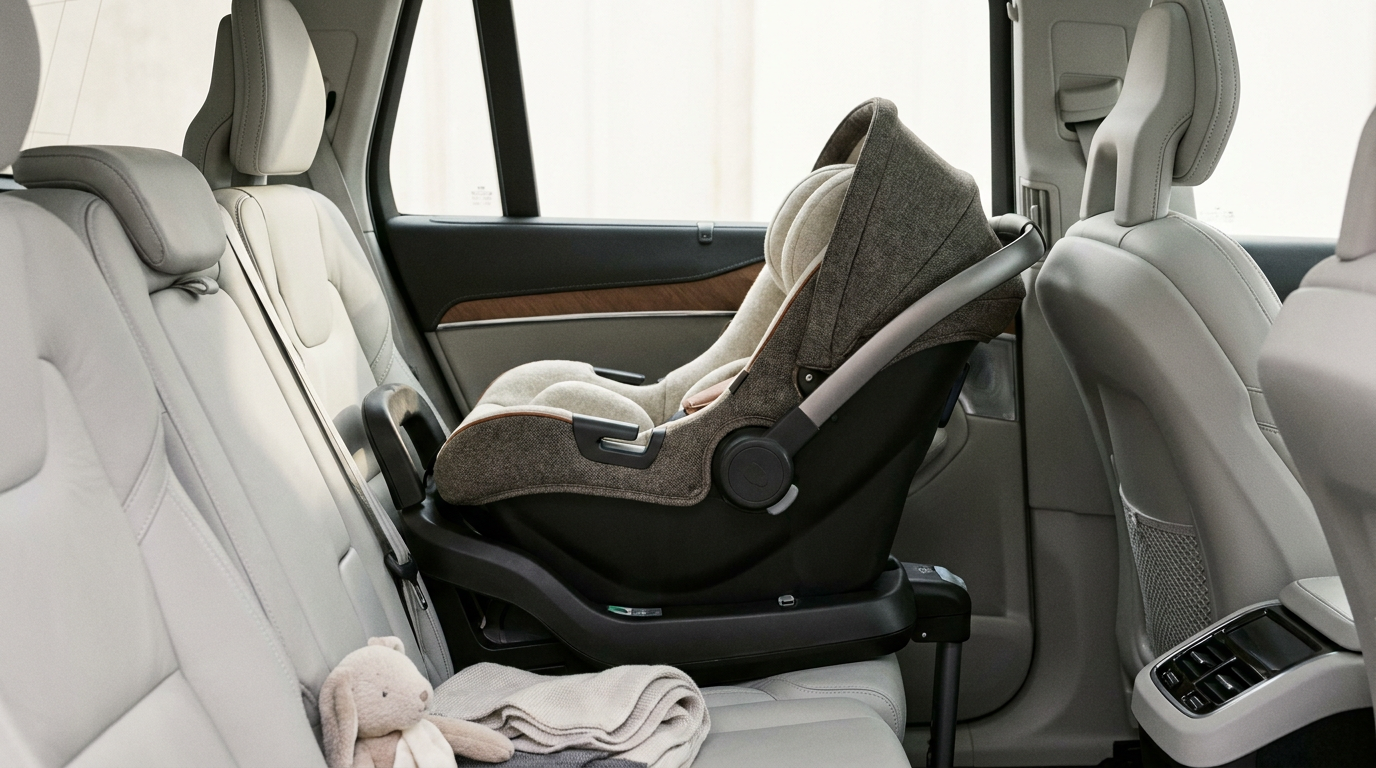
When evaluating the infant car seat, the primary argument for its use is modular portability. These seats feature a detachable carrier that clicks into a stay-in-car base, allowing parents to buckle the baby indoors and transfer them to the vehicle or a compatible stroller without waking them. The argument against this option is its short lifespan and the guaranteed secondary expense; most children outgrow the typical 30 to 35-pound weight limit or 32-inch height limit by 12 to 15 months. The evidence from child passenger safety technicians highlights that while the upfront cost ranges from $150 to $400, the convenience of the travel system integration is heavily favored by families navigating urban environments, public transit, or harsh winter weather.[2][4][6]

Conversely, looking at the convertible car seat, the core argument for this route is long-term financial value and longevity. These seats start rear-facing for newborns and eventually convert to forward-facing seats, with some models accommodating children up to 65 pounds or even transitioning into booster seats. The argument against starting with a convertible is the loss of portability; these seats are heavy, permanently installed in the vehicle, and cannot be attached to a stroller, meaning a sleeping baby must be unbuckled and physically lifted out at every stop. The evidence from retail analysts indicates that while the initial purchase may be higher, eliminating the need to buy a second car seat a year later makes it the most cost-effective strategy over a five-year horizon.[5][6][7]
Conversely, looking at the convertible car seat, the core argument for this route is long-term financial value and longevity.
Beyond cost and portability, the physical fit for a newborn is a critical differentiator. Infant seats are specifically contoured like a small nest, providing a snug, secure fit for babies weighing as little as four pounds. They naturally offer the correct recline angle to keep a newborn's airway open. Convertible seats feature a much larger interior shell. While most include newborn inserts to bridge the gap, safety experts note that very small or premature babies may struggle to achieve a proper harness fit or the necessary chin-to-chest clearance in a convertible model. Parents opting for a convertible from day one must carefully verify the seat's minimum weight rating and recline capabilities.[1][3]

Quantifying the financial trade-offs reveals two distinct spending curves. A family choosing the infant seat path will spend roughly $200 on the initial carrier, plus potential extra bases for a second vehicle at $80 to $150 each. Within 18 months, they must then purchase a convertible seat for another $250 to $400, bringing the total car seat expenditure to $450 or more. A family going straight to a convertible seat makes a single $300 purchase that lasts until the child reaches booster age. However, this savings is sometimes offset by the need to buy a stroller with a fully flat bassinet mode, since they cannot simply click a car seat into a stroller frame.[5][7]
Daily routines ultimately dictate which trade-offs matter most. Families who frequently switch between multiple vehicles—such as a two-car household or one that relies heavily on grandparents for childcare—find that buying one infant carrier and multiple inexpensive bases is far easier than reinstalling a heavy convertible seat. On the other hand, families who primarily use one vehicle and take longer, less frequent trips often find the portability of an infant seat unnecessary. As babies grow heavier, the 15-pound combined weight of a carrier and a six-month-old baby becomes physically taxing to carry, prompting many parents to leave the infant seat in the car anyway.[4][6]

Ultimately, the infant car seat fits well when a family relies on a stroller travel system for daily errands, frequently uses rideshares or multiple vehicles, lives in a climate with extreme weather where indoor buckling is a priority, or is expecting a premature or low-birth-weight baby. It does not fit well when the family is on a strict budget that prohibits buying two separate car seats within the first year, or when the primary vehicle is exceptionally small, as the required recline angle for an infant carrier can force the front passenger seat uncomfortably far forward.[2][6]
The convertible car seat from birth fits well when parents want a one-and-done purchase to maximize their budget, primarily drive a single vehicle, plan to use a baby carrier or a bassinet stroller for out-of-the-car transport, and prioritize a seat with higher rear-facing weight limits to keep the child rear-facing well past age two. It does not fit well when the daily routine involves multiple quick stops where waking a sleeping baby would be highly disruptive, or when parents need the flexibility to easily hand off the baby and car seat to a daycare provider or relative without uninstalling heavy equipment.[5][7]
Viewpoints in depth
Pediatric Safety Consensus
Medical professionals and safety technicians prioritize rear-facing duration and proper harness fit above all convenience factors.
The American Academy of Pediatrics and certified child passenger safety technicians emphasize that the safest seat is the one that fits the child's current size and is installed correctly every time. While both seat types are safe, experts note that very small newborns often achieve a better airway-protecting recline in an infant-specific carrier. Conversely, they praise convertible seats for their high weight limits, which encourage parents to keep toddlers rear-facing well past age two, maximizing spinal protection in the event of a crash.
Portability Advocates
Many parents and gear reviewers argue that the first-year convenience of an infant carrier justifies the extra expense.
For families navigating urban environments, harsh winters, or multiple caregivers, the infant car seat is viewed as an indispensable tool. Reviewers highlight the ability to buckle a fragile newborn indoors and seamlessly click the carrier into a stroller frame as a major quality-of-life upgrade. This camp argues that avoiding the disruption of a sleeping baby during frequent errands is easily worth the eventual cost of buying a second car seat a year later.
Longevity Maximizers
Budget-conscious and minimalist families advocate for skipping the infant carrier entirely to reduce waste and spending.
This perspective challenges the assumption that an infant carrier is a mandatory first-year purchase. By investing in a high-quality convertible seat from day one, families can save hundreds of dollars and reduce the environmental footprint of outgrown baby gear. These advocates point out that babies quickly become too heavy to comfortably carry in an infant seat anyway, meaning the heavily marketed 'portability' feature often loses its utility by the time the child is six months old.
What we don't know
- Whether future vehicle designs will better accommodate the steep recline angles required by rear-facing convertible seats without compromising front-passenger legroom.
- How upcoming updates to federal crash-test standards might alter the minimum weight and height requirements for convertible seats.
Key terms
- Travel System
- A matching set that includes an infant car seat and a stroller, allowing the car seat to click directly into the stroller frame.
- Rear-Facing
- A car seat orientation where the child faces the back of the vehicle, which the AAP recommends for as long as possible to protect the head, neck, and spine.
- LATCH
- Lower Anchors and Tethers for Children, a standardized system of anchors built into vehicles to secure car seats without using seat belts.
- Convertible Car Seat
- A versatile car seat that starts in a rear-facing position for infants and later converts to a forward-facing position for older toddlers.
- Load Leg
- An anti-rotation safety feature found on some car seat bases that extends to the floor of the vehicle to reduce movement during a crash.
Frequently asked
Can a newborn go straight into a convertible car seat?
Yes, as long as the convertible seat is rated for the baby's birth weight (often starting at 4 or 5 pounds) and includes the necessary infant inserts to ensure a proper harness fit and safe recline angle.
How long do babies stay in an infant car seat?
Most babies outgrow their infant car seat between 10 and 15 months of age. They must transition to a larger seat when they reach the maximum weight limit (usually 30-35 lbs) or when the top of their head is within one inch of the top of the seat shell.
Is it safer to use an infant seat or a convertible seat?
Both are equally safe when installed correctly and used within their size limits. The AAP notes that rear-facing provides the best protection, and both seat types keep infants rear-facing.
Can I put a convertible car seat in a stroller?
No. Convertible car seats are heavy and designed to be permanently installed in the vehicle. They do not click into stroller frames like infant car seats do.
Sources
Source coverage
7 outlets
3 viewpoints surfaced







[1]HealthyChildren.orgPediatric Safety Consensus
Car Safety Seats: A Guide for Families
Read on HealthyChildren.org →[2]ForbesPortability Advocates
The Best Infant Car Seats, According To Safety Experts And Parents
Read on Forbes →[3]Safe in the SeatPediatric Safety Consensus
Infant Car Seat vs. Convertible Car Seat: What's the Difference?
Read on Safe in the Seat →[4]Mommyhood101Portability Advocates
The Top 5 Best Infant Car Seats of 2026
Read on Mommyhood101 →[5]Chicco USALongevity Maximizers
Infant Car Seat vs Convertible Car Seat
Read on Chicco USA →[6]Baby EnRoutePortability Advocates
Infant Car Seat vs Convertible: Which Setup Fits Your Family?
Read on Baby EnRoute →[7]Factlen Editorial TeamLongevity Maximizers
Synthesis by Factlen editorial team
Read on Factlen Editorial Team →

Every angle. Every day.
Get shopping stories with full source coverage and perspective breakdowns delivered to your inbox.