
EU Plans to Rewrite Water Protection Laws to Fast-Track Critical Mineral Mines in Drought Regions
The European Commission is preparing to revise its flagship Water Framework Directive to accelerate mining for clean-energy minerals, despite analysis showing many strategic sites are in water-stressed areas. Environmental groups warn the move risks Europe's water security, while industry advocates argue the changes are essential to reduce reliance on foreign supply chains.
By Factlen Editorial Team
- Clean Energy & Mining Sector
- Argues that fast-tracking domestic critical mineral mines is essential for Europe's green transition and strategic autonomy, requiring more flexible environmental permitting.
- Environmental Conservationists
- Warns that weakening the Water Framework Directive will devastate already fragile freshwater ecosystems and exacerbate drought conditions.
- Local Communities
- Fears that water-intensive mining operations will deplete local aquifers, threatening drinking water supplies and farming in water-stressed regions.
- European Policymakers
- Seeks to balance the urgent geopolitical need for critical raw materials with the continent's long-term environmental and climate resilience goals.
What's not represented
- · Indigenous groups affected by mining expansion in northern Europe
- · Agricultural trade unions facing water competition
Why this matters
The proposed changes pit Europe's urgent need for clean-energy minerals against its dwindling freshwater supplies. If water protections are weakened, communities in drought-prone regions could face severe shortages and agricultural disruptions to support the continent's industrial autonomy.
Key points
- The EU Commission plans to revise its Water Framework Directive to speed up permitting for critical mineral mines.
- Over half of the 33 planned strategic mines are located in regions that have been drying for two decades.
- Mining is highly water-intensive and threatens to deplete aquifers in already water-stressed areas like Spain and Greece.
- Industry groups argue the changes are essential to secure minerals for the clean energy transition and reduce reliance on China.
- Environmentalists warn that weakening water protections sacrifices long-term climate resilience for short-term industrial gains.
The European Commission is preparing to rewrite the European Union’s flagship water protection law to accelerate the development of critical mineral mines, a move that has sparked intense debate over the continent's environmental priorities. The proposed revision targets the Water Framework Directive (WFD), the foundational 2000 legislation designed to safeguard Europe's rivers, lakes, and groundwater. Driven by the urgent need to secure raw materials for the clean energy transition, Brussels aims to remove what the mining industry describes as regulatory bottlenecks. However, the push to fast-track these industrial projects is colliding with the reality of a continent increasingly battered by extreme weather and water scarcity.[1][2]
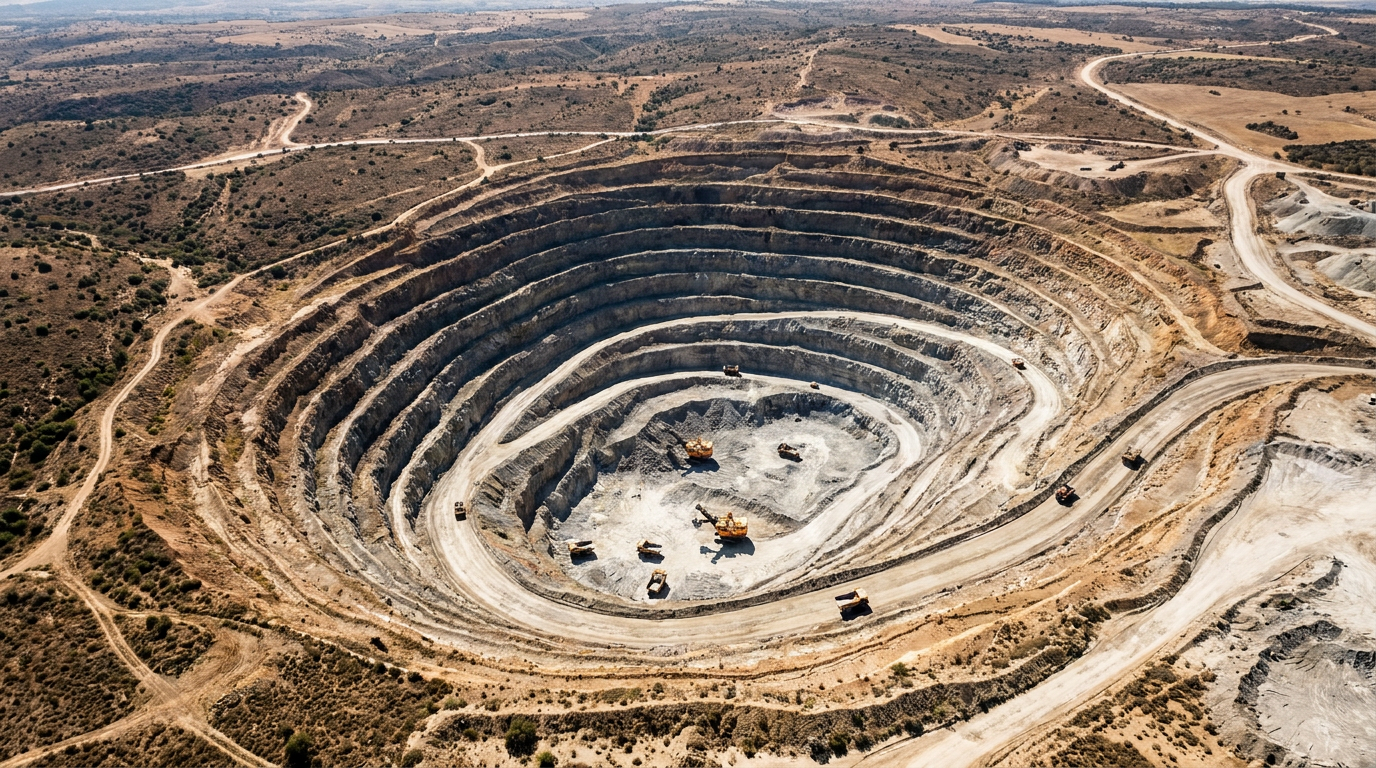
The stakes of this policy shift were brought into sharp relief by a new analysis from Watershed Investigations, which examined the geographic footprint of Europe's mining ambitions. According to the data, more than half of the 33 planned new or expanded mines designated as "strategic projects" under the EU’s Critical Raw Materials Act are located in areas that have been steadily drying over the past two decades. Nearly half of these sites sit in zones that experienced drought conditions in the past three months alone, and a quarter are located in regions already classified as highly water-stressed, including parts of Spain, Portugal, and Greece.[1]
The intersection of heavy industry and water scarcity presents a formidable challenge. Mining is an inherently water-intensive process, requiring massive volumes of freshwater for ore processing, dust suppression, waste management, and mine dewatering. While modern mining operations increasingly utilize water recycling technologies, the sheer scale of extraction required for materials like lithium, cobalt, and graphite still demands significant continuous water inputs. In regions where aquifers and rivers are already stretched to their limits, the introduction of large-scale open-pit mines threatens to exacerbate existing shortages and trigger conflicts over resource allocation.[1][6]

The legislative vehicle for these changes is the RESourceEU Action Plan, announced by the Commission in late 2025. The plan explicitly calls for a targeted revision of the WFD by mid-2026 to promote circularity and secure access to critical raw materials within the EU. The primary target of this revision is the WFD's strict "no deterioration" principle, which mandates that member states prevent any decline in the ecological or chemical status of their water bodies. Industry advocates argue that applying this principle too rigidly makes it nearly impossible to permit new mines, effectively stalling Europe's green industrial strategy.[2][4]
Trade associations representing Europe's mining and metals sector have lobbied heavily for these regulatory adjustments. Groups like Euromines argue that without a streamlined permitting process, the EU will remain dangerously dependent on foreign supply chains—particularly China—for the minerals essential to manufacturing electric vehicle batteries, wind turbines, and digital infrastructure. They are pushing for longer deadlines to meet water quality targets and greater legal certainty for industrial projects, arguing that the clean energy transition cannot happen without a robust domestic mining sector.[1][4]
Trade associations representing Europe's mining and metals sector have lobbied heavily for these regulatory adjustments.
However, transparency watchdogs warn that the push for simplification is eroding hard-won environmental safeguards. Organizations tracking corporate lobbying note that the mining industry has leveraged the geopolitical urgency of the energy transition to secure unprecedented concessions. Under the Critical Raw Materials Act, projects granted "strategic" status benefit from a capped permitting timeframe of just 27 months. Critics argue this accelerated schedule severely limits comprehensive environmental impact assessments and curtails the ability of local communities to meaningfully consult on or challenge the projects.[4]

Environmental groups and water suppliers have mounted a fierce opposition to the proposed WFD revisions. In a joint effort, organizations including WWF Europe and the European Environmental Bureau have urged the Commission to abandon plans to weaken the directive. They describe the strategy as "Russian roulette," warning that dismantling water protections to facilitate mining will ultimately undermine Europe's long-term resilience. Conservationists argue that the mining industry has failed to provide empirical evidence that the WFD is the primary cause of permitting delays, suggesting instead that poor project design and local opposition are more significant factors.[1][3]
The controversy is unfolding against a backdrop of severe climate instability across the continent. Europe has endured a series of extreme droughts in recent years, notably in 2018, 2022, and 2025, which severely restricted inland navigation on major arteries like the Rhine and devastated agricultural yields. Scientists warn that rising temperatures are accelerating evaporation rates, pushing Europe past the planetary boundary for freshwater stability. In this context, experts argue that weakening the legal framework designed to protect water resources is a profound and costly mistake.[5][6]

Local communities in the crosshairs of these strategic projects are already bracing for the impact. In countries like Spain, which consistently ranks among the EU nations suffering the worst water scarcity, the prospect of new mining operations has sparked grassroots anxiety. Residents and farmers fear that industrial water extraction will deplete the aquifers they rely on for drinking water and irrigation. The tension highlights a growing paradox in European policy: the very materials needed to mitigate climate change are threatening the local environments most vulnerable to its effects.[1][7]
The European Commission defends its approach, maintaining that all strategic projects are rigorously assessed by independent experts and must comply with overarching EU environmental laws. A spokesperson for the Commission stated that the WFD review is carefully calibrated to improve access to critical raw materials while maintaining robust safeguards for human health and the environment. The Commission insists that national authorities will still be required to conduct thorough water impact assessments before any permits are granted.[1][2]
As the Commission reviews the thousands of contributions submitted during its recent call for evidence, the debate over the WFD is expected to intensify. The final legislative proposal, anticipated in the coming months, will set the stage for a contentious battle in the European Parliament. Policymakers will be forced to navigate the razor-thin line between securing the continent's industrial autonomy and preserving the fragile water ecosystems that sustain its population.[2][7]

Ultimately, the outcome of this legislative rewrite will shape the physical landscape of Europe for decades to come. If the revisions pass, the continent could see a rapid expansion of domestic mining infrastructure, accelerating the deployment of green technologies but potentially leaving a legacy of depleted aquifers and industrial runoff. As Europe attempts to mine its way out of a climate crisis, the true cost of its strategic autonomy may be measured in drops of water.[5][7]
How we got here
2000
The EU adopts the Water Framework Directive to protect and restore the continent's water bodies.
March 2024
The Critical Raw Materials Act is passed to reduce Europe's reliance on foreign supply chains for essential minerals.
June 2025
The EU Commission presents the Water Resilience Strategy to address growing water scarcity and extreme weather.
December 2025
The Commission announces the RESourceEU Action Plan, targeting a revision of the WFD to ease mining permits.
June 2026
Analysis reveals that over half of the EU's planned strategic mines are located in drought-stricken or water-stressed regions.
Viewpoints in depth
Mining Industry's View
The clean energy transition requires a massive increase in domestic mining, which is currently stalled by rigid environmental regulations.
Trade associations like Euromines argue that Europe is caught in a regulatory trap. While the continent has set ambitious goals to phase out fossil fuels, the rigid application of the Water Framework Directive's "no deterioration" principle makes it nearly impossible to open the mines necessary to build wind turbines and electric vehicles. They contend that without a streamlined permitting process, Europe will simply offshore its environmental footprint to countries with lower standards, while remaining dangerously dependent on geopolitical rivals like China for critical raw materials.
Environmentalists' View
Weakening foundational water protections to fast-track mining will devastate ecosystems and undermine Europe's long-term climate resilience.
Conservation groups view the proposed WFD revisions as a catastrophic misstep. They argue that the mining industry is using the urgency of the climate crisis as a Trojan horse to dismantle decades of hard-won environmental protections. By allowing water-intensive open-pit mines to operate in drought-stricken regions, they warn that the EU is trading one environmental crisis for another. Organizations like WWF emphasize that a truly "green" transition cannot be built on the depletion of the continent's most vital resource: freshwater.
Local Communities' View
Industrial water extraction for mining threatens the immediate survival of agriculture and drinking water supplies in water-stressed regions.
For residents in regions like southern Spain and Portugal, the debate is not an abstract policy discussion but an existential threat. Local farmers and municipalities argue that their aquifers are already severely depleted by years of recurring droughts and extreme heat. The prospect of massive industrial operations competing for the same dwindling water supplies has sparked intense grassroots anxiety. These communities feel they are being asked to bear the localized environmental costs of Europe's broader geopolitical and climate strategies.
What we don't know
- Exactly which provisions of the Water Framework Directive the European Commission will formally propose to alter.
- How the European Parliament will vote on the revisions, given the deep divisions between pro-industry and green factions.
- Whether the accelerated permitting timeline will survive legal challenges from environmental NGOs in national courts.
Key terms
- Water Framework Directive (WFD)
- The primary European Union legislation enacted in 2000 to protect and improve the quality of all inland and coastal waters.
- Critical Raw Materials Act
- EU legislation designed to ensure a secure and sustainable supply of essential minerals by fast-tracking domestic mining and processing projects.
- Strategic Projects
- Specific mining, processing, or recycling initiatives granted priority status by the EU to accelerate their permitting and development.
- Dewatering
- The process of removing groundwater or surface water from a construction or mining site to allow for excavation.
- No Deterioration Principle
- A core rule of the WFD mandating that member states must prevent any decline in the ecological or chemical status of their water bodies.
Frequently asked
What is the Water Framework Directive?
The Water Framework Directive is the EU's foundational water protection law, adopted in 2000, designed to restore and protect the health of Europe's rivers, lakes, and groundwater.
Why does the EU want to revise the law?
The European Commission aims to remove regulatory bottlenecks to speed up the permitting process for critical mineral mines, which are needed for the clean energy transition.
Why is mining a threat to water resources?
Mining requires massive volumes of water for ore processing, dust suppression, and waste management, which can severely deplete local aquifers, especially in drought-prone regions.
What are critical minerals?
Critical minerals are raw materials like lithium, cobalt, and graphite that are essential for manufacturing electric vehicle batteries, wind turbines, and digital technologies.
Sources
Source coverage
7 outlets
4 viewpoints surfaced







[1]The GuardianClean Energy & Mining Sector
‘It’s Russian roulette’: alarm as Europe backs critical minerals mines in water-stressed regions
Read on The Guardian →[2]European CommissionEuropean Policymakers
Targeted revision of the Water Framework Directive
Read on European Commission →[3]WWF EuropeEnvironmental Conservationists
NGOs and water suppliers urge not to revise the Water Framework Directive
Read on WWF Europe →[4]Corporate Europe ObservatoryClean Energy & Mining Sector
EU permitting rules under attack from mining lobbies
Read on Corporate Europe Observatory →[5]Renewable MatterEnvironmental Conservationists
Lowering the Water Framework Directive, amid growing droughts, floods and pollution, would be a profound and costly mistake
Read on Renewable Matter →[6]Clean Energy WireEuropean Policymakers
Climate change is putting Europe's water resources under immense pressure
Read on Clean Energy Wire →[7]Factlen Editorial TeamLocal Communities
Synthesis by Factlen editorial team
Read on Factlen Editorial Team →
More in news politics
See all 7 stories →School Meals
Do Universal Free School Meals Work? What the 2026 Data Shows
7 sources

US-Iran Deal
Inside the U.S.-Iran Peace Deal: How the Islamabad Memorandum Halted a 110-Day War
7 sources
US-Iran Deal
US Envoys Arrive in Switzerland for Iran Talks as Israel Fumes Over Peace Deal
8 sources
Information Ecosystem
Evidence Pack: Does Crowdsourced Fact-Checking Actually Work?
6 sources

Every angle. Every day.
Get news politics stories with full source coverage and perspective breakdowns delivered to your inbox.