
First AI-Designed 'Universal Vaccine' Successfully Completes Initial Human Trials
Researchers at the University of Cambridge have successfully tested a needle-free, AI-designed vaccine that targets stable viral components to protect against multiple coronavirus strains and future pandemic threats.
By Factlen Editorial Team
- Medical Researchers
- Scientists focused on the long-term potential of proactive, variant-proof immunology.
- Public Health Officials
- Global health experts prioritizing scalable, accessible, and temperature-stable vaccine distribution.
- Immunology Pragmatists
- Experts calling for cautious optimism regarding the 'modest' immune response seen in Phase 1.
What's not represented
- · Pharmaceutical companies manufacturing annual booster shots
- · Regulatory bodies evaluating AI-generated therapeutics
Why this matters
Current vaccines are reactive, requiring constant updates as viruses mutate and evolve. By using artificial intelligence to target the unchanging core structures of a virus family, this breakthrough paves the way for "variant-proof" vaccines that could stop future pandemics before they start.
Key points
- A vaccine whose active ingredient was entirely designed by AI has successfully completed its first human trial.
- The 'universal vaccine' targets stable, unchanging features shared across the entire Sarbecovirus family.
- The Phase 1 trial involved 39 healthy volunteers and reported no significant side effects.
- The vaccine triggered immune responses against SARS, COVID-19, and related bat viruses.
- It is administered as a DNA vaccine using a needle-free, high-pressure micro-fluid jet.
- Researchers hope this AI-driven approach will prevent future pandemics by future-proofing vaccines against viral mutations.
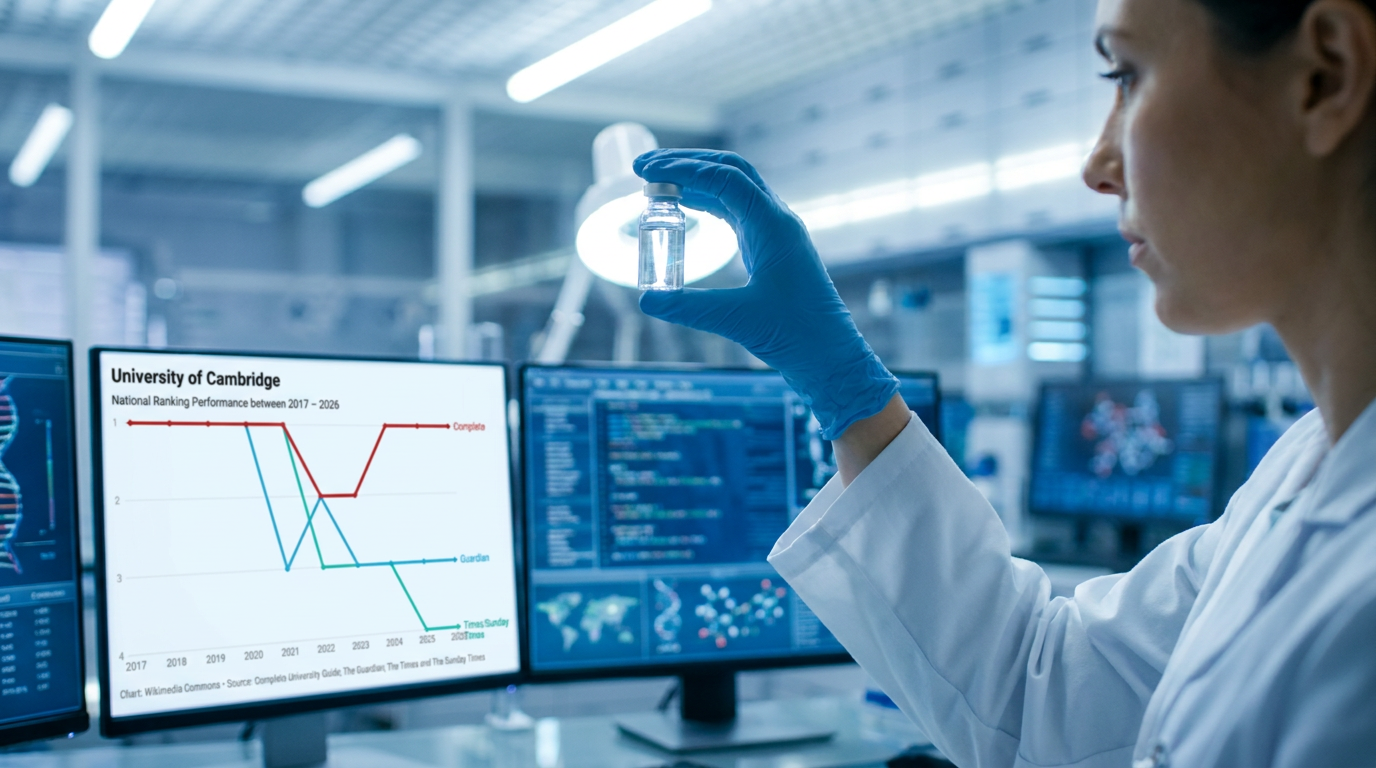
The first human clinical trial of a vaccine whose active component was entirely designed by artificial intelligence has concluded in the United Kingdom, marking a major milestone in preventive medicine. The experimental jab, developed by researchers at the University of Cambridge and its spin-out company DIOSynVax, aims to provide broad protection against an entire family of viruses rather than a single strain. By shifting the focus from reacting to existing outbreaks to anticipating future threats, the technology offers a glimpse into a new era of pandemic preparedness.[1][3]
The Phase 1 trial, conducted at the National Institute for Health and Care Research (NIHR) Clinical Research Facilities in Southampton and Cambridge, involved 39 healthy volunteers between the ages of 18 and 50. The primary goal of this early-stage study was to rigorously evaluate the safety profile of the novel AI-generated antigen before moving to larger efficacy tests. According to the peer-reviewed results published in the Journal of Infection, the vaccine proved to be remarkably safe and well-tolerated across the cohort, with participants reporting no significant adverse reactions or side effects.[1][2][6]
The fundamental problem with traditional vaccine development is that it relies on training the human immune system to recognize a specific, currently circulating virus. When that pathogen mutates—as seen repeatedly with influenza and the SARS-CoV-2 virus during the COVID-19 pandemic—the vaccine's efficacy inevitably drops. This dynamic forces pharmaceutical companies into a perpetual race to formulate, manufacture, and distribute updated booster shots. Professor Jonathan Heeney, the scientific lead for the research program at Cambridge, likened this reactive cycle to "a dog chasing its tail," constantly trying to catch up with viral evolution rather than getting ahead of it.[2][4]

To break this cycle, the research team turned to advanced artificial intelligence. The AI was tasked with analyzing the genetic sequences of thousands of viruses within the Sarbecovirus family, a broad viral group that includes the pathogens responsible for the SARS and COVID-19 outbreaks, as well as numerous related bat coronaviruses. The algorithm rapidly sifted through this massive global surveillance dataset to identify the stable, shared structural features that evolution has left largely untouched across all these different strains, pinpointing the virus's unchanging vulnerabilities.[1][3]
To break this cycle, the research team turned to advanced artificial intelligence.
Based on this computational analysis, the AI designed a synthetic "super-antigen"—a molecular blueprint that combines these unchanging viral components into a single target. By training the immune system to recognize these stable core features rather than the rapidly mutating surface proteins, the vaccine is designed to be "variant-proof." The trial demonstrated that this super-antigen successfully triggered immune responses not only against known human viruses like SARS and COVID-19 but also against bat viruses that have the potential to jump to humans in the future.[1][2][5]
While the initial immune response observed in the volunteers was described by researchers as "modest," the trial successfully proves the underlying viability of the AI-driven concept. Proving that an entirely computer-simulated active ingredient can safely stimulate the human immune system without adverse effects opens the door to refining and optimizing the dosage in subsequent clinical phases. This milestone establishes a critical new foundation for modern immunology, demonstrating that machine learning algorithms can successfully design functional biological therapeutics from scratch, moving AI from a data-analysis tool to a primary drug architect.[3][4]

Beyond its digital origins, the vaccine also features an innovative physical delivery system designed to maximize global accessibility and ease of use. It is formulated as a DNA-based vaccine, which is significantly more temperature-stable than the fragile mRNA vaccines utilized extensively during the recent pandemic. This inherent thermal stability drastically reduces the reliance on complex, ultra-cold supply chains, making the vaccine far easier to transport, store, and distribute in lower-income countries or remote geographic regions during a rapidly unfolding health crisis.[3][5]
Furthermore, the vaccine is administered using a needle-free micro-fluid jet. This device uses a high-pressure stream of liquid to deliver the DNA directly through the skin, eliminating the pain and anxiety associated with traditional injections. Public health officials note that this needle-free approach could drastically accelerate mass vaccination campaigns, as it requires less specialized medical training to administer and eliminates the logistical burden of safely disposing of millions of biohazardous needles.[1][2][3]

The implications of this technology extend far beyond coronaviruses. Professor Saul Faust, chief investigator of the trial at University Hospital Southampton, emphasized that viruses like influenza and Ebola are continuously evolving, often outpacing the rollout of reactive vaccines. If this AI-driven approach can be applied to those viral families, the scientific community could develop a library of universal vaccines, ready to be deployed at the first sign of an outbreak, potentially saving millions of lives and preventing future global lockdowns.[2][5]
How we got here
2020–2023
The COVID-19 pandemic highlights the limitations of reactive vaccine development as the SARS-CoV-2 virus rapidly mutates into new variants.
2024–2025
Researchers at the University of Cambridge and DIOSynVax use AI to analyze thousands of viral genomes and design a synthetic super-antigen.
Early 2026
The AI-designed universal vaccine enters Phase 1 human clinical trials at the NIHR Clinical Research Facilities in Southampton and Cambridge.
June 2026
Trial results are published, confirming the vaccine is safe, well-tolerated, and capable of triggering a broad immune response.
Viewpoints in depth
Medical Researchers
Scientists focused on the long-term potential of proactive, variant-proof immunology.
For the scientific community, the success of this trial represents a paradigm shift from reactive to proactive medicine. Researchers emphasize that the traditional model of chasing viral mutations—often compared to a dog chasing its tail—is fundamentally flawed against rapidly evolving pathogens. By leveraging AI to find the evolutionary constants across an entire viral family, scientists believe they can finally build a defensive arsenal against 'Disease X' before it ever jumps from animals to humans.
Public Health Officials
Global health experts prioritizing scalable, accessible vaccine distribution.
Public health authorities are particularly encouraged by the vaccine's DNA-based formulation and needle-free delivery system. DNA vaccines are significantly more temperature-stable than the mRNA vaccines used during the COVID-19 pandemic, reducing the reliance on complex cold-chain logistics. Combined with a micro-fluid jet injector that requires less specialized medical training to administer, officials see this technology as a critical tool for equitable global vaccine distribution, especially in lower-income nations.
Immunology Pragmatists
Experts calling for cautious optimism regarding the 'modest' immune response.
While celebrating the safety and conceptual validation of the AI-designed antigen, some immunologists urge caution regarding the efficacy. The Phase 1 trial produced what researchers described as a 'modest' immune response. Pragmatists note that while the vaccine successfully targets the right viral components, subsequent trials will need to optimize the dosage, adjuvants, or delivery mechanisms to ensure the immune response is robust enough to prevent real-world infection and transmission.
What we don't know
- Whether the 'modest' immune response observed in this early trial will be sufficient to provide full clinical immunity in real-world conditions.
- How long the protective immunity generated by the AI-designed super-antigen will last in humans.
- The exact timeline for when this universal vaccine might complete Phase 3 trials and receive regulatory approval for public use.
Key terms
- Universal Vaccine
- A type of vaccine designed to provide broad protection against multiple strains or an entire family of viruses, rather than just one specific variant.
- Super-antigen
- A synthetic molecular structure designed by AI that combines the shared, unchanging features of multiple related viruses to trigger a broad immune response.
- Sarbecovirus
- A subgenus of coronaviruses that includes SARS-CoV, SARS-CoV-2 (the virus that causes COVID-19), and various related bat viruses.
- DNA Vaccine
- A vaccine that uses a small, engineered piece of DNA to instruct cells to produce an antigen, triggering an immune response. They are typically more temperature-stable than mRNA vaccines.
- Micro-fluid Jet
- A needle-free medical device that delivers vaccines or medications through the skin using a high-pressure stream of liquid.
Frequently asked
Is the AI-designed vaccine safe?
Yes. The Phase 1 clinical trial involving 39 healthy volunteers showed that the vaccine is safe and well-tolerated, with no significant side effects reported.
Does this vaccine use a needle?
No. It is administered using a micro-fluid jet, which uses a high-pressure stream of liquid to deliver the DNA vaccine painlessly through the skin.
Will this replace the annual flu shot?
While this specific trial focused on coronaviruses, researchers believe the same AI-driven technology could eventually be used to create universal vaccines for influenza and Ebola, potentially eliminating the need for annual updates.
When will this vaccine be available to the public?
The vaccine has only completed Phase 1 trials to test for safety and basic immune response. It will need to pass larger Phase 2 and Phase 3 trials before seeking regulatory approval, a process that typically takes several years.
Sources
Source coverage
6 outlets
3 viewpoints surfaced






[1]University of CambridgeMedical Researchers
Could a 'universal vaccine' protect us from future virus outbreaks?
Read on University of Cambridge →[2]University Hospital SouthamptonMedical Researchers
New AI-designed 'universal vaccine' could protect against future virus outbreaks
Read on University Hospital Southampton →[3]Gavi, the Vaccine AlliancePublic Health Officials
A vaccine designed entirely by AI has been tested in people for the first time
Read on Gavi, the Vaccine Alliance →[4]South China Morning PostImmunology Pragmatists
First AI-designed 'universal vaccine' tested in humans
Read on South China Morning Post →[5]Canadian AffairsImmunology Pragmatists
First AI-designed 'universal vaccine' tested in humans: U.K. researchers
Read on Canadian Affairs →[6]Journal of InfectionMedical Researchers
Safety and immunogenicity of a novel AI-designed Sarbecovirus vaccine
Read on Journal of Infection →

More in ai
See all 5 stories →


Every angle. Every day.
Get ai stories with full source coverage and perspective breakdowns delivered to your inbox.