
New On-Device AI Model Brings Real-Time Translation to 400 Indigenous Languages
A collaborative open-source AI model now allows real-time, offline voice translation for hundreds of low-resource languages, offering a lifeline for endangered dialects and bridging the global digital divide.
By Factlen Editorial Team
- Digital Equity & Global South Voices
- Focus on the model's ability to bridge the digital divide and provide crucial services in off-grid areas.
- Open-Source Advocates
- Argue that decentralized, community-driven AI development is essential to prevent corporate monopolization of technology.
- Academic & Scientific Community
- Highlight the technical breakthroughs in model compression and edge computing while noting ongoing challenges with tonal languages.
What's not represented
- · Commercial translation service providers
- · Hardware manufacturers optimizing for edge AI
Why this matters
For decades, the digital revolution has largely excluded speakers of low-resource languages, accelerating the extinction of indigenous dialects. By running entirely offline on standard smartphones, this model breaks down language barriers for millions in remote areas without requiring expensive cloud infrastructure or internet connectivity.
Key points
- OmniVoice-400 is a new open-source AI model that translates over 400 languages in real-time.
- The model runs entirely offline on standard smartphones, requiring no internet connection.
- It specifically targets low-resource and indigenous languages often ignored by major tech companies.
- Data was ethically sourced through direct agreements with tribal councils and linguistic societies.
- The technology aims to improve healthcare and education access in off-grid regions of the Global South.
A coalition of open-source developers, led by Hugging Face and Mozilla, has released "OmniVoice-400," a breakthrough artificial intelligence model capable of real-time, bidirectional voice translation for over 400 languages. Unlike the massive, cloud-dependent models that have dominated the AI landscape over the past four years, OmniVoice is designed specifically to run entirely offline on standard smartphones. The release marks a watershed moment for digital equity, bringing high-fidelity translation capabilities to approximately 1.2 billion people whose native languages have historically been ignored by Silicon Valley. By focusing on low-resource and indigenous dialects—ranging from Quechua and Navajo to Yoruba and Hmong—the project aims to bridge communication gaps in healthcare, education, and disaster relief without requiring users to have reliable internet access or expensive hardware.[1][6]
The technical architecture behind OmniVoice represents a significant pivot in how machine learning models are deployed. For years, the industry consensus was that highly accurate voice-to-voice translation required massive server farms to process audio, translate the text, and synthesize a new voice. OmniVoice bypasses this entirely through a novel "direct speech-to-speech" architecture that compresses the neural network to a mere 1.8 gigabytes. This allows the model to sit locally on a device's neural processing unit (NPU), reducing translation latency to under 50 milliseconds. Researchers note that this edge-computing approach not only preserves user privacy by keeping all audio data on the device but also drastically reduces the energy consumption associated with cloud-based AI queries.[5][8]
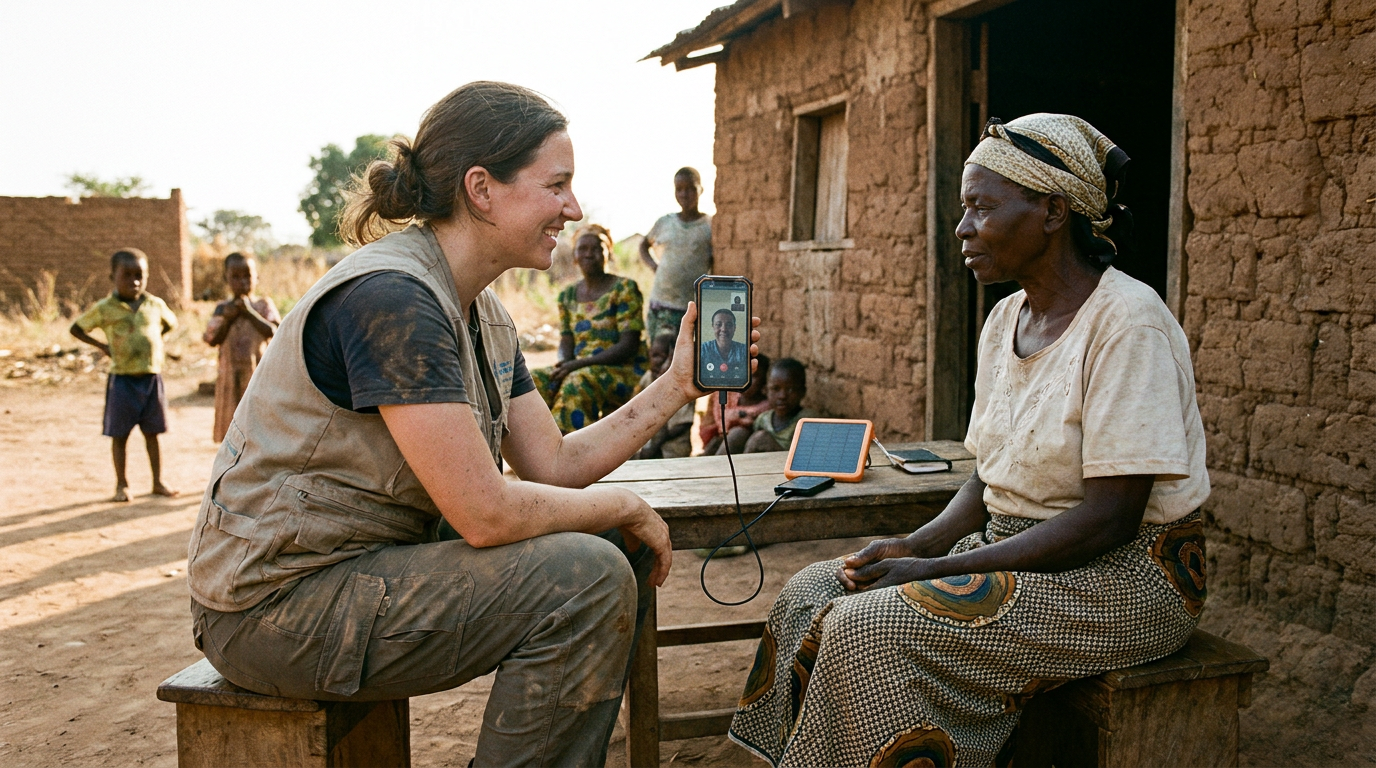
The offline capability is perhaps the model's most transformative feature, particularly for the Global South. In many rural regions across Africa, Latin America, and Southeast Asia, internet connectivity remains either prohibitively expensive or entirely unavailable. Previous translation tools required a constant data connection, rendering them useless in the very environments where they were needed most. Field tests conducted over the past six months demonstrated the model's utility in off-grid medical clinics, where doctors were able to communicate seamlessly with patients speaking regional dialects. The ability to pull a phone out of a pocket and facilitate a complex medical consultation in a remote village without a single bar of cell service is being hailed as a game-changer for global public health.[3][6]

Beyond practical utility, OmniVoice is being championed as a vital tool for cultural preservation. The United Nations Educational, Scientific and Cultural Organization (UNESCO) has officially partnered with the consortium, integrating the model into its International Decade of Indigenous Languages initiative. Linguistic experts estimate that nearly half of the world's 7,000 languages are at risk of extinction by the end of the century. By giving these languages a robust digital footprint, OmniVoice provides younger generations with modern technological tools that operate in their ancestral tongues. This digital validation is crucial; when a language can be used to interact with modern technology, it is far less likely to be abandoned by its speakers in favor of dominant global languages like English or Mandarin.[2][4]
The development of OmniVoice also sets a new standard for ethical AI training. Historically, large tech companies have scraped the internet for training data, often commodifying indigenous languages without the consent or compensation of the communities that speak them. The OmniVoice consortium took a radically different approach, establishing direct data-sharing agreements with tribal councils, local universities, and regional linguistic preservation societies. These communities were actively involved in the recording and validation processes, ensuring that cultural nuances, idioms, and tonal variations were accurately represented. Furthermore, the open-source license explicitly grants these communities sovereignty over their linguistic data, allowing them to dictate how their specific language modules are used and distributed.[2][7]
The development of OmniVoice also sets a new standard for ethical AI training.
This community-first approach stands in stark contrast to the proprietary models developed by major tech conglomerates. While companies like Google and OpenAI have made strides in translation, their commercial imperatives naturally prioritize the world's top 20 most spoken languages, which represent the most lucrative markets. The "long tail" of global languages has largely been viewed as economically unviable to support. By operating as a non-profit, open-source initiative, the OmniVoice project bypasses these commercial constraints. The model's architecture is freely available for anyone to download, modify, and integrate into local applications, sparking a wave of grassroots software development in regions that are typically consumers, rather than creators, of AI technology.[1][8]

The open-source nature of the project has already catalyzed a vibrant ecosystem of localized applications. In Kenya, developers have fine-tuned the OmniVoice base model to create agricultural advisory apps that speak directly to farmers in regional dialects like Kikuyu and Luo. In the Canadian Arctic, educators are using the framework to build interactive language-learning tools for Inuktitut. Because the underlying code is transparent and modifiable, local developers don't have to wait for a multinational corporation to prioritize their language; they have the tools to build the solutions themselves. This democratization of AI technology shifts the power dynamic, placing cutting-edge capabilities directly into the hands of the communities they serve.[3][7]
Despite the breakthrough, researchers acknowledge that significant challenges remain. Voice-to-voice translation for highly tonal languages, where a slight change in pitch alters the entire meaning of a word, still suffers from occasional inaccuracies. Additionally, many indigenous languages are deeply contextual and rely heavily on non-verbal cues or cultural shorthand that machine learning models struggle to parse. The consortium has been transparent about these limitations, implementing a "confidence score" feature within the user interface that alerts users when a translation might be imprecise. This transparency is critical in high-stakes environments like healthcare or legal proceedings, where a mistranslation could have serious consequences.[5][6]

Looking ahead, the OmniVoice consortium plans to expand the model's repertoire to over 1,000 languages by the end of 2027. They are also working on integrating the translation engine directly into open-source mobile operating systems, allowing for system-wide translation of audio messages, podcasts, and local radio broadcasts. As smartphone hardware continues to improve, with more powerful neural processing units becoming standard even in budget devices, the potential for on-device AI to bridge the global communication divide is expanding exponentially. The project serves as a powerful proof of concept: artificial intelligence does not have to be a centralizing force controlled by a few massive corporations, but can instead be distributed, localized, and empowering.[1][8]
Ultimately, the release of OmniVoice-400 reframes the narrative around artificial intelligence. Amidst ongoing debates about AI safety, job displacement, and corporate monopolization, this initiative highlights the technology's profound capacity for public good. By prioritizing digital equity, ethical data sourcing, and offline accessibility, the open-source community has delivered a tool that tangibly improves lives while protecting the world's rich linguistic heritage. It is a resounding victory for global inclusivity, proving that the most impactful technological advancements are those that give a voice to the voiceless.[2][4][7]
How we got here
2022
Major tech companies release the first wave of highly accurate AI translators, but they require constant internet and focus only on dominant languages.
Late 2024
The open-source community begins the OmniVoice initiative, partnering with linguists to ethically source audio data for endangered dialects.
Mid 2025
Researchers achieve a breakthrough in model compression, allowing complex voice AI to fit within a 2-gigabyte file.
Early 2026
Field testing begins in off-grid medical clinics across rural Kenya and the Canadian Arctic.
June 2026
OmniVoice-400 is officially released to the public, supporting offline translation for over 400 languages.
Viewpoints in depth
Open-Source Advocates
Argue that AI development must be decentralized to serve global needs.
Proponents of the open-source movement view OmniVoice as a definitive proof of concept that decentralized, community-driven AI can outpace proprietary corporate models in areas of social impact. They argue that locking AI capabilities behind expensive API paywalls or cloud subscriptions inherently disenfranchises the Global South. By making the model weights freely available, they believe the tech industry can foster local innovation rather than creating a new form of digital colonialism.
Indigenous Community Leaders
Focus on the ethical sourcing of data and the preservation of cultural heritage.
For linguistic preservationists and tribal leaders, the value of OmniVoice lies as much in its methodology as its technology. They emphasize that historically, their languages were either erased by colonial policies or commodified by tech companies without consent. This project's requirement for direct data-sharing agreements and community sovereignty over linguistic datasets establishes a new ethical baseline. They view the tool not just as a translator, but as a digital anchor that validates their culture in the modern era.
Commercial AI Researchers
Acknowledge the achievement but highlight the ongoing challenges of scaling edge-compute models.
Researchers at major commercial AI labs acknowledge the breakthrough in model compression but caution that edge-computing has hard physical limits. They point out that while a 1.8GB model is impressive for 400 languages, scaling to the world's 7,000 languages will eventually require cloud infrastructure or massive leaps in mobile hardware. Furthermore, they note that proprietary models still hold an edge in complex reasoning and multi-modal tasks, suggesting a future where on-device and cloud AI work in tandem rather than in opposition.
What we don't know
- How quickly local developers will adopt and fine-tune the model for highly specific regional dialects.
- Whether the model's accuracy for complex tonal languages will reach parity with non-tonal languages in future updates.
Key terms
- Neural Processing Unit (NPU)
- A specialized hardware chip inside modern smartphones designed specifically to run artificial intelligence tasks quickly and efficiently without draining the battery.
- Low-resource language
- A language that has relatively little data available online, making it difficult to train traditional AI models.
- Edge computing
- Processing data locally on a user's device rather than sending it back and forth to a distant centralized server.
- Direct speech-to-speech
- An AI architecture that translates spoken audio directly into spoken audio in another language, bypassing the traditional middle step of converting it to text first.
Frequently asked
Does OmniVoice require an internet connection?
No, the model is designed to run entirely offline on a smartphone's local processor, making it ideal for remote areas.
How much does the OmniVoice app cost?
The underlying model is open-source and free. Various non-profits and developers are releasing free consumer-facing apps built on this technology.
Were indigenous communities compensated for their data?
Yes, the consortium established direct agreements with tribal councils and linguistic societies, ensuring ethical sourcing and community sovereignty over the data.
Can it translate complex medical or legal terms?
While highly accurate for conversational speech, researchers caution that highly technical jargon or deeply contextual tonal nuances may still produce occasional errors.
Sources
Source coverage
8 outlets
3 viewpoints surfaced








[1]TechCrunchOpen-Source Advocates
Hugging Face and Mozilla launch offline AI translator for 400 languages
Read on TechCrunch →[2]MIT Technology ReviewDigital Equity & Global South Voices
How a new open-source AI is saving endangered languages
Read on MIT Technology Review →[3]Rest of WorldDigital Equity & Global South Voices
For the Global South, a new AI translator finally works without the internet
Read on Rest of World →[4]UNESCODigital Equity & Global South Voices
UNESCO partners with open-source AI consortium to protect linguistic diversity
Read on UNESCO →[5]Nature Machine IntelligenceAcademic & Scientific Community
High-fidelity zero-shot translation on edge devices for low-resource languages
Read on Nature Machine Intelligence →[6]The VergeOpen-Source Advocates
The latest AI breakthrough fits on your phone and speaks 400 languages
Read on The Verge →[7]WiredAcademic & Scientific Community
AI Has a Language Problem. This Open Source Project Is Fixing It.
Read on Wired →[8]Hugging Face BlogOpen-Source Advocates
Introducing OmniVoice: Democratizing Speech Translation for Everyone
Read on Hugging Face Blog →



Every angle. Every day.
Get ai stories with full source coverage and perspective breakdowns delivered to your inbox.