
Experimental Stem Cell Therapy Banishes Severe Autoimmune Disease for 15 Years
Two patients with a devastating autoimmune disorder have achieved a 15-year remission after receiving a donor stem-cell transplant that completely replaced their malfunctioning immune systems.
By Factlen Editorial Team
- Clinical Researchers
- Focused on the biological proof-of-concept and the potential to expand this therapy.
- Transplant Specialists
- Focused on the severe risks of allogeneic transplants and the need for strict patient selection.
- Patient Advocates
- Values the potential for a one-time curative treatment that eliminates the need for lifelong immunosuppression.
What's not represented
- · Patients who suffered severe complications or mortality from experimental stem-cell transplants
- · Health economists evaluating the long-term cost of a one-time transplant versus lifelong immunosuppressive medications
Why this matters
Autoimmune diseases typically require a lifetime of daily medications to suppress symptoms. This 15-year milestone proves that a complete biological 'reboot' of the immune system can offer a permanent, drug-free cure for even the most severe conditions.
Key points
- Two patients with severe Neuromyelitis Optica Spectrum Disorder (NMOSD) have remained symptom-free for over 15 years following a stem-cell transplant.
- The experimental procedure involved wiping out their malfunctioning immune systems and replacing them with healthy donor stem cells.
- NMOSD is a devastating autoimmune condition that primarily attacks the optic nerves and spinal cord, often causing blindness and paralysis.
- The treatment effectively removed the autoantibodies responsible for the disease, allowing the patients to live without daily immunosuppressive drugs.
- Despite the success, the procedure carries severe risks, including Graft-Versus-Host Disease, and is currently reserved for treatment-resistant cases.
For decades, the holy grail of autoimmune disease research has been the concept of a complete system reset. Rather than suppressing a malfunctioning immune system with daily medications, scientists have theorized about wiping the slate clean and rebuilding it from scratch. Now, a landmark medical report has transformed that theory into a durable reality, revealing that an experimental stem-cell therapy has effectively banished a devastating autoimmune disorder in two patients for more than a decade and a half.[1][6]
The findings, published in the medical journal Med and highlighted by Nature, detail the unprecedented 15-year remission of two individuals diagnosed with Neuromyelitis Optica Spectrum Disorder (NMOSD). By utilizing an allogeneic hematopoietic stem-cell transplant—a procedure that replaces the patient's immune system with healthy cells from a donor—researchers achieved what lifelong medications could not: a complete halt to the disease's progression without the need for ongoing immunosuppression.[1][2]
To understand the magnitude of this breakthrough, one must understand the sheer destructive power of NMOSD. Often historically misdiagnosed as a rare variant of multiple sclerosis, NMOSD is a distinct and aggressive inflammatory disorder of the central nervous system. The disease is characterized by the immune system mistakenly launching coordinated attacks primarily against the optic nerves and the spinal cord.[3][5]
During an acute NMOSD attack, patients can experience sudden and profound vision loss, severe eye pain, uncontrollable vomiting, and creeping paralysis. The biological culprit in up to 80% of cases is an autoantibody that targets aquaporin-4, a crucial water channel protein located on the surface of astrocytes—the star-shaped cells that support and protect the brain and spinal cord. When the immune system attacks these channels, it triggers massive inflammation and irreversible nerve damage.[1][3][5]

The standard of care for NMOSD has long been a defensive battle. Without preventive treatment, approximately 60% of patients will suffer a debilitating relapse within a single year. Consequently, patients are typically prescribed lifelong immunosuppressive therapies, such as monoclonal antibodies or broad-spectrum steroids, to keep their rogue immune cells at bay. Yet, even with strict adherence to these regimens, breakthrough attacks can occur, and the cumulative damage often leaves patients reliant on mobility aids or facing permanent blindness.[3][5]
Faced with two patients whose severe NMOSD was entirely unresponsive to conventional therapies, researchers opted for a radical intervention. They hypothesized that if the source of the autoantibodies could be completely eradicated and replaced, the disease could be stopped permanently. This required an allogeneic hematopoietic stem-cell transplant, a high-stakes procedure traditionally reserved for aggressive blood cancers like leukemia.[1][4]
The protocol began with a grueling conditioning phase. The patients were administered a potent combination of chemotherapy drugs, including fludarabine and treosulfan, alongside targeted B-cell depleting antibodies. The goal was not merely to suppress the immune system, but to intentionally destroy the patients' existing, malfunctioning immune cells down to the marrow, leaving them temporarily without any natural defenses against infection.[1][2][4]
The patients were administered a potent combination of chemotherapy drugs, including fludarabine and treosulfan, alongside targeted B-cell depleting antibodies.
Once the biological slate was wiped clean, the rebuilding phase commenced. In 2009, the first patient—a man suffering from severe, treatment-resistant NMOSD—received an infusion of healthy, blood-forming stem cells donated by his sister. The following year, a woman battling the same relentless condition underwent the identical procedure, this time utilizing stem cells sourced from an unrelated matched donor.[1]

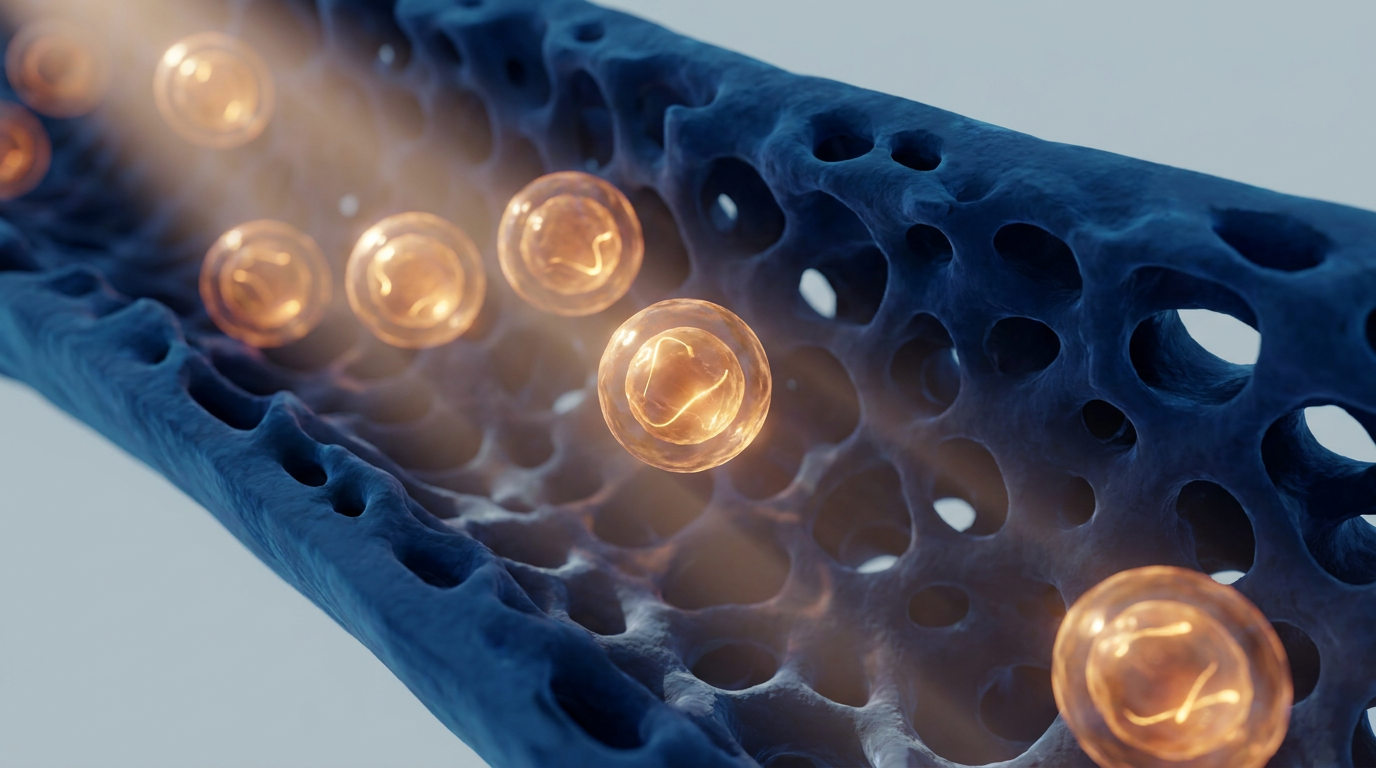
The infused donor stem cells migrated to the patients' bone marrow, where they engrafted and began the slow process of generating a completely new immune system. Because these new white blood cells and antibodies were derived from healthy donors, they lacked the biological memory and the genetic inclination to attack the aquaporin-4 water channels. The patients were given temporary medications to prevent their new immune systems from attacking their bodies, acting as a bridge to long-term tolerance.[1][3][4]
The long-term clinical results have been nothing short of extraordinary. More than 15 years after their respective single-infusion transplants, neither patient has experienced a single relapse. Blood tests confirm the complete absence of the disease-causing autoantibodies that once ravaged their nervous systems. By effectively swapping out the defective immune machinery, the treatment appears to have removed the source of the autoimmune attack altogether.[1][2]
The physical recovery has mirrored the biological success. The male patient's neurological condition improved so dramatically that he was able to resume a normal, active life and start a family. The female patient regained significant motor function in her arms and, crucially, has remained entirely free from the burden of daily immunosuppressive medications for over a decade.[1]
Despite these life-altering outcomes, transplant specialists emphasize that this procedure is not yet ready to become a frontline treatment. The barrier is the extreme risk profile inherent to allogeneic stem-cell transplants. The most severe threat is Graft-Versus-Host Disease (GVHD), a potentially fatal complication where the newly transplanted donor immune cells recognize the recipient's own tissues and organs as foreign invaders and launch a systemic attack against them.[1][4][6]

Furthermore, the conditioning phase leaves patients profoundly immunocompromised for weeks or months. During this window, even a common cold virus or a minor fungal spore can escalate into a life-threatening infection. Because of these compounding dangers, allogeneic transplants carry a notable mortality risk, meaning the procedure is currently ethically justifiable only for patients whose autoimmune disease is already life-threatening and entirely resistant to safer drugs.[4][6]
Nevertheless, the 15-year milestone achieved by these two patients serves as a vital proof of concept for the broader field of immunology. It demonstrates unequivocally that severe, organ-damaging autoimmune diseases are not inherently incurable. If the risks of GVHD and opportunistic infections can be mitigated through advancing cellular engineering—such as selectively editing donor cells or improving targeted conditioning regimens—the risk-reward calculus could shift dramatically.[2][4][6]

For the millions of people worldwide tethered to lifelong immunosuppression for various autoimmune conditions, this research offers a profound beacon of hope. It proves that the human immune system can indeed be rebooted, transforming a lifetime of defensive symptom management into the possibility of a permanent, drug-free cure.[1][6]
How we got here
Late 1800s
NMOSD (then called Devic's disease) is first described as a distinct neurological condition.
2005
Researchers identify the aquaporin-4 antibody, allowing NMOSD to be definitively distinguished from multiple sclerosis.
2009
The first patient in the study, a man with severe NMOSD, receives a stem cell transplant from his sister.
2010
A second patient, a woman with the condition, receives a transplant from an unrelated donor.
June 2026
Researchers publish 15-year follow-up data showing both patients remain completely symptom-free without medication.
Viewpoints in depth
Clinical Researchers
Focused on the biological proof-of-concept and the potential to expand this therapy.
For immunologists and clinical researchers, the 15-year remission of these two patients represents a watershed moment. It provides definitive biological proof that severe, autoantibody-driven diseases are not inherently incurable. Researchers argue that by demonstrating the efficacy of a complete immune system replacement, this study validates the pursuit of 'immune reset' therapies. Their focus is now on refining the conditioning regimens and cellular engineering techniques to make the procedure safe enough for broader clinical trials, potentially expanding its use to other severe autoimmune conditions.
Transplant Specialists
Focused on the severe risks of allogeneic transplants and the need for strict patient selection.
Transplant specialists view this breakthrough through a lens of profound caution. While acknowledging the remarkable outcomes, they emphasize that allogeneic hematopoietic stem-cell transplants carry a notable mortality risk. Their primary concern is Graft-Versus-Host Disease (GVHD), a condition where the donor's immune cells attack the recipient's organs, which can be just as devastating as the original autoimmune disease. Consequently, they argue that this extreme intervention must remain a last-resort option, ethically justifiable only for patients who have exhausted all conventional therapies and face imminent life-threatening consequences from their disease.
What we don't know
- Whether this allogeneic stem-cell approach can be safely adapted for other, more common autoimmune diseases like multiple sclerosis or lupus.
- How to significantly reduce the high risks of Graft-Versus-Host Disease and severe infections associated with the transplant conditioning phase.
- If the 15-year remission represents a permanent, lifelong cure, or if the disease could eventually re-emerge decades later.
Key terms
- Neuromyelitis Optica Spectrum Disorder (NMOSD)
- A rare, aggressive autoimmune disease that damages the optic nerves and spinal cord, causing vision loss and paralysis.
- Allogeneic transplant
- A medical procedure that uses cells or tissues from a healthy donor rather than the patient themselves.
- Graft-versus-host disease (GVHD)
- A severe complication of allogeneic transplants where the newly transplanted donor immune cells attack the recipient's body.
- Aquaporin-4
- A water channel protein in the central nervous system that is mistakenly targeted by the immune system in the majority of NMOSD cases.
- Conditioning regimen
- The intensive chemotherapy and antibody treatment given before a transplant to intentionally wipe out the patient's existing immune system.
Frequently asked
What is an allogeneic stem cell transplant?
A medical procedure where a patient receives blood-forming stem cells from a healthy donor. These cells migrate to the bone marrow and generate a completely new immune system.
Is this a cure for all autoimmune diseases?
Not currently. Because the procedure carries high risks, including mortality, it is only being tested in severe, treatment-resistant cases where conventional medications have failed.
What is the main risk of the treatment?
The most severe risk is Graft-Versus-Host Disease (GVHD), a potentially fatal complication where the new donor immune cells recognize the patient's healthy tissues as foreign and attack them.
What is NMOSD?
Neuromyelitis Optica Spectrum Disorder is a rare autoimmune disease where the immune system mistakenly attacks the optic nerves and spinal cord, often leading to blindness and paralysis.
Sources
Source coverage
6 outlets
3 viewpoints surfaced





[1]NatureClinical Researchers
Stem cells banish severe autoimmune disease for 15 years
Read on Nature →[2]MedClinical Researchers
Long-term remission of NMOSD following allogeneic hematopoietic stem-cell transplantation
Read on Med →[3]Cleveland ClinicPatient Advocates
Neuromyelitis Optica Spectrum Disorder (NMOSD)
Read on Cleveland Clinic →[4]National Institutes of HealthTransplant Specialists
Graft-Versus-Host Disease
Read on National Institutes of Health →[5]Mayo ClinicPatient Advocates
Neuromyelitis optica - Diagnosis and treatment
Read on Mayo Clinic →[6]Factlen Editorial TeamPatient Advocates
Synthesis by Factlen editorial team
Read on Factlen Editorial Team →


Every angle. Every day.
Get science stories with full source coverage and perspective breakdowns delivered to your inbox.