
How Lab-Grown Mycelium and Spider Silk Are Redefining Luxury Fashion
Biotech innovators and major luxury houses are scaling bio-fabricated textiles, replacing animal hides and petroleum plastics with sustainable, lab-grown alternatives.
By Factlen Editorial Team
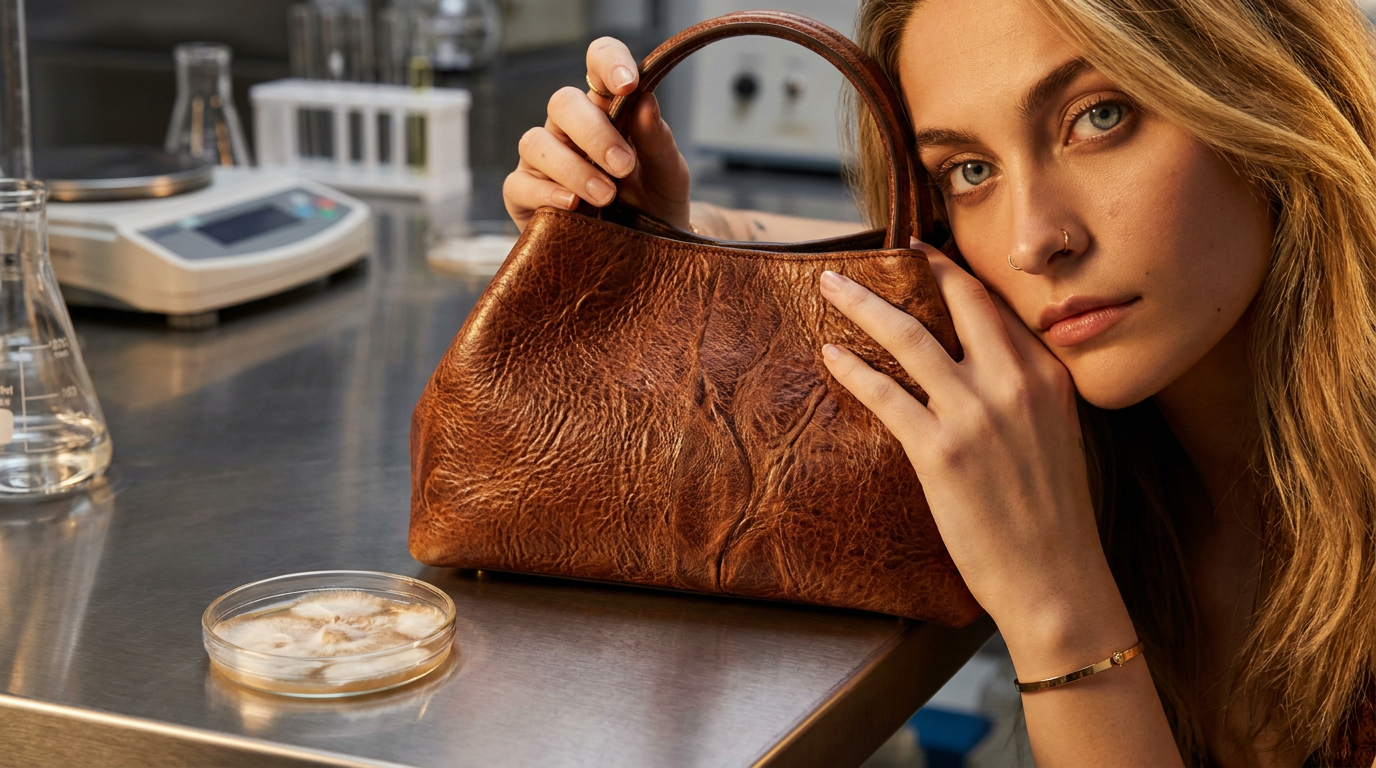
- Biotech Innovators
- Companies focused on scaling bio-fabrication to replace petroleum-based synthetics.
- Luxury Fashion Houses
- Heritage brands balancing sustainability mandates with exacting craftsmanship standards.
- Market & Industry Analysts
- Observers tracking the economic viability and growth of the bio-fabricated apparel sector.
What's not represented
- · Traditional Leather Tanners
- · Mass-Market Apparel Manufacturers
- · Livestock Farmers
Why this matters
The commercial scaling of lab-grown biomaterials marks the end of the compromise between animal exploitation and plastic pollution in fashion. As these technologies reach price parity, they will fundamentally rewire global supply chains, drastically reducing the clothing industry's carbon footprint and water toxicity.
Key points
- Biotech companies are successfully cultivating leather alternatives from mycelium and spider silk proteins via microbial fermentation.
- Major luxury houses like Hermès, Balenciaga, and Stella McCartney have integrated these lab-grown materials into commercial collections.
- Bio-fabricated textiles offer massive environmental benefits, including biodegradability and a fraction of the carbon footprint of animal leather.
- The lab-grown leather market is projected to expand from $78.5 million in 2025 to nearly $685 million by 2036.
- High production costs remain a hurdle, but industrial-scale facilities are opening to drive prices toward parity with conventional materials.
For decades, luxury fashion has been trapped in an uncomfortable binary. On one side sits traditional animal leather and exotic skins—materials celebrated for their durability and heritage craftsmanship, but increasingly scrutinized for their massive environmental footprint, methane emissions, and reliance on heavy-metal tanning. On the other side sits "vegan leather," a marketing triumph that often masks the reality of polyurethane and petroleum-derived plastics. Consumers demanding ethical alternatives were essentially asked to choose between deforestation and fossil fuels. But in 2026, a third paradigm has moved from the fringes of speculative science into the ateliers of the world's most prestigious fashion houses.[1]
Welcome to the era of bio-fabricated luxury. Instead of extracting materials from animals or extruding them from petrochemicals, a new vanguard of biotech companies is cultivating textiles in controlled laboratory environments. By harnessing the biological machinery of fungi, microbes, and cellular agriculture, these innovators are growing materials that match—and sometimes exceed—the performance of traditional luxury fabrics. This shift represents the most significant evolution in textile raw materials since the invention of synthetic polymers in the mid-twentieth century.[1]
This is no longer a conceptual exercise confined to trade shows and speculative design exhibits. The lab-grown leather alternative apparel market, valued at $78.5 million in 2025, is projected to cross $92.4 million this year and surge toward $685 million by 2036. Major luxury conglomerates, driven by tightening environmental, social, and governance (ESG) mandates, are pouring hundreds of millions of dollars into scaling these technologies. The result is a fundamental rewiring of the fashion supply chain, where the farm and the slaughterhouse are being replaced by the bioreactor and the vertical farm.[2]

The most commercially advanced of these new materials is mycelium leather. Mycelium is the naturally abundant, infinitely renewable root-like vegetative structure of fungi. In the wild, it forms vast, complex networks beneath the forest floor. In the laboratory, companies like California-based MycoWorks and Bolt Threads have learned to coax these fungal cells into dense, interwoven mats that mimic the collagen structure of animal hide, offering a buttery hand-feel and remarkable durability.[3][4]
The cultivation process is remarkably efficient. Spores are fed a diet of sawdust and organic agricultural waste in climate-controlled indoor vertical farms. Within just two weeks—a fraction of the years required to raise cattle—the mycelium grows into a thick, foamy layer resembling a bag of compressed marshmallows. This raw material is then harvested, tanned using green chemistry, and finished into a supple, durable textile. The remaining organic substrate is simply composted, creating a closed-loop system that generates virtually zero waste.[4]
The luxury establishment has embraced mycelium with surprising enthusiasm. Hermès, a French maison synonymous with centuries of traditional leather craftsmanship, sent shockwaves through the industry when it partnered with MycoWorks to release a version of its classic Victoria travel bag made from "Sylvania," a fine mycelium material. The collaboration proved that lab-grown textiles could meet the exacting standards of high-end artisans. Similarly, Stella McCartney, a lifelong pioneer of cruelty-free fashion, has integrated Bolt Threads' "Mylo" material into luxury handbags and garment prototypes, proving that sustainability does not require compromising on aesthetic desirability.[4][9]
While mycelium is replacing leather, another biological marvel is targeting the silk industry: bioengineered spider silk. Natural spider silk is one of the most extraordinary materials on Earth—five times stronger than steel by weight, highly elastic, and naturally biodegradable. However, spiders are territorial and cannibalistic, making them impossible to farm at scale. For centuries, the material remained an unharvestable curiosity, inspiring myths but defying industrial application.[1]
While mycelium is replacing leather, another biological marvel is targeting the silk industry: bioengineered spider silk.
Today, biotech firms like Germany's AMSilk and Japan's Spiber are bypassing the spider entirely. Using advanced synthetic biology, they have genetically engineered microbes to produce spider silk proteins through a process of microbial fermentation. Inside massive steel bioreactors, these microbes are fed plant sugars, multiplying and secreting liquid silk proteins that are then purified and spun into high-performance yarns. This process mirrors the brewing of beer, but yields a textile of unparalleled strength and lightness.[6][8]

The commercial breakthrough for bioengineered silk arrived forcefully in the Spring 2026 collections. Balenciaga debuted commercially available garments—including a sharp-collared white shirt and a tailored shirtdress—woven from AMSilk's bioengineered silk protein yarns. This milestone demonstrated that fermented textiles could seamlessly integrate into established haute couture manufacturing processes, offering the drape, breathability, and luster of traditional silk without the environmental toll of boiling silkworms. It proved that biotech materials are no longer experimental novelties, but viable staples for global luxury brands.[6]
The environmental stakes driving this transition are profound. Traditional animal agriculture is responsible for nearly 15% of global greenhouse gas emissions, with cattle rearing driving significant deforestation and water pollution. Furthermore, conventional leather tanning relies heavily on chromium and other toxic chemicals that frequently contaminate waterways in developing nations. The industry has long recognized these externalities, but lacked a drop-in replacement that could satisfy luxury consumers.[1][4]
Bio-fabricated materials offer a radical reduction in this ecological footprint. MycoWorks reports that producing 11 square feet of its Reishi mycelium material generates only six pounds of carbon dioxide equivalent—a fraction of the emissions associated with bovine leather. Moreover, because these materials are inherently biological, they solve the end-of-life problem that plagues synthetic fashion. Mycelium leather and spider silk proteins are fully biodegradable, capable of composting in natural environments within 45 to 90 days, leaving behind no microplastics.[3][7]

The rapid acceleration of these technologies is heavily intertwined with the strategic roadmaps of luxury conglomerates. Kering—the parent company of Gucci, Saint Laurent, and Balenciaga—has positioned biomaterials at the center of its 2025 sustainability strategy. Having committed to reducing its overall environmental footprint by 40% and achieving full supply chain transparency, Kering views bio-fabrication not as a novelty, but as an operational necessity to decouple revenue growth from resource extraction.[5]
Despite the immense promise, the bio-fabricated fashion sector faces significant hurdles, primarily regarding scalability and cost. Currently, lab-grown leather remains the most expensive alternative on the market, costing between $15 and $30 per square foot. This price premium restricts its use to luxury capsules and high-end accessories, keeping it out of reach for the broader mass-market apparel industry that still relies on cheap polyurethane.[7]
However, the industry is aggressively moving down the cost curve. Biotech production follows an experience curve similar to semiconductor manufacturing: as cumulative production volume doubles, unit costs typically fall by 20 to 30 percent. To achieve this, companies are transitioning from pilot labs to industrial-scale facilities. MycoWorks recently utilized a $125 million funding round to open a massive production plant in South Carolina, capable of producing millions of square feet of mycelium annually, while Spiber has scaled its Brewed Protein operations in Thailand.[3][7][8]

As production volumes increase and costs approach parity with mid-range conventional materials by the end of the decade, the definition of luxury itself is undergoing a profound transformation. Historically, luxury was defined by scarcity, extraction, and the mastery of nature. Today, a new generation of designers and consumers is redefining it through the lens of regeneration, scientific ingenuity, and harmony with planetary boundaries. The wardrobe of the future is no longer being stitched together from the remnants of the past; it is being grown, cell by cell, in the laboratories of today.[1]
How we got here
2017
Stella McCartney partners with Bolt Threads to begin developing Mylo mushroom leather.
2021
Hermès announces its collaboration with MycoWorks to create the Sylvania mycelium Victoria bag.
2022
MycoWorks secures $125 million to build an industrial-scale Fine Mycelium factory in South Carolina.
2025
Kering reaches a key milestone in its sustainability roadmap, heavily integrating bio-fabricated materials into its supply chain.
Spring 2026
Balenciaga debuts commercially available garments woven from AMSilk's bioengineered spider silk proteins.
Viewpoints in depth
Biotech Innovators
Companies focused on scaling bio-fabrication to replace petroleum-based synthetics.
For biotechnology firms like MycoWorks, Bolt Threads, and AMSilk, the primary goal is achieving price parity and industrial scale. They argue that the fashion industry's reliance on both animal agriculture and fossil-fuel-derived plastics is ecologically unsustainable. By leveraging microbial fermentation and vertical farming, these innovators believe they can provide drop-in replacements that match the performance metrics of traditional materials without the associated carbon footprint or toxic tanning effluent. Their current focus is aggressively moving down the cost curve through massive infrastructure investments.
Luxury Fashion Houses
Heritage brands balancing sustainability mandates with exacting craftsmanship standards.
Luxury conglomerates such as Kering and Hermès view bio-fabricated materials as a strategic necessity to meet tightening ESG targets and appeal to eco-conscious younger demographics. However, they are uncompromising on quality. For these houses, biomaterials must offer the same buttery hand-feel, durability, and aging properties as traditional calfskin or silk. Their willingness to integrate materials like Reishi and bioengineered spider silk into flagship products signals that lab-grown textiles have finally crossed the threshold from experimental novelties to true luxury commodities.
Environmental Advocates
Campaigners pushing for the total elimination of animal agriculture and plastics in fashion.
Environmental and animal rights organizations celebrate the rise of bio-fabricated textiles as the ultimate solution to fashion's dual crises: animal exploitation and microplastic pollution. They point out that traditional leather production drives deforestation and methane emissions, while synthetic 'vegan' leathers shed microplastics that contaminate oceans. For this camp, inherently biodegradable materials grown in closed-loop systems represent the only viable future for a truly circular fashion economy, though they urge faster democratization of the technology beyond high-end luxury.
What we don't know
- Whether bio-fabricated materials can scale quickly enough to reach price parity with cheap polyurethane plastics used in fast fashion.
- How mainstream consumers will respond to wearing garments cultivated from fungi and genetically engineered microbes once the novelty fades.
Key terms
- Mycelium
- The naturally abundant, infinitely renewable root-like vegetative structure of fungi, which can be cultivated into dense mats.
- Bioreactor
- A controlled, closed environment where biological processes, such as microbial fermentation, are carried out to grow materials at scale.
- Microbial Fermentation
- A process where genetically engineered microbes are fed sugars to produce specific proteins, such as spider silk, without using animals.
- Bio-fabricated Leather
- A leather alternative grown from cell cultures or mycelium networks rather than being stripped from animals or extruded from petrochemicals.
Frequently asked
Is lab-grown leather just another type of plastic vegan leather?
No. Traditional vegan leather is typically made from polyurethane, a petroleum-based plastic. Lab-grown leather is cultivated from biological materials like fungi or animal cells, making it plastic-free and biodegradable.
How long does it take to grow mycelium leather?
Unlike raising cattle, which takes years and vast amounts of land, mycelium can be grown into dense, harvestable mats in less than two weeks inside climate-controlled vertical farms.
Are bioengineered fabrics like spider silk biodegradable?
Yes. Both mycelium leather and bioengineered spider silk proteins are inherently biodegradable and can compost in natural environments within 45 to 90 days.
Why is lab-grown leather so expensive right now?
The technology is still transitioning from pilot labs to industrial-scale facilities. As cumulative production volume increases, costs are expected to drop significantly, following standard biotech experience curves.
Sources
Source coverage
9 outlets
3 viewpoints surfaced









[1]Factlen Editorial TeamMarket & Industry Analysts
Synthesis by Factlen editorial team
Read on Factlen Editorial Team →[2]Future Market InsightsMarket & Industry Analysts
Lab-Grown Leather Alternative Apparel Market Size, Market Forecast and Outlook
Read on Future Market Insights →[3]MycoWorksBiotech Innovators
Reishi Fine Mycelium: A New Category of Materials
Read on MycoWorks →[4]Stella McCartneyLuxury Fashion Houses
Mylo™: The Future of Fashion Grown from Mycelium
Read on Stella McCartney →[5]KeringLuxury Fashion Houses
Crafting Tomorrow's Luxury: 2025 Sustainability Strategy
Read on Kering →[6]TexDataBiotech Innovators
AMSilk bioengineered yarns featured in Balenciaga Spring 2026
Read on TexData →[7]iFactoryBiotech Innovators
Three Bioengineered Fibers Reshaping the Raw Material Landscape
Read on iFactory →[8]BioRunwayBiotech Innovators
6 biotech companies advancing fashion in 2025
Read on BioRunway →[9]Imperium PublicationLuxury Fashion Houses
How Hermès is Betting on Fungus-Based Biomaterials to Redefine Luxury
Read on Imperium Publication →

Every angle. Every day.
Get lifestyle stories with full source coverage and perspective breakdowns delivered to your inbox.