
The End of Dentures? World's First Tooth Regrowth Drug Enters Phase II Human Trials
Japanese biotech startup Toregem BioPharma has successfully concluded Phase I safety trials for TRG-035, an experimental antibody that stimulates the body to grow new teeth. With new funding secured in June 2026, the drug now moves to Phase II trials targeting patients with severe congenital tooth loss, paving the way for a potential commercial release by 2030.
By Factlen Editorial Team
- Regenerative Researchers
- Argue that biological regeneration is the inevitable future of dentistry, moving the field beyond mechanical replacements.
- Clinical Prosthodontists
- Emphasize that while the science is promising, titanium implants and dentures remain the proven, immediate standard of care for tooth loss.
- Patient Advocates
- Highlight the urgent quality-of-life needs for children with congenital hypodontia, who currently suffer through years of ill-fitting dentures.
What's not represented
- · Health Insurance Providers
- · Dental Implant Manufacturers
Why this matters
For generations, losing a permanent tooth meant relying on expensive, invasive mechanical replacements like titanium implants or removable dentures. If this drug proves effective in humans, it will fundamentally shift dentistry from mechanical repair to biological regeneration, offering a natural, permanent solution to millions suffering from tooth loss.
Key points
- Japanese biotech Toregem BioPharma has raised $29 million to fund Phase II trials of a tooth-regrowing drug.
- Phase I safety trials concluded in early 2026 with no serious adverse events reported among the 30 participants.
- The drug, TRG-035, works by blocking the USAG-1 protein, which normally suppresses the growth of dormant tooth buds.
- Phase II trials will focus on patients with severe congenital hypodontia, who are missing six or more permanent teeth.
- Researchers hope to expand the treatment to adults with acquired tooth loss in the future.
- The company is targeting 2030 for regulatory approval for the congenital condition.
For generations, losing a permanent tooth meant relying on mechanical replacements—dentures, bridges, or titanium implants drilled directly into the jawbone. But a fundamental shift from mechanical replacement to biological regeneration is now underway in laboratories across Japan.[3][5]
In June 2026, Japanese biotechnology startup Toregem BioPharma announced a $5.3 million funding round, pushing its total capital above $29 million. This financial milestone clears the runway for Phase II clinical trials of TRG-035, an experimental intravenous drug designed to stimulate the human body to regrow missing teeth.[1][2]
The transition to Phase II comes after the successful conclusion of Phase I safety trials, which ran from late 2024 through early 2026. Conducted at Kyoto University Hospital, the initial trial enrolled 30 healthy adult men aged 30 to 64, each of whom was missing at least one rear tooth.[2][6]
The primary goal of Phase I was to establish safety and dosing, not efficacy. As of early 2026, researchers reported no serious adverse events from the intravenous antibody, clearing the critical first hurdle for any novel therapeutic and allowing the team to begin analyzing the data for their final report.[2][4]
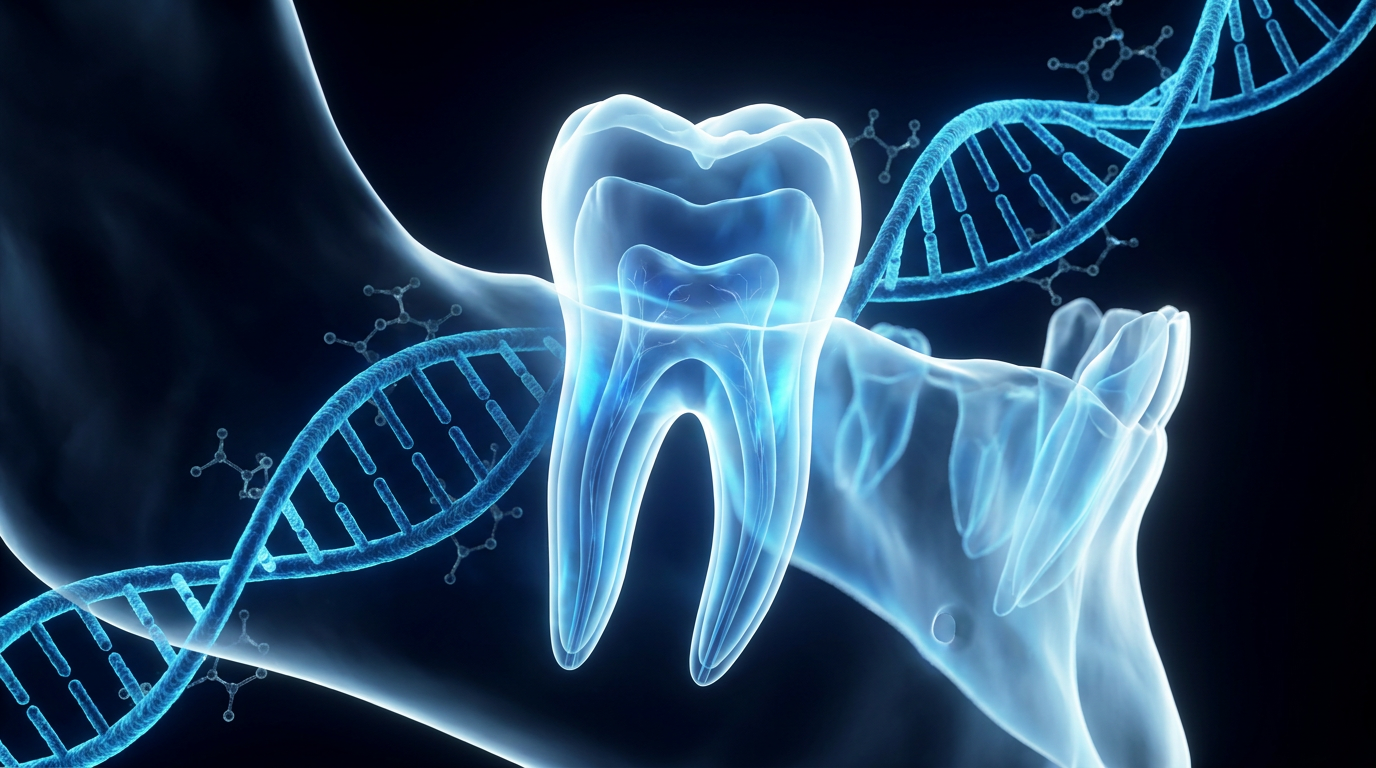
To understand how TRG-035 works, one must look at the biological brakes the human body applies to dental development. Humans naturally grow two sets of teeth: deciduous (baby) teeth and permanent adult teeth. However, researchers have long known that humans harbor the cellular potential for a "third set" of teeth in the form of dormant tooth buds hidden within the jaw.[1][3]
These buds remain dormant because of a specific protein called USAG-1 (uterine sensitization-associated gene-1). USAG-1 acts as a biological stop sign, suppressing the bone morphogenetic protein signaling pathway that normally drives tooth development and preventing the third set from ever emerging.[3][5]
TRG-035 is a monoclonal antibody engineered specifically to bind to and neutralize the USAG-1 protein. By temporarily removing this biological brake, the drug aims to "awaken" the dormant tooth buds, signaling the body's stem cells to resume the natural process of tooth formation.[1][6]

TRG-035 is a monoclonal antibody engineered specifically to bind to and neutralize the USAG-1 protein.
The foundational science behind this approach was cemented in a landmark 2021 study published in Science Advances. Researchers demonstrated that blocking USAG-1 in mice with congenital tooth agenesis allowed them to grow the teeth they were genetically missing. Subsequent trials in ferrets—animals with dental patterns remarkably similar to humans—yielded similarly positive results.[2][4]
While the ultimate dream is a treatment for general tooth loss, Phase II trials will target a highly specific population: patients with severe congenital hypodontia. This rare genetic condition is defined by the absence of six or more permanent teeth from birth.[1][6]
For children with severe hypodontia, the clinical stakes are immense. Because traditional dental implants cannot be safely placed until the jawbone finishes growing in late adolescence, children are often forced to rely on removable dentures for years. This can severely impact their nutrition, speech development, facial bone structure, and psychological well-being.[1][5]

The upcoming Phase II trial will administer the drug to patients with this condition, marking the first time researchers will actively look for signs of human tooth regeneration. If successful, the drug could offer these children a permanent, biological solution before they reach adulthood.[1][3]
Dr. Katsu Takahashi, the lead researcher and co-founder of Toregem BioPharma, has been explicit about the company's long-term roadmap. Once the drug is proven safe and effective for congenital conditions, the team plans to expand trials to adults with acquired tooth loss—those who have lost teeth to decay, gum disease, or trauma.[2][6]
The company has set an ambitious target of 2030 for regulatory approval and general availability for the hypodontia indication. Expanding the label to cover general adult tooth loss would likely take several years beyond that, requiring extensive, large-scale clinical trials across diverse global populations.[2][4]

Despite the excitement, dental professionals urge cautious optimism. Phase I trials only proved that the drug is safe, not that it actually regrows teeth in humans. The complex biomechanics of human jawbones, the precise alignment required for a functional bite, and the unpredictable nature of awakened stem cells all present significant clinical hurdles that animal models cannot fully replicate.[2][3]
Nevertheless, the initiation of Phase II trials represents a watershed moment in regenerative medicine. If TRG-035 fulfills its promise, the dental profession may eventually view titanium implants and acrylic dentures not as the standard of care, but as relics of a time before the body could be taught to heal itself.[3][5]
How we got here
2021
A landmark study in Science Advances proves that blocking the USAG-1 protein regrows teeth in mice and ferrets.
Late 2024
Phase I clinical trials begin at Kyoto University Hospital with 30 healthy adult male volunteers.
Early 2026
Phase I data collection wraps up, with researchers reporting no serious adverse events.
June 2026
Toregem BioPharma announces $5.3 million in new funding to launch Phase II trials for patients with congenital hypodontia.
2030
The target year for regulatory approval and general availability for the hypodontia indication.
Viewpoints in depth
Regenerative Researchers
Argue that biological regeneration is the inevitable future of dentistry, moving the field beyond mechanical replacements.
Scientists leading the charge in regenerative dentistry view the current reliance on titanium implants and acrylic dentures as a stopgap era in medical history. They argue that the human body already possesses the cellular machinery to grow a 'third set' of teeth, and that unlocking this potential is simply a matter of biochemical signaling. By proving that monoclonal antibodies can safely block the USAG-1 protein in humans, these researchers believe they are laying the groundwork for a future where biological regeneration is the first-line treatment for tooth loss, vastly improving patient comfort and long-term oral health.
Clinical Prosthodontists
Emphasize that while the science is promising, titanium implants and dentures remain the proven, immediate standard of care for tooth loss.
Practicing dentists and prosthodontists maintain a stance of cautious optimism. While acknowledging the groundbreaking nature of the TRG-035 trials, they emphasize that Phase I only proved safety, not efficacy in humans. They point out that human jaw biomechanics are incredibly complex, and it remains to be seen whether a chemically induced tooth will emerge with the correct alignment, root structure, and enamel density to withstand decades of chewing forces. Until those questions are answered in large-scale Phase III trials, they stress that patients should not delay necessary restorative care, as implants and dentures remain highly successful, proven solutions.
Patient Advocates
Highlight the urgent quality-of-life needs for children with congenital hypodontia, who currently suffer through years of ill-fitting dentures.
For advocacy groups representing patients with severe congenital hypodontia, the TRG-035 trials represent a lifeline. They highlight the severe physical and psychological toll the condition takes on children, who often cannot receive permanent implants until their jawbones stop growing in their late teens. During those formative years, children are forced to wear removable dentures that can impede speech development, restrict diets, and cause significant social anxiety. Advocates argue that fast-tracking biological solutions for these pediatric patients is a moral imperative, offering them a chance at a normal childhood free from the stigma of extensive dental prosthetics.
What we don't know
- Whether the drug will successfully stimulate tooth growth in humans as effectively as it did in animal models.
- If newly grown teeth will emerge with the correct alignment and structural integrity to function normally.
- How much the treatment will ultimately cost and whether insurance providers will cover it.
- Exactly how long it will take to expand the treatment from congenital conditions to general adult tooth loss.
Key terms
- TRG-035
- An experimental monoclonal antibody drug designed to stimulate the growth of new teeth by blocking a specific protein.
- USAG-1
- Uterine sensitization-associated gene-1, a protein that acts as a biological brake to suppress the development of dormant tooth buds in humans.
- Congenital Hypodontia
- A rare genetic condition characterized by the developmental absence of one or more permanent teeth from birth.
- Monoclonal Antibody
- A lab-made protein designed to bind to a specific target in the body, in this case, the USAG-1 protein.
- Tooth Bud
- A mass of embryonic tissue in the jawbone that has the cellular potential to develop into a fully formed tooth.
Frequently asked
Will this drug work for teeth lost to cavities or aging?
Eventually, researchers hope so. However, the current Phase II trials are strictly focused on patients with severe congenital hypodontia (missing teeth from birth). Expanding the treatment to acquired tooth loss is a longer-term goal.
When will the tooth regrowth drug be available to the public?
Toregem BioPharma is targeting 2030 for regulatory approval for congenital hypodontia. General availability for adults with acquired tooth loss would likely take several years beyond that.
How is the TRG-035 drug administered?
In the Phase I clinical trials, the drug was administered intravenously (via an IV drip) to the participants.
Does the drug regrow the exact same tooth that was lost?
The drug activates dormant "third set" tooth buds that humans naturally possess. It stimulates the body to grow a new, natural tooth in the empty space, rather than regenerating the specific decayed tooth.
Sources
Source coverage
6 outlets
3 viewpoints surfaced






[1]Dentistry.co.ukRegenerative Researchers
Tooth regrowth drug TRG035 is moving towards Phase II trials in patients with severe congenital hypodontia
Read on Dentistry.co.uk →[2]DocTrustClinical Prosthodontists
Tooth Regrowth Drug TRG-035 Enters Phase II: What's Actually Proven in 2026
Read on DocTrust →[3]The Economic TimesPatient Advocates
A groundbreaking human trial in Japan is exploring a revolutionary treatment to regrow teeth
Read on The Economic Times →[4]Global NewsRegenerative Researchers
Toregem Biopharma is slated to begin clinical trials after succeeding in growing new teeth
Read on Global News →[5]Plymouth UniversityPatient Advocates
Japanese Scientists Discover Potential Tooth Regrowth Drug
Read on Plymouth University →[6]Concierge Dental GroupClinical Prosthodontists
Japanese Scientists Begin Human Trials for Tooth Regrowth Drug
Read on Concierge Dental Group →

Every angle. Every day.
Get health stories with full source coverage and perspective breakdowns delivered to your inbox.