
Inside Formula 1's 2026 Reset: The 50/50 Power Split, Active Aero, and Sustainable Fuel
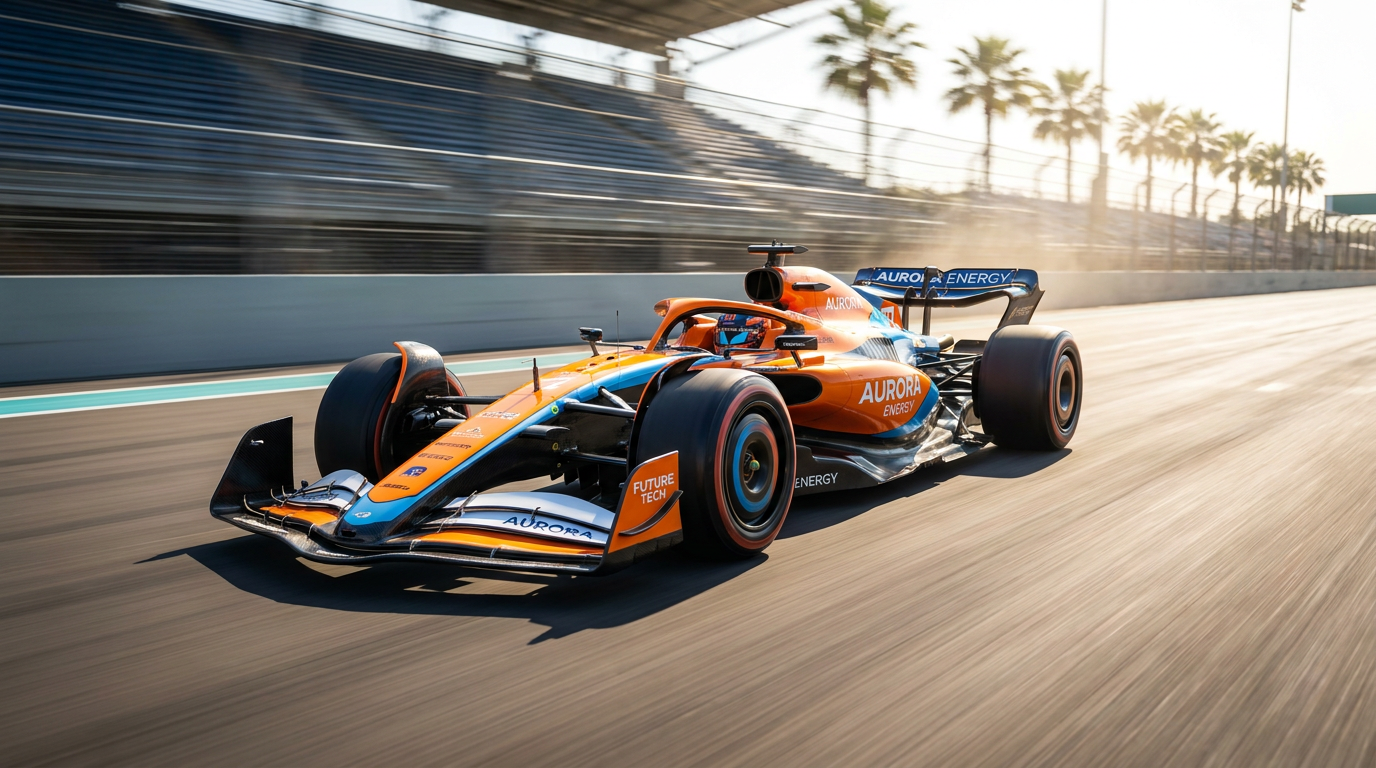
Formula 1's 2026 regulations represent the biggest technical overhaul in the sport's history, introducing a 50/50 hybrid power split, active aerodynamics, and 100% sustainable drop-in fuels. The changes aim to keep the sport relevant to road cars while maintaining elite performance.
By Factlen Editorial Team
- Automotive Manufacturers
- View Formula 1 as a high-speed research and development laboratory for consumer technology.
- Motorsport Traditionalists
- Prioritize raw speed, sound, and uncompromised racing over environmental initiatives.
- Aerodynamicists & Engineers
- Focused on interpreting the rulebook and finding performance advantages within strict constraints.
What's not represented
- · Independent Engine Suppliers
- · Environmental Advocacy Groups
Why this matters
The technologies pioneered in the 2026 Formula 1 regulations—specifically the advanced hybrid systems and 100% sustainable drop-in fuels—are designed to directly trickle down to consumer road cars. If successful, this high-speed R&D could offer a viable pathway to decarbonize the billions of internal combustion vehicles already on global roads.
Key points
- The 2026 power units will feature a near 50/50 split between internal combustion and electrical power, with the MGU-K output tripling to 350 kW.
- The complex MGU-H exhaust energy recovery system is being completely removed to simplify the engines and attract new manufacturers.
- Active aerodynamics will be introduced, allowing cars to dynamically reduce drag on straights to prevent battery depletion.
- All cars will run on 100% sustainable drop-in fuels, utilizing carbon capture and biomass to achieve net-zero emissions.
The 2026 Formula 1 season will mark the most radical technical reset in the seventy-six-year history of the sport. While previous regulatory overhauls have typically focused on either aerodynamic constraints or engine formulas in isolation, the upcoming generation of cars represents a fundamental, holistic reimagining of how a grand prix vehicle generates and deploys power. The Fédération Internationale de l'Automobile (FIA) and Formula 1 have finalized a rulebook that simultaneously shrinks the cars, introduces active aerodynamics, and completely overhauls the hybrid power units. It is an engineering tightrope walk designed to keep the sport at the absolute pinnacle of automotive performance while aggressively pivoting toward environmental sustainability.[1][2]
At the heart of this transformation is a philosophical shift in what Formula 1 is meant to achieve. For decades, the sport operated as a laboratory for raw, unbridled speed, often disconnected from the realities of consumer automotive markets. However, as the global automotive industry faces immense pressure to decarbonize, Formula 1 recognized that its survival depends on remaining relevant to the manufacturers that fund the grid. The 2026 regulations are the sport's answer to a seemingly impossible equation: maintaining the visceral thrill of wheel-to-wheel racing at 220 miles per hour while aligning with strict global net-zero emissions targets.[5]
The most dramatic change lies beneath the engine cover, where the power unit will transition to a near 50/50 split between internal combustion and electrical power. Since the dawn of the turbo-hybrid era in 2014, the internal combustion engine (ICE) has provided roughly eighty percent of the car's total output. Starting in 2026, the 1.6-liter turbocharged V6 will be dialed back to produce approximately 400 kilowatts (kW) of power. To compensate, the electrical output from the hybrid system will undergo a massive upgrade, jumping from a modest 120 kW to a staggering 350 kW. This means nearly half of the car's propulsion will come from the battery.[1][4]

This surge in electrical dependency places unprecedented importance on the Motor Generator Unit-Kinetic (MGU-K). The MGU-K is responsible for harvesting kinetic energy generated under heavy braking and converting it into electrical power stored in the battery. With its output nearly tripling, the battery is no longer just a supplementary boost system; it is now just as critical to lap time as the fuel tank. Drivers will have to master complex energy management strategies, ensuring they harvest enough energy in the braking zones to deploy maximum electrical power down the ensuing straights.[2][4]
To achieve this new electrical benchmark, the FIA made the controversial decision to completely eliminate the Motor Generator Unit-Heat (MGU-H). The MGU-H was an engineering marvel that captured waste heat directly from the turbocharger's exhaust gases and converted it into electricity. While incredibly efficient, the system was notoriously complex, exorbitantly expensive to develop, and possessed almost zero relevance to consumer road cars. By removing the MGU-H, the FIA has simplified the power unit, significantly lowering the barrier to entry for new engine manufacturers like Audi and Ford, who are joining the grid in 2026.[4]
However, the death of the MGU-H introduces a massive aerodynamic and strategic headache for the teams. Under the current regulations, the MGU-H allows teams to perform a 'free energy' trick, passing harvested electricity directly to the MGU-K without routing it through the battery. This bypass mechanism effectively eliminates turbo lag and ensures the car has a continuous stream of electrical deployment all the way down the longest straights. Without the MGU-H, teams are entirely reliant on the battery's finite capacity, fundamentally altering how power is delivered over a single lap.[4][5]
The immediate consequence of this reliance is the threat of 'super clipping,' or a sudden derate in power. If a driver exhausts their battery capacity halfway down a long straight like those in Baku or Monza, the MGU-K will shut off, instantly stripping the car of 350 kW—roughly 470 horsepower. The driver would hit an invisible aerodynamic wall, becoming a sitting duck for the cars behind them. Preventing this catastrophic loss of straight-line speed became the primary catalyst for the second major pillar of the 2026 regulations: active aerodynamics.[4]

The immediate consequence of this reliance is the threat of 'super clipping,' or a sudden derate in power.
To ensure the cars do not run out of electrical energy on the straights, the FIA is introducing a fully active aerodynamic system that dynamically alters the car's drag profile. Unlike the current Drag Reduction System (DRS), which only opens a flap on the rear wing in specific overtaking zones, the 2026 active aero will manipulate both the front and rear wings simultaneously. This system is designed to drastically reduce the aerodynamic resistance pushing against the car, allowing it to maintain top speed even as the electrical deployment from the MGU-K begins to taper off.[1][2]
The active aero system will operate in two distinct configurations, known as Z-Mode and X-Mode. Z-Mode is the high-downforce configuration utilized through the corners, keeping the wings steeply angled to press the tires into the tarmac for maximum grip. Once the car exits the corner and accelerates onto the straight, the driver will engage X-Mode. This low-drag configuration flattens the wing elements, allowing the car to slice through the air with minimal resistance. By shedding drag on demand, the cars can achieve higher top speeds while consuming significantly less electrical energy.[1][2]
While the hybrid and aerodynamic systems represent a leap into the future, the internal combustion engine is undergoing a quiet revolution of its own. Starting in 2026, every car on the Formula 1 grid will be mandated to run on 100% advanced sustainable fuel. This is not a standard biofuel blended with traditional gasoline; it is a fully synthetic 'drop-in' fuel designed to eliminate the introduction of new fossil carbon into the atmosphere. The fuel must deliver the extreme energy density required for elite motorsport without relying on freshly extracted petroleum.[1][3]

The creation of this sustainable fuel relies on a circular carbon economy. Manufacturers will synthesize the fuel using carbon captured directly from the atmosphere, combined with municipal waste or non-food biomass. Because the carbon released from the exhaust during combustion is equal to the carbon removed from the environment to create the fuel, the entire process is entirely net-zero. Crucially, the FIA has mandated that these fuels must be 'drop-in' ready, meaning they can be used in high-performance combustion engines without requiring a complete redesign of the engine architecture.[3]
The implications of this fuel mandate extend far beyond the racetrack. While the global automotive industry is aggressively pushing toward electrification, experts estimate that there will still be between 1.2 and 2 billion internal combustion vehicles on the road by 2030. Formula 1's aggressive development of synthetic drop-in fuels serves as a high-speed research and development laboratory for decarbonizing this massive existing fleet. If the sport can prove that sustainable fuels can deliver elite performance without compromising reliability, the technology could eventually trickle down to consumer gas stations worldwide.[3][5]

To accommodate these complex new power units and improve the quality of wheel-to-wheel racing, the 2026 cars are being put on a strict diet. Dubbed the 'nimble car' concept, the new chassis will be 100 millimeters narrower and 200 millimeters shorter than the current generation. Furthermore, the FIA has mandated a minimum weight reduction of 30 kilograms. By shrinking the footprint of the cars, the governing body hopes to make them more agile through tight street circuits and easier to position during overtaking maneuvers, addressing long-standing driver complaints about the current cars feeling like heavy boats.[1][2]
Of course, in Formula 1, a new rulebook is simply a puzzle waiting to be solved by thousands of the world's brightest engineers. Teams are already hunting for loopholes within the strict new parameters. For example, the FIA has mandated a strict 16:1 static compression ratio for the internal combustion engine to cap development costs. However, engineers are utilizing advanced additive manufacturing—3D printing—to create hollow, complex pistons that intentionally expand under extreme racing heat. This allows the engine to pass the static test in the garage while dynamically boosting its compression ratio out on the track.[4][5]
Despite the brilliance of the engineering, the 2026 regulations carry a significant degree of uncertainty. The primary concern among motorsport purists is that the heavy reliance on electrical energy management will fundamentally alter the nature of the racing. If drivers are forced to constantly monitor battery levels, lift and coast into braking zones, and manage active aero modes, they may become more akin to high-speed accountants than gladiators pushing flat-out. The fear is that the raw, instinctual art of driving could be overshadowed by software algorithms and energy deployment maps.[4][5]
Ultimately, the 2026 regulations represent a high-stakes gamble for the future of Formula 1. The sport is attempting to thread the needle between entertainment, technological innovation, and environmental responsibility. If the FIA and the teams get it right, they will deliver a generation of cars that are lighter, more agile, and fiercely competitive, all while running on net-zero fuel and pioneering hybrid technologies that could genuinely impact the global automotive landscape. It is a bold vision that proves the pursuit of sustainability does not have to come at the expense of elite performance.[5]
How we got here
2014
Formula 1 introduces the V6 turbo-hybrid era, featuring both the MGU-K and MGU-H.
2022
F1 announces the goal to reach net-zero carbon emissions by 2030, centering on sustainable fuels.
August 2022
The FIA officially approves the 2026 power unit regulations, confirming the removal of the MGU-H.
June 2024
The FIA reveals the 'nimble car' chassis regulations and the introduction of active aerodynamics.
March 2026
The new generation of cars will make their competitive debut at the season-opening Grand Prix.
Viewpoints in depth
Motorsport Traditionalists
Fans and purists who prioritize raw speed, sound, and uncompromised racing over environmental initiatives.
This camp frequently expresses concern that the 2026 regulations are turning Formula 1 into an engineering exercise rather than a pure sporting contest. They argue that the heavy reliance on battery management and the threat of 'super clipping' will force drivers to lift and coast, prioritizing energy conservation over flat-out racing. Furthermore, traditionalists often lament the increasing complexity of the cars, fearing that active aerodynamics and software-driven power deployment dilute the raw, instinctual skill required to pilot a grand prix vehicle.
Automotive Manufacturers
Global car brands that view Formula 1 as a high-speed research and development laboratory for consumer technology.
For manufacturers like Mercedes, Ferrari, Audi, and Ford, the 2026 regulations are the primary reason they remain committed to the sport. They view the mandate for 100% sustainable drop-in fuels as a critical pathway to decarbonizing the billions of internal combustion engines that will remain on global roads for decades. By removing the hyper-niche MGU-H and focusing heavily on the MGU-K and battery efficiency, the manufacturers believe the technology developed on the track will have a direct, tangible impact on the next generation of hybrid consumer vehicles.
Aerodynamicists & Engineers
The technical minds tasked with interpreting the rulebook and finding performance advantages within strict constraints.
Engineers view the 2026 rulebook not as a limitation, but as a puzzle to be solved through creative loopholes. While the FIA has attempted to cap development costs by mandating strict static compression ratios and simplifying the floor aerodynamics, technical teams are already exploring advanced additive manufacturing and thermal expansion techniques to dynamically alter engine performance on track. For this camp, the introduction of active aerodynamics and the 50/50 power split represents a thrilling new frontier in fluid dynamics and energy deployment mapping.
What we don't know
- Whether the heavy reliance on battery management will force drivers to adopt conservative 'lift and coast' driving styles during races.
- How effectively the active aerodynamic systems will function in turbulent air when cars are following closely.
- Which engine manufacturer will find the most significant loopholes in the strict new thermal efficiency and compression ratio regulations.
Key terms
- Motor Generator Unit-Kinetic (MGU-K)
- A hybrid system component that harvests kinetic energy under braking and converts it into electrical power for acceleration.
- Motor Generator Unit-Heat (MGU-H)
- A complex energy recovery system that captures waste heat from the exhaust; it will be banned in 2026 to simplify engine design.
- Active Aerodynamics
- Movable wing elements that dynamically adjust their angle while the car is in motion to reduce drag on straights and increase downforce in corners.
- Drop-in Fuel
- A synthetic or sustainable fuel designed to be a direct replacement for traditional fossil fuels without requiring any modifications to the engine.
- Super Clipping
- A sudden loss of acceleration on a straight when a car's battery is fully depleted, causing a massive drop in electrical power deployment.
Frequently asked
What happens to the MGU-H in 2026?
The MGU-H is being completely removed to simplify the engine, reduce costs, and make it easier for new manufacturers to enter the sport.
What is active aerodynamics in F1?
It is a system that dynamically adjusts the front and rear wings on straights to reduce drag, preventing the cars from losing speed when electrical power runs out.
Will the 2026 F1 cars be smaller?
Yes, the new 'nimble car' regulations make the chassis 100mm narrower, 200mm shorter, and 30kg lighter to improve racing agility.
What is drop-in sustainable fuel?
A fully synthetic fuel made from carbon capture or biomass that can be used in standard combustion engines without requiring modifications, achieving net-zero emissions.
Sources
Source coverage
5 outlets
3 viewpoints surfaced





[1]Fédération Internationale de l'Automobile (FIA)Automotive Manufacturers
FIA and Formula 1 Announce 2026 Technical Regulations
Read on Fédération Internationale de l'Automobile (FIA) →[2]Formula 1 OfficialAutomotive Manufacturers
2026 F1 Regulations: Everything You Need to Know
Read on Formula 1 Official →[3]Top Racing ShopAerodynamicists & Engineers
What Makes the 2026 Fuel Sustainable?
Read on Top Racing Shop →[4]The Motorsport MetricsMotorsport Traditionalists
F1 2026 Engine Regulations Explained: The Powerful New Rules Transforming Formula 1
Read on The Motorsport Metrics →[5]Factlen Editorial TeamAerodynamicists & Engineers
Synthesis by Factlen editorial team
Read on Factlen Editorial Team →

More in sports
See all 8 stories →Combat Sports Tech
How Smart Mouthguards Are Changing the Math on Brain Trauma in Combat Sports
6 sources

Sports Biomechanics
The Biomechanics Behind MLB's 104 MPH Fastball Revolution
7 sources

Equipment Tech
How Hybrid Rubbers and Hexagonal Blades Are Rewriting Table Tennis Physics
7 sources

Sports Economics
Women's Sports Franchises Surge in Value as Global Revenue Tops $3 Billion
6 sources

Every angle. Every day.
Get sports stories with full source coverage and perspective breakdowns delivered to your inbox.