
50 Years of the Panenka: How a Bet for Beer Changed Football History
Half a century ago today, Antonín Panenka debuted a delicately chipped penalty kick that won Euro 1976 and permanently altered the psychological landscape of football.
By Factlen Editorial Team
- Football Traditionalists
- Viewing the Panenka as a moment of historical sporting poetry and audacious creativity.
- Modern Tacticians
- Analyzing the Panenka as a high-risk psychological weapon that subverts goalkeeper training.
- Goalkeepers' Viewpoint
- Experiencing the Panenka as the ultimate professional humiliation and a sign of disrespect.
What's not represented
- · Sepp Maier's direct modern commentary on the anniversary
- · Sports psychologists analyzing the pressure of the kick
Why this matters
The Panenka penalty is a rare example of a single athlete inventing a move that permanently changes how a global sport is played. Understanding its origins highlights the psychological warfare of elite sports and the enduring value of audacious creativity.
Key points
- June 20, 2026, marks exactly 50 years since Antonín Panenka debuted his famous chipped penalty in the Euro 1976 final.
- The audacious kick secured the European Championship for Czechoslovakia and humiliated West German goalkeeper Sepp Maier.
- Panenka developed the technique during club practices to win bets for beer and chocolate against his own goalkeeper.
- The move relies entirely on the psychological assumption that a goalkeeper will commit to a dive before the ball is struck.
- While legends like Zidane and Messi have adopted the chip, it remains a high-risk maneuver that invites ridicule if the keeper stands still.
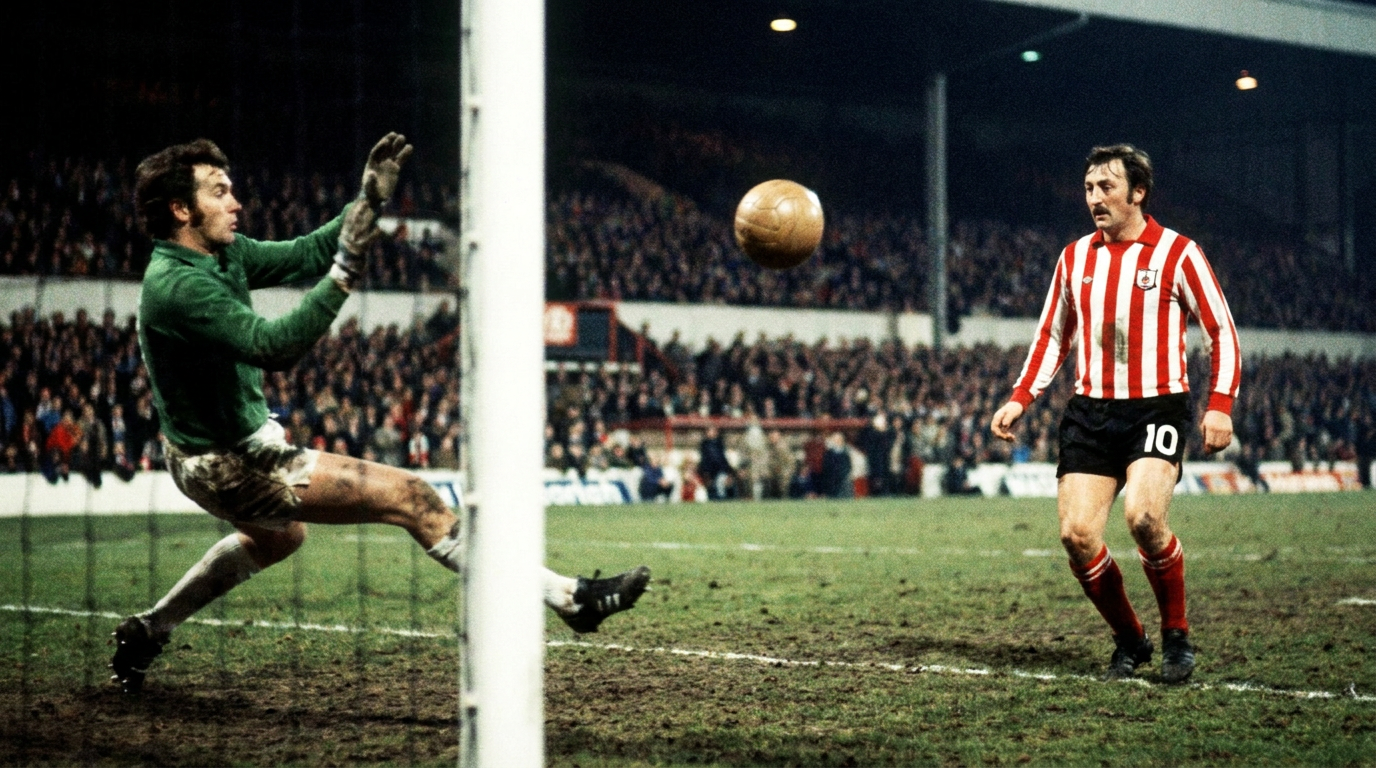
Fifty years ago today, in the muggy night air of Belgrade, a 27-year-old Czechoslovak midfielder fundamentally altered the psychological landscape of football. On June 20, 1976, the UEFA European Championship final between Czechoslovakia and West Germany was locked at 2-2 after extra time. For the first time in the history of a major international tournament, the title would be decided by a penalty shootout. The tension was suffocating. West Germany’s Uli Hoeness had just blazed his spot-kick over the crossbar, leaving the stage set for Antonín Panenka. If he scored, Czechoslovakia would be champions of Europe.[4][5]
Standing between Panenka and glory was Sepp Maier, the formidable West German goalkeeper and reigning world champion. Panenka began a brisk run-up, projecting every intention of unleashing a ferocious strike into the corner. Maier took the bait, launching his body to the left. But Panenka didn't smash the ball. Instead, his boot slid underneath it, delivering a delicate, lofted chip that floated dead-center into the net as Maier tumbled helplessly away. The audacity of the strike stunned the stadium into silence before erupting into cheers. A French journalist watching from the stands immediately dubbed the Czechoslovak playmaker "a poet."[1][4]
Half a century later, the "Panenka" remains the most famous penalty technique in global football—a high-wire act of deception that balances ultimate humiliation for the goalkeeper with catastrophic embarrassment for the taker if it fails. Sitting in his office at Bohemians 1905 in Prague this week, the 77-year-old Panenka reflected on the golden anniversary of his masterpiece. He recounted the story with a low, rumbling laugh, noting that while the goal secured his sporting immortality, it severely damaged his relationship with the man he beat.[1][3]
"He went 35 years without uttering a single word to me," Panenka said of Maier, who felt deeply disrespected by the cheeky finish on such a massive stage. The feud ran so deep that Panenka heard rumors of Maier keeping a dartboard in his garage featuring the Czechoslovak player's face. Time, however, has softened the animosity, and the two men are now on amicable terms. Yet the psychological scar the kick leaves on goalkeepers remains a defining feature of the technique.[1]

The origins of the Panenka were born not out of arrogance, but out of a desire to win chocolate and beer. Two years before the Belgrade final, Panenka routinely stayed late after training at Bohemians to practice penalties against his club goalkeeper, Zdenek Hruska. The pair wagered small stakes on the outcomes. Finding himself losing money and pride, Panenka began analyzing goalkeeper behavior. He realized that keepers almost always committed to a dive a fraction of a second before the ball was struck. If he could hold his nerve and simply lift the ball down the middle, the keeper would already be out of the way.[1]
The origins of the Panenka were born not out of arrogance, but out of a desire to win chocolate and beer.
He perfected the technique in the shadows of the domestic league before unleashing it on the world. After the 1976 final, Panenka used the move sparingly, recognizing that the element of surprise was gone. He estimates taking around 15 penalties for the remainder of his career, deploying the chip only three more times—most notably in a 1979 European Championship qualifier against France. He only missed once, during a friendly match in southern Bohemia, and only because a massive puddle in the goalmouth prevented the opposing keeper from diving at all.[1]
Today, the Panenka is a global phenomenon, attempted by players from amateur Sunday leagues to the pinnacle of the sport. Legends like Zinedine Zidane, Andrea Pirlo, and Lionel Messi have all successfully deployed the chip in high-stakes matches. Zidane famously utilized it in the 2006 World Cup final, clipping the underside of the crossbar on its way in. But the technique carries immense risk. When a Panenka fails—when the goalkeeper stands their ground and simply catches the ball—the taker is subjected to merciless ridicule.[5]

This brutal duality was on display earlier this year when Moroccan winger Brahim Diaz attempted a Panenka deep into stoppage time of the Africa Cup of Nations final against Senegal. Attempting to end Morocco's 50-year wait for an AFCON title, Diaz chipped the ball down the middle, only for Senegalese goalkeeper Edouard Mendy to stand perfectly still and catch it with embarrassing ease. The miss cost Morocco the championship, a stark reminder that the Panenka is as much a test of psychological dominance as it is of technical skill.[2][3]
Despite the occasional high-profile failure by his successors, Antonín Panenka remains fiercely proud of his invention. He acknowledges that modern stars like Vinícius Júnior might possess different skill sets, but he playfully insists that nobody executes the chip quite like its creator. As the football world celebrates the 50th anniversary of that muggy night in Belgrade, the Panenka stands as a testament to the enduring power of creativity in sports—a fleeting moment of cheekiness that permanently etched a player's name into the dictionary of the beautiful game.[3][6]
Ultimately, the enduring appeal of the Panenka lies in its subversion of expectations. In a sport increasingly dominated by data analytics, optimized shot velocities, and rigid tactical systems, the chipped penalty remains a triumph of human psychology over pure physics. It requires a player to suppress every instinct screaming at them to strike the ball with power, opting instead for a fragile, floating arc that demands absolute conviction. Fifty years after it first stunned the world, the Panenka remains football's ultimate expression of sporting poetry.[6]
How we got here
1974
Panenka begins practicing the chipped penalty with his club goalkeeper to win bets for beer and chocolate.
June 20, 1976
Panenka debuts the kick on the world stage, winning Euro 1976 for Czechoslovakia against West Germany.
April 1979
Panenka successfully uses the technique again in a European Championship qualifier against France.
2006
Zinedine Zidane famously uses the Panenka in the FIFA World Cup Final against Italy.
June 20, 2026
The football world celebrates the 50th anniversary of the iconic kick.
Viewpoints in depth
Football Traditionalists
Viewing the Panenka as a moment of historical sporting poetry.
For football historians and purists, the 1976 penalty is a watershed moment in the sport's history. It represents a time before hyper-optimized analytics, where a player could invent a globally recognized technique simply by experimenting after practice. Traditionalists celebrate Antonín Panenka not just for the goal itself, but for the sheer audacity required to attempt an untested, delicate chip in the first-ever penalty shootout of a major international final.
Modern Tacticians
Analyzing the Panenka as a high-risk psychological weapon.
Modern coaches and tacticians view the Panenka through the lens of risk management and psychological warfare. Because the kick relies entirely on deception rather than power or placement, it is mathematically a terrible shot if the goalkeeper doesn't move. However, tacticians acknowledge that when executed perfectly, it inflicts severe psychological damage on the opposing team and goalkeeper, making it a viable, albeit dangerous, tool in high-stakes shootouts.
The Goalkeepers' View
Experiencing the Panenka as the ultimate professional humiliation.
From the perspective of those between the posts, the Panenka is often viewed as a sign of profound disrespect. Goalkeepers are trained to react to body mechanics and power; a chipped shot exploits their fundamental training to dive. Sepp Maier's 35-year refusal to speak to Panenka underscores the deep embarrassment goalkeepers feel when they are left tumbling through the air while the ball floats gently into the center of the net they just vacated.
What we don't know
- Whether the technique will eventually become obsolete as goalkeepers increasingly use data analytics to predict penalty takers' habits.
- Exactly how many times the Panenka has been attempted in professional football globally since 1976.
Key terms
- Panenka
- A penalty kick technique where the player delicately chips the ball down the center of the goal instead of kicking it with power.
- Penalty Shootout
- A tie-breaking method in football where teams take turns kicking from the penalty mark to decide the winner of a drawn match.
- UEFA European Championship
- The primary association football tournament contested by the senior men's national teams of the members of the Union of European Football Associations (UEFA).
Frequently asked
What is a Panenka penalty?
A Panenka is a penalty kick technique where the player delicately chips the ball down the center of the goal, relying on the goalkeeper committing to a dive to either side.
Who invented the Panenka?
Czech midfielder Antonín Panenka invented the technique, debuting it on the world stage during the 1976 European Championship final against West Germany.
Did Antonín Panenka ever miss his signature kick?
Yes, he missed once during a friendly match in southern Bohemia, but only because a large puddle prevented the opposing goalkeeper from diving.
Sources
Source coverage
6 outlets
3 viewpoints surfaced






[1]The GuardianFootball Traditionalists
‘That penalty changed my life’: Panenka’s pride 50 years on from special spot-kick
Read on The Guardian →[2]TRT AfrikaModern Tacticians
Panenka: The penalty technique that robbed Morocco's Diaz of AFCON glory
Read on TRT Afrika →[3]La RazónGoalkeepers' Viewpoint
Se cumple medio siglo desde el legendario penalti 'a lo Panenka'
Read on La Razón →[4]WikipediaFootball Traditionalists
Antonín Panenka
Read on Wikipedia →[5]GrokipediaModern Tacticians
Antonín Panenka
Read on Grokipedia →[6]Factlen Editorial TeamModern Tacticians
Synthesis by Factlen editorial team
Read on Factlen Editorial Team →
Every angle. Every day.
Get sports stories with full source coverage and perspective breakdowns delivered to your inbox.