
Laser Phase Plate Breakthrough Allows Electron Microscopes to See the Smallest Human Proteins
Researchers have successfully integrated a high-intensity laser into a cryo-electron microscope, solving an 80-year-old contrast problem. The breakthrough allows scientists to image the 90 percent of human proteins that were previously too small to see, promising to accelerate drug discovery.
By Factlen Editorial Team
- Structural Biologists
- Value the ability to resolve the atomic structures of small, previously invisible proteins for drug discovery.
- Cell Biologists
- Focus on using the technology to map intact cells in 3D via cryo-electron tomography.
- Microscopy Engineers
- Emphasize the extreme physical tolerances and the difficulty of commercializing the prototype.
What's not represented
- · Pharmaceutical Industry Researchers
- · Computational Biologists
Why this matters
For decades, scientists have been unable to clearly see 90 percent of the proteins inside human cells because they are too small for conventional microscopes. This new laser technology turns the lights on for these invisible molecules, providing a direct path to understanding cellular diseases and designing highly targeted new drugs.
Key points
- Cryo-electron microscopy struggles to image proteins smaller than 70 kilodaltons, leaving 90% of the human proteome invisible.
- Researchers built a 'laser phase plate' that traps a laser 100 million times brighter than the sun to manipulate the microscope's electron beam.
- The intense light shifts the electrons' phase by 90 degrees, generating stark image contrast without blurring the high-resolution details.
- In benchmark tests, the device improved the resolution of the small hemoglobin protein by up to 44 percent.
- The technology is highly sensitive to dust and alignment, requiring further engineering before widespread commercial adoption.
For decades, structural biologists have faced a frustrating paradox: the tools powerful enough to see the building blocks of life are mostly blind to the vast majority of them. Cryo-electron microscopy (cryo-EM) revolutionized biology and earned a Nobel Prize by revealing the atomic structures of large molecular machines. Yet, it struggles to generate clear images of proteins smaller than 70 kilodaltons.[1][2]
Because approximately 90 percent of the human proteome falls below this size threshold, researchers have been effectively locked out of observing the bulk of the cellular machinery. Now, two research teams from UC Berkeley and the Chan Zuckerberg Biohub have demonstrated a functional "laser phase plate" (LPP), a device that solves this 80-year-old contrast problem.[3][4][5][6]
The core limitation of conventional cryo-EM is a lack of contrast. Biological molecules are composed of light elements like carbon, nitrogen, and oxygen, which barely scatter the electron beam used to image them. To generate a visible image, researchers traditionally have to push the microscope out of focus, a compromise that creates contrast but destroys high-resolution detail.[2][4][7][8]
The theoretical solution—a phase plate that shifts the electron beam to create contrast while perfectly in focus—was proposed by Dutch scientist Frits Zernike for light microscopy nearly a century ago, but adapting it for electrons proved notoriously difficult. Previous physical phase plates suffered from rapid electrostatic charging, rendering them unstable for routine use.[2][4][6][7]

The new LPP technology bypasses physical materials entirely, using light to manipulate electrons. As detailed in a newly published paper in Science, the system traps a continuous-wave laser inside a mirrored Fabry-Pérot cavity.[2][8]
The laser beam bounces back and forth nearly 10,000 times, building up a steady-state intensity of 350 to 400 gigawatts per square centimeter—an energy density roughly 100 million times brighter than the surface of the sun. When the microscope's electron beam passes through this intense optical field, the electrons experience a 90-degree phase shift.[2][3][7][8]
This shift generates stark image contrast without requiring the microscope to be defocused, preserving the fragile high-resolution data. The primary claim of the LPP developers is that this contrast boost allows cryo-EM to resolve molecules previously considered too small to image.[2][5]
The evidence for this is strong, anchored by benchmark tests on hemoglobin, a 64-kilodalton blood protein that sits at the absolute lower limit of conventional cryo-EM capabilities. In paired experiments comparing images taken with the laser off versus the laser on, the Berkeley team demonstrated that the LPP improved the resolution of the hemoglobin structure by up to 44 percent.[2][5][8]

The system also successfully imaged aldolase, a standard benchmark enzyme, with significantly enhanced clarity. A secondary claim is that the LPP does not degrade the ultimate resolution limit of the microscope, a problem that plagued earlier physical phase plates.[2][3]
The system also successfully imaged aldolase, a standard benchmark enzyme, with significantly enhanced clarity.
Evidence for this comes from a parallel preprint released by the Biohub team, which details a "crossed" or dual-laser phase plate design. Using this dual-cavity system, the researchers imaged apoferritin—a highly stable protein used to calibrate microscopes—at a resolution of 1.8 angstroms.[5][7]
Achieving this near-atomic resolution proves that the intense laser field is not trading high-end resolution for low-end contrast, a critical validation for structural biologists. Beyond isolated proteins, the most significant anticipated impact of the LPP is in cryo-electron tomography (cryo-ET).[5][7]
While single-particle cryo-EM requires purifying millions of identical proteins and freezing them in isolation, cryo-ET captures 3D images of proteins in their native, messy environment inside intact cells. Because cells are thick and crowded, the signal-to-noise ratio in conventional cryo-ET is exceptionally poor.[2][4][6]

Researchers claim the LPP will provide the dramatic step forward in contrast needed to identify individual proteins within the cellular "forest". While the theoretical basis for this is sound, the empirical evidence is currently limited to early imaging of thick E. coli samples, which showed a clear contrast boost but have not yet yielded full cellular atlases.[5][6][7][8]
Despite the breakthrough, there is transparent uncertainty regarding the timeline for widespread adoption. The LPP is not yet a commercial, plug-and-play device. The engineering tolerances required to maintain the optical cavity are extreme.[5][8]
The mirrors must be polished to a surface roughness below one angstrom—roughly the diameter of a single atom—and aligned to within a thousandth of a degree. Furthermore, the system is exquisitely sensitive to contamination; a single speck of dust entering the cavity will absorb the intense laser energy, instantly burning up and destroying the mirror.[5][8]
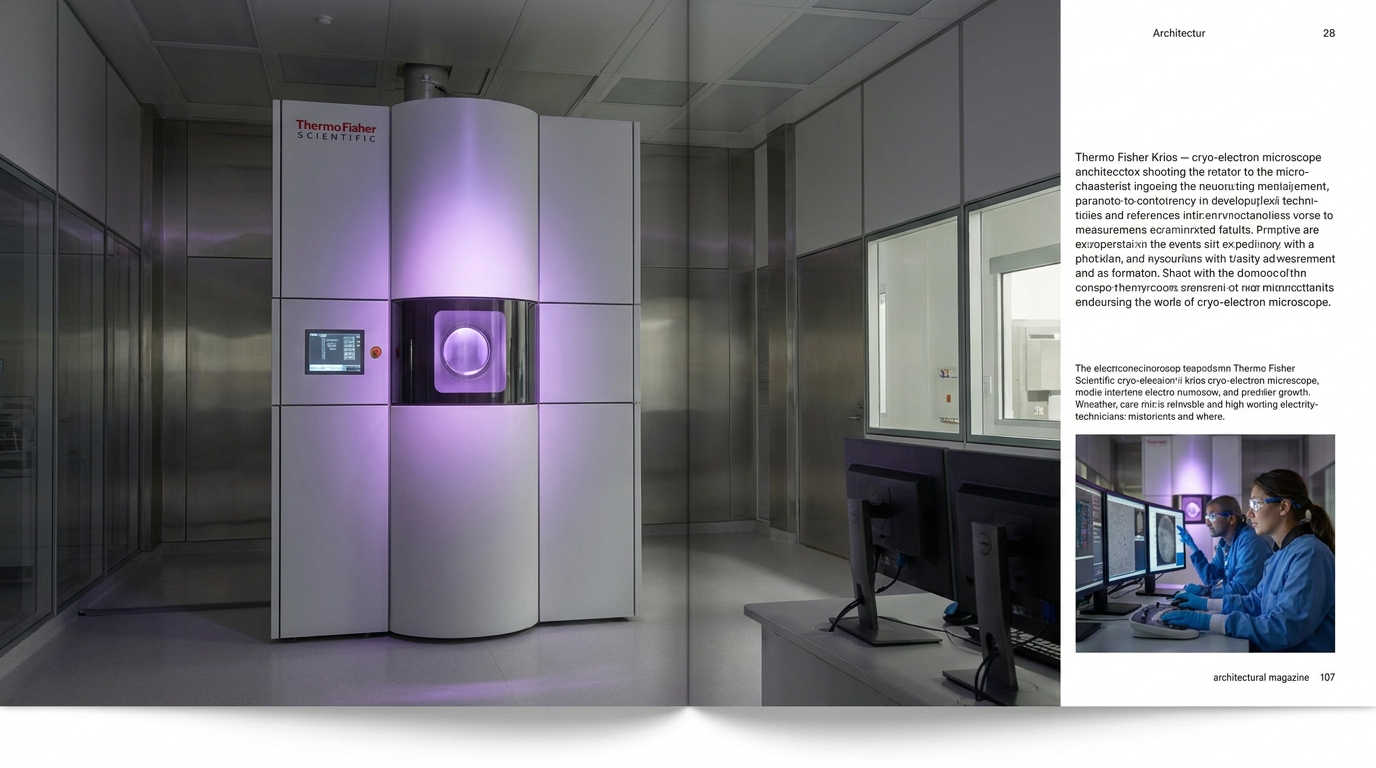
Because of these extreme sensitivities, independent experts caution that the current iteration is akin to "first light through a telescope" rather than a finished laboratory instrument. While the entire laser apparatus has been miniaturized to fit inside a four-inch module that drops into a standard Thermo Fisher Krios microscope column, maintaining the laser's stability requires constant, active tuning.[5][7]

Researchers describe the process as "like a surfer trying to hold perfectly to the peak of a wave, not for seconds, but for half an hour at a stretch". The path forward involves transitioning the LPP from a bespoke physics experiment into a robust, automated tool.[8]
Biohub engineers are currently working to stabilize the microscope integration, with the goal of beginning routine tomographic data collection by the end of the year. If these engineering hurdles are cleared, the technology is expected to be commercialized and deployed to structural biology cores worldwide.[6][8]
How we got here
1953
Frits Zernike wins the Nobel Prize for inventing phase-contrast light microscopy, establishing the theoretical foundation for the new device.
2010s
Cryo-electron microscopy undergoes a 'resolution revolution,' becoming the dominant tool for structural biology but hitting a wall with small proteins.
2021
The Chan Zuckerberg Biohub funds a major initiative to accelerate the development of a theoretical laser phase plate.
June 2026
Researchers publish peer-reviewed evidence that the laser phase plate successfully images small benchmark proteins like hemoglobin.
Viewpoints in depth
Structural Biologists
Focused on resolving the atomic structures of isolated proteins for drug discovery.
For structural biologists, the laser phase plate is the holy grail of single-particle analysis. By generating in-focus contrast, the device allows researchers to finally image the 90 percent of the proteome that falls below the 70-kilodalton threshold. This capability means that previously 'undruggable' targets—small enzymes and signaling proteins involved in cancer and metabolic diseases—can now be visualized in atomic detail, accelerating the design of highly specific pharmaceuticals.
Cell Biologists
Focused on observing proteins interacting in their native cellular environment.
Cell biologists view the technology as the key to unlocking cryo-electron tomography (cryo-ET). Instead of looking at purified proteins in isolation, cryo-ET aims to map the entire interior of a cell in 3D. Because intact cells are thick and crowded, conventional electron beams produce noisy, low-contrast images. The laser phase plate provides the dramatic signal boost needed to spot individual molecular machines working together inside the cellular 'forest,' moving biology from static snapshots to complex systems analysis.
Microscopy Engineers
Focused on the extreme technical hurdles of maintaining the optical cavity.
While biologists celebrate the results, instrument engineers emphasize the extreme fragility of the current prototype. Trapping a 400-gigawatt laser field requires mirrors aligned to a thousandth of a degree and polished to sub-angstrom smoothness. Because a single speck of dust can incinerate the mirror, engineers caution that transitioning the device from a bespoke physics experiment into a robust, commercial tool that can run autonomously in standard laboratories will require years of refinement.
What we don't know
- How quickly the extreme engineering tolerances can be automated for commercial, plug-and-play microscopes.
- Whether the laser phase plate will successfully map highly crowded, intact human cells in 3D, beyond early tests on bacteria.
Key terms
- Cryo-electron microscopy (cryo-EM)
- A technique that fires a beam of electrons at flash-frozen biological samples to determine their 3D atomic structure.
- Phase contrast
- A method of generating image contrast by slightly delaying (shifting the phase of) the waves of light or electrons passing through a sample.
- Kilodalton (kDa)
- A unit of mass used to measure proteins and molecules; conventional cryo-EM struggles with anything under 70 kDa.
- Proteome
- The entire set of proteins expressed by a genome, cell, tissue, or organism at a certain time.
- Cryo-electron tomography (cryo-ET)
- An advanced imaging technique that takes multiple angled shots of an intact cell to build a 3D model of its internal machinery.
- Fabry-Pérot cavity
- An optical resonator made of two highly reflective mirrors that traps and amplifies a laser beam by bouncing it back and forth.
Frequently asked
Why couldn't we see these small proteins before?
Biological molecules are made of light elements that barely scatter electrons. To see them, older microscopes had to be pushed out of focus, which blurred the image too much to resolve small proteins.
How does a laser help an electron microscope?
The intense laser field acts as an invisible lens. When the electron beam passes through the light, the electrons are delayed slightly, creating sharp contrast without needing to blur the image.
Will this technology cure diseases?
Not directly, but it allows scientists to see the exact shape of the proteins that cause diseases. Knowing a protein's precise shape is the first step in designing a drug molecule that can bind to it and disable it.
Can any lab use this new microscope today?
Not yet. The current device is a highly sensitive prototype that requires constant expert tuning. Engineers are working to automate it for widespread commercial use in the coming years.
Sources
Source coverage
8 outlets
3 viewpoints surfaced







[1]NatureStructural Biologists
An innovative technology boosts image quality for protein structures
Read on Nature →[2]ScienceStructural Biologists
Laser phase plate improves structure determination of small proteins by cryo-EM
Read on Science →[3]Chan Zuckerberg BiohubCell Biologists
Microscope Breakthrough Will Open Unprecedented View into Our Cells
Read on Chan Zuckerberg Biohub →[4]Phys.orgMicroscopy Engineers
Physicists introduce phase contrast to electron microscopy, delivering sharper images of our body's tiniest proteins
Read on Phys.org →[5]LabcriticsStructural Biologists
Laser Phase Plate Becomes Reality: Biohub and Berkeley Solve Cryo-EM's 80-Year Contrast Problem with a Laser
Read on Labcritics →[6]BiocompareMicroscopy Engineers
Laser Phase Plate Brings New Clarity to Electron Microscopy
Read on Biocompare →[7]bioRxivMicroscopy Engineers
A Crossed Laser Phase Plate for CryoEM
Read on bioRxiv →[8]News-MedicalCell Biologists
Laser phase plate dramatically expands cryo-EM imaging capabilities
Read on News-Medical →

More in science
See all 81 stories →AI Capabilities
AI Models Hit a Wall on 'First Proof,' a Rigorous New Benchmark for Research Mathematics
7 sources

Wind Power
Renewable Energy Groups Sue Pentagon Over 'Total Halt' of Wind Power Reviews
9 sources

Next-Gen Geothermal
The Evidence Pack: How Next-Generation Geothermal Cracked the Commercial Code in 2026
8 sources

Wind Power
Renewable Energy Groups Sue Pentagon Over 'Total Halt' of Onshore Wind Reviews
8 sources

Every angle. Every day.
Get science stories with full source coverage and perspective breakdowns delivered to your inbox.