
How Precision Fermentation is Brewing Real Dairy Without the Cow
Food scientists are using engineered yeast to brew molecularly identical milk proteins, promising a future of real cheese and ice cream with a fraction of the environmental footprint.
By Factlen Editorial Team
- Food Tech Innovators
- Advocates for decoupling protein production from animal agriculture via biotechnology.
- Environmental Analysts
- Focuses on the quantifiable resource savings and climate impact of alternative proteins.
- Food Safety Regulators
- Prioritizes rigorous safety testing and clear labeling for novel bio-engineered ingredients.
What's not represented
- · Traditional Dairy Farmers
- · Agricultural Economists
Why this matters
As climate change and resource scarcity threaten traditional agriculture, precision fermentation offers a viable path to producing the protein-dense foods we love without the massive environmental toll of raising livestock.
Key points
- Precision fermentation uses engineered microbes to brew molecularly identical dairy proteins.
- The process requires no animals, resulting in products that are naturally lactose-free and cholesterol-free.
- Animal-free whey generates up to 96% fewer greenhouse gas emissions than conventional dairy.
- Scaling the technology remains the biggest hurdle due to the high cost of bioreactor infrastructure.
The global appetite for dairy is insatiable, but the environmental math of the modern cow is increasingly difficult to justify. Dairy production occupies roughly seven percent of habitable land worldwide, consumes four percent of global freshwater, and accounts for nearly five percent of greenhouse gas emissions. For decades, the food industry’s answer has been plant-based alternatives—almond, oat, and soy milks that mimic the color and use-case of dairy, but often fall short on texture, protein density, and the crucial ability to melt or stretch like real cheese. Now, a rapidly maturing biotechnology is offering a different proposition: what if we could produce the exact proteins found in cow’s milk, without ever involving a cow?[4]
The technology driving this shift is called precision fermentation. While traditional fermentation uses microbes to transform food—think yeast turning wheat into bread or grapes into wine—precision fermentation uses microbes as microscopic factories to produce specific, highly purified ingredients. It is not a new concept in the broader scientific world; the pharmaceutical industry has used it for decades to produce human insulin, and the food industry relies on it to make rennet, the enzyme used in most commercial cheese production. What is new, however, is the application of this technology to produce macronutrients—specifically, the complex whey and casein proteins that give dairy its unique culinary properties.[1]
The process begins with a genetic blueprint. Scientists take the specific DNA sequence that codes for a cow’s milk protein—such as beta-lactoglobulin, the primary protein in whey—and insert it into the genome of a microorganism, typically a strain of yeast or fungi. This genetic instruction manual teaches the microbe how to synthesize the exact same protein that a cow’s mammary gland would produce. Because the DNA sequence is simply digital information that can be downloaded from an open-source database, no animals are harmed, or even swabbed, in the process.[4][5]

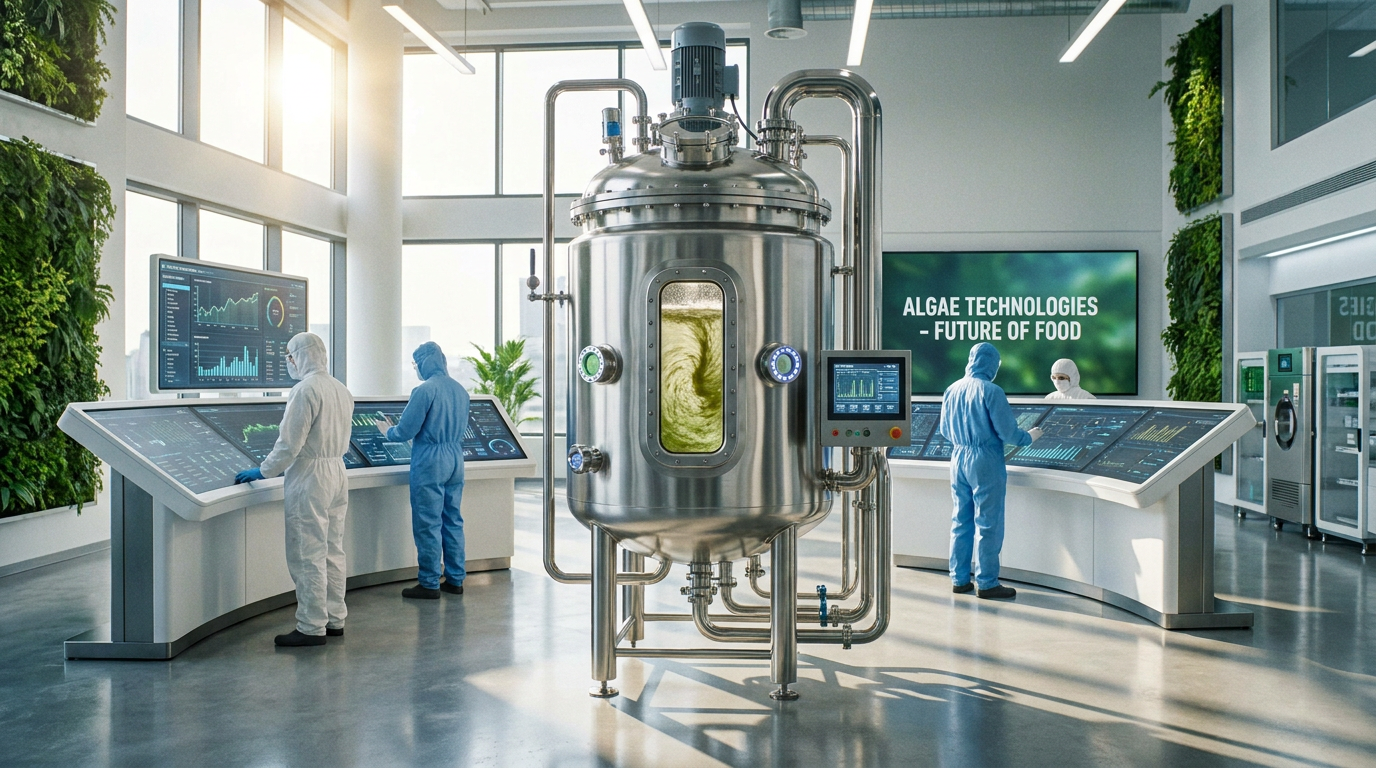
Once the microbes are programmed, they are placed into massive stainless-steel bioreactors, similar to the tanks used in commercial beer brewing. Inside these controlled environments, the microflora are fed a steady diet of plant-based sugars, water, and basic nutrients. As they consume the sugars and multiply, they naturally express the target dairy protein. The environment inside the tank is meticulously monitored for temperature, pH, and oxygen levels to optimize the microbes' productivity, a process that data-rich bioinformatics and artificial intelligence are making increasingly efficient.[1][3]
After the fermentation cycle is complete, the resulting broth undergoes a rigorous purification process. The liquid is filtered to separate the newly synthesized proteins from the yeast cells that created them. The final product is a pure protein isolate—typically a dry powder—that contains absolutely no living microbes, no genetically modified organisms, and no animal DNA. It is simply a molecularly identical replica of conventional whey or casein, ready to be integrated into food manufacturing.[1][2]
The environmental implications of this decoupling are staggering. Because precision fermentation bypasses the biological inefficiencies of a cow—which must consume massive amounts of calories and water simply to maintain its own body heat and skeletal structure—the resource savings are profound. According to life-cycle assessments of commercially available animal-free whey, the fermentation process generates up to 96 percent fewer greenhouse gas emissions than conventional dairy production. It also requires 99 percent less freshwater and a fraction of the land, as bioreactors can be built vertically near urban centers rather than sprawling across agricultural acreage.[4]

The environmental implications of this decoupling are staggering.
Nutritionally, the resulting proteins are indistinguishable from their animal-derived counterparts. Animal-free whey delivers the exact same complete amino acid profile as cow's whey, including high levels of leucine, which is critical for muscle synthesis and metabolic health. This makes it highly attractive to the sports nutrition market and the growing demographic of consumers focused on healthy aging. However, because the protein is synthesized in isolation, the final product is inherently free of lactose, cholesterol, hormones, and the trace antibiotics often associated with industrial animal agriculture.[4][5]
The commercial landscape for precision fermentation dairy is no longer purely theoretical. In the United States, the Food and Drug Administration (FDA) has granted "Generally Recognized As Safe" (GRAS) status to several animal-free proteins, clearing the path for retail products to enter the mainstream market. Companies like Perfect Day have successfully scaled their animal-free whey, which is now featured in commercial ice creams like Brave Robot and fluid milk alternatives like Bored Cow, currently stocked on shelves at major national retailers like Target.[3]
Beyond fluid milk and ice cream, startups are targeting highly specific functional ingredients. French food-tech company Verley recently secured over $37 million in funding to scale its production of high-purity beta-lactoglobulin. Their focus is on the lucrative sports nutrition and medical food markets, where the protein's exceptional solubility and clean taste profile make it ideal for clear protein shots and specialized dietary formulations. By tailoring the protein's structure during purification, these companies can actually improve upon the thermal resistance and functional behavior of conventional whey.[5]
While whey protein has been the vanguard of the movement, the holy grail of animal-free dairy is casein. Casein proteins form complex structures called micelles, which are responsible for the stretch, melt, and structural integrity of traditional cheese—a culinary feat that plant-based cheeses have notoriously struggled to replicate. Companies like New Culture and Eden Brew are actively engineering microbes to produce these complex casein proteins, aiming to capture a slice of the multi-billion-dollar global cheese market with animal-free mozzarella that genuinely bubbles and browns in a pizza oven.[3]

Despite the rapid scientific progress, the industry faces significant hurdles, primarily centered around the economics of scale. Currently, precision fermentation proteins remain two to five times more expensive to produce than conventional dairy proteins. The bottleneck is not the biology, but the infrastructure. Building the massive, food-grade bioreactors required to produce these proteins at a global commodity scale requires billions of dollars in capital expenditure. The gap between successful pilot-scale production and true industrial supply remains the sector's most pressing challenge.[1][3]
Regulatory landscapes also present a fragmented reality. While the US and Singapore have embraced rapid approval frameworks, the European Union classifies precision fermentation ingredients under its stringent Novel Foods regulation. This process requires extensive safety dossiers and can take years to navigate, prompting many European startups to launch their products in the American market first. The UK's Food Standards Agency is currently working to streamline its own novel foods framework to ensure safety without stifling domestic biotechnology innovation.[2][3]
Consumer acceptance remains the final, unpredictable variable. While the proteins are molecularly identical to dairy, the process of creating them in a lab-like bioreactor challenges traditional notions of "natural" food. Industry advocates emphasize that fermentation is an ancient, natural process, framing bioreactors as modern breweries rather than sterile laboratories. They also point out that modern industrial dairy farming—with its automated milking carousels and concentrated animal feeding operations—is far removed from the pastoral imagery printed on milk cartons.[6]
As the technology matures, the binary distinction between "animal" and "plant-based" food is beginning to blur. The most likely future for precision fermentation is not a total replacement of traditional agriculture, but a deep integration into the existing food system. Large multinational dairy conglomerates are already investing heavily in fermentation startups, recognizing that hybrid products—combining plant-based fats with fermentation-derived proteins—may offer the ultimate balance of taste, cost, and sustainability. In this emerging paradigm, the cow is no longer the only way to make milk; it is simply the oldest.[6][7]
How we got here
1990s
Precision fermentation is first used by the food industry to produce rennet for cheesemaking, replacing enzymes harvested from calf stomachs.
2014
Perfect Day is founded, pioneering the use of precision fermentation to create animal-free whey protein for consumer products.
2020
The FDA grants GRAS status to Perfect Day's animal-free whey, allowing the first commercial ice creams to hit US shelves.
2023
Animal-free fluid milk alternatives, such as Bored Cow, begin rolling out to major US retail chains.
2026
Startups successfully scale specialized proteins like beta-lactoglobulin for the sports nutrition and medical food markets.
Viewpoints in depth
Food Tech Innovators
Scientists and founders focused on scaling the technology to decouple protein from animal agriculture.
This camp views precision fermentation as an existential necessity for a warming planet. They argue that relying on massive, resource-intensive mammals to produce specific proteins is an outdated technology. By digitizing the genetic code for milk and brewing it via microflora, they believe we can maintain the cultural and culinary joys of dairy while drastically slashing greenhouse gas emissions, water usage, and land degradation.
Traditional Dairy Industry
Farmers and agricultural groups concerned about the economic impact and the definition of 'milk'.
Traditional agricultural advocates argue that dairy farming is a cornerstone of rural economies and provides complex, whole-food nutrition that isolated proteins cannot fully replicate. They are heavily focused on regulatory battles over nomenclature, arguing that terms like 'milk' and 'cheese' should be legally reserved exclusively for lactating animal secretions, framing lab-grown alternatives as highly processed industrial products.
Regulatory Bodies
Government agencies tasked with ensuring the safety and accurate labeling of novel foods.
Agencies like the FDA and the European Food Safety Authority approach the sector with cautious optimism, prioritizing consumer safety above innovation speed. Their primary focus is ensuring that the final purified proteins contain no genetically modified microbial DNA and do not introduce novel allergens into the food supply. They are currently working to modernize their approval frameworks to handle the influx of bio-engineered ingredients without compromising rigorous safety standards.
What we don't know
- When precision fermentation proteins will reach true price parity with subsidized conventional dairy.
- How quickly European and Asian regulators will approve novel animal-free dairy ingredients.
- Whether mainstream consumers will fully embrace lab-brewed proteins as a natural part of their diet.
Key terms
- Precision Fermentation
- A biotechnology process that uses programmed microorganisms to produce specific complex molecules, such as proteins or fats, in a bioreactor.
- Bioreactor
- A large, controlled stainless-steel tank where microorganisms are fed nutrients to grow and produce target ingredients.
- Beta-lactoglobulin
- The primary protein found in cow's whey, highly valued for its complete amino acid profile and functional properties in food.
- Casein
- A family of milk proteins that form complex structures, giving traditional cheese its unique ability to stretch and melt.
- GRAS (Generally Recognized As Safe)
- A US FDA designation indicating that a food ingredient is safe for human consumption based on scientific consensus.
Frequently asked
Is precision fermentation dairy considered vegan?
Yes, because it is produced entirely without animals. However, because the proteins are molecularly identical to cow's milk, they are not suitable for people with dairy allergies.
Does the final product contain genetically modified organisms (GMOs)?
No. While genetically engineered microbes are used to produce the protein, the final ingredient is highly purified and contains no living microbes or modified DNA.
Is precision fermentation milk lactose-free?
Yes. The process only synthesizes the specific milk proteins (like whey or casein). Lactose, which is a milk sugar, is not produced, making the products naturally lactose-free.
Why is it currently more expensive than regular dairy?
The technology requires massive, specialized stainless-steel bioreactors. Building this infrastructure at a global scale requires billions in upfront capital, keeping initial production costs high.
Sources
Source coverage
7 outlets
3 viewpoints surfaced







[1]Good Food InstituteFood Tech Innovators
The science of fermentation for alternative proteins
Read on Good Food Institute →[2]Food Standards AgencyFood Safety Regulators
Precision fermentation and food safety
Read on Food Standards Agency →[3]ProVeg InternationalFood Tech Innovators
Precision fermentation explained: how it works & why it matters
Read on ProVeg International →[4]Taskforce on Nature-related Financial DisclosuresEnvironmental Analysts
Nature benefit of animal-free whey protein
Read on Taskforce on Nature-related Financial Disclosures →[5]Green QueenEnvironmental Analysts
French precision fermentation startup Verley raises €32M
Read on Green Queen →[6]Factlen Editorial TeamFood Safety Regulators
Synthesis by Factlen editorial team
Read on Factlen Editorial Team →[7]New Food MagazineFood Tech Innovators
Precision fermentation – the tractable food solution
Read on New Food Magazine →
Every angle. Every day.
Get lifestyle stories with full source coverage and perspective breakdowns delivered to your inbox.