
How Next-Generation Heat Pumps Conquered the Deep Freeze
Advanced cold-climate heat pumps are now efficiently heating homes in sub-zero temperatures, shattering the long-held myth that the technology only works in mild weather.
By Factlen Editorial Team
- Electrification Advocates
- Argue that cold-climate heat pumps are ready for mass deployment in all climates, citing Scandinavian success and the urgent need to decarbonize residential heating.
- HVAC Traditionalists
- Emphasize that while the technology is impressive, older, drafty homes in extreme climates still benefit from a dual-fuel approach to avoid overworking the system during deep freezes.
- Energy Efficiency Regulators
- Focus on establishing rigorous testing standards and field validation to ensure consumers actually get the performance promised by manufacturers.
What's not represented
- · Homeowners with older, uninsulated homes
- · Natural gas utility operators
Why this matters
Heating and cooling account for over 40% of residential energy use. The ability to efficiently electrify heating in freezing climates unlocks massive utility bill savings for northern homeowners while dramatically cutting residential carbon emissions.
Key points
- Next-generation cold-climate heat pumps can efficiently heat homes in sub-zero temperatures without fossil fuels.
- Variable-speed compressors and vapor-injection technology allow modern units to extract heat from frigid air.
- DOE field tests proved these systems operate at nearly 200% efficiency even at 5 degrees Fahrenheit.
- Scandinavian countries like Norway have already achieved 60% household adoption rates in extreme climates.
- Home weatherization and proper insulation remain critical for maximizing a heat pump's performance and savings.
For decades, a persistent piece of conventional wisdom has dominated home improvement in northern latitudes: heat pumps are great for mild climates, but they cannot handle a real winter. Homeowners in places like Minnesota, Maine, and Canada were routinely told to stick with gas furnaces or boilers, operating under the assumption that electric heat pumps would simply freeze up when the temperature dropped. It was a rule of thumb that shaped millions of residential HVAC installations and kept fossil fuels firmly entrenched in cold-weather regions.
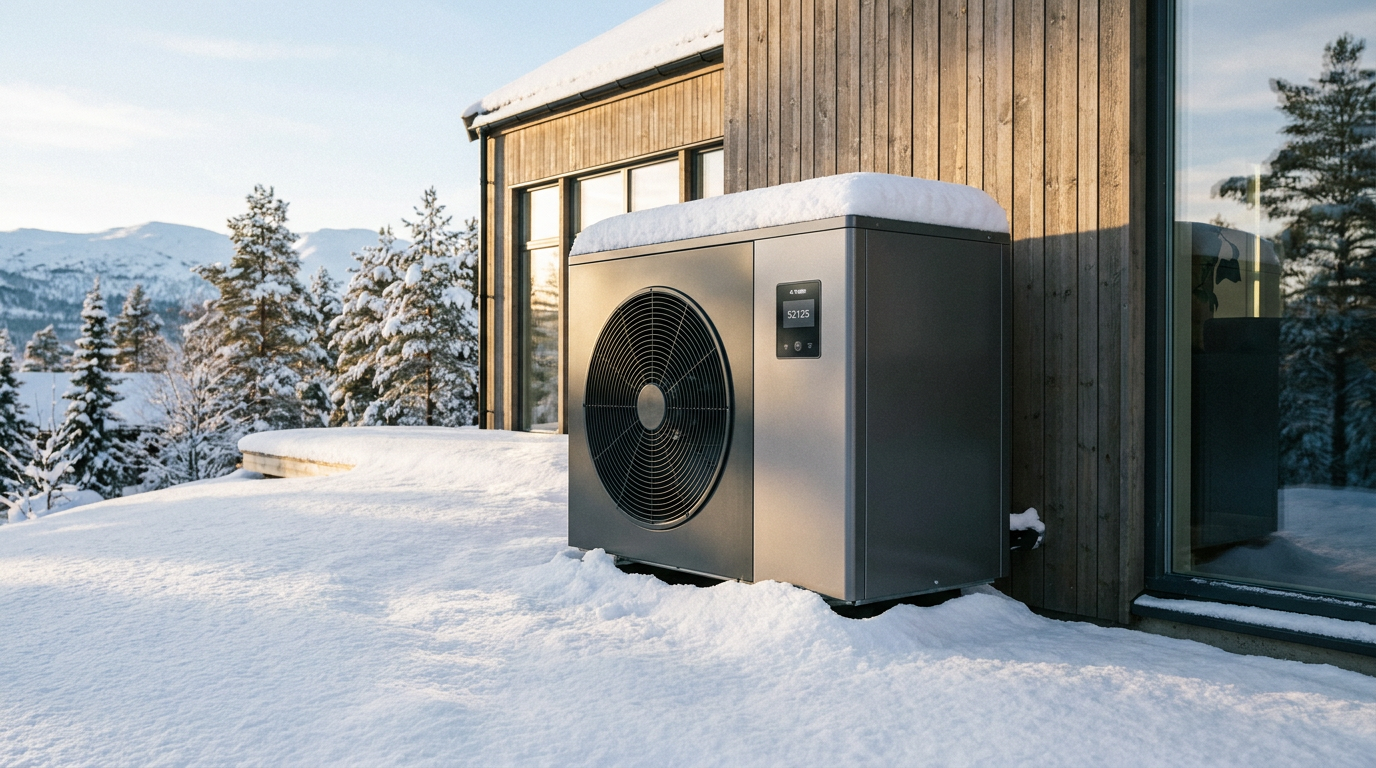
In 2026, that advice is officially obsolete. A quiet revolution in heating, ventilation, and air conditioning engineering has yielded a new class of appliances: the cold-climate heat pump. These next-generation systems are successfully extracting warmth from sub-zero air, delivering reliable, cost-effective heat without the need for fossil fuels. The shift represents one of the most significant leaps in residential energy technology in a generation, fundamentally altering the math for homeowners looking to lower their utility bills and decarbonize their properties.[7]
To understand the breakthrough, it helps to understand the underlying mechanism. Unlike a traditional furnace that burns natural gas or heating oil to create heat, a heat pump simply moves heat from one place to another. In the winter, it extracts ambient thermal energy from the outdoor air, compresses that energy to raise its temperature, and transfers it indoors. In the summer, the cycle reverses, pulling heat out of the house to provide air conditioning. Because they are transferring heat rather than generating it from scratch, heat pumps are inherently more efficient than combustion-based systems.[6]
The historical problem was a matter of physics. As outdoor temperatures plunge, there is less ambient heat available in the air to extract. Older, standard heat pumps relied on single-speed compressors that would lose 40 to 60 percent of their rated heating capacity once the thermometer dropped below 35 degrees Fahrenheit. They would run constantly, struggle to keep the house warm, and eventually force the home's expensive, highly inefficient electric resistance backup heaters to kick on, leading to skyrocketing winter utility bills.[4]

The cold-climate heat pump solves this capacity drop through three major engineering upgrades. The first is the variable-speed, inverter-driven compressor. Instead of simply turning on or off like a light switch, an inverter compressor modulates its speed like a car's accelerator pedal. It can run at a low, steady hum during mild weather to maintain a consistent indoor temperature, and then ramp up to maximum capacity when a blizzard hits, ensuring the home stays warm without wasting energy during milder periods.[4][6]
The second critical upgrade is vapor-injection technology, which fundamentally changes how the system handles extreme temperatures. In extreme cold, traditional compressors struggle to maintain pressure and can overheat if pushed too hard. Cold-climate models solve this by injecting a portion of the refrigerant back into the compressor mid-cycle. This flash-cooling effect allows the compressor to run at much higher speeds and pressures without sustaining damage. By maintaining higher pressures, the system can extract significantly more thermal energy from frigid air than older models ever could, keeping the indoor coils hot even when it is freezing outside.[4]
The third factor is the adoption of advanced refrigerants with exceptionally low boiling points. These specialized chemical blends are designed to absorb thermal energy even when the outside air feels bone-chillingly cold to human skin. Because there is still thermal energy present in the air all the way down to absolute zero, these advanced refrigerants allow the heat pump to continue capturing usable warmth long after older systems would have frozen over and shut down. Combined with redesigned outdoor coils that maximize surface area, the modern heat pump is a masterclass in thermodynamic efficiency.[6]
The third factor is the adoption of advanced refrigerants with exceptionally low boiling points.
The results of these engineering advancements are no longer theoretical. The U.S. Department of Energy recently concluded a multi-year Cold Climate Heat Pump Technology Challenge, partnering with major HVAC manufacturers to field-test prototype units in real, occupied homes across northern U.S. states and Canadian provinces. The goal was to validate whether these systems could truly deliver on their promises outside of a controlled laboratory environment, subjecting them to the unpredictable rigors of actual winter weather, fluctuating grid conditions, and everyday household usage patterns.[1]
The field validation data, analyzed and published by the Pacific Northwest National Laboratory, definitively proved the technology's viability. During periods when the outdoor temperature hovered between 0 and 5 degrees Fahrenheit, the median Coefficient of Performance across all test sites was 1.9. This metric is the gold standard for measuring heating efficiency, and the results exceeded the expectations of many industry skeptics who doubted the technology could perform in such harsh conditions. The data confirmed that the units were not just surviving the cold, but actively providing efficient, comfortable heat.[2]
To put that number in perspective, a Coefficient of Performance of 1.9 means that for every one unit of electricity the heat pump consumed, it produced 1.9 units of heat. By comparison, a standard electric baseboard heater or space heater has a maximum theoretical Coefficient of Performance of exactly 1.0. This means that even in the bitter cold of a northern winter, these advanced heat pumps were operating at nearly 200 percent efficiency, drastically reducing the electrical load required to keep a home warm.[2][5]

Premium models currently on the market have pushed the boundaries even further. Top-tier systems from leading manufacturers are now rated to maintain 100 percent of their heating capacity down to 5 degrees Fahrenheit, meaning they do not lose an ounce of heating power when the first freeze hits. Furthermore, these units can continue operating efficiently at temperatures as low as minus 22 degrees Fahrenheit, or minus 30 degrees Celsius, covering the vast majority of winter conditions experienced in North America.[4]
For evidence of long-term viability at scale, energy analysts frequently point to Scandinavia. Norway currently boasts the highest per-capita heat pump installation rate in the world, with roughly 60 percent of households utilizing the technology. Sweden and Finland follow closely at around 40 percent. These nations routinely experience design temperatures well below minus 4 degrees Fahrenheit, yet their power grids and homes have seamlessly integrated the technology, proving that cold-climate heat pumps are a mature, reliable solution rather than an experimental novelty.[5]

For North American homeowners looking to upgrade, navigating the market requires looking for specific certifications rather than just taking a salesperson's word. The Northeast Energy Efficiency Partnerships maintains a widely referenced Cold Climate Air Source Heat Pump product list. To qualify for this rigorous registry, a system must demonstrate steady, modulating performance at 5 degrees Fahrenheit without relying on electric strip heat to carry the load. This list has become the benchmark for utility rebate programs across the northern states.[3][4]
Similarly, the Environmental Protection Agency has updated its ENERGY STAR program to reflect the new technological reality. The specialized 'Cold Climate' label now requires a minimum Coefficient of Performance of 1.75 at 5 degrees Fahrenheit. Consumers are also advised to look at the Heating Seasonal Performance Factor 2, the current federal efficiency rating standard. For a cold-climate system worth installing in a northern home, experts recommend looking for an HSPF2 rating of 10.0 or higher to ensure maximum utility bill savings.[1][2]

Despite the technological triumphs, HVAC professionals caution that a heat pump is only as good as the building envelope it serves. Success depends heavily on proper installation and comprehensive home weatherization. A drafty, poorly insulated house will lose heat faster than even the best cold-climate heat pump can replace it. Because heat pumps deliver air at slightly lower temperatures than the scorching blasts of a gas furnace, air leaks become much more noticeable, making insulation and air sealing a mandatory first step.[6]
For homes in the most extreme climate zones, or those with older, leaky ductwork that cannot be easily replaced, installers often recommend a 'dual-fuel' hybrid approach. This configuration pairs a high-efficiency cold-climate heat pump with a traditional gas furnace. The heat pump handles the heating for 90 percent of the winter, providing clean, affordable warmth, while the gas furnace acts as a safety net, only kicking on during the deepest, record-breaking freezes when the heat pump's capacity finally begins to wane.[4]
Ultimately, the maturation of cold-climate heat pumps marks a critical milestone in residential energy infrastructure. By decoupling reliable winter heating from fossil fuels, the technology offers a rare win-win scenario. Homeowners gain access to significantly lower utility bills, quieter operation, and superior year-round comfort, while policymakers secure a massive reduction in residential carbon emissions. The deep freeze has finally been conquered by smart engineering, proving that the future of home heating is undeniably electric, no matter how far the mercury drops.[7]
How we got here
2021
The U.S. Department of Energy launches the Cold Climate Heat Pump Technology Challenge to spur industry innovation.
2023
The Northeast Energy Efficiency Partnerships updates its cold-climate specification, setting stricter performance benchmarks for state rebate eligibility.
2024
Field validation of prototype units concludes, proving high efficiency in real-world sub-zero conditions.
2025
The EPA updates the ENERGY STAR program to include a specific 'Cold Climate' certification label.
2026
Next-generation models hit the mass market, featuring advanced vapor-injection and variable-speed technologies.
Viewpoints in depth
Electrification Advocates
Proponents of rapid decarbonization argue that the technology is fully mature and ready for universal adoption.
Electrification advocates, including environmental policymakers and energy researchers, point to the DOE's field validation data as definitive proof that the 'too cold for heat pumps' argument is dead. They emphasize that countries with much harsher winters than the U.S., such as Norway and Finland, have already transitioned the majority of their housing stock to heat pumps. From this perspective, the remaining barriers are not technological, but rather a lack of consumer education and outdated building codes that still favor natural gas infrastructure.
HVAC Traditionalists
Installers and technicians emphasize caution when retrofitting older, poorly insulated homes in extreme climates.
While acknowledging the massive leaps in compressor technology, many veteran HVAC contractors caution against a one-size-fits-all approach. They argue that dropping a high-efficiency heat pump into a drafty, 100-year-old house without first upgrading the insulation will lead to comfort issues and high electricity bills. For these homes, especially in Climate Zones 7 and 8, traditionalists often recommend a dual-fuel system. This allows the homeowner to reap the efficiency benefits of a heat pump for most of the winter, while keeping a gas furnace in reserve for the few weeks when temperatures drop to historic lows.
Energy Efficiency Regulators
Government and non-profit organizations focus on setting strict performance standards to protect consumers.
Organizations like the EPA and the Northeast Energy Efficiency Partnerships (NEEP) are focused on standardizing what 'cold climate' actually means. Because older heat pumps performed so poorly in the cold, regulators are working to rebuild consumer trust by establishing rigorous, third-party testing protocols. By requiring systems to prove their efficiency at 5 degrees Fahrenheit before they can earn an ENERGY STAR label or qualify for state rebates, these groups aim to prevent manufacturers from making unsubstantiated marketing claims about their equipment's winter capabilities.
What we don't know
- How the widespread adoption of cold-climate heat pumps will impact peak winter electricity demand on regional power grids.
- Whether the upfront costs of premium cold-climate systems will decrease significantly as manufacturing scales up.
- How quickly local HVAC contractors will adopt the specialized training required to properly size and install these advanced systems.
Key terms
- Coefficient of Performance (COP)
- A ratio measuring a heat pump's efficiency, calculated by dividing the heat output by the electrical energy input.
- HSPF2
- Heating Seasonal Performance Factor 2, a federal efficiency rating that measures a heat pump's total heating output over a normal season divided by its total electricity use.
- Vapor-Injected Compressor
- Advanced technology that injects refrigerant mid-cycle to cool the compressor, allowing it to extract heat from much colder air without overheating.
- Dual-Fuel System
- A hybrid heating setup that pairs an electric heat pump with a gas furnace backup for extreme cold snaps.
Frequently asked
Do heat pumps cost more to run than gas furnaces in the winter?
In most climates, a cold-climate heat pump is cheaper to operate because it transfers heat rather than generating it, achieving efficiencies of up to 300%. However, exact savings depend on your local electricity rates versus natural gas prices.
Do I need a backup heating system if I install a heat pump?
Modern cold-climate heat pumps can handle 100% of heating needs down to sub-zero temperatures. However, homes in the most extreme climates or poorly insulated houses may still benefit from a dual-fuel backup system.
Why is my heat pump running constantly in the cold?
Unlike older furnaces that blast heat and shut off, modern variable-speed heat pumps are designed to run continuously at a low, quiet speed to maintain a consistent temperature and maximize energy efficiency.
Sources
Source coverage
7 outlets
3 viewpoints surfaced






[1]U.S. Department of EnergyElectrification Advocates
Residential Cold Climate Heat Pump Technology Challenge
Read on U.S. Department of Energy →[2]Pacific Northwest National LaboratoryEnergy Efficiency Regulators
Cold Climate Heat Pump Technology Challenge: Field Validation Results
Read on Pacific Northwest National Laboratory →[3]Northeast Energy Efficiency PartnershipsEnergy Efficiency Regulators
Cold Climate Air Source Heat Pump Specification
Read on Northeast Energy Efficiency Partnerships →[4]Heat Pump NetworkHVAC Traditionalists
Best Cold Climate Heat Pumps in 2026: What to Look For and How to Choose
Read on Heat Pump Network →[5]Reading Heat Pumps UKElectrification Advocates
Do heat pumps work in cold weather? The Scandinavian evidence
Read on Reading Heat Pumps UK →[6]Consumer ReportsHVAC Traditionalists
Can Heat Pumps Actually Work in Cold Climates?
Read on Consumer Reports →[7]Factlen Editorial Team
Synthesis by Factlen editorial team
Read on Factlen Editorial Team →
Every angle. Every day.
Get home stories with full source coverage and perspective breakdowns delivered to your inbox.