
How Entrepreneurs Are Turning Dead Big-Box Stores Into Experiential Hubs
As legacy retailers close their doors, a new wave of entrepreneurs is repurposing vacant big-box storefronts into interactive, community-driven spaces. The shift highlights a broader transformation in commercial real estate from transactional shopping to experiential retail.
By Factlen Editorial Team
- Experiential Entrepreneurs
- Value flexible, low-cost spaces to build community and test concepts without the burden of decade-long leases.
- Commercial Landlords
- Focused on generating foot traffic, maintaining property yields, and backfilling large vacancies left by bankrupt anchor tenants.
- Urban Planners
- View adaptive reuse as a critical tool to prevent urban blight and foster local economic resilience.
What's not represented
- · Legacy Retail Employees
- · Traditional Retail Investors
Why this matters
As e-commerce hollows out traditional shopping centers, the adaptive reuse of empty retail space offers a blueprint for revitalizing local economies. This shift lowers the barrier to entry for small businesses while preventing massive commercial properties from becoming blighted eyesores.
Key points
- Entrepreneurs are repurposing vacant big-box stores into community-driven experiential hubs.
- Landlords are increasingly accepting short-term leases and pop-up agreements to activate dormant properties.
- The U.S. retail availability rate remains historically low at 4.9% due to adaptive reuse.
- Experiential retail competes with e-commerce by offering tactile interaction and community engagement.
- Urban planners support the trend as a way to prevent blight and revitalize local economies.
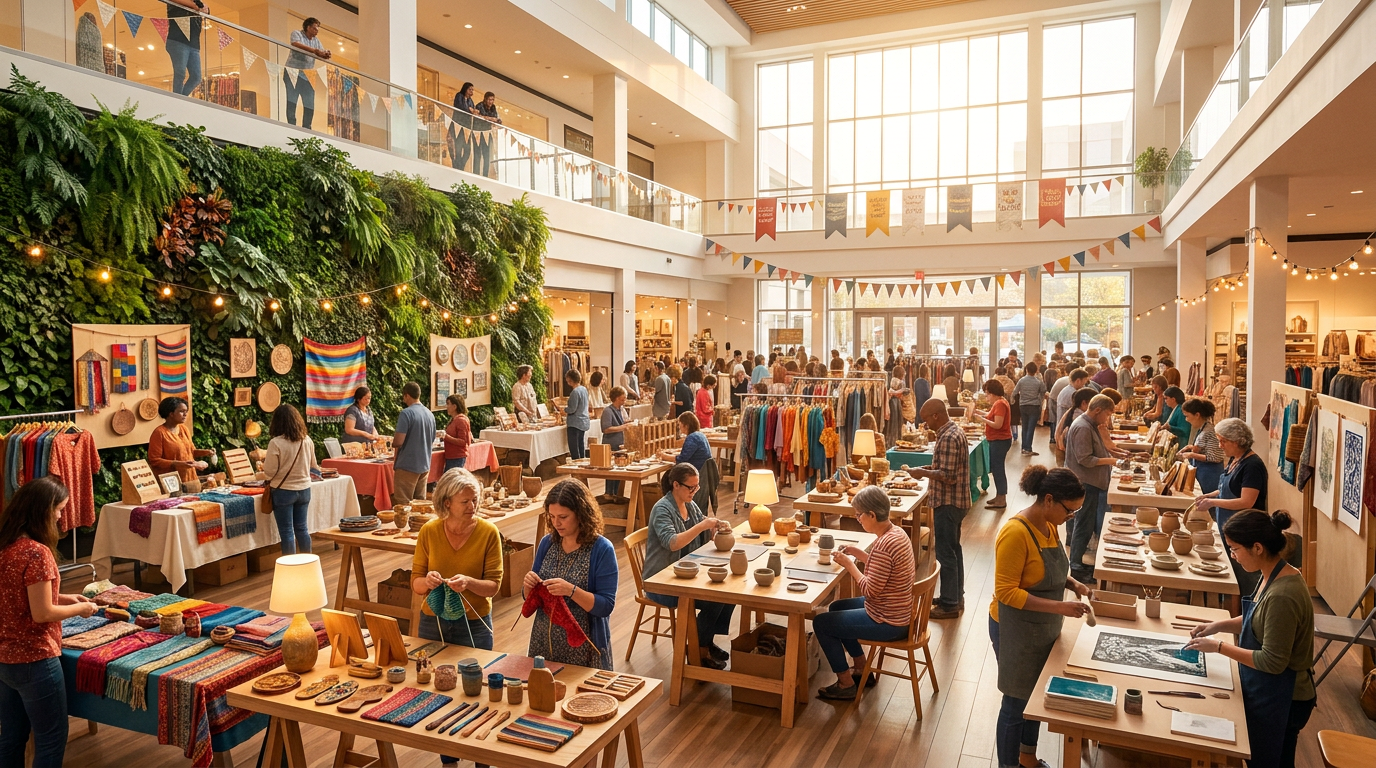
The bankruptcy of legacy chains like Joann Fabric left massive, empty footprints across American strip malls and shopping centers. But in Torrance, California, one of those cavernous empty shells is getting a vibrant second life.[1]
Lauren Tetef, a 40-year-old events producer, saved $24,000 of her own money to launch the Open House Creative Fest inside a former Joann store at the Del Amo Fashion Center.[1]
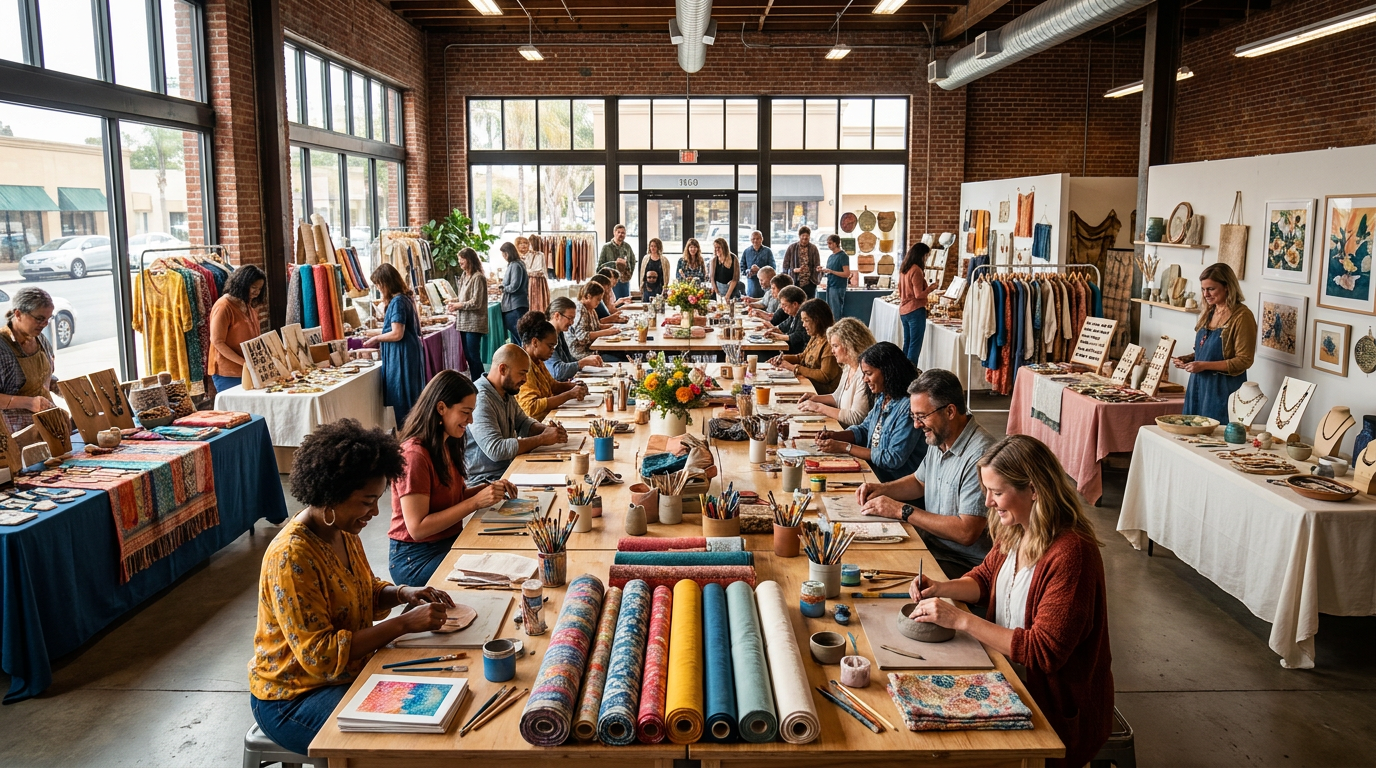
Instead of quiet aisles of mass-produced fabric, the repurposed space will host 25 vendors offering interactive workshops, alongside a free-creation zone equipped with textiles, paper, and paint.[1]
Tetef’s venture is a microcosm of a massive shift in American commercial real estate. The "retail apocalypse" narrative has dominated business headlines for a decade, driven by e-commerce and shifting consumer habits, but the physical spaces left behind are not staying empty.[6]

Commercial real estate is undergoing a quiet renaissance of adaptive reuse. Entrepreneurs are taking over big-box shells and transforming them into experiential, community-driven hubs.[3]
The mechanism behind this shift relies heavily on changing landlord incentives. In the past, commercial property owners held out for ten-year leases from national credit tenants, preferring to leave a space vacant rather than accept a short-term deal.[4]
Today, with high interest rates and a drought of traditional anchor tenants expanding their footprints, landlords are increasingly open to short-term leases, pop-up agreements, and revenue-sharing models.[3][4]
This newfound flexibility dramatically lowers the barrier to entry for small businesses and independent creators. An entrepreneur like Tetef can test a concept and build a community without taking on millions in debt or committing to a decade-long lease.[1][3]
For landlords, activating a dead space—even temporarily—generates crucial foot traffic that benefits adjacent tenants and makes the overall property more attractive to future investors.[4]

The data reflects this rapid absorption of space. According to CBRE’s first-quarter 2026 U.S. Retail report, the national retail availability rate sits at a historically low 4.9 percent.[2]
Retail report, the national retail availability rate sits at a historically low 4.9 percent.
While new retail construction has largely ground to a halt due to financing constraints and high material costs, existing spaces are being rapidly backfilled by non-traditional tenants.[2]
Industry developers have coined the term "retailtainment" to describe this trend. It encompasses everything from indoor pickleball courts and escape rooms to immersive art installations and community co-working spaces.[4]
The core philosophy driving this transition is that physical retail can no longer compete with the internet on convenience, inventory size, or price. It must compete on tactile interaction, emotional connection, and community experience.[5]
Urban planners view this transition as a vital defense against urban blight. A vacant 40,000-square-foot box can quickly become an eyesore that depresses surrounding property values and invites vandalism.[3]

By converting these spaces into community centers, performance venues, or local marketplaces, cities can maintain vibrant commercial corridors without relying on vulnerable national chains.[3]
However, the experiential model is not without its uncertainties. Pop-ups are inherently transient, and landlords often view them as placeholders until a permanent, higher-paying tenant can be secured.[6]
Furthermore, the economics of "retailtainment" are still being tested on a macroeconomic scale. While a craft festival or an immersive art exhibit can draw a massive opening-weekend crowd, sustaining that foot traffic month over month requires constant reinvention.[5][6]
Despite these structural uncertainties, the transformation of the Torrance Joann store illustrates a profound optimism within the grassroots entrepreneurship sector.[1]

It proves that the consumer demand for physical gathering spaces has not disappeared; it has simply evolved beyond the purely transactional exchange of goods.[5]
As more legacy retailers shrink their physical footprints, the next generation of American commerce will likely be defined not by what people buy, but by the experiences they share when they get there.[6]
How we got here
2010s
The 'retail apocalypse' accelerates as e-commerce giants capture market share, leaving millions of square feet of big-box space vacant.
2020–2022
The pandemic temporarily halts physical retail, forcing landlords to rethink their long-term leasing strategies.
2023–2025
Adaptive reuse surges as developers convert empty malls and big-box stores into medical facilities, logistics hubs, and entertainment centers.
June 2026
Lauren Tetef launches the Open House Creative Fest in a former Joann store, highlighting the grassroots shift toward experiential pop-ups.
Viewpoints in depth
Experiential Entrepreneurs
Entrepreneurs view vacant retail spaces as low-risk incubators for community-driven business concepts.
For independent creators and event producers, the traditional commercial real estate model—which demands decade-long leases and massive upfront capital—has long been a barrier to entry. The current willingness of landlords to entertain short-term pop-ups and revenue-sharing agreements has democratized access to premium square footage. Entrepreneurs can now test experiential concepts, build local followings, and refine their business models with significantly lower financial risk.
Commercial Landlords
Property owners are prioritizing immediate foot traffic and property activation over holding out for traditional anchor tenants.
Faced with high interest rates and a shrinking pool of expanding national retail chains, commercial landlords have fundamentally altered their leasing strategies. Leaving a 40,000-square-foot box empty not only bleeds revenue but also depresses the foot traffic necessary to sustain the property's smaller, adjacent tenants. By embracing 'retailtainment' and short-term experiential pop-ups, landlords can maintain the vibrancy of their properties, making them more attractive to future investors and long-term lessees.
Urban Planners
City officials see adaptive reuse as a vital mechanism to prevent urban decay and foster local economic resilience.
When massive retail anchors fail, the resulting vacant structures can quickly devolve into blighted eyesores that drag down surrounding property values and invite vandalism. Urban planners and community advocates champion the adaptive reuse of these spaces into local marketplaces, performance venues, and community centers. This approach not only mitigates urban decay but also shifts the local economy away from a reliance on vulnerable national chains, fostering a more resilient, locally-owned commercial ecosystem.
What we don't know
- Whether experiential pop-ups can generate the consistent, long-term revenue required to permanently replace traditional anchor tenants.
- How commercial real estate valuations will adjust if short-term leases become the permanent industry standard.
Key terms
- Adaptive Reuse
- The process of repurposing an existing building for a use other than what it was originally designed for.
- Retailtainment
- The fusion of retail and entertainment, designed to draw customers into physical stores with unique, interactive experiences.
- Net Absorption
- A real estate metric measuring the change in occupied space over a given period, indicating whether demand is growing or shrinking.
- Credit Tenant
- A corporate tenant with a strong financial profile and high credit rating, traditionally favored by landlords for long-term leases.
Frequently asked
Why are so many big-box stores closing?
A combination of e-commerce growth, changing consumer habits, and high interest rates have forced many legacy retailers to shrink their physical footprints or declare bankruptcy.
What is experiential retail?
It is a retail strategy that prioritizes engaging, interactive experiences—like workshops, classes, or immersive entertainment—over the simple transactional sale of goods.
How do short-term pop-ups benefit landlords?
Pop-ups generate immediate cash flow, increase foot traffic for neighboring tenants, and keep the property active while the landlord searches for a long-term lease.
Sources
Source coverage
6 outlets
3 viewpoints surfaced






[1]CNBCExperiential Entrepreneurs
She saved $24,000 to launch a craft festival in an old Joann store: 'This is my dream come true'
Read on CNBC →[2]CBRECommercial Landlords
U.S. Retail Figures Q1 2026: Retail Rent Growth Supported by Drop in New Supply
Read on CBRE →[3]Social Sector NetworkUrban Planners
10 Inspiring Ways Cities Are Repurposing Empty Storefronts
Read on Social Sector Network →[4]Stark EnterprisesCommercial Landlords
5 Trends to Explore When Repurposing Retail Spaces
Read on Stark Enterprises →[5]Generis CollectiveExperiential Entrepreneurs
The Future of Experiential Retail
Read on Generis Collective →[6]Factlen Editorial TeamUrban Planners
Synthesis by Factlen editorial team
Read on Factlen Editorial Team →
Every angle. Every day.
Get business stories with full source coverage and perspective breakdowns delivered to your inbox.