
Creators Are Turning Empty Big-Box Stores Into Experiential Startups
Following the collapse of traditional craft retailers, independent creators are using their own savings to transform vacant mall spaces into interactive, community-driven hubs.
By Factlen Editorial Team
- Independent Creators & Makers
- Argues that physical spaces allow them to bypass algorithmic digital marketing and build genuine, high-retention relationships with fans through tactile experiences.
- Retail Analysts
- Emphasizes that stores functioning merely as inventory warehouses will fail; survival depends on offering immersive, community-authored experiences.
- Commercial Landlords & Developers
- Views short-term creator activations as strategic new anchors that generate social media buzz and drive foot traffic to mixed-use developments.
What's not represented
- · Traditional retail workers who lost their jobs during the wave of big-box bankruptcies.
- · City planners managing the zoning and tax implications of shifting from permanent retail to temporary event spaces.
Why this matters
As massive retail chains collapse, the future of the American shopping mall is being rewritten by independent creators. This shift offers consumers richer, hands-on experiences while providing a sustainable, high-margin physical footprint for digital-first startups.
Key points
- Lauren Tetef invested $24,000 to launch a craft festival in an empty Joann store in California.
- The festival uses a hybrid model, offering free entry to shop but charging $40 for hands-on workshops.
- The creator-storefront market is now valued at $6.7 billion as digital influencers move into physical retail.
- Landlords are increasingly using short-term creator pop-ups as new anchor tenants to drive mall foot traffic.
The American shopping mall is undergoing a radical, forced metamorphosis. Following a brutal string of retail bankruptcies throughout 2024 and 2025—a collapse capped by the total liquidation of all 800 Joann fabric and craft stores nationwide—millions of square feet of prime commercial real estate were suddenly left vacant. For traditional retail analysts, these cavernous, empty big-box stores represented a crisis of consumer demand and a glaring liability for commercial landlords. But where legacy institutions saw a real estate apocalypse, a new generation of independent entrepreneurs and digital creators saw an unprecedented blank canvas. Unburdened by the massive corporate overhead that doomed their predecessors, these agile startups are sweeping into dead retail spaces, transforming them from static inventory warehouses into vibrant, community-driven hubs of commerce and culture.[3][5][8]
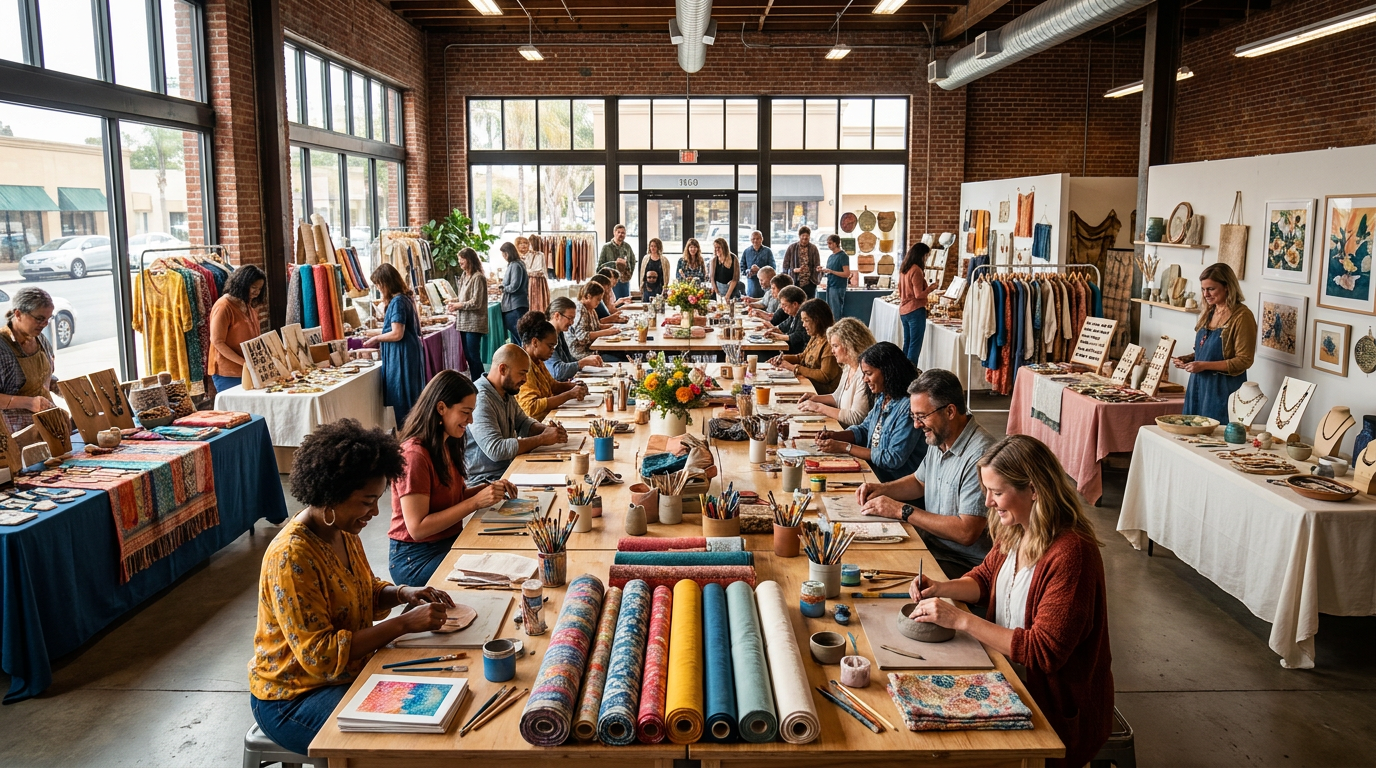
In Torrance, California, a 40-year-old events producer named Lauren Tetef is vividly demonstrating how the death of the corporate craft store might actually be the birth of a more dynamic retail ecosystem. Tetef recently poured $24,000 of her own meticulously saved personal funds into leasing a massive, empty Joann store located inside the Del Amo Fashion Center. Her vision was not to resurrect the failed retail model of selling mass-produced yarn and plastic beads, but to launch the Open House Creative Fest—a sprawling, interactive celebration of independent makers. By taking over the exact physical footprint of a fallen giant, Tetef is directly challenging the narrative that physical retail is dying, proving instead that it simply needs to be reimagined for a modern audience that values connection over pure consumption.[1][2][8]
"This is my dream come true," Tetef said of the ambitious venture, reflecting the deep personal stakes that often drive the creator economy. "I just want to go to a thing where everyone's sitting down making stuff." Her sentiment captures a growing cultural exhaustion with the isolation of digital-only commerce and the sterile efficiency of one-click online shopping. Consumers are increasingly craving tactile, shared experiences where they can engage with their community, learn new skills, and physically interact with the materials and the artists behind the products they purchase. Tetef’s festival is designed specifically to engineer these moments of human connection, turning a cavernous retail shell into a bustling, collaborative workshop.[1][4][6][8]
Scheduled to take over the Torrance mall space during the last weekend of June 2026, the Open House Creative Fest represents a sharp, calculated departure from the traditional retail mechanics that previously occupied the building. Instead of navigating endless aisles of static, imported inventory, visitors will enter a curated environment that seamlessly blends a high-end flea market with interactive, hands-on education. The festival features 25 carefully selected independent exhibitors, each of whom is required to offer practical, skill-building workshops alongside their retail displays. This educational mandate ensures that the event is not just a place to buy things, but a destination for immersive learning, fundamentally altering the value proposition for the consumer.[2][8]

To make the economics work for both the organizer and the independent artisans, the festival relies on an innovative hybrid revenue model. General admission to enter the space and browse the 25 exhibitor booths is entirely free, a strategic decision designed to eliminate barriers to entry and encourage massive, frictionless foot traffic from casual mall-goers. However, the core financial engine of the event is a $40 "activity passport." Purchasing this passport grants attendees unlimited access to the specialized hands-on workshops led by the makers themselves, as well as entry into a sprawling free-creation zone fully stocked with premium fabrics, specialty papers, and paints.[2]
This passport model elegantly solves a critical, chronic problem for independent makers: the notoriously razor-thin profit margins associated with selling handmade goods. By monetizing the actual experience of crafting rather than relying solely on the sale of a final physical product, exhibitors can generate sustainable, high-margin revenue. Simultaneously, the workshop format serves as a powerful marketing tool; as artisans teach consumers the intricate techniques required to create their goods, they inherently educate the market on the intense labor and skill involved. This transparency builds deep brand loyalty and fundamentally increases the consumer's willingness to pay premium prices for handcrafted items in the future.[2][8]
Tetef's $24,000 gamble in a California mall is not merely an isolated, feel-good local story; it is the leading edge of a massive, structural shift within the $250 billion global creator economy. For the past decade, digital creators, influencers, and independent makers built their businesses almost entirely online, relying heavily on social media algorithms, viral video feeds, and digital e-commerce platforms to reach their audiences. Now, facing algorithmic fatigue and skyrocketing digital advertising costs, these same creators are aggressively moving their operations into the physical world. They are realizing that physical spaces offer an unparalleled opportunity to cut through the digital noise and forge genuine, high-retention relationships with their most dedicated fans.[4][7][8]
Now, facing algorithmic fatigue and skyrocketing digital advertising costs, these same creators are aggressively moving their operations into the physical world.
The financial scale of this physical migration is staggering. The "creator-storefront" segment—a category where independent makers shift from being mere media partners or affiliate linkers to full-fledged, independent merchandisers—is currently valued at $6.7 billion and is projected to grow at a blistering 20 percent annual rate through the end of the decade. In this new paradigm, creators are no longer just influencing what people buy; they are entirely controlling where and how that buying happens. By curating their own physical retail experiences, these entrepreneurs capture a much larger share of the economic value they generate, transforming their digital influence into tangible, real-world commercial empires.[7][8]

This trend is fundamentally rewriting the power dynamics of commercial real estate. Landlords and property developers, who were once highly hesitant to sign short-term leases with unproven, digitally-native startups, are now actively and aggressively courting them. The era of the empty storefront is rapidly ending as property owners begin to treat these short-term creator activations not as a last resort, but as strategic, high-value incubators. By offering flexible terms to creators, landlords can inject immediate vitality into underused areas, generate massive social media buzz, and test new retail concepts without locking themselves into the rigid, decade-long leases of the past.[5]
Historically, sprawling, multi-level department stores served as the undisputed "anchor tenants" of the American shopping mall, relied upon to draw the vast majority of foot traffic to the property. Today, as those legacy retailers continue to consolidate or collapse, experiential pop-ups and creator-led festivals are stepping in to become the new anchors. A highly anticipated creator event can draw thousands of hyper-engaged fans to a specific location over a single weekend. This concentrated influx of visitors provides a massive halo effect of foot traffic, directly boosting the sales and visibility of the neighboring permanent tenants who happen to share the concourse.[2][5][8]
This transition aligns perfectly with a fundamental, industry-wide shift in retail philosophy. As industry analysts note, physical stores can no longer justify their expensive existence simply by holding inventory on shelves, because digital commerce has already permanently mastered the metrics of speed, infinite selection, and convenience. Instead, physical retail can only survive by evolving into an "experience hub"—a dynamic space that offers intelligence, human connection, and deep emotional relevance. A successful modern store is no longer just a point of transaction; it is a physical manifestation of a brand's storytelling, designed to immerse the consumer in a specific lifestyle or creative community.[4][8]
The empirical data strongly backs up this industry-wide pivot toward experiential commerce. The retail sector has witnessed a massive 40 percent surge in pop-up store launches over the past year alone, as brands scramble to create viral, in-person moments. However, retail strategists warn that the most successful of these activations are not just top-down, heavily sanitized corporate marketing stunts. The pop-ups that truly resonate and drive lasting loyalty are those that are genuinely co-authored with local artists, superfans, and the surrounding community, creating a two-way dialogue that feels authentic and rooted in the neighborhood's specific culture.[6]

Furthermore, these temporary spaces are becoming increasingly sophisticated in their execution. Rather than relying on simple folding tables and hand-written signs, modern creator pop-ups often integrate advanced technology, seamless smart-checkout systems, and modular architectural designs that can be quickly packed up and transported to the next major city. This operational agility allows independent creators to rigorously test different geographic markets and consumer demographics without ever taking on the crushing, existential financial liability of a traditional long-term commercial lease. It is a lean, highly iterative approach to physical retail that mirrors the rapid deployment cycles of the software industry.[5][6][8]
By transforming a bankrupt, corporate-owned craft store into a bustling, interactive festival, Lauren Tetef is executing exactly what the world's top retail strategists are currently recommending. She is offering consumers a highly compelling, irreplaceable reason to leave the comfort of their homes: the unique opportunity to learn a new creative skill, to connect directly and personally with the artisan who manufactured their product, and to participate actively in a shared, joyful cultural moment. It is a model of commerce that prioritizes human enrichment and community building just as highly as it prioritizes the final financial transaction.[2][6][8]
As the creator economy continues to mature into its highly anticipated second phase, the traditional boundaries separating a digital influencer from a brick-and-mortar enterprise brand will only continue to blur and dissolve. The cavernous, empty big-box stores of yesterday are rapidly being repurposed into the interactive, community-driven startup incubators of tomorrow. Tetef’s festival stands as a powerful testament to this evolution, definitively proving that while the rigid, traditional craft store may have folded under the weight of its own debt, the fundamental human demand for creativity, connection, and shared experience has absolutely never been higher.[3][5][7][8]
How we got here
March 2024
Joann fabric and craft stores files for its first Chapter 11 bankruptcy, citing waning consumer demand and debt.
January 2025
Joann files for bankruptcy a second time, initiating a court-supervised sale process.
February 2025
Joann announces the closure of all 800 of its retail locations, leaving massive vacancies in commercial real estate.
June 2026
Lauren Tetef launches the Open House Creative Fest in an empty Torrance, California Joann store, signaling a shift toward creator-led retail.
Viewpoints in depth
Independent Creators & Makers
Argues that physical spaces allow them to bypass algorithmic digital marketing and build genuine, high-retention relationships with fans through tactile experiences.
For independent creators, the shift to physical retail is a direct response to the rising costs and unpredictability of digital customer acquisition. Social media algorithms frequently change, and advertising rates have skyrocketed, making it increasingly difficult for small makers to reach their audiences online. By hosting in-person workshops and pop-ups, creators can bypass these digital gatekeepers entirely. They argue that teaching a customer how to craft an item builds a level of brand loyalty and trust that a sponsored Instagram post simply cannot replicate, ultimately allowing them to charge premium prices for their labor-intensive goods.
Commercial Landlords & Developers
Views short-term creator activations as strategic new anchors that generate social media buzz and drive foot traffic to mixed-use developments.
Property developers are facing a historic crisis of vacant square footage following the collapse of legacy department stores and big-box chains. Rather than letting these massive spaces sit empty while waiting for a traditional ten-year lease, landlords are pivoting to treat short-term creator pop-ups as strategic incubators. They argue that a rotating cast of highly anticipated, community-driven events functions as a modern "anchor tenant." These festivals generate intense, localized foot traffic over a weekend, providing a halo effect of sales for the permanent restaurants and retailers that share the mall concourse.
Retail Analysts
Emphasizes that stores functioning merely as inventory warehouses will fail; survival depends on offering immersive, community-authored experiences.
Industry analysts contend that the fundamental purpose of a physical store has changed permanently. Because e-commerce has already optimized for speed, convenience, and infinite inventory, a brick-and-mortar location can no longer justify its overhead simply by stocking products on shelves. Analysts point to the 40 percent surge in pop-up launches as evidence that the future of retail is "experiential." They stress that the most successful brands will be those that transform their spaces into interactive hubs—blending education, entertainment, and commerce—while co-authoring these experiences with local superfans rather than relying on top-down corporate mandates.
What we don't know
- Whether short-term creator pop-ups can generate enough consistent revenue for landlords to permanently replace the long-term lease models of legacy department stores.
- How independent makers will scale their physical presence without taking on the same crippling corporate overhead that doomed traditional retailers.
- If consumers will continue to pay premium prices for experiential workshops during periods of broader economic tightening.
Key terms
- Creator Economy
- The financial ecosystem built by independent content creators, influencers, and artists who monetize their audiences through digital and physical products.
- Experiential Retail
- A retail strategy that prioritizes immersive, engaging customer experiences—like workshops or interactive displays—over traditional product stocking.
- Pop-up Store
- A temporary retail space opened for a short period to generate buzz, test a market, or host a specific event.
- Anchor Tenant
- A major department store or retail chain that historically drew the majority of foot traffic to a shopping mall.
Frequently asked
Why are there so many empty big-box stores right now?
A wave of retail bankruptcies in 2024 and 2025, including the closure of all 800 Joann fabric stores, left massive vacancies in American malls and shopping centers.
How does the Open House Creative Fest make money?
While entry to shop the 25 exhibitors is free, the festival generates revenue through a $40 activity passport that grants access to hands-on workshops and a free-creation zone.
What is a creator storefront?
It is a curated, shoppable physical or digital space hosted by an independent creator, blending their personal brand and storytelling with direct commerce.
Sources
Source coverage
8 outlets
3 viewpoints surfaced








[1]CNBCIndependent Creators & Makers
She saved $24,000 to launch a craft festival in an old Joann store: 'This is my dream come true'
Read on CNBC →[2]SpaceMoneyIndependent Creators & Makers
Com US$ 24 mil economizados, festival ocupa antiga Joann
Read on SpaceMoney →[3]The Washington PostCommercial Landlords & Developers
Joann will close all stores, shutter business pending court approval
Read on The Washington Post →[4]ForbesRetail Analysts
The Store As An Experience Hub
Read on Forbes →[5]Kayyem MarketingCommercial Landlords & Developers
From Empty to Experiential
Read on Kayyem Marketing →[6]Checkland KindleysidesRetail Analysts
Will 2026 see a rise in pop-up shops?
Read on Checkland Kindleysides →[7]Viral NationRetail Analysts
What creator-branded storefronts look like today
Read on Viral Nation →[8]Factlen Editorial TeamRetail Analysts
Synthesis by Factlen editorial team
Read on Factlen Editorial Team →
Every angle. Every day.
Get business stories with full source coverage and perspective breakdowns delivered to your inbox.