
The Science of No-Dig Gardening: How Leaving Soil Undisturbed Transforms Plant Health
Ecologists and horticulturists are urging home gardeners to abandon the rototiller. Emerging soil science reveals that layering compost rather than digging protects vital fungal networks, drastically reducing weeds and water usage.
By Factlen Editorial Team
- Regenerative Gardeners
- Practitioners focused on the practical benefits of reduced labor, lower water usage, and higher yields.
- Soil Ecologists
- Scientists focused on the biological mechanisms and fungal networks within the soil.
- Traditional Horticulturists
- Growers who historically favored tilling for aeration and weed control, though many are adapting.
What's not represented
- · Commercial Fertilizer Manufacturers
- · Large-Scale Mechanized Farmers
Why this matters
Tilling garden beds destroys the microscopic fungal networks that plants rely on for water and nutrients. Adopting a no-dig approach saves hours of back-breaking labor while creating a drought-resistant, weed-free ecosystem in your backyard.
Key points
- Traditional tilling destroys beneficial fungal networks and soil structure.
- No-dig gardening relies on layering organic matter on the soil surface.
- Arbuscular mycorrhizal fungi act as a secondary root system for plants.
- Undisturbed soil drastically reduces weed germination and water evaporation.
- Increasing soil organic matter by just 1% significantly boosts water retention.
Every spring, millions of home gardeners fire up their rototillers, eager to churn the earth into a fluffy, clean canvas for planting. For generations, digging and turning the soil has been viewed as a necessary chore to aerate garden beds and eliminate weeds. But a quiet revolution is taking root in backyards worldwide, driven by a deeper understanding of soil science. Researchers and ecologists are urging gardeners to put down the spade and step away from the tiller.[1]
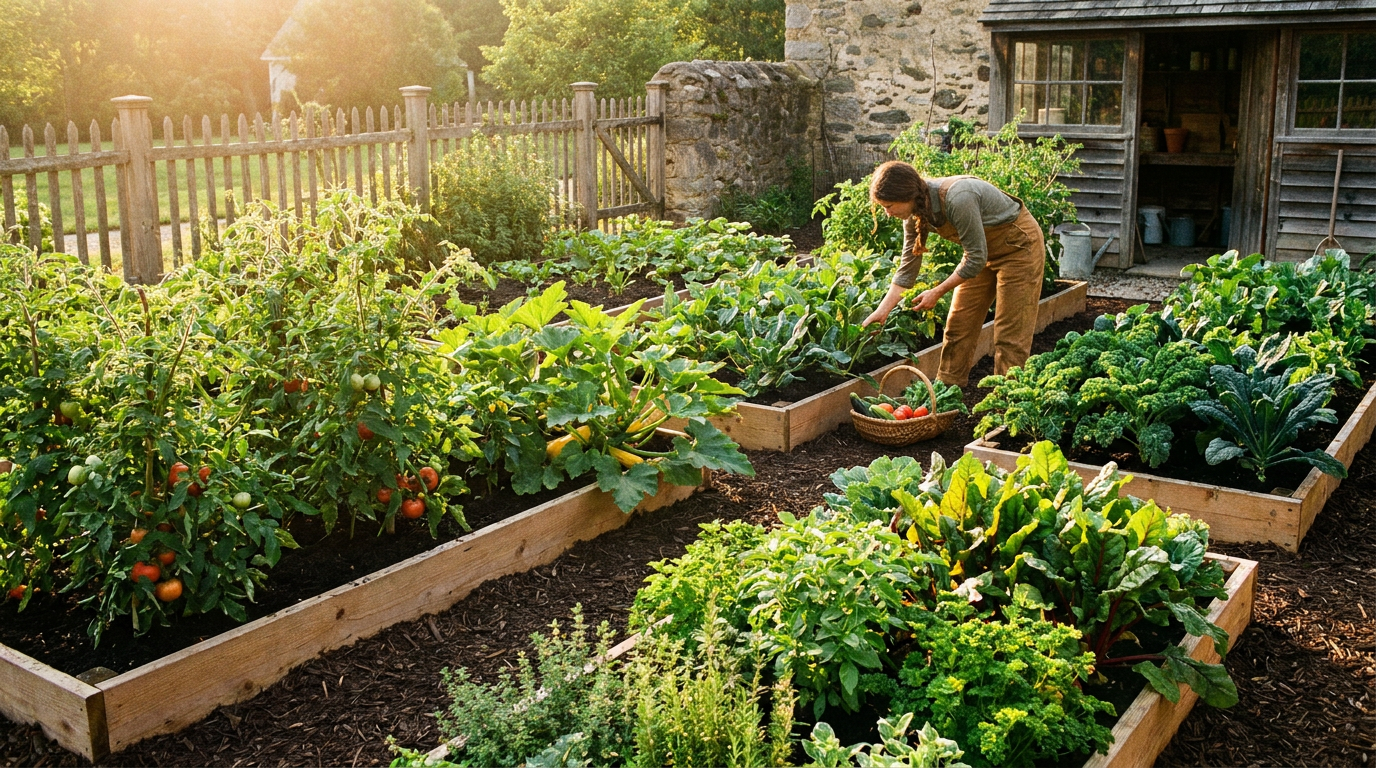
The movement is known as "no-dig" or regenerative gardening. Instead of mechanically inverting the earth, this method relies on layering organic matter—like compost, leaf mold, and straw—directly on top of the soil. By leaving the ground undisturbed, gardeners allow nature's own mechanisms to build fertility, structure, and resilience. It represents a fundamental paradigm shift: rather than focusing on feeding the plants, regenerative gardeners focus entirely on feeding the soil.[3][7][8]
To understand why no-dig gardening is so effective, one must look closely at the rhizosphere—the hidden, microscopic ecosystem teeming just beneath the surface. Healthy soil is not just dirt; it is a living, breathing biological matrix. A single handful of healthy soil contains billions of organisms, including bacteria, fungi, nematodes, and earthworms, all interacting in a complex food web.[1][6]
The star players in this subterranean world are arbuscular mycorrhizal fungi (AMF). These specialized fungi form a symbiotic relationship with the roots of over 80% of all terrestrial plant species. When a plant's roots encounter mycorrhizal fungi, the fungi actually penetrate the root cells, establishing a direct biological connection. Far from being a parasitic infection, this is a mutually beneficial partnership that has evolved over hundreds of millions of years.[2][4]
The relationship operates like a microscopic bartering economy. Plants, through the magic of photosynthesis, convert sunlight and carbon dioxide into liquid sugars (carbohydrates). They do not keep all this energy for themselves; they actually leak or pump a significant portion of these "photosynthates" down into their roots to feed the fungi. Because the fungi cannot photosynthesize, they rely entirely on the host plant for their carbon-based food.[1][2][4]

In exchange for this steady diet of sugar, the mycorrhizal fungi act as a massive secondary root system for the plant. The fungi grow vast networks of microscopic threads called hyphae, which are much finer and longer than the plant's own roots. These hyphae mine the surrounding soil for water and essential minerals—particularly phosphorus, which is often locked up and inaccessible to normal plant roots—and transport them directly back to the host plant.[2][4]
Beyond nutrient transport, these fungal networks literally hold the earth together. As the fungi grow, they secrete a sticky protein called glomalin. This biological glue binds microscopic soil particles into larger aggregates, creating tiny pockets of air and water. This process gives healthy soil its rich, crumbly texture—often referred to as "tilth"—and ensures that it drains well during heavy rains while retaining moisture during droughts.[1][5]
This delicate architecture explains why traditional tilling is so destructive. Running a rototiller through a garden bed is akin to a hurricane tearing through a city. The spinning blades physically shred the delicate fungal hyphae networks, destroy the glomalin-bound soil aggregates, and expose light-sensitive microbes to lethal ultraviolet radiation from the sun.[1][3]

This delicate architecture explains why traditional tilling is so destructive.
Furthermore, tilling forces a sudden influx of oxygen into the soil, causing a rapid, unnatural spike in bacterial activity. These bacteria quickly consume the stored organic matter, releasing it into the atmosphere as carbon dioxide. Over time, repeatedly tilled soil loses its organic carbon, its structure collapses, and it becomes compacted and lifeless, requiring synthetic fertilizers to sustain plant growth.[3][5][7][8]
The no-dig approach avoids this destruction entirely. When a gardener layers compost or mulch on the surface, they are mimicking the natural accumulation of leaf litter on a forest floor. Earthworms and other macro-organisms naturally rise to the surface to feed on this organic matter, pulling it down into the soil profile as they move. Their tunneling action provides natural aeration without disrupting the established fungal networks.[1][3][8]
One of the most immediate and celebrated benefits of no-dig gardening is a drastic reduction in weeds. Every patch of soil contains a "seed bank"—thousands of dormant weed seeds waiting for the right conditions to sprout. Tilling constantly brings these buried seeds to the surface, exposing them to the light they need to germinate. By leaving the soil undisturbed and covering it with mulch, the dormant seeds remain buried in the dark, and surface weeds are easily smothered.[3][7]

Water conservation is another major advantage. Because the soil structure remains intact and organic matter steadily increases, the ground acts like a giant sponge. Research indicates that increasing soil organic matter by just 1% can increase the soil's water-holding capacity by roughly 1.5 quarts per cubic foot. For the home gardener, this means significantly less time spent standing with a hose during the heat of summer.[3][5][6]

Plants grown in undisturbed, microbially rich soil also exhibit remarkable resilience against pests and diseases. A robust soil microbiome acts as an immune system for the garden. Beneficial microbes outcompete pathogenic fungi and bacteria for resources, while the mycorrhizal networks can actually trigger the plant's natural defense mechanisms when a threat is detected.[4][6]
To maximize these benefits, regenerative gardeners also focus on keeping a "living root" in the soil for as much of the year as possible. Because mycorrhizal fungi rely on living plants for food, leaving garden beds completely bare over the winter can starve the microbiome. Planting cover crops—like clover, vetch, or winter rye—ensures the fungi stay fed and active until spring planting resumes.[6][7][8]
Interestingly, there is one major family of garden vegetables that does not form relationships with mycorrhizal fungi: the brassicas, which include cabbage, broccoli, kale, and radishes. However, ecologists note that growing brassicas in a crop rotation is still beneficial. The temporary absence of a host makes the fungi "hungry," stimulating aggressive colonization when a compatible plant is introduced the following season.[2]
Transitioning to a no-dig system is remarkably straightforward, often beginning with "sheet mulching." Gardeners lay down a barrier of plain, unwaxed cardboard directly over grass or existing weeds to smother them, then top it with a thick layer of compost. Seeds or transplants can be planted directly into the compost layer. Over a few months, the cardboard decomposes, and the roots reach down into the native soil below.[1][7][8]

While the first year of a no-dig garden requires an upfront investment in compost and mulch, the labor and input costs drop precipitously in subsequent seasons. The soil structure improves year after year, the weed pressure plummets, and the need for synthetic fertilizers vanishes entirely. The garden becomes a self-sustaining ecosystem that sequesters carbon rather than emitting it.[3][5][7]
Ultimately, the science of the soil microbiome invites us to rethink our relationship with the earth. By putting away the tiller and adopting regenerative practices, home gardeners can transform their backyards from heavily managed, resource-intensive plots into thriving, resilient ecosystems. It is a gentler, smarter way to grow—one that honors the complex, invisible life beneath our feet.[1][8]
How we got here
1940s
The concept of no-dig gardening is popularized by pioneers like F.C. King and Ruth Stout as an alternative to labor-intensive tilling.
1996
Scientists discover glomalin, the vital soil-binding protein produced by mycorrhizal fungi, highlighting the damage caused by tilling.
2010s
Regenerative agriculture principles begin crossing over heavily into home gardening, driven by climate awareness and soil science.
2020s
No-dig gardening becomes a mainstream horticultural movement, endorsed by major botanical gardens and soil ecologists globally.
Viewpoints in depth
Soil Ecologists
Scientists focused on the biological mechanisms and fungal networks within the soil.
For soil microbiologists, the garden is primarily a subterranean ecosystem. They view tilling as a catastrophic disturbance that severs the delicate hyphae of arbuscular mycorrhizal fungi and exposes light-sensitive bacteria to lethal UV rays. From this perspective, the goal of gardening is to maximize the health of the rhizosphere by feeding the microbes with continuous organic matter and living roots, allowing the fungi to naturally transport phosphorus and water to the plants.
Regenerative Gardeners
Practitioners focused on the practical benefits of reduced labor, lower water usage, and higher yields.
Regenerative gardeners approach the no-dig method as a highly efficient, low-input system. By layering compost and utilizing sheet mulching, they bypass the back-breaking labor of double-digging and weeding. Their primary evidence lies in the visible results: drastically reduced weed pressure because dormant seeds remain buried, and significantly lower water bills because the undisturbed, organic-rich soil acts as a sponge during dry spells.
Traditional Horticulturists
Growers who historically favored tilling for aeration and weed control, though many are adapting.
Traditional horticulture has long taught that soil must be mechanically loosened to allow delicate seedling roots to penetrate and to incorporate fertilizers evenly. While many in this camp acknowledge the biological benefits of no-dig systems, they often point out that transitioning heavy, compacted clay soils can take several years of surface mulching before the natural aeration of earthworms fully takes effect. However, a growing consensus within this group is shifting toward minimal-disturbance practices.
What we don't know
- The exact timeline for heavily compacted urban soils to fully regenerate their microbiome using only surface mulching.
- How shifting climate zones and extreme heat waves will affect the survival of specific mycorrhizal fungi species in home gardens.
- The full extent of the chemical communication network between different plant species connected by the same fungal web.
Key terms
- Arbuscular Mycorrhizal Fungi (AMF)
- Beneficial fungi that penetrate plant roots, forming a symbiotic relationship to exchange nutrients for plant sugars.
- Hyphae
- The microscopic, branching filaments of a fungus that grow through the soil to absorb water and minerals.
- Glomalin
- A sticky protein secreted by mycorrhizal fungi that binds soil particles together, improving soil structure and aeration.
- Rhizosphere
- The narrow region of soil directly surrounding and influenced by plant roots and their associated microorganisms.
- Sheet Mulching
- A no-dig technique that involves layering cardboard and organic matter over existing soil or grass to suppress weeds and build fertility.
- Photosynthates
- The sugars and other chemical compounds produced by plants during photosynthesis, some of which are secreted into the soil to feed microbes.
Frequently asked
Can I start a no-dig garden directly over a grass lawn?
Yes. By using a technique called "sheet mulching," you can lay plain cardboard directly over the grass and cover it with a thick layer of compost. The grass will be smothered and decompose, feeding the soil below.
Do I need to buy mycorrhizal fungi inoculants for my garden?
While inoculants are available, mycorrhizal fungi occur naturally in most soils. Adopting no-dig practices and keeping living roots in the soil will naturally allow existing fungal populations to multiply and thrive.
How do I deal with weeds if I don't dig them up?
No-dig gardening drastically reduces weeds by keeping dormant seeds buried in the dark. The few weeds that do appear in the surface compost can be easily pulled by hand or lightly hoed while they are small.
Will no-dig gardening work in heavy clay soil?
Yes. While it may seem counterintuitive not to break up hard clay, layering organic matter on top encourages earthworms and roots to penetrate the clay, naturally improving its structure and drainage over time.
Sources
Source coverage
8 outlets
3 viewpoints surfaced






[1]Factlen Editorial TeamTraditional Horticulturists
Synthesis by Factlen editorial team
Read on Factlen Editorial Team →[2]No-Till FarmerSoil Ecologists
Understanding the Mycorrhizae Relationship
Read on No-Till Farmer →[3]Horticulture MagazineRegenerative Gardeners
No Dig Gardening: The Eco-Friendly Method
Read on Horticulture Magazine →[4]A Way To GardenSoil Ecologists
Mycorrhizae 101: The Basics
Read on A Way To Garden →[5]Dalefoot CompostsTraditional Horticulturists
What is Regenerative Gardening?
Read on Dalefoot Composts →[6]Just Good SoilTraditional Horticulturists
Why Soil Health Matters for Home Gardeners
Read on Just Good Soil →[7]Green Bay Botanical GardenRegenerative Gardeners
Regenerative Gardening: 5 Quick Ideas
Read on Green Bay Botanical Garden →[8]Natasha MorganRegenerative Gardeners
Growing Soil: The Foundation of a Healthy Garden
Read on Natasha Morgan →
Every angle. Every day.
Get home stories with full source coverage and perspective breakdowns delivered to your inbox.