
U.S. and Iran Open High-Stakes Peace Talks as Strait of Hormuz Crisis Escalates
Diplomatic negotiations in Switzerland face immediate hurdles as Iran threatens to close the Strait of Hormuz in retaliation for ongoing Israeli strikes in Lebanon.
By Factlen Editorial Team
- The Trump Administration
- Believes leveraging maximum pressure and direct diplomacy can secure a comprehensive regional deal.
- The Iranian Government
- Demands an immediate halt to Israeli operations in Lebanon and the unfreezing of assets as preconditions for peace.
- Bipartisan U.S. Critics
- Views the provisional agreement as a dangerous capitulation that rewards Iranian aggression.
- U.S. Military Command
- Maintains that the Strait of Hormuz remains open and secure under American naval protection.
What's not represented
- · Global Shipping Companies
- · Lebanese Civilians
Why this matters
The outcome of these talks will determine whether the devastating four-month war between the U.S. and Iran permanently ends, or if the conflict reignites. The status of the Strait of Hormuz directly impacts global energy prices, meaning a collapse in negotiations could trigger an immediate spike in the cost of oil and gas worldwide.
Key points
- U.S. and Iranian delegations have opened high-stakes peace talks in Switzerland to solidify a fragile ceasefire.
- Iran's military announced the closure of the Strait of Hormuz in retaliation for ongoing Israeli strikes in Lebanon.
- The U.S. military denied the strait is closed, reporting that 55 merchant ships safely transited over the weekend.
- President Trump threatened to impose tolls on the waterway or launch new strikes if a final deal is not reached.
- The negotiations face a strict 60-day window to resolve Iran's nuclear program and regional security issues.
- The provisional agreement is facing fierce bipartisan backlash in Washington from lawmakers demanding stronger security guarantees.
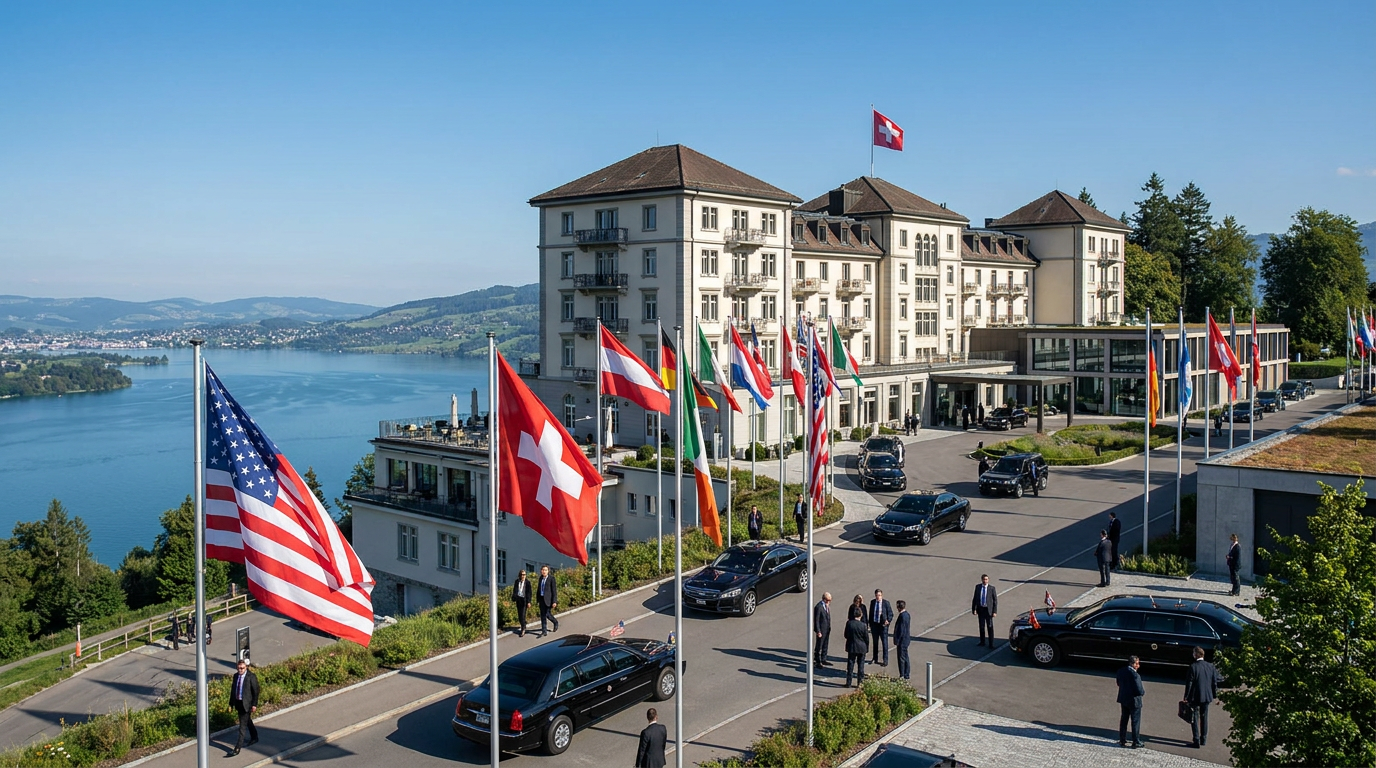
The United States and Iran have officially opened high-stakes peace talks in Switzerland in a desperate bid to solidify a fragile ceasefire, but the summit is already teetering on the edge of collapse before the ink on the preliminary agreement has dried. Just as the diplomatic delegations arrived at the heavily guarded Lake Lucerne Summit, Iran's military abruptly announced it was closing the Strait of Hormuz to all commercial traffic. The dramatic escalation was framed as direct retaliation for ongoing Israeli military strikes in Lebanon, which Tehran views as a blatant violation of the newly established truce. The sudden closure threat immediately injected a deep sense of volatility into the negotiations, underscoring the immense difficulty of untangling a complex, multi-front conflict that has engulfed the Middle East for the past four months.[5][6]
The tense negotiations in Switzerland follow a preliminary Memorandum of Understanding signed just days ago by U.S. President Donald Trump and Iranian President Masoud Pezeshkian. That landmark agreement established a strict 60-day window for both nations to negotiate a permanent end to the devastating war that erupted in February 2026. The ambitious diplomatic framework aims to definitively address Iran's controversial nuclear program, secure the unfreezing of billions of dollars in Iranian assets, and permanently reopen the critical global shipping lanes that have been choked by military blockades. However, the rapid unraveling of the security situation on the ground threatens to render the 60-day timeline obsolete, as both sides accuse the other of failing to uphold the foundational requirements of the initial ceasefire.[4][5]
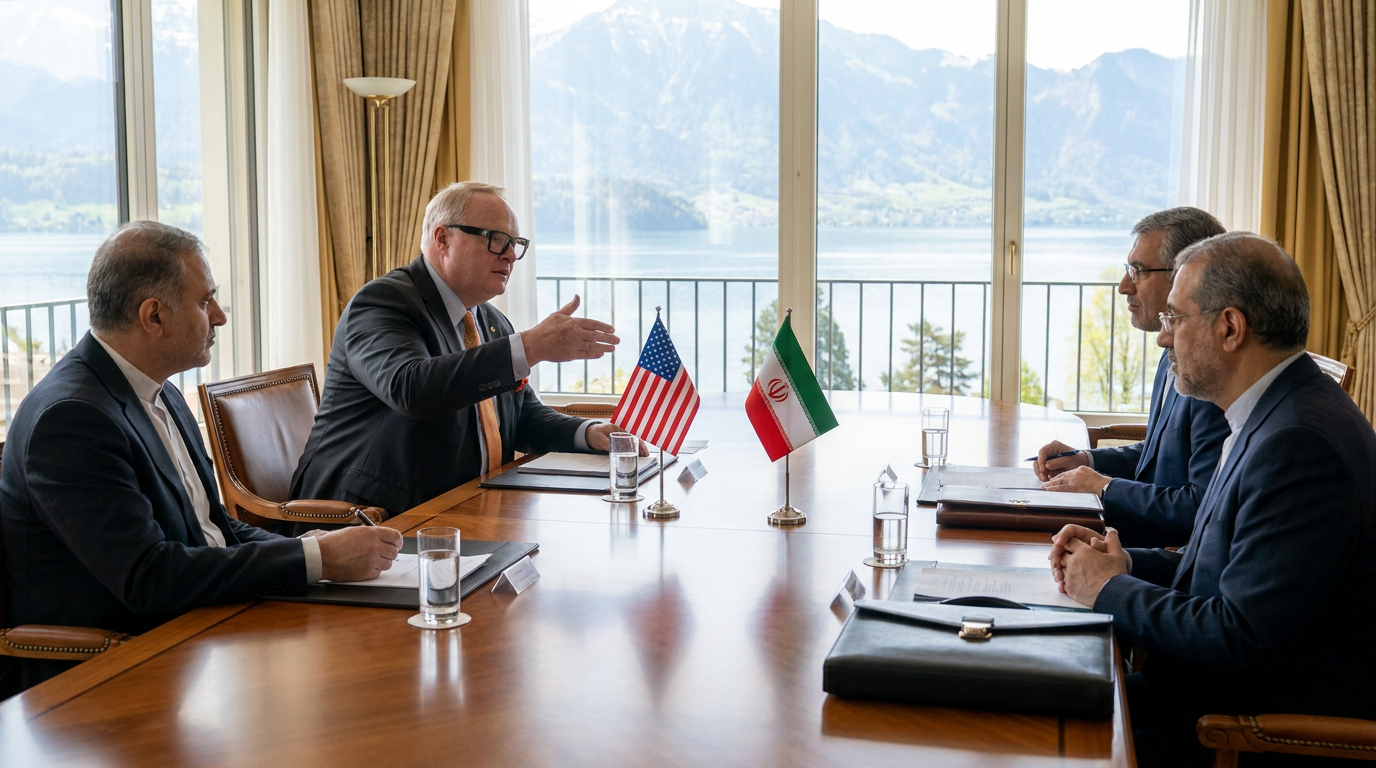
The U.S. diplomatic posture heading into the summit has been marked by a stark and highly public split-screen strategy. Vice President JD Vance, who is leading the American delegation alongside special envoys Jared Kushner and Steve Witkoff, struck a notably optimistic and conciliatory tone upon arriving in Switzerland. During his initial meetings with Iranian Parliament Speaker Mohammad Bagher Ghalibaf and Foreign Minister Abbas Araghchi, Vance publicly urged both sides to "turn over a new leaf" and seize the opportunity to permanently change relations in the Middle East. The vice president emphasized that the U.S. prefers a diplomatic resolution over a return to the devastating military exchanges that characterized the early months of the conflict, positioning himself as the pragmatic face of the administration's foreign policy.[7][8]

Simultaneously, President Trump issued a series of explosive and highly provocative threats from Washington, seemingly undercutting his own vice president's diplomatic messaging. In a flurry of social media posts and a combative television interview, Trump warned that he would order the U.S. military to hit Iran "very hard again, just like we did last week, only harder" if Tehran did not immediately rein in its proxy forces operating in Lebanon. Furthermore, the president threatened to unilaterally impose U.S. transit tolls on the Strait of Hormuz—or take over the waterway entirely using American naval power—if a final, comprehensive deal is not reached by the end of the 60-day window, adding immense pressure to the already strained negotiations.[2][4]
The operational status of the Strait of Hormuz—a vital maritime chokepoint that normally handles roughly 20 percent of the world's seaborne oil trade and a significant portion of its liquefied natural gas—remains highly contested and shrouded in the fog of war. Iran's Khatam al-Anbiya Central Headquarters, the highest-level joint command center of the nation's armed forces, formally declared the waterway closed to all vessel traffic over the weekend. Iranian military officials cited the U.S. and Israel's alleged "breaches of commitments" regarding the Lebanon ceasefire as the primary justification for the blockade, weaponizing the global energy supply chain to extract immediate diplomatic concessions at the negotiating table.[3][6]

The U.S. military apparatus, however, flatly rejected Tehran's claims of a successful blockade, painting a vastly different picture of the reality on the water. The U.S. Central Command (CENTCOM), which oversees American forces in the Middle East, issued a forceful statement clarifying that Iran does not currently control the strait. According to CENTCOM data, 55 merchant ships carrying approximately 17 million barrels of oil had safely transited the corridor over the weekend under the watchful eye and protective umbrella of American naval forces. The conflicting narratives highlight the precarious nature of the waterway, where a single miscalculation between U.S. warships and Iranian Revolutionary Guard vessels could instantly reignite a broader regional war.[3][4]
military apparatus, however, flatly rejected Tehran's claims of a successful blockade, painting a vastly different picture of the reality on the water.
The core friction point threatening to completely derail the diplomatic progress in Switzerland is the ongoing and escalating violence in Lebanon. The U.S.-Iran ceasefire agreement explicitly calls for an end to regional hostilities, but Israel—which is notably not a signatory to the bilateral pact between Washington and Tehran—has continued its aggressive military operations against Hezbollah targets in southern Lebanon. Iranian negotiators argue that the U.S. has a responsibility to restrain its closest regional ally, viewing the continued Israeli airstrikes as a proxy violation of the truce that renders the broader peace framework meaningless.[4][5]
Despite the escalating rhetoric and the ongoing violence, Iran has dispatched an unprecedented "whole-regime" delegation to the Swiss mountain resort, indicating a deep internal desire to secure a deal. Led by Ghalibaf and Araghchi, the expansive group notably includes senior central bank executives and top oil ministry officials. Diplomatic analysts suggest that the composition of the delegation signals Tehran's urgent, overriding demand for immediate cash flow and the rapid unfreezing of billions of dollars in international assets. The Iranian economy has been severely battered by the four-month war and years of crippling sanctions, making economic relief the primary driver behind their willingness to engage in direct talks with the Trump administration.[5][8]

Back in Washington, the provisional agreement is facing fierce and increasingly vocal bipartisan blowback, complicating the administration's ability to sell a final deal to Congress. Prominent Democrats, including Senator Cory Booker, have publicly slammed the memorandum of understanding as an "abject surrender," arguing that the president is projecting weakness on the global stage. Meanwhile, hawkish Republicans like Senator John Cornyn have voiced equally strong objections to negotiating with Tehran while its proxy forces remain active and heavily armed across the region. The domestic political pressure severely limits the concessions the U.S. delegation can offer in Switzerland without triggering a revolt on Capitol Hill.[1][2]
The delicate talks are currently being facilitated by Qatari and Pakistani mediators, who are frantically shuttling between the U.S. and Iranian delegations in an effort to keep the dialogue alive. With Israel signaling its intent to continue operations in Lebanon and Trump threatening renewed military strikes, the mediators face an uphill battle. The next 60 days will serve as a critical, high-stakes test of whether the devastating February conflict can be permanently resolved through diplomacy, or if the Middle East will inevitably spiral back into active, multi-front warfare with catastrophic consequences for the global economy.[6][8]
How we got here
Feb 28, 2026
The U.S. and Israel launch an air war against Iran, resulting in the death of Supreme Leader Ali Khamenei.
April-May 2026
Iran blocks the Strait of Hormuz in retaliation, while the U.S. blockades Iranian ports.
June 17, 2026
President Trump and Iranian President Pezeshkian sign a Memorandum of Understanding to halt the war.
June 20, 2026
Iran announces the closure of the Strait of Hormuz again, citing ongoing Israeli strikes in Lebanon.
June 21, 2026
High-level peace talks begin in Switzerland, led by U.S. Vice President JD Vance.
Viewpoints in depth
The Trump Administration's view
Leveraging maximum pressure and direct diplomacy to secure a comprehensive regional deal.
The administration believes that the combination of severe military threats and open diplomatic channels will force Tehran into a corner. By threatening to impose tolls on the Strait of Hormuz and promising further strikes, the White House aims to extract maximum concessions during the 60-day window while Vice President Vance plays the role of the pragmatic negotiator in Switzerland.
The Iranian Government's view
Demanding an immediate halt to Israeli operations and the unfreezing of assets as preconditions for peace.
Tehran views the ongoing Israeli strikes in Lebanon as a direct violation of the U.S.-brokered ceasefire. By announcing the closure of the Strait of Hormuz, Iran is attempting to maintain its leverage and pressure the U.S. into reining in Israel. The presence of central bank officials in Switzerland underscores their primary goal: securing immediate economic relief and access to frozen funds.
Bipartisan U.S. Critics' view
Viewing the provisional agreement as a dangerous capitulation that rewards Iranian aggression.
Lawmakers from both sides of the aisle are deeply skeptical of the Memorandum of Understanding. Critics argue that negotiating with Iran while its proxies continue to operate in Lebanon projects weakness. They fear the 60-day window simply gives Tehran time to regroup and rebuild its forces following the devastating February conflict, without offering concrete security guarantees for Israel.
What we don't know
- Whether Israel will agree to halt its military operations in Lebanon to preserve the U.S.-Iran ceasefire.
- If the U.S. military will actively engage Iranian vessels attempting to enforce the blockade in the Strait of Hormuz.
- How the Trump administration plans to bypass bipartisan congressional opposition to unfreeze Iranian assets.
Key terms
- Strait of Hormuz
- A critical maritime chokepoint between the Persian Gulf and the Gulf of Oman, through which roughly 20 percent of the world's oil passes.
- Memorandum of Understanding (MoU)
- A preliminary diplomatic agreement outlining the framework for future, more detailed negotiations.
- Hezbollah
- An Iran-backed militant group and political party based in Lebanon, currently engaged in conflict with Israel.
- Khatam al-Anbiya Central Headquarters
- The highest-level joint command center of Iran's armed forces, responsible for coordinating military operations.
Frequently asked
Why are the U.S. and Iran negotiating in Switzerland?
The two nations are holding talks to finalize a permanent peace agreement following a devastating four-month war that began in February 2026.
Is the Strait of Hormuz currently closed?
Iran claims it has closed the strait in retaliation for Israeli strikes in Lebanon, but the U.S. military says the waterway remains open and traffic is flowing.
What is the 60-day window?
A preliminary Memorandum of Understanding signed by the U.S. and Iran established a two-month period to negotiate details regarding Iran's nuclear program, sanctions relief, and regional security.
How does Israel fit into this deal?
Israel is not a signatory to the U.S.-Iran pact and has continued its military campaign against Hezbollah in Lebanon, which Iran cites as a violation of the ceasefire conditions.
Sources
Source coverage
8 outlets
4 viewpoints surfaced








[1]Fox NewsBipartisan U.S. Critics
Booker slams Trump's Iran deal as an 'abject surrender,' labels him the 'biggest loser' with 'egg on his face'
Read on Fox News →[2]The GuardianBipartisan U.S. Critics
Trump faces fresh bipartisan criticism on Iran deal as Vance hails peace talks
Read on The Guardian →[3]The New York TimesU.S. Military Command
Uncertainty Remains Over the Strait of Hormuz
Read on The New York Times →[4]The Washington PostThe Trump Administration
Trump threatens Iran over Strait of Hormuz as Vance opens peace talks
Read on The Washington Post →[5]PBSThe Iranian Government
U.S. and Iran to talk Sunday in Switzerland as Tehran says it closed Strait of Hormuz again
Read on PBS →[6]The HinduThe Iranian Government
Iran's military command announces Strait of Hormuz closure over ceasefire violations by U.S., Israel
Read on The Hindu →[7]The Irish TimesThe Trump Administration
Vance calls for sides to work together as Iran peace talks begin in Switzerland
Read on The Irish Times →[8]CBC NewsThe Trump Administration
Vance and U.S. negotiators met with Iran's parliamentary Speaker
Read on CBC News →
Every angle. Every day.
Get news politics stories with full source coverage and perspective breakdowns delivered to your inbox.