
How Open-Source Intelligence is Democratizing Geopolitical Verification
The proliferation of commercial satellite imagery and digital forensics has shattered state monopolies on intelligence, empowering civil society to independently verify arms control, track conflicts, and counter disinformation.
By Factlen Editorial Team
- Civilian OSINT Analysts
- Advocates who believe open-source data prevents state monopolies on truth and deters conflict.
- Traditional Intelligence Agencies
- Security professionals who value OSINT but stress the need for formal integration and rigorous tradecraft.
- Academic Skeptics
- Researchers cautioning that data access does not equal intelligence, highlighting risks of misinterpretation.
What's not represented
- · Commercial Satellite Operators
- · Targeted State Governments
Why this matters
By allowing independent researchers to verify military movements and nuclear facilities, open-source intelligence reduces the risk of nations stumbling into conflict over faulty data and holds governments accountable to the public.
Key points
- Commercial satellite imagery and digital forensics have broken the state monopoly on geopolitical intelligence.
- NGOs and researchers use OSINT to independently verify arms control compliance and track nuclear facilities.
- Open-source investigations have repeatedly dismantled state-sponsored disinformation campaigns during global conflicts.
- Experts warn that rigorous training is required to prevent amateur analysts from misinterpreting complex military data.
For decades, the ability to peer across borders and monitor the military capabilities of rival nations was the exclusive domain of superpowers. Multibillion-dollar spy satellites and clandestine human networks formed a monopoly on geopolitical truth, leaving the public and civil society reliant on whatever declassified scraps governments chose to share. This asymmetry meant that international disputes over weapons development or troop movements were often decided behind closed doors, with little opportunity for independent verification.[7]
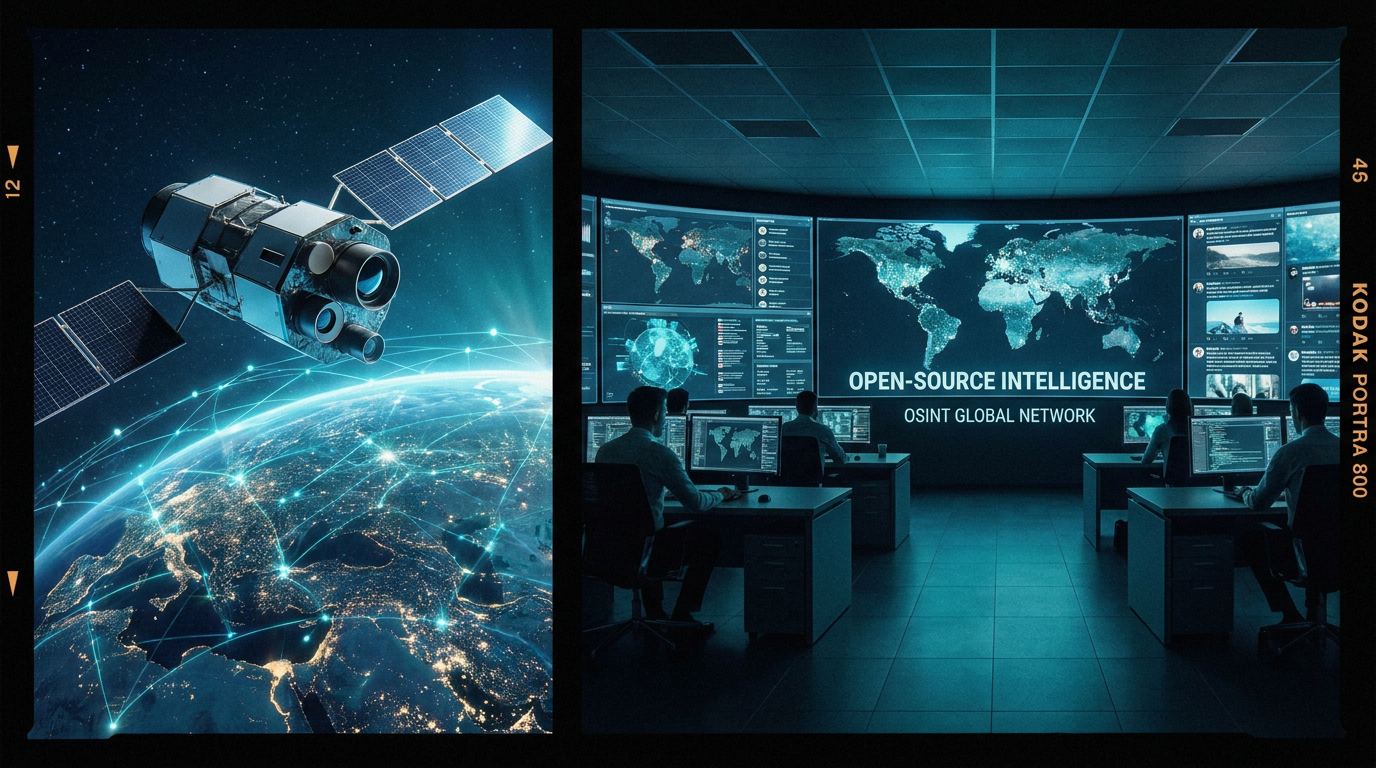
Today, that monopoly has shattered. A convergence of high-resolution commercial satellite imagery, global social media penetration, and advanced digital forensics has birthed a new era of "societal verification." Open-source intelligence (OSINT)—once a niche supplement to classified data—has evolved into a primary driver of global security transparency, empowering nongovernmental organizations (NGOs), journalists, and academic researchers to independently verify geopolitical events.[3][5]
The mechanics of this democratization are rooted in the commercial space sector. Where early civilian satellites offered blurry images with 10-to-20-meter resolution, today's commercial constellations provide sub-meter clarity updated daily. Organizations no longer need to task a government asset; they can purchase or receive grants for imagery from companies like Planet or Maxar, allowing them to monitor conflict zones, nuclear facilities, and troop movements in near-real time.[5][6]
This capability has profoundly impacted arms control and nonproliferation. At the Middlebury Institute of International Studies, researchers at the James Martin Center for Nonproliferation Studies routinely use commercial satellite data and 3D modeling to track missile silos and nuclear testing sites in closed states like North Korea. By establishing a ground-level view of illicit weapons programs, these civilian analysts provide a crucial layer of independent verification that policymakers and the public can trust.[2][7]

The stabilizing effect of this transparency is significant. When multiple independent groups fact-check the claims of intelligence agencies, it reduces the likelihood of nations stumbling into conflict over faulty or manipulated data. As experts note, this external validation builds public confidence in the intelligence that underpins major diplomatic or military decisions, ensuring that governments cannot easily fabricate pretexts for escalation.[5]
Beyond tracking nuclear arsenals, OSINT has become a vital weapon against state-sponsored disinformation. A comprehensive report by the Center for Strategic and International Studies highlights how open-source investigations have repeatedly dismantled false narratives. During the Syrian civil war, for instance, the OSINT community used satellite imagery and digital forensics to verify the use of chemical weapons in Douma, thoroughly discrediting the denial campaigns launched by the Syrian and Russian governments.[1]
Similarly, in the lead-up to the 2022 invasion of Ukraine, civilian researchers using Google Maps traffic data and commercial radar imagery detected Russian military buildups and staging areas before official hostilities began. This real-time exposure stripped the invasion of its element of surprise and countered fabricated pretexts, such as the baseless claims regarding Ukrainian biological weapons laboratories.[1][2][6]
The impact extends deeply into human rights and war crimes investigations. Organizations like Bellingcat and the Global Investigative Journalism Network have pioneered networked approaches to conflict monitoring. By crowdsourcing the analysis of social media videos, flight tracking data, and satellite imagery, these groups have documented civilian harm and reconstructed complex events, such as the downing of Malaysian Airlines Flight MH17, which claimed 298 lives.[3][6]

The impact extends deeply into human rights and war crimes investigations.
In regions where physical access is denied to journalists and human rights workers, remote sensing fills the void. Satellites collect data across different parts of the light spectrum, allowing investigators to detect mass graves, assess agricultural destruction, and map damaged infrastructure with precision. This evidence is increasingly utilized in international legal proceedings, ensuring that perpetrators of atrocities cannot hide behind closed borders.[6]
However, the rapid expansion of OSINT is not without significant challenges and uncertainties. While the volume of publicly available information has exploded, the capacity to accurately interpret it remains a bottleneck. A recent analysis in the European Journal of International Security cautions against viewing OSINT as a panacea, noting that it is not merely about data access, but about rigorous, professionalized analysis.[4]
The sheer scale of data—such as the 6,000-plus public UN documents analyzed by researchers attempting to verify compliance with the Biological Weapons Convention—requires sophisticated automated processing and deep subject-matter expertise. Without this rigor, the democratization of intelligence risks devolving into amateur speculation, where untrained observers misidentify facilities or misinterpret routine military exercises as imminent threats.[1][4][7]
Furthermore, the integration of OSINT into formal security structures remains uneven. While military and intelligence communities increasingly rely on open-source data, institutional frameworks often treat it as a passive supplement rather than a distinct, professionalized discipline. Advocates argue for standardized training and clearer doctrinal integration to maximize the utility of civilian intelligence while mitigating the risks of information overload.[3]

There are also concerns regarding the commercial nature of the underlying data. While many satellite companies offer grants or free access to NGOs, the reliance on private corporations means that access can be restricted by market forces or exclusive government buyouts. Ensuring that OSINT remains a democratizing force requires sustained commitment to keeping these vital data streams accessible to civil society.[5]
Despite these hurdles, the trajectory is clear: the era of the state intelligence monopoly is over. The ability of non-state actors to independently verify geopolitical realities has fundamentally altered the calculus of international relations. By shining a light on covert activities and exposing disinformation, the global OSINT community is fostering a more transparent, and ultimately more accountable, world order.[1][3][7]
As artificial intelligence and machine learning tools become more adept at parsing vast datasets, the speed and accuracy of societal verification will only increase. In an age where truth is frequently contested, the collaborative, evidence-based approach of open-source intelligence stands as a vital pillar of global security and conflict prevention.[4][6][7]
How we got here
1980s-1990s
Early civilian researchers begin using low-resolution commercial satellite imagery to identify Soviet military facilities.
2014
The downing of MH17 in Ukraine prompts civilian investigative groups to pioneer crowdsourced digital forensics and social media verification.
2018
OSINT analysts use satellite data and digital forensics to verify the Douma chemical weapons attack, countering state-sponsored disinformation.
2022
Civilian researchers detect Russian military buildups using commercial radar and traffic data, stripping the invasion of Ukraine of its element of surprise.
Viewpoints in depth
Civilian OSINT Analysts
Advocates who believe open-source data prevents state monopolies on truth and deters conflict.
This camp, comprising NGOs, investigative journalists, and academic researchers, argues that the democratization of intelligence is a fundamental stabilizing force in global security. By utilizing commercial satellite imagery and crowdsourced digital forensics, they provide an independent layer of verification that holds governments accountable. They emphasize that transparent, public evidence—such as tracking missile silos or debunking fabricated pretexts for war—builds public trust and prevents nations from escalating conflicts based on classified, unverified claims.
Traditional Intelligence Agencies
Security professionals who value OSINT but stress the need for formal integration and rigorous tradecraft.
Military and state intelligence practitioners recognize that the information landscape has fundamentally shifted, with non-state actors often breaking news before classified channels can process it. However, they argue that OSINT must be treated as a professionalized discipline rather than a passive research tool. This camp advocates for standardized training, secure processing frameworks, and the integration of open-source findings with classified intelligence to ensure that decision-makers receive comprehensive, vetted assessments rather than raw, potentially misleading data.
Academic Skeptics
Researchers cautioning that data access does not equal intelligence, highlighting risks of misinterpretation.
Scholars studying the evolution of intelligence warn against the utopian view that OSINT is a flawless democratizing force. They point out that the sheer volume of publicly available information creates massive noise, requiring highly specialized expertise to filter and analyze accurately. This perspective highlights the dangers of amateur analysts misidentifying military assets or falling victim to sophisticated state-sponsored spoofing. They argue that without rigorous methodological standards, the proliferation of open-source data could inadvertently fuel misinformation rather than combat it.
What we don't know
- How the increasing use of AI-generated deepfakes and spoofed data will impact the reliability of open-source verification.
- Whether commercial satellite companies will continue to provide affordable access to NGOs if market dynamics shift or exclusive government contracts expand.
- How authoritarian states will adapt their concealment tactics to evade the pervasive gaze of commercial satellite constellations.
Key terms
- Open-Source Intelligence (OSINT)
- The collection and analysis of publicly available data, such as satellite imagery and social media, to produce actionable security insights.
- Societal Verification
- The concept of civil society, rather than just governments, monitoring and verifying compliance with international treaties and arms control agreements.
- Synthetic Aperture Radar (SAR)
- A type of satellite imaging that uses radar to create high-resolution images of the Earth's surface, capable of penetrating clouds and operating at night.
- Nonproliferation
- Diplomatic and verifiable efforts to prevent the spread of weapons of mass destruction, particularly nuclear weapons.
Frequently asked
What exactly is open-source intelligence (OSINT)?
OSINT is the practice of collecting and analyzing publicly available information—such as commercial satellite imagery, social media posts, and government databases—to generate actionable intelligence.
How does OSINT help prevent conflicts?
By providing independent, verifiable evidence of military movements or weapons development, OSINT prevents governments from monopolizing the narrative and reduces the risk of wars starting over false or manipulated intelligence.
Can anyone access commercial satellite imagery?
While high-resolution imagery is often expensive, many commercial satellite companies offer grants, low-cost tiers, or free access to NGOs, academic researchers, and journalists for humanitarian and security monitoring.
What are the risks of relying on OSINT?
The primary risks include information overload and the potential for untrained analysts to misinterpret data, such as mistaking routine industrial activity for weapons manufacturing, which can inadvertently spread misinformation.
Sources
Source coverage
7 outlets
3 viewpoints surfaced





[1]Center for Strategic and International StudiesTraditional Intelligence Agencies
The Role of OSINT in Countering Disinformation and Arms Control
Read on Center for Strategic and International Studies →[2]Middlebury Institute of International StudiesCivilian OSINT Analysts
The Power of Open-Source Intelligence in Nonproliferation
Read on Middlebury Institute of International Studies →[3]Small Wars JournalTraditional Intelligence Agencies
Democratized Intelligence: How Open-Source Intelligence is Reshaping Asymmetric Advantage
Read on Small Wars Journal →[4]European Journal of International SecurityAcademic Skeptics
The evolution of open-source intelligence practices
Read on European Journal of International Security →[5]Stanley Center for Peace and SecurityCivilian OSINT Analysts
Commercial Satellite Imagery and Conflict Prevention
Read on Stanley Center for Peace and Security →[6]Global Investigative Journalism NetworkCivilian OSINT Analysts
Using Satellite Imagery to Investigate War Crimes
Read on Global Investigative Journalism Network →[7]Factlen Editorial TeamCivilian OSINT Analysts
Synthesis by Factlen editorial team
Read on Factlen Editorial Team →
Every angle. Every day.
Get defense security stories with full source coverage and perspective breakdowns delivered to your inbox.