
US-Iran Peace Talks Collapse in Switzerland Amid Threats Over Strait of Hormuz
Iranian negotiators suspended high-stakes talks following US threats to seize the Strait of Hormuz, shattering a fragile 60-day interim peace agreement.
By Factlen Editorial Team
- US Administration
- Focuses on enforcing the 60-day interim agreement and keeping the Strait open by force if necessary.
- Iranian Leadership
- Argues the US and Israel breached the ceasefire first, viewing threats as violating the non-aggression pact.
- Global Security Observers
- Focused on the factual reality of the Strait and the severe economic implications of a blockade or toll system.
What's not represented
- · Commercial Shipping Operators
- · European Energy Importers
Why this matters
The collapse of these talks and the potential closure of the Strait of Hormuz threaten to severely disrupt global shipping and send energy prices skyrocketing, directly impacting inflation and fuel costs worldwide.
Key points
- Iranian negotiators suspended high-stakes peace talks in Switzerland following military threats from President Trump.
- Iran claims to have closed the Strait of Hormuz in retaliation for Israeli strikes in Lebanon, a claim the US military denies.
- The breakdown shatters a fragile interim agreement intended to open a 60-day window for nuclear and sanctions negotiations.
- President Trump has threatened to seize control of the Strait and impose American tolls on international shipping.
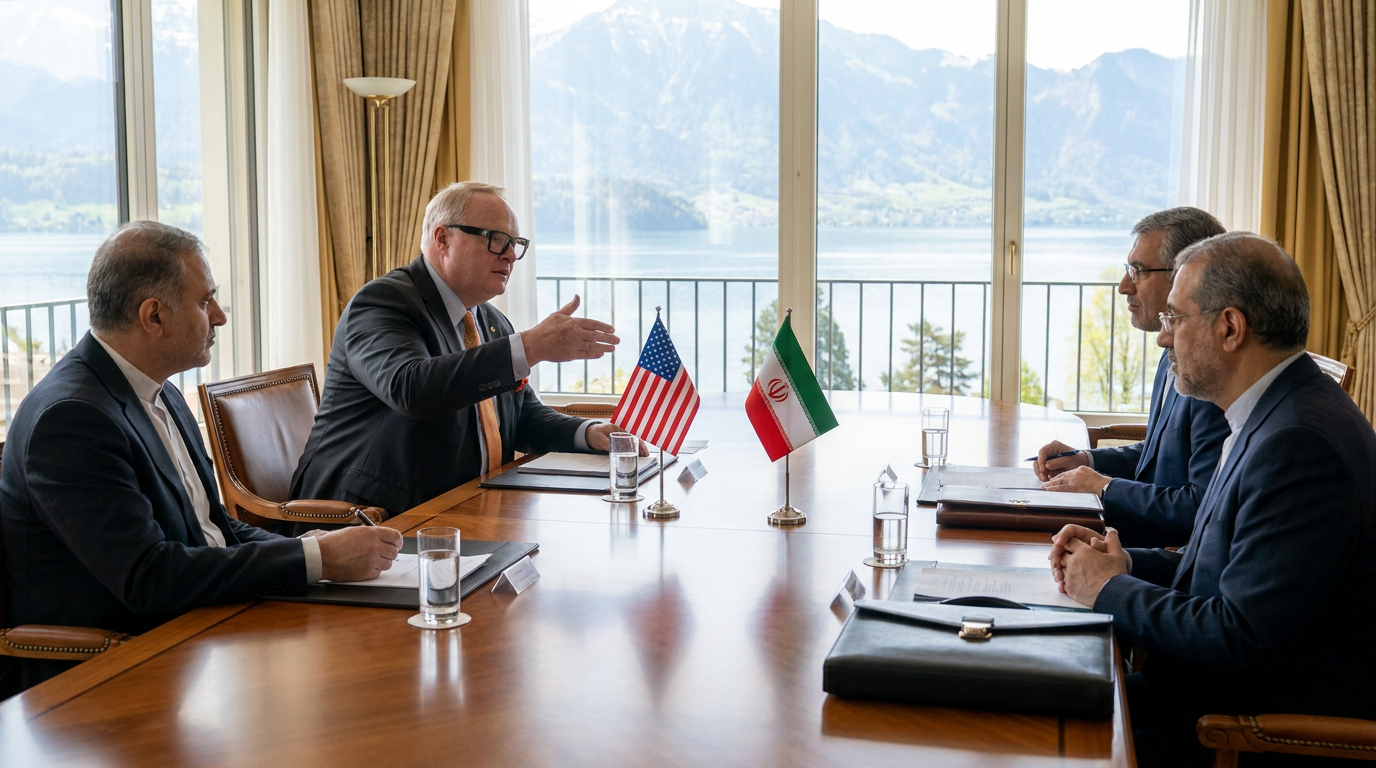
High-stakes peace talks between the United States and Iran collapsed in Switzerland on Sunday after the Iranian delegation suspended negotiations in protest. The abrupt walkout at the Lake Lucerne Summit shatters a fragile memorandum of understanding signed just days ago, which was intended to halt regional hostilities and open a 60-day window for broader nuclear diplomacy.[4][6]
The diplomatic rupture followed a weekend of escalating rhetoric from Washington. As Vice President JD Vance arrived in Switzerland hoping to "turn over a new leaf" with Tehran, President Donald Trump took to social media and television to threaten overwhelming military force if Iran disrupted global shipping.[2][4]
Trump warned that the United States would take over the Strait of Hormuz by force and potentially charge tolls for vessels passing through the critical chokepoint. The Iranian delegation, citing a non-aggression pact included in last week's interim agreement, stated that the public threats represented an unacceptable violation of their personal safety and the diplomatic framework.[4][7]
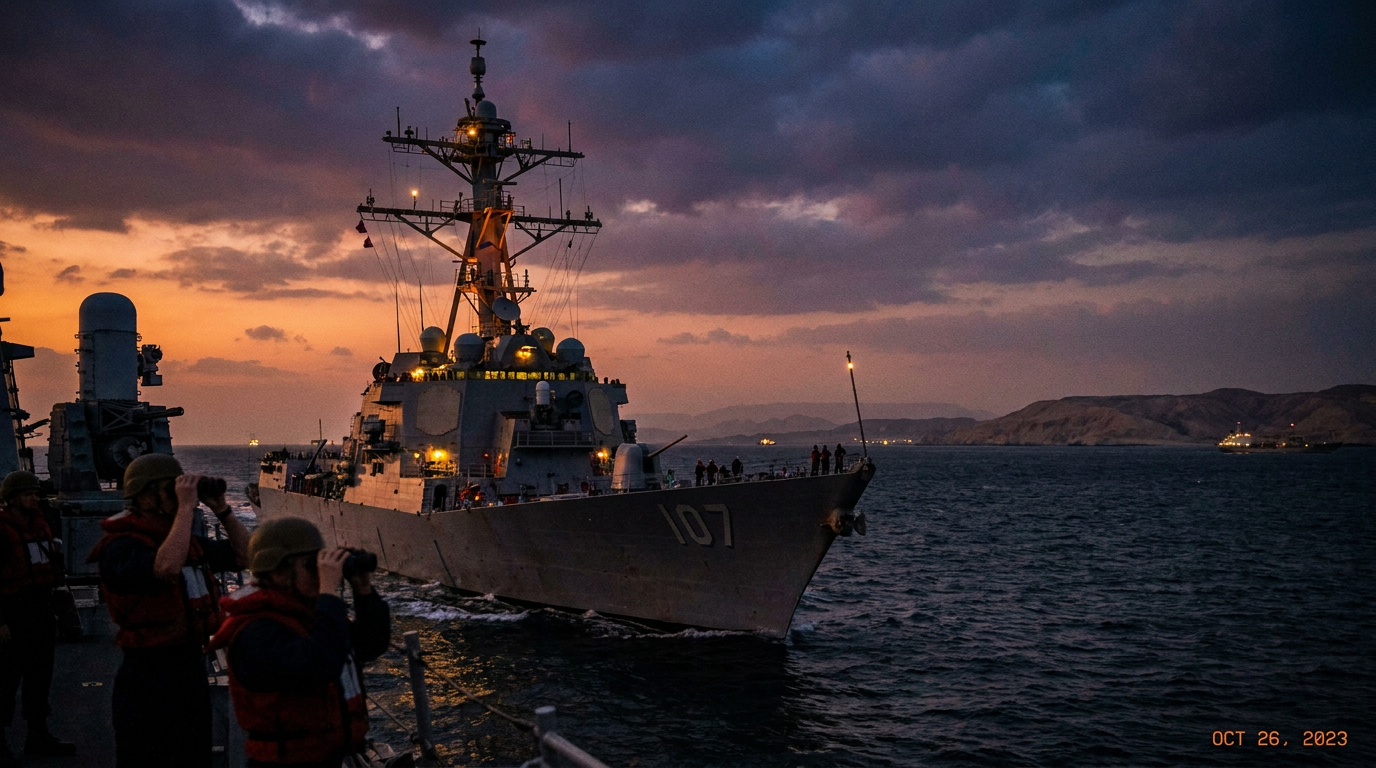
The immediate catalyst for the breakdown, however, was renewed violence in the Middle East. Iran announced on Saturday that it was closing the Strait of Hormuz, citing deadly Israeli military strikes against Hezbollah targets in southern Lebanon. Tehran argued these strikes violated the comprehensive ceasefire outlined in the US-Iran agreement.[5][7]

A bizarre information war has since erupted over the physical status of the world's most vital oil artery. Iran's joint military command insists the waterway is entirely shut to international traffic in retaliation for the Lebanon strikes.[3][5]
A bizarre information war has since erupted over the physical status of the world's most vital oil artery.
Conversely, US Central Command firmly denied the closure, stating that traffic continues to flow unabated. The American military reported that 55 merchant ships carrying over 17 million barrels of oil successfully transited the strait on Saturday, directly contradicting Tehran's claims.[3][5]
The Iranian delegation that walked out of the Swiss talks was unprecedented in its scope. Led by parliamentary Speaker Mohammad Bagher Ghalibaf, the group included Iran's central bank governor and top oil officials, signaling that Tehran had arrived fully prepared to negotiate immediate cash flow, the unfreezing of overseas assets, and sanctions waivers.[1][5]
Back in Washington, the provisional deal and its rapid unraveling have drawn fierce bipartisan criticism. Democratic lawmakers have slammed the initial memorandum as an "abject surrender" that emboldens Tehran, while conservative hawks argue the administration is failing to adequately check Iran's proxy networks in Lebanon and Yemen.[2][7]

Trump's suggestion of imposing American tolls in the Strait of Hormuz—framing it as reimbursement for the US acting as the "Guardian Angel" of the Middle East—has particularly alarmed international shipping syndicates. European allies fear that unilaterally charging fees for international waters could lead to a complete breakdown of maritime law.[4][7]
The collapse leaves Vice President Vance in a precarious position. Vance had spent the weekend attempting to isolate the 60-day nuclear and sanctions negotiations from the immediate military flare-ups. However, the Iranian walkout suggests Tehran is unwilling to separate the diplomatic track from the ongoing kinetic conflicts involving its regional proxies.[2][4]
The global economy is now bracing for the fallout. The Strait of Hormuz facilitates nearly a fifth of the world's total oil consumption. While oil prices had initially tumbled following the signing of the interim agreement last week, the renewed threat of a blockade threatens to send energy markets into a tailspin just as the summer driving season peaks.[3][4]

Swiss mediators and Qatari officials are currently scrambling to salvage the framework, attempting to determine if the Iranian walkout is a permanent withdrawal or a temporary, symbolic protest. Until the status of the Strait is definitively resolved and the proxy violence halts, the 60-day window for a broader peace pact appears firmly shut.[5][6]
How we got here
Last Week
The US and Iran sign a memorandum of understanding to halt hostilities and open a 60-day negotiation window.
Saturday Morning
Israel launches deadly military strikes against Hezbollah targets in southern Lebanon.
Saturday Afternoon
Iran announces the closure of the Strait of Hormuz in retaliation, claiming a breach of the ceasefire.
Sunday Morning
President Trump threatens military force and tolls; the Iranian delegation suspends talks in Switzerland.
Viewpoints in depth
US Administration's view
The US views the interim agreement as binding and is prepared to use force to keep international waterways open.
Washington argues that the 60-day negotiation window must proceed regardless of regional proxy skirmishes. The administration maintains that Iran does not have the legal or military authority to close the Strait of Hormuz, and views any attempt to do so as a direct challenge to global commerce. President Trump's threats to impose tolls reflect a broader 'America First' doctrine, suggesting that the US should be financially compensated for providing maritime security in the Middle East.
Iranian Leadership's view
Tehran believes the US and its allies have already breached the core tenets of the ceasefire.
From Iran's perspective, the interim agreement was predicated on a comprehensive halt to military operations, including those by Israel in Lebanon. Because the US is Israel's primary backer, Tehran holds Washington responsible for the recent strikes against Hezbollah. The Iranian delegation views President Trump's public threats of bombing and kidnapping as a violation of the pact's non-aggression clauses, making good-faith negotiations in Switzerland impossible.
Global Security Observers' view
Analysts are deeply concerned about the economic fallout and the erosion of international maritime law.
Independent observers and European allies are alarmed by the rapid escalation from both sides. While they condemn Iran's threats to close the Strait, they are equally troubled by the US proposal to unilaterally charge tolls in international waters, which could set a dangerous precedent for global freedom of navigation. Economists warn that even a contested, unverified closure of the Strait could trigger a massive spike in global energy prices.
What we don't know
- Whether the Iranian delegation's walkout in Switzerland is a permanent withdrawal or a temporary negotiating tactic.
- How global oil markets will respond when trading opens on Monday given the conflicting reports over the Strait of Hormuz.
- Whether the US military will actively escort commercial vessels if Iran attempts to physically enforce its declared blockade.
Key terms
- Strait of Hormuz
- A narrow, strategically critical waterway between the Persian Gulf and the Gulf of Oman, through which roughly 20% of the world's oil supply passes.
- Lake Lucerne Summit
- The diplomatic talks held in Switzerland aimed at finalizing a 60-day interim peace and nuclear agreement between the US and Iran.
- Sanctions Waiver
- An exemption granted by the US government allowing certain countries or entities to purchase Iranian oil without facing financial penalties.
Frequently asked
Is the Strait of Hormuz actually closed?
The situation is heavily contested. Iran claims it has shut the waterway, while the US military insists that dozens of commercial vessels continue to pass through freely.
Why was the Iranian delegation in Switzerland?
They were attending the Lake Lucerne Summit to negotiate the details of a 60-day interim peace agreement, including sanctions waivers and nuclear limits.
How does Israel factor into the US-Iran deal?
Israel is not a signatory to the US-Iran memorandum. Continued Israeli strikes against Hezbollah in Lebanon have complicated the ceasefire, as Iran considers these attacks a breach of the broader peace framework.
Sources
Source coverage
7 outlets
3 viewpoints surfaced







[1]Fox NewsUS Administration
Iran's unprecedented 'whole-regime' delegation at US deal talks signals one goal: expert
Read on Fox News →[2]The GuardianIranian Leadership
Trump faces fresh bipartisan criticism on Iran deal as Vance hails peace talks
Read on The Guardian →[3]NYTGlobal Security Observers
Uncertainty Remains Over the Strait of Hormuz
Read on NYT →[4]The Washington PostUS Administration
Trump threatens Iran over Strait of Hormuz as Vance seeks peace deal in Switzerland
Read on The Washington Post →[5]PBSIranian Leadership
U.S. and Iran to talk Sunday in Switzerland as Tehran says it closed Strait of Hormuz again
Read on PBS →[6]CBS NewsGlobal Security Observers
Switzerland says U.S.-Iran talks postponed
Read on CBS News →[7]The Times of IsraelGlobal Security Observers
Iran suspends Switzerland talks, claims Strait of Hormuz closed after IDF strikes in Lebanon
Read on The Times of Israel →
Every angle. Every day.
Get news politics stories with full source coverage and perspective breakdowns delivered to your inbox.