
The Science of the Maillard Reaction: How Heat and Chemistry Transform Home Cooking
Understanding the chemical reaction between proteins and sugars is the key to achieving perfect sears, golden crusts, and deep savory flavors in the kitchen.
By Factlen Editorial Team
- Food Scientists
- Focusing on the molecular mechanisms, temperature thresholds, and chemical manipulation of the reaction.
- Culinary Instructors
- Emphasizing practical kitchen applications, technique, and flavor building.
- Home Cooks
- Prioritizing accessible methods, avoiding common mistakes, and achieving reliable results without specialized equipment.
What's not represented
- · Flavor Industry Chemists
- · Vegetarian and Vegan Chefs
Why this matters
Mastering the Maillard reaction allows home cooks to stop guessing and start controlling the fundamental chemistry of flavor, turning pale, bland ingredients into restaurant-quality meals.
Key points
- The Maillard reaction is a heat-activated chemical process between amino acids and sugars that creates brown pigments and savory flavors.
- It requires temperatures between 280°F and 330°F, which is why boiling or steaming food prevents browning.
- Surface moisture is the primary obstacle to a good sear, as heat energy is wasted on evaporation rather than browning.
- Unlike caramelization, which involves only the breakdown of sugars, the Maillard reaction requires proteins to generate complex umami notes.
- Pushing temperatures past 355°F crosses into pyrolysis, destroying delicate flavors and introducing bitter, burnt carbon compounds.
There is a universal sensory experience that transcends cultural boundaries in the kitchen: the intoxicating aroma of a searing steak, the comforting scent of baking bread, and the rich fragrance of roasting coffee beans. These seemingly disparate culinary events are all governed by a single, elegant chemical process. It is the invisible engine that transforms raw, pale ingredients into deeply flavorful, golden-brown masterpieces. For home cooks seeking to elevate their meals from mundane to restaurant-quality, understanding this transformation is arguably the most important scientific concept they can master. It is the dividing line between food that merely sustains and food that genuinely delights.[7]
This transformative process is known as the Maillard reaction, named after the French chemist Louis-Camille Maillard, who first described the phenomenon in 1912. While attempting to reproduce biological protein synthesis in a laboratory, Maillard observed that heating amino acids and sugars together resulted in a distinct browning effect. Decades later, food scientists would map the staggering complexity of this reaction, revealing that it is responsible for generating hundreds of unique flavor and aroma compounds. Today, the Maillard reaction is recognized as the foundational pillar of savory cooking, dictating the techniques used by everyone from Michelin-starred chefs to backyard grill enthusiasts.[4][7]
At its core, the Maillard reaction is a heat-activated chemical dance between amino acids—the building blocks of proteins—and reducing sugars, such as glucose and fructose. When exposed to sufficient heat, the reactive carbonyl group of the sugar interacts with the nucleophilic amino group of the protein. This initial collision triggers a cascading chain of unstable chemical rearrangements. Ultimately, this chaotic molecular breakdown produces melanoidins, the complex polymeric pigments that give seared and baked foods their characteristic rich, mahogany-brown color. Alongside these pigments, the reaction spawns a vast array of volatile aromatic molecules that our palates register as savory, meaty, and deeply complex.[2][4]
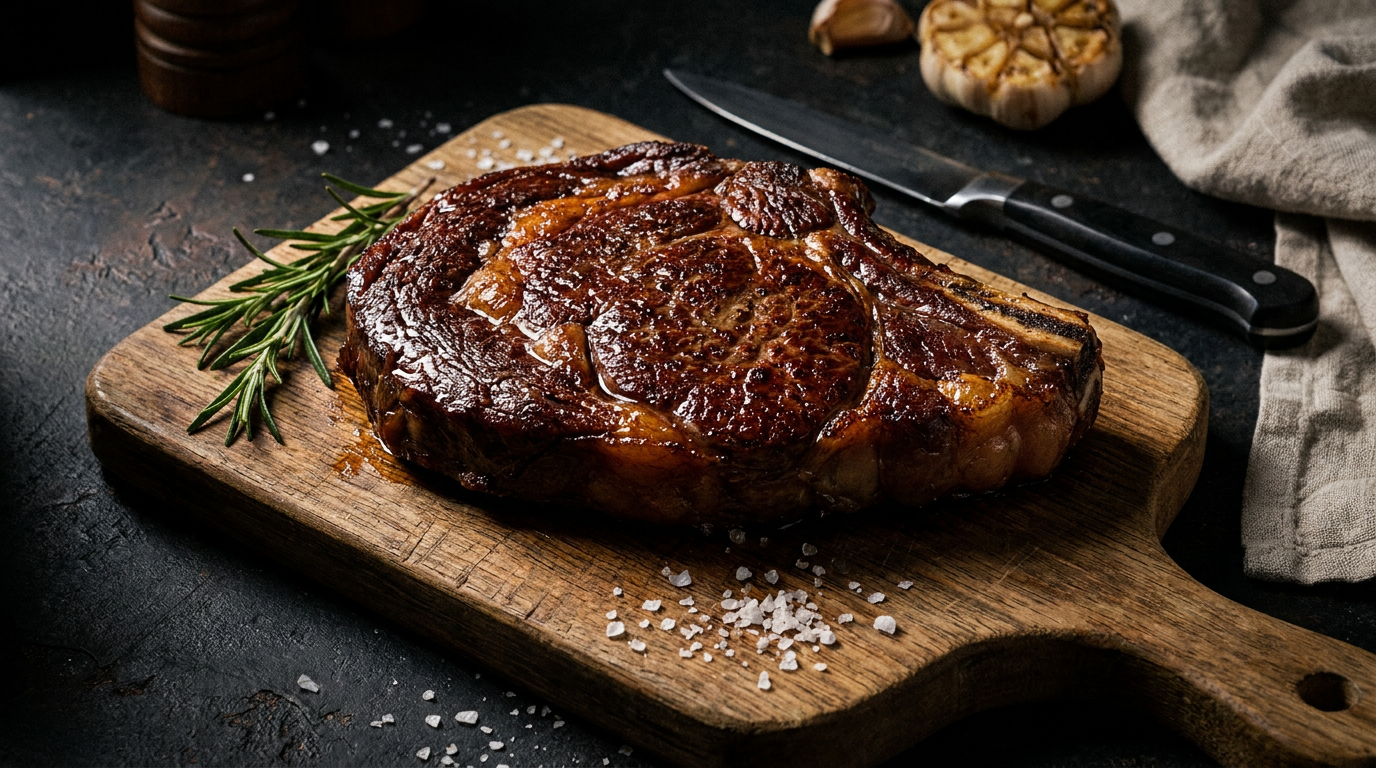
A common point of confusion in the culinary world is the conflation of the Maillard reaction with caramelization. While both are non-enzymatic browning processes that require heat, their chemical requirements and flavor profiles are distinctly different. Caramelization is the thermal decomposition of sugars alone, occurring at higher temperatures—typically above 320 degrees Fahrenheit. It produces the sweet, nutty notes found in caramel sauce or spun sugar. The Maillard reaction, by contrast, mandates the presence of amino acids and activates at slightly lower temperatures. It is this protein interaction that generates the savory, umami-rich depth found in a seared ribeye or a roasted mushroom, rather than mere sweetness.[3][5]

To harness the power of the Maillard reaction, cooks must respect its strict temperature parameters. The chemical cascade generally requires a sustained temperature between 280 and 330 degrees Fahrenheit to proceed rapidly enough to be useful in a kitchen setting. This specific thermal window explains why certain cooking methods fail to produce a crust. Water boils at 212 degrees Fahrenheit, meaning that any food submerged in liquid or surrounded by steam cannot exceed this temperature threshold. Consequently, boiling, poaching, or steaming meat will thoroughly cook the proteins, but it will leave the exterior pale, soft, and entirely devoid of the complex roasted flavors that browning provides.[4][6]
Because water acts as an impenetrable thermal barrier to the Maillard reaction, surface moisture is the greatest enemy of a perfect sear. When a damp piece of meat hits a hot skillet, the pan's thermal energy is immediately hijacked. Instead of raising the meat's surface temperature into the browning zone, the heat is expended converting the surface water into steam. The food effectively boils in its own moisture until the water fully evaporates. By the time the surface is finally dry enough to begin browning, the interior of the meat is often hopelessly overcooked.[2][5]
Because water acts as an impenetrable thermal barrier to the Maillard reaction, surface moisture is the greatest enemy of a perfect sear.
The most effective defense against this steaming effect is rigorous moisture management before the food ever touches the heat. Culinary instructors universally advise thoroughly patting meat and fish dry with paper towels prior to cooking. For an even more pronounced effect, cooks utilize a technique known as dry-brining. By generously salting a steak and leaving it uncovered in the refrigerator for several hours or overnight, the salt draws out surface moisture through osmosis. This moisture eventually evaporates in the dry air of the fridge, leaving behind a deeply seasoned, perfectly desiccated surface that will immediately trigger the Maillard reaction upon contact with a hot pan.[5][7]
Another frequent misstep that sabotages browning is overcrowding the cooking vessel. When too many ingredients are packed into a skillet, the ambient temperature of the pan plummets. Furthermore, as the food begins to cook and release its internal water, the tightly packed environment prevents the resulting steam from escaping. The trapped moisture pools at the bottom of the pan, once again dropping the temperature below the 280-degree threshold. To achieve a proper sear, ingredients must be given ample breathing room, allowing steam to dissipate instantly and ensuring the pan retains the high heat necessary to drive the chemical reaction.[2][7]

While high heat is essential, cooks must also be wary of pushing the temperature too far. When surface temperatures climb beyond 355 degrees Fahrenheit, the Maillard reaction gives way to a different, less desirable chemical process: pyrolysis. Pyrolysis is the thermal decomposition of organic material—in layman's terms, burning. As the food chars and turns black, the delicate, savory compounds created by the Maillard reaction are destroyed and replaced by acrid, bitter carbon molecules. Mastering the sear requires a delicate balancing act, maintaining enough heat to rapidly brown the food without crossing the threshold into destructive pyrolysis.[1][4]
For those looking to manipulate the reaction further, food scientists have discovered that the Maillard process is highly sensitive to pH levels. Specifically, alkaline environments accelerate the chemical breakdown of the amino acids and sugars. Armed with this knowledge, cooks can employ a simple chemical hack: adding a tiny pinch of baking soda to ingredients. This technique is particularly effective when caramelizing onions, where a fractional amount of baking soda raises the pH and slashes the required cooking time, rapidly producing deep, sweet-and-savory browning that would normally take nearly an hour of slow cooking to achieve.[1][6]
Modernist culinary techniques have even found ways to force the Maillard reaction in traditionally wet environments by manipulating pressure. Because pressure cookers trap steam and increase the atmospheric pressure inside the vessel, they raise the boiling point of water well above the standard 212 degrees Fahrenheit. Inside a sealed pressure cooker, liquid temperatures can reach high enough into the Maillard zone to trigger browning even while the food is submerged. This advanced technique allows chefs to create deeply roasted, complex stocks, broths, and vegetable purees in a fraction of the time required by traditional stovetop methods.[1][7]
The rewards of the Maillard reaction are not limited to the food itself; they also coat the cooking vessel. After searing a piece of meat, a dark, sticky residue is inevitably left clinging to the bottom of the skillet. Known in culinary terms as the "fond," this residue is a highly concentrated deposit of Maillard compounds and caramelized sugars. Rather than scrubbing it away, cooks capture this flavor through deglazing—pouring a splash of wine, broth, or water into the hot pan and scraping up the browned bits. This process dissolves the fond, creating the deeply savory foundation for classic pan sauces and gravies.[2][7]

While often associated exclusively with meat, the Maillard reaction is a universal principle that applies to almost every corner of the kitchen. It is the reason coffee beans transform from green and grassy to dark and aromatic during roasting. It dictates the golden, flaky crust of a butter croissant and the deep brown exterior of a pretzel. Bakers frequently exploit the reaction by brushing pastries with an egg wash before baking; the added proteins and sugars from the egg supercharge the surface browning, ensuring a glossy, appetizing finish that a dry oven alone could not produce.[4][6]
Ultimately, understanding the Maillard reaction shifts cooking from a game of guesswork to a practice of deliberate design. By controlling the variables of moisture, temperature, and surface area, home cooks can reliably engineer the complex flavors that make food truly memorable. Whether it is taking the time to properly dry a steak, resisting the urge to overcrowd a pan of roasting vegetables, or carefully deglazing a skillet to capture every ounce of flavor, mastering this single chemical reaction is the most direct path to culinary excellence.[7]

How we got here
1912
French chemist Louis-Camille Maillard first describes the reaction while attempting to reproduce biological protein synthesis.
1953
Chemist John E. Hodge publishes the definitive mechanism of the Maillard reaction, establishing its complex multi-step pathway.
Late 20th Century
Food scientists and flavorists begin isolating specific Maillard compounds to artificially replicate savory and roasted flavors.
2011
The publication of 'Modernist Cuisine' popularizes advanced Maillard techniques, such as using pressure cookers and baking soda, for home cooks.
Viewpoints in depth
Food Scientists
Focusing on the molecular mechanisms, temperature thresholds, and chemical manipulation of the reaction.
For food chemists and researchers, the Maillard reaction is a staggeringly complex web of molecular rearrangements. They view cooking as an applied science, where manipulating variables like pH, pressure, and amino acid profiles can yield highly specific flavor compounds. This camp champions techniques like using baking soda to increase alkalinity or utilizing pressure cookers to break the 212°F boiling barrier, allowing for browning in traditionally wet environments.
Culinary Instructors
Emphasizing practical kitchen applications, technique, and flavor building.
Professional chefs and culinary educators focus on the sensory and practical outcomes of the reaction. Rather than calculating molecular weights, they teach moisture management, heat control, and pan spacing. To this camp, the Maillard reaction is the foundational technique of savory cooking, best expressed through the meticulous drying of proteins, the patience to let a crust form undisturbed, and the essential practice of deglazing the pan to capture the flavorful fond.
Home Cooks
Prioritizing accessible methods, avoiding common mistakes, and achieving reliable results without specialized equipment.
For the everyday cook, the science of browning is about solving common kitchen frustrations, such as why a steak steams instead of sears or why vegetables turn mushy in a crowded pan. This perspective values straightforward, actionable advice: patting meat dry with paper towels, preheating the skillet properly, and understanding that patience is required to let the heat do its work before flipping the food.
What we don't know
- While hundreds of flavor compounds have been identified, the exact molecular pathways of every Maillard byproduct remain partially unmapped by chemists.
- The precise health impacts of consuming high volumes of advanced glycation end products (AGEs), a byproduct of the reaction, are still actively studied by nutritionists.
Key terms
- Maillard reaction
- A chemical reaction between amino acids and reducing sugars under heat that creates brown pigments and savory flavors.
- Caramelization
- The thermal breakdown of sugars alone, producing sweet, nutty flavors without the involvement of proteins.
- Melanoidins
- The brown polymeric pigments created during the Maillard reaction that give seared and baked foods their characteristic color.
- Pyrolysis
- The chemical decomposition of organic materials at elevated temperatures, commonly experienced in cooking as burning or charring.
- Fond
- The browned, caramelized bits of food left at the bottom of a pan after searing, used as a highly flavorful base for sauces.
- Dry-brining
- The process of salting meat in advance and letting it rest uncovered in the refrigerator to draw out and evaporate surface moisture.
Frequently asked
Why doesn't boiled meat turn brown?
Water boils at 212°F, which is well below the 280°F threshold required for the Maillard reaction to occur rapidly. Boiling effectively steams the meat rather than searing it.
Is the Maillard reaction the same as caramelization?
No. While both are non-enzymatic browning processes, caramelization involves only sugars breaking down under heat. The Maillard reaction requires both sugars and amino acids (proteins) to create savory flavors.
How can I speed up browning in the kitchen?
You can accelerate the Maillard reaction by ensuring the food's surface is completely dry, using high heat, or slightly raising the pH by adding a tiny pinch of baking soda.
Why do recipes say not to overcrowd the pan?
Overcrowding traps the moisture released by the food. Instead of evaporating, the water pools in the pan, dropping the temperature and causing the food to steam instead of sear.
Sources
Source coverage
7 outlets
3 viewpoints surfaced







[1]Modernist CuisineFood Scientists
The Maillard Reaction
Read on Modernist Cuisine →[2]BBC Good FoodCulinary Instructors
Browning meat recipes and the Maillard reaction
Read on BBC Good Food →[3]ChowhoundCulinary Instructors
Maillard Reaction Vs Caramelization: What's The Difference?
Read on Chowhound →[4]WikipediaFood Scientists
Maillard reaction
Read on Wikipedia →[5]Good Meat ProjectCulinary Instructors
The Maillard Reaction: How to get the perfect sear
Read on Good Meat Project →[6]KhymosFood Scientists
Speeding up the Maillard reaction
Read on Khymos →[7]Factlen Editorial TeamHome Cooks
Synthesis by Factlen editorial team
Read on Factlen Editorial Team →
Every angle. Every day.
Get food drink stories with full source coverage and perspective breakdowns delivered to your inbox.