
Community-Owned Grocery Stores Reach Tipping Point as Neighborhoods Reclaim Food Access
Driven by frustration over food deserts and corporate consolidation, neighborhoods across the U.S. and U.K. are successfully launching community-owned grocery cooperatives in 2026. Recent openings in Salt Lake City and upcoming launches in Texas highlight a nationwide movement that is keeping food dollars local and expanding access to fresh produce.
By Factlen Editorial Team
- Community Organizers
- Advocates argue that cooperative ownership is the only reliable way to ensure food security in marginalized areas.
- Local Producers
- Regional agricultural suppliers view co-ops as vital economic lifelines that offer fair margins.
- Retail Analysts
- Industry experts caution that the grocery business remains brutally difficult, even for mission-driven co-ops.
What's not represented
- · Corporate Grocery Executives
- · Commercial Real Estate Developers
Why this matters
As traditional grocery chains consolidate and abandon lower-income or rural neighborhoods, the cooperative model proves that communities can build their own resilient food infrastructure. These stores not only eliminate food deserts but also redirect millions of dollars back to local farmers and workers.
Key points
- The Wasatch Food Co-op opened in Salt Lake City in May 2026 after 15 years of community organizing.
- The Del Valle Food Co-Op in Texas is launching a pilot store this fall to serve a 70,000-person food desert.
- Food co-ops source an average of 23% of their inventory locally, compared to just 2% at traditional grocery chains.
- Community-owned businesses in the U.K. have surged by 67% over the past decade, reaching 869 active enterprises.
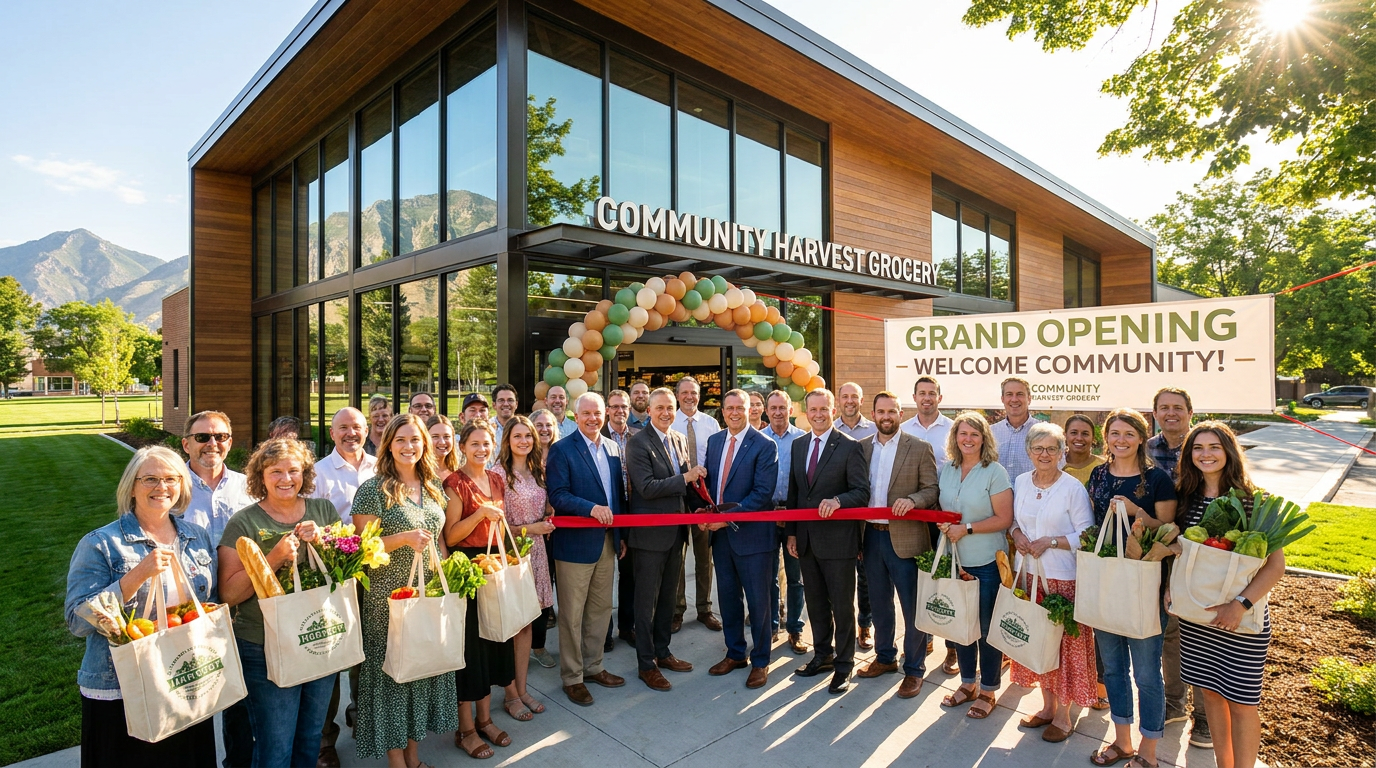
On May 20, 2026, the line to get inside the newly minted Wasatch Food Co-op wrapped around the block in Salt Lake City's Liberty Wells neighborhood. For the residents who had spent 15 years organizing, fundraising, and navigating real estate hurdles, the grand opening was more than just a new place to buy groceries. It was the realization of a community-owned food system.[1][2]
The Wasatch opening is not an isolated victory. Across the United States and the United Kingdom, 2026 is emerging as a tipping point for community-owned grocery stores. Driven by frustration over corporate consolidation and the persistence of "food deserts," neighborhoods are increasingly pooling their resources to build, fund, and operate their own supermarkets.[2][7]
The driving force behind this cooperative renaissance is a profound shift in the retail landscape. For decades, large grocery chains have optimized their footprints, often abandoning lower-income urban neighborhoods and isolated rural towns because they do not meet strict corporate profit margins. Rather than waiting for mega-chains to return, residents are taking matters into their own hands.[3][5]
In Del Valle, Texas—a rapidly growing community of 70,000 people just outside Austin—residents have lived without a major supermarket for years. A major regional chain purchased land in the area in 2016 but never broke ground, leaving locals reliant on dollar stores and gas stations for their daily nutritional needs.[3][4]

Tired of waiting, the community formed the Del Valle Food Co-Op. Backed by $500,000 in municipal stimulus funding and relentless grassroots organizing, the cooperative is slated to open a pilot store this fall. The project is explicitly designed to keep profits reinvested locally and to give residents direct democratic control over what goes on their shelves.[3][4]
The movement is equally potent in rural America. In Little Falls, Minnesota, the downtown core lost its last independent grocer years ago, earning the town a federal designation as a low-food-access area. In response, over 800 locals bought shares to fund the Purple Carrot Market, which recently broke ground and is targeting a late 2026 grand opening.[5]
In Little Falls, Minnesota, the downtown core lost its last independent grocer years ago, earning the town a federal designation as a low-food-access area.
The economic ripple effects of these community-owned stores are staggering. According to the National Co+op Grocers' 2025 Impact Report, the average food co-op sources 23% of its inventory from local producers. By contrast, traditional corporate grocery chains source an average of just 2% locally.[6]
This commitment to regional agriculture means that a single cooperative often works with an average of 187 local suppliers and 41 local farms. Instead of revenue being extracted and sent to a distant corporate headquarters, millions of dollars are kept circulating within the immediate regional economy, supporting local jobs and sustainable farming practices.[6]

A parallel explosion in community ownership is unfolding internationally. In the United Kingdom, a 2026 impact report by the advocacy group Plunkett UK revealed that there are now 869 community-owned businesses trading across the country. This represents a massive 67% increase over the past decade, with dozens of new community enterprises opening in the last year alone despite broader economic headwinds.[7]
However, the road to opening a cooperative is notoriously steep. Retail analysts point out that modern food co-ops are no longer the small, volunteer-run buying clubs of the 1970s; they are multi-million dollar operations. Launching a full-scale store today typically requires between $1.5 million and $5 million in upfront capital, necessitating years of complex fundraising and membership drives.[5]
Furthermore, the grocery sector operates on razor-thin margins. Cooperatives face the ongoing challenge of balancing their ethical commitments—such as paying living wages to staff and fair prices to local farmers—with the absolute necessity of keeping shelf prices affordable for low-income shoppers.[5][6]

To bridge this gap, many co-ops have implemented needs-based discount programs and actively accept food assistance benefits. Despite the brutal economics of the industry, the cooperative model is proving remarkably resilient. Last year, sales at food co-ops grew at a rate of 6.2%, more than double the 2.9% growth rate seen by traditional grocery competitors.[6]
For the shoppers filling their carts in Salt Lake City, the appeal goes far beyond the fresh produce. By paying a one-time equity fee to become member-owners, they have secured a permanent voice in their neighborhood's future. As corporate retail continues to consolidate, these communities have proven that the most reliable way to ensure access to quality food is to own the store themselves.[1][2]
How we got here
2009
Grassroots organizing begins for the Wasatch Food Co-op in Salt Lake City.
2016
A major regional chain purchases land in Del Valle, Texas, but never builds, leaving the area a food desert.
2021
Austin City Council allocates $500,000 in stimulus funds to help launch the Del Valle Food Co-Op.
2025
Co-op grocery sales growth hits 6.2%, more than doubling the growth rate of traditional supermarket chains.
May 2026
Wasatch Food Co-op officially opens its doors, marking a major milestone for the modern cooperative movement.
Viewpoints in depth
Community Organizers
Advocates argue that cooperative ownership is the only reliable way to ensure food security in marginalized areas.
For community leaders in places like Del Valle and Little Falls, the cooperative model is a direct response to market failure. They argue that waiting for corporate grocery chains to deem their neighborhoods 'profitable enough' is a losing strategy that perpetuates food deserts. By pooling local capital and securing municipal grants, organizers believe they are not just opening stores, but reclaiming autonomy over their local food systems and ensuring that basic nutritional needs are no longer subject to distant corporate boardrooms.
Local Farmers & Producers
Regional agricultural suppliers view co-ops as vital economic lifelines that offer fair margins.
Small-scale farmers and regional food producers often find themselves squeezed out of traditional supermarket supply chains, which demand massive scale and razor-thin wholesale pricing. Co-ops, which source an average of 23% of their goods locally, provide a reliable, high-volume market that pays fair prices. Producers argue that this localized supply chain creates a powerful multiplier effect, keeping agricultural dollars circulating within the community and supporting sustainable farming practices that mega-chains ignore.
Retail Analysts
Industry experts caution that the grocery business remains brutally difficult, even for mission-driven co-ops.
While analysts acknowledge the impressive 6.2% sales growth of the cooperative sector, they warn that the barrier to entry has never been higher. Opening a modern, full-service grocery store requires millions of dollars in upfront capital, sophisticated logistics, and expert management. Analysts point out that co-ops must constantly walk a tightrope: paying premium wages and fair farmer prices while simultaneously keeping shelf prices low enough to serve the low-income shoppers who need the store the most.
What we don't know
- Whether newly launched co-ops in lower-income areas can maintain long-term financial sustainability given the tight margins of the grocery industry.
- How traditional corporate grocery chains will respond if the cooperative model begins capturing a larger share of the regional market.
Key terms
- Food Desert
- A geographic area where residents have few to no convenient options for securing affordable and healthy foods, especially fresh produce.
- Food Co-op
- A grocery store owned and democratically governed by the people who shop there, rather than by outside investors or a corporate board.
- Member-Owner
- An individual who purchases an equity share in a cooperative, granting them voting rights and a share of any potential profits.
Frequently asked
Do I have to be a member to shop at a food co-op?
No. While members own the store and receive special discounts or dividends, almost all modern food co-ops are open to the general public.
Why are so many co-ops opening now?
Many communities are frustrated by corporate grocery chains closing underperforming stores or refusing to build in lower-income areas, prompting residents to pool resources and open their own.
Are groceries more expensive at a co-op?
Prices can vary. While co-ops prioritize paying fair wages and supporting local farmers—which can raise costs—many offer needs-based discounts and accept SNAP benefits to ensure affordability.
Sources
Source coverage
7 outlets
3 viewpoints surfaced







[1]KUERCommunity Organizers
Salt Lake City's long-awaited food co-op is finally open
Read on KUER →[2]AxiosLocal Producers
Salt Lake City's first co-op grocery store to open at Milk Block
Read on Axios →[3]Austin CurrentCommunity Organizers
Del Valle co-op pushes to open long-awaited grocery store this fall
Read on Austin Current →[4]KVUECommunity Organizers
Del Valle residents start community-run food co-op
Read on KVUE →[5]MPR NewsLocal Producers
Little Falls community rallies to open Purple Carrot Market
Read on MPR News →[6]FoodNavigator-USARetail Analysts
Traditional grocers could learn a thing or two from food co-ops
Read on FoodNavigator-USA →[7]Plunkett UKRetail Analysts
2026 Impact Report: Community ownership continues to gather momentum
Read on Plunkett UK →
Every angle. Every day.
Get community stories with full source coverage and perspective breakdowns delivered to your inbox.