
Buying New Construction vs. an Existing Home in 2026: A Financial and Lifestyle Comparison
With the price gap between new builds and existing homes narrowing to historic lows, buyers are weighing builder incentives and energy efficiency against the established neighborhoods and faster timelines of resale properties.
By Factlen Editorial Team
- New Construction Advocates
- Focuses on energy efficiency, warranties, and builder incentives as the smartest financial play.
- Resale Market Proponents
- Values established neighborhoods, faster timelines, and the character of existing homes.
- Pragmatic Buyers
- Weighs the immediate cost of entry against long-term maintenance, prioritizing whatever fits their immediate budget.
What's not represented
- · Environmental advocates concerned about the ecological impact of continuous suburban sprawl.
- · Local municipal governments managing the infrastructure strain of new exurban developments.
Why this matters
For buyers navigating the 2026 housing market, the traditional assumption that older homes are always cheaper no longer holds true across the board. Understanding the hidden costs, builder incentives, and long-term equity implications of both paths is essential to making a sound financial decision.
Key points
- The price gap between new and existing homes has narrowed significantly in 2026, with some metrics showing parity.
- Builders are offering aggressive incentives, including rate buydowns, to attract buyers.
- Existing homes offer faster move-in times and established, walkable neighborhoods.
- New construction provides long-term savings through energy efficiency and builder warranties.
- Nearly 80% of new construction is concentrated in suburban and exurban areas.
- The best choice depends heavily on a buyer's timeline, location preferences, and risk tolerance for repairs.
The long-held real estate rule that buying a brand-new house is a luxury upgrade compared to purchasing an older home has been upended. In the first half of 2026, the financial calculus between new construction and existing homes has narrowed dramatically. According to data from the National Association of Home Builders, the median price for a new single-family home in the first quarter actually dipped slightly below the median price of an existing home in certain unadjusted metrics, marking a historic shift in the market. While other indices still show a premium for new builds, the gap is undeniably shrinking. This convergence is forcing prospective buyers to rethink their strategies, weighing the immediate conveniences of established neighborhoods against the long-term financial predictability of a brand-new property.[2]
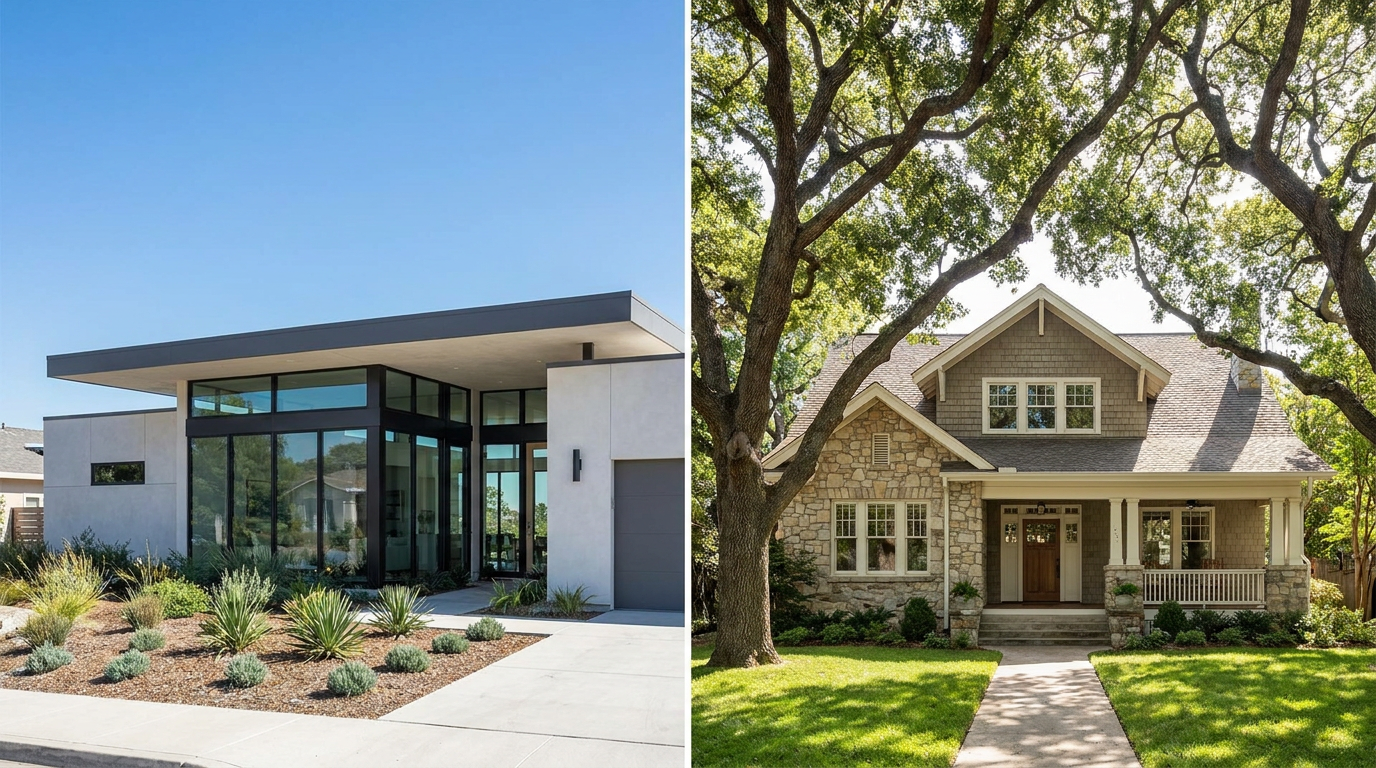
The argument for new construction centers heavily on financial predictability and builder incentives. As the existing home market remains gridlocked by owners reluctant to give up their pandemic-era low mortgage rates, builders have stepped in to capture demand. To move inventory, production builders in 2026 are frequently offering aggressive concessions, including mortgage rate buydowns, covered closing costs, and upgraded appliance packages. These incentives can significantly lower a buyer's monthly payment, making a slightly higher purchase price more affordable on a cash-flow basis. Furthermore, new homes come with builder warranties and modern, energy-efficient systems that drastically reduce utility bills and eliminate the threat of sudden, catastrophic repair costs in the first decade of ownership.[4][6]
The argument against new construction involves location compromises and timeline risks. Evidence from Realtor.com's 2026 market analysis reveals that nearly 80 percent of new builds are located in suburban or exurban ZIP codes. Buyers seeking walkable urban centers, mature tree canopies, or specific established school districts will find new construction options exceedingly rare and prohibitively expensive. Additionally, purchasing a home that is not yet completed introduces timeline uncertainty. Supply chain hiccups, labor shortages, and permitting delays can push move-in dates back by months, creating logistical headaches for buyers who need to coordinate the sale of their current residence or the end of a lease.[1][4]

Turning to existing homes, the argument for this path is anchored in location, character, and immediate availability. Resale homes dominate the inventory in established urban and inner-suburban rings, offering shorter commutes and proximity to developed civic infrastructure. Buyers of existing homes can close and move in within thirty to sixty days, providing a concrete timeline that new construction rarely guarantees. Furthermore, older homes often feature unique architectural details, larger lot sizes, and mature landscaping that cannot be replicated in a newly graded subdivision. For buyers who prioritize neighborhood culture and immediate occupancy, the resale market remains the primary avenue.[1][5]
The argument against existing homes focuses on hidden maintenance costs and fierce competition. The Harvard Joint Center for Housing Studies notes that the existing home market remains highly constrained in 2026, meaning buyers often face bidding wars for well-maintained properties in desirable areas. Once the keys are handed over, the financial risks shift entirely to the buyer. An older home may require immediate capital expenditures for an aging roof, an outdated HVAC system, or plumbing that no longer meets modern standards. When these deferred maintenance costs are factored into the total cost of ownership over a five-to-ten-year horizon, the initial price advantage of an existing home can quickly evaporate.[3][6]
The argument against existing homes focuses on hidden maintenance costs and fierce competition.
Financing structures also represent a crucial point of comparison. Purchasing an existing home involves a straightforward traditional mortgage process, allowing buyers to lock in a rate and close quickly. Financing a custom new build, however, often requires a construction-to-permanent loan, which involves multiple closing phases, variable interest rates during the building period, and a more complex underwriting process. However, buyers purchasing a completed spec home directly from a production builder can bypass this complexity, often using the builder's in-house lender to secure below-market interest rates that are currently unavailable on the open resale market.[6]

Another quantifiable difference lies in energy efficiency and climate resilience. Homes built in 2026 are subject to stringent modern building codes, featuring advanced insulation, high-efficiency windows, and smart-home climate control systems that drastically reduce monthly utility bills. In states prone to extreme weather, new construction often incorporates updated wind-resistance standards and elevated foundations, which can translate to significantly lower homeowner's insurance premiums. For an existing home, retrofitting these energy and safety features can cost tens of thousands of dollars, a hidden expense that buyers must weigh against the lower initial purchase price.[4]
The evidence comparing the two paths reveals a highly segmented reality. Nationally, new construction accounts for roughly 15 percent of all home sales in 2026, but this figure spikes dramatically in Sun Belt markets where land is plentiful. In cities like Raleigh and McAllen, new builds make up a massive share of the market, driving prices down through competition. Conversely, in the Northeast and coastal West, strict zoning and land scarcity mean new construction carries a steep premium, sometimes exceeding $300,000 over existing homes. Buyers must analyze their specific local market rather than relying on national averages, as the geographic variance in 2026 is wider than in previous decades.[2][5]

Ultimately, the decision requires matching the property type to the buyer's specific conditions. New construction fits well when a buyer has a flexible moving timeline, prioritizes predictable monthly costs over the first decade, and wants to leverage builder-sponsored mortgage rate buydowns to achieve a lower monthly payment. It is the optimal choice for those who prefer modern, open floor plans and are willing to commute from suburban or developing exurban neighborhoods. It does not fit well when a buyer needs to relocate immediately, desires a highly walkable urban lifestyle, or wants the architectural charm and mature trees of a historic district.[4][6]
Conversely, purchasing an existing home fits well when a buyer is bound to a strict timeline, requires a specific school district or urban zip code, and has the cash reserves to handle unexpected repairs. It is ideal for those who value the character of older construction and the stability of a neighborhood where the commercial and civic amenities are already fully developed. It does not fit well when a buyer is stretching their budget to the absolute limit just to cover the down payment, leaving no emergency fund for the inevitable maintenance surprises that accompany a decades-old property.[1][3]
How we got here
2021–2022
Supply chain shortages and high demand drive new construction costs to record premiums over existing homes.
2023–2024
Mortgage rates rise, locking existing homeowners in place and severely constraining resale inventory.
2025
Builders pivot to smaller floor plans and offer rate buydowns, beginning to close the price gap with existing homes.
Q1 2026
The median price gap narrows to historic lows, with new construction accounting for 15% of the total housing market.
Viewpoints in depth
Production Builders' View
Emphasizing total cost of ownership and modern conveniences.
Home builders argue that the initial sticker price of a home is a misleading metric. They emphasize that new construction offers a lower 'total cost of ownership' over the first decade, pointing to the elimination of immediate repair costs, significantly lower utility bills due to modern energy codes, and the financial leverage of builder-subsidized mortgage rate buydowns. From their perspective, buying an older home is inheriting someone else's deferred maintenance.
Urban Planners & Preservationists
Valuing established infrastructure and community integration.
Advocates for existing neighborhoods argue that new construction often contributes to suburban sprawl, requiring long commutes that negate any energy savings from the home itself. They emphasize the value of mature tree canopies, walkable access to established civic amenities, and the architectural diversity found in older districts. To this camp, the premium paid for a home in a developed neighborhood is an investment in community and quality of life, not just a real estate transaction.
First-Time Homebuyers
Balancing upfront affordability with long-term stability.
For buyers entering the market, the perspective is purely pragmatic. While many desire the charm of an older home, the reality of bidding wars and the fear of a catastrophic repair bill (like a $15,000 roof replacement) pushes them toward new construction. However, they are often frustrated by the lack of entry-level new builds in urban areas, forcing a difficult compromise between the location they want and the financial predictability they need.
What we don't know
- Whether builders will continue to offer aggressive mortgage rate buydowns if the Federal Reserve adjusts baseline interest rates later in the year.
- How the long-term appreciation of 2026 exurban new builds will compare to existing homes in urban cores over the next decade.
Key terms
- Rate Buydown
- A financing incentive where a builder or seller pays a lump sum upfront to lower the buyer's mortgage interest rate for the first few years or the life of the loan.
- Spec Home
- A new home built by a developer before a specific buyer is found, designed to appeal to a wide range of tastes and available for relatively quick move-in.
- Total Cost of Ownership
- A financial metric that includes not just the purchase price, but also ongoing maintenance, utility costs, insurance, and taxes over a set period.
- Construction-to-Permanent Loan
- A specialized mortgage used to finance the building of a custom home, which later converts into a standard mortgage once construction is complete.
Frequently asked
Is it cheaper to build or buy a home in 2026?
While existing homes often have a lower upfront purchase price, new construction can be cheaper over the first decade when factoring in builder rate buydowns, energy savings, and zero immediate repair costs.
How long does it take to build a new home?
Building a custom home typically takes 6 to 12 months, though purchasing a nearly completed 'spec' home from a builder can shorten the timeline to just 30 to 60 days.
Why are existing homes so expensive right now?
Many current homeowners are locked into low pandemic-era mortgage rates and are reluctant to sell, creating a severe inventory shortage that keeps resale prices artificially high.
Do new homes appreciate faster than existing homes?
It depends on the location. Existing homes in established urban areas often appreciate steadily due to land scarcity, while new homes in developing exurbs may see rapid initial appreciation as the neighborhood fills in.
Sources
Source coverage
6 outlets
3 viewpoints surfaced






[1]Realtor.comNew Construction Advocates
Q1 2026 New Construction Report
Read on Realtor.com →[2]National Association of Home BuildersNew Construction Advocates
New vs. Existing Home Prices in Q1 2026
Read on National Association of Home Builders →[3]Harvard Joint Center for Housing StudiesResale Market Proponents
The State of the Nation's Housing 2026
Read on Harvard Joint Center for Housing Studies →[4]ZillowPragmatic Buyers
New Construction vs Existing Homes: The Pros and Cons of Both
Read on Zillow →[5]Clever Real EstateResale Market Proponents
New Homes in the U.S. Are $50,000 More Expensive
Read on Clever Real Estate →[6]OpendoorNew Construction Advocates
Build vs. Buy: The 2026 Market Context
Read on Opendoor →
Every angle. Every day.
Get real estate stories with full source coverage and perspective breakdowns delivered to your inbox.