
Apple Unveils iOS 27: Rebuilt Siri and Practical AI Features Arrive on iPhone
Apple has officially introduced iOS 27, featuring a rebuilt Siri powered by Google Gemini and a suite of practical AI tools integrated directly into everyday apps like Safari and Photos.
By Factlen Editorial Team
- Everyday iPhone Users
- Consumers are focused on how these AI tools reduce friction in daily tasks.
- Privacy Advocates
- Security experts are closely monitoring Apple's hybrid approach to AI processing.
- Industry Analysts
- Market watchers view iOS 27 as a critical redemption arc for Apple's software division.
What's not represented
- · Android Developers
- · Third-Party AI Startups
Why this matters
Instead of forcing users to interact with standalone chatbots, Apple is weaving AI directly into the tools millions use daily—from splitting a dinner bill with the camera to having Safari monitor webpages for restocks. This update fundamentally changes how users will interact with their iPhones, turning generative AI into a frictionless daily utility.
Key points
- Apple unveiled iOS 27 at WWDC 2026, deeply integrating AI into native apps.
- Siri has been rebuilt as a standalone app with cross-device syncing and text-input capabilities.
- Visual Intelligence allows the camera to perform tasks like splitting receipts and scheduling events.
- Safari gains AI tab management and a background monitoring tool for webpage changes.
- The update follows a $250 million settlement over previously delayed AI features.
Apple has finally delivered on its long-promised artificial intelligence overhaul. At the Worldwide Developers Conference (WWDC) 2026, the company unveiled iOS 27, an operating system update that weaves AI deeply into the iPhone's most-used applications.[1][2]
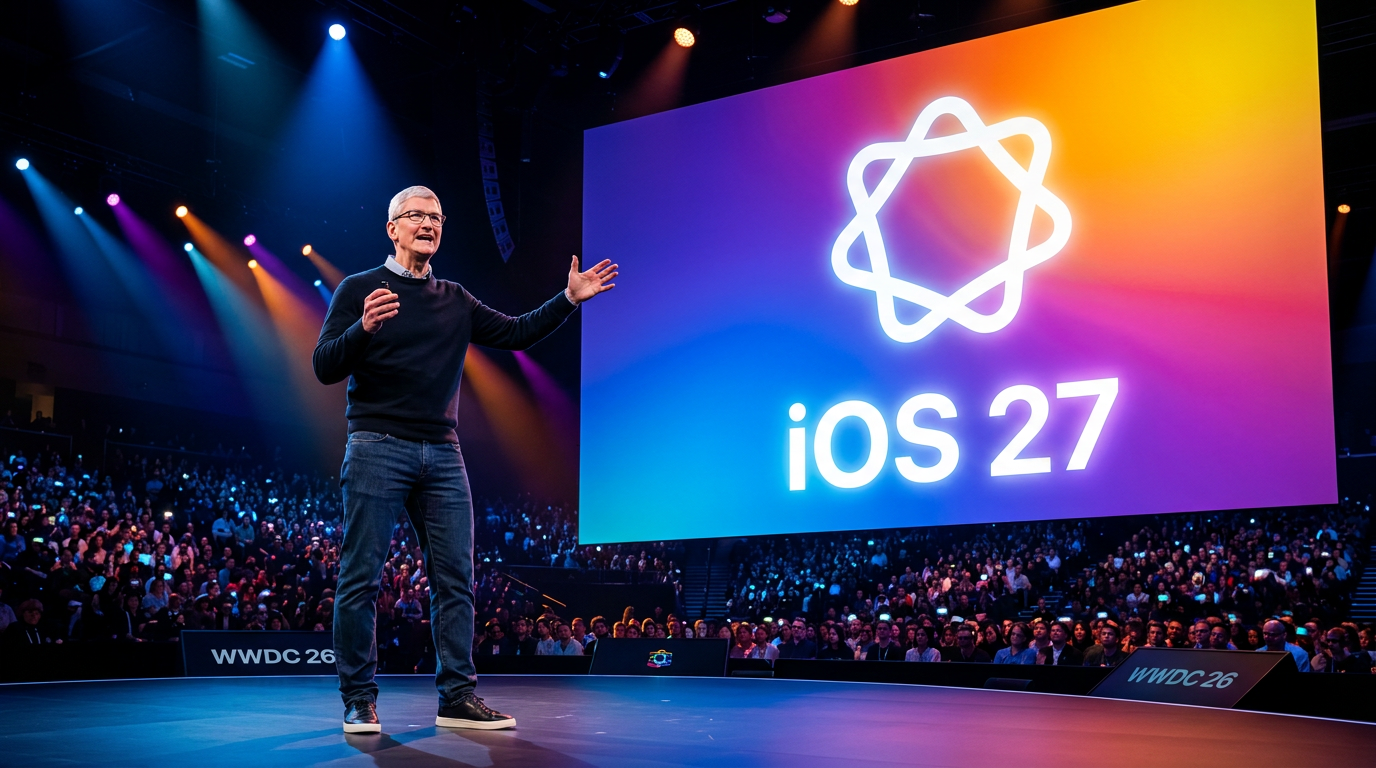
The announcement marked a significant milestone for the tech giant, serving as CEO Tim Cook’s final WWDC keynote before John Ternus assumes the chief executive role on September 1. Cook used the stage to introduce a rebuilt Siri and a suite of practical tools designed to make everyday tasks frictionless.[3][4][6]
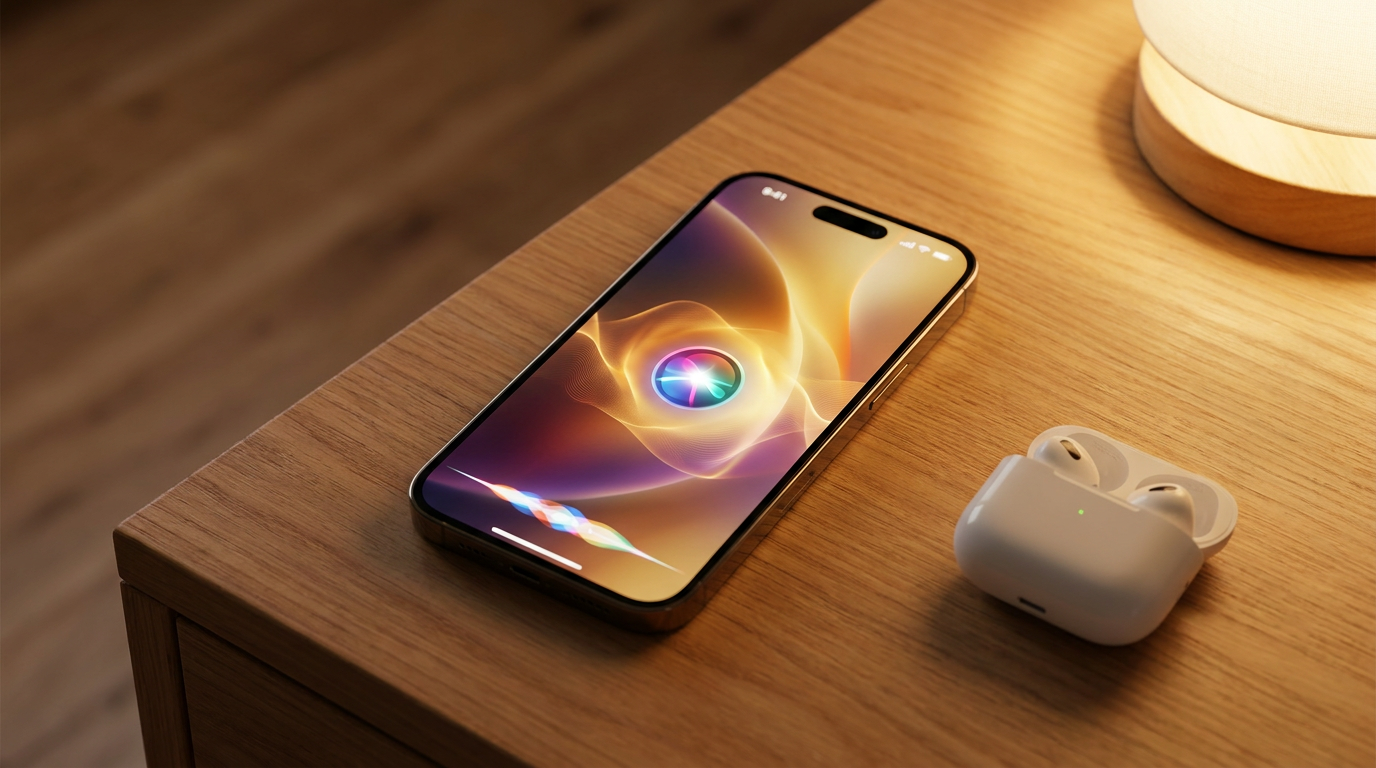
At the center of the update is a completely overhauled Siri, powered by Apple Foundation Models and custom Google Gemini technology. No longer just a voice prompt, Siri now exists as a standalone app with a persistent conversation history that syncs seamlessly across the iPhone, iPad, Mac, and Vision Pro via iCloud.[2][5][6]

The assistant also features a new "Search or Ask" interface integrated directly into the Dynamic Island, complete with a glowing cursor. It can handle multi-step commands and maintain personal context, allowing users to attach images and documents directly to their requests.[5][6]
Beyond voice commands, Apple is expanding its Visual Intelligence capabilities. The feature is now deeply integrated into the Camera app, allowing the iPhone to understand and act on real-world objects in real time.[1][3]
Beyond voice commands, Apple is expanding its Visual Intelligence capabilities.
In one practical demonstration, Apple showed how a user can point their camera at a restaurant receipt; Siri instantly reads the items, calculates the split, and initiates an Apple Cash transfer to friends. Similarly, pointing the camera at a festival poster allows the AI to parse the lineup and automatically generate calendar events for specific performances.[1][2][5]

The Safari browser is also receiving a major AI infusion. A new "Notify Me" feature allows the browser to monitor specific webpages in the background, alerting users when a product comes back in stock or a price drops. Safari will also use AI to automatically organize chaotic browser tabs based on their underlying topics.[1][2]
For photography enthusiasts, the Photos app retains its familiar layout but introduces a new "Tools" tab. This section houses three primary AI-driven editing features: Clean Up, Expand, and Reframe, which allow users to seamlessly remove unwanted background objects or extend the borders of an image using generative fill.[2][3]
System-wide Writing Tools and the Image Playground have also been revamped with updated algorithms. Users can now invoke Siri to rewrite emails, adjust the tone of a text message to sound more professional, or generate custom images directly within conversation threads.[2][3]

The release of iOS 27 represents a critical redemption arc for Apple's software division. The company previously faced intense scrutiny—and recently settled a $250 million class-action lawsuit—over the delayed rollout of AI features initially promised in 2024.[2][6]
To address ongoing privacy concerns, Apple emphasized its "Private Cloud Compute" architecture. While simple requests are processed locally on the device's silicon, more complex queries are securely routed to dedicated Apple servers without storing user data.[3][5]
Developers are already testing the iOS 27 beta, which also boasts up to 30% faster app launch speeds. As the smartphone industry increasingly pivots from hardware iterations to software intelligence, Apple's latest update signals a clear intent to turn generative AI from a novelty into a daily utility.[1][6]
How we got here
June 2024
Apple first teases its Apple Intelligence features, though many are subsequently delayed.
Early 2026
Apple settles a $250 million class-action lawsuit over the delayed rollout of its initial AI promises.
June 2026
Apple unveils iOS 27 at WWDC, showcasing a rebuilt Siri and deep AI integration across the operating system.
September 2026
John Ternus is scheduled to officially take over as Apple CEO, coinciding with the expected public release of iOS 27.
Viewpoints in depth
Everyday iPhone Users
Consumers are focused on how these AI tools reduce friction in daily tasks.
For the average iPhone owner, the appeal of iOS 27 lies not in complex language models, but in practical utility. Features like pointing a camera at a receipt to instantly split a bill via Apple Cash, or having Safari automatically monitor a webpage for a restock, turn abstract AI concepts into tangible time-savers. This demographic is less concerned with the underlying architecture and more focused on whether Siri can finally execute multi-step commands without failing.
Privacy Advocates
Security experts are closely monitoring Apple's hybrid approach to AI processing.
Apple has long built its brand on user privacy, and the shift toward generative AI presents a unique challenge. Privacy advocates are scrutinizing the 'Private Cloud Compute' system, which routes complex queries to Apple's servers when on-device silicon isn't powerful enough. While Apple guarantees that user data is never stored or used for training, security researchers will be rigorously testing these claims once iOS 27 is released to the public, ensuring the company doesn't compromise its core tenets in the race for AI dominance.
Industry Analysts
Market watchers view iOS 27 as a critical redemption arc for Apple's software division.
Following a $250 million class-action settlement over the delayed rollout of features promised in 2024, analysts see iOS 27 as a necessary leap forward. By partnering with Google to utilize custom Gemini models, Apple is acknowledging that it cannot win the AI arms race entirely in-house. Analysts believe this pragmatic approach, combined with deep system-level integration, positions Apple to finally compete with the likes of OpenAI and Microsoft, turning the iPhone into a true AI-first device ahead of John Ternus taking over as CEO.
What we don't know
- It remains unclear exactly how much of Siri's processing relies on Google's Gemini models versus Apple's in-house Foundation Models.
- The exact public release date for iOS 27 this fall has not been officially confirmed.
- Independent security audits of Apple's Private Cloud Compute architecture have not yet been published.
Key terms
- Apple Intelligence
- Apple's overarching suite of artificial intelligence features integrated directly into its operating systems.
- Private Cloud Compute
- Apple's privacy-focused architecture that routes complex AI requests to secure, dedicated servers without storing user data.
- Visual Intelligence
- An AI feature that uses the device's camera to recognize and interact with real-world objects, text, and environments.
- Dynamic Island
- The pill-shaped interactive area at the top of newer iPhone displays that houses alerts, live activities, and the new Siri interface.
Frequently asked
Which iPhones will support the new iOS 27 AI features?
The features require newer hardware, specifically the iPhone 15 Pro, the iPhone 16 lineup, and subsequent models equipped with advanced neural engines.
Is Siri still a voice-only assistant?
No. Siri is now a standalone app with a persistent, cross-device conversation history and a text-based "Search or Ask" interface built into the Dynamic Island.
Will Apple use my personal data to train its AI?
Apple states that its Private Cloud Compute architecture ensures user data is never stored or used to train its foundational models, even when requests are processed on external servers.
When will iOS 27 be available to the public?
The operating system is currently in developer beta and is expected to launch publicly in the fall of 2026.
Sources
Source coverage
6 outlets
3 viewpoints surfaced






[1]TechCrunchEveryday iPhone Users
Beyond Siri: Here are the practical AI features coming to your iPhone in iOS 27
Read on TechCrunch →[2]MashableEveryday iPhone Users
At WWDC 2026, Apple relaunched its AI efforts with iOS 27
Read on Mashable →[3]ApplePrivacy Advocates
Apple introduces Siri AI and Apple Intelligence in iOS 27
Read on Apple →[4]BloombergIndustry Analysts
Apple’s New CEO Must Rebuild a Design Team That Lost Its Way
Read on Bloomberg →[5]Breezy.gePrivacy Advocates
The biggest WWDC 2026 announcements: the new Siri AI, Apple Intelligence, iOS 27
Read on Breezy.ge →[6]LushbinaryIndustry Analysts
WWDC 2026 just reset the integration bar for every iOS and macOS app
Read on Lushbinary →

Every angle. Every day.
Get technology stories with full source coverage and perspective breakdowns delivered to your inbox.