
OLED vs. Mini-LED TVs in 2026: The Complete Technology Comparison
As television technology advances in 2026, buyers face a stark choice between the perfect contrast of OLED and the overwhelming brightness of Mini-LED. The right decision depends entirely on room lighting, viewing habits, and budget.
By Factlen Editorial Team
- Home Theater Purists
- Values perfect black levels, pixel-level contrast, and cinematic accuracy above all else.
- Bright-Room Viewers
- Prioritizes peak brightness, glare reduction, and daytime visibility for sports and casual viewing.
- Value & Longevity Buyers
- Focuses on cost-per-inch, zero burn-in risk, and large screen affordability.
What's not represented
- · Micro-LED Early Adopters
- · Projector Enthusiasts
Why this matters
Purchasing a premium television is a multi-year investment that dictates how you experience movies, sports, and gaming. Understanding the physical trade-offs between these two dominant technologies ensures you don't overpay for features that clash with your living room's lighting or your daily viewing habits.
Key points
- OLED panels offer perfect black levels and infinite contrast by turning off individual pixels.
- Mini-LED panels dominate in peak brightness, making them ideal for sun-drenched living rooms.
- OLED provides near-instant response times for competitive gaming, but carries a slight risk of burn-in.
- Mini-LED offers better value for massive screen sizes and zero risk of permanent image retention.
- The ideal choice depends entirely on the room's lighting environment and the viewer's budget.
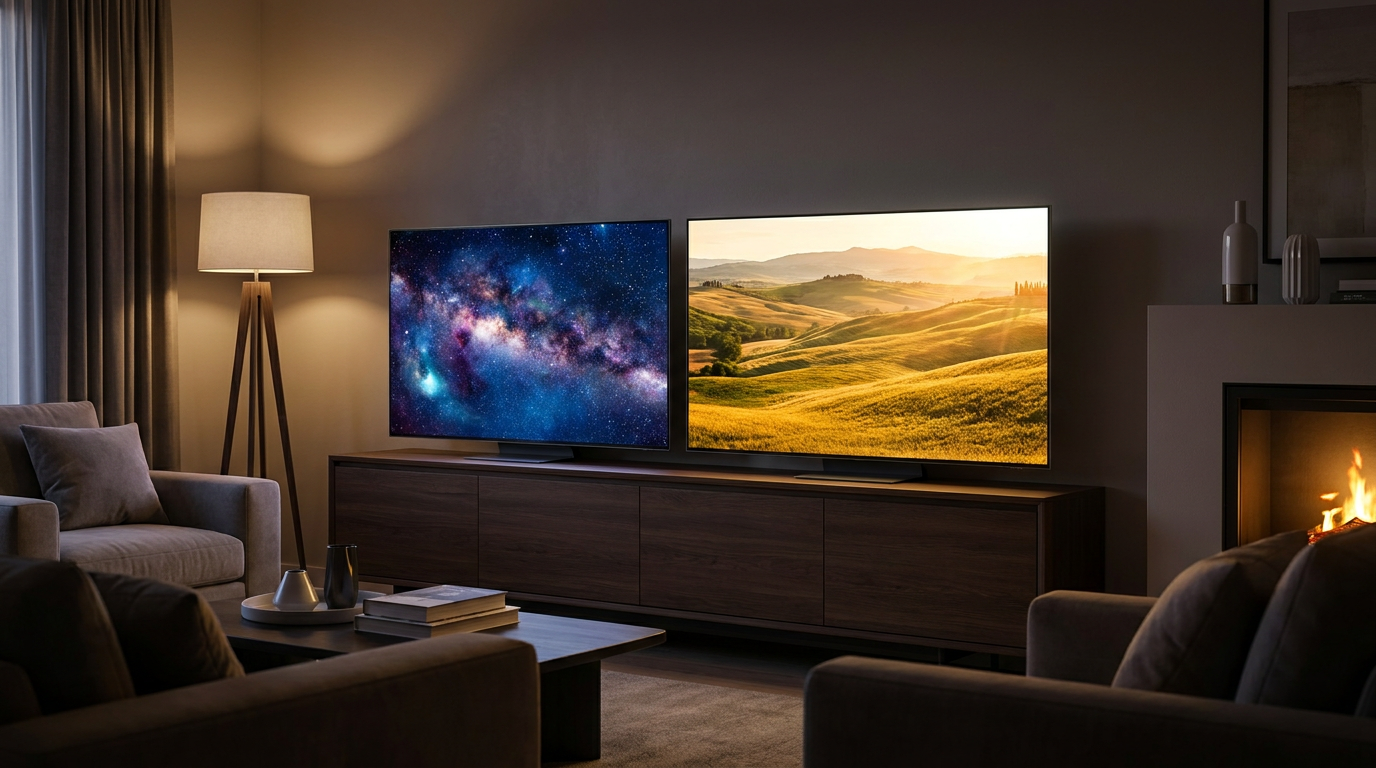
The television market in 2026 has fractured into two distinct engineering philosophies, leaving consumers with a highly nuanced purchasing decision. Rather than simply choosing between basic budget panels and luxury displays, buyers are now caught between two highly advanced frameworks: Organic Light-Emitting Diodes (OLED) and Mini-LED. As manufacturers like Samsung, LG, and Hisense push both technologies to their physical limits, the days of a single, universal "best TV" are over. Instead, the ideal choice depends entirely on the physical environment of the room and the specific visual demands of the viewer.[1][2][4]
To understand the divide, one must look at how each panel generates light. OLED relies on carbon-based organic molecules that emit their own localized light per pixel. When a pixel needs to display black, the television's processor cuts the voltage to that individual diode down to zero. Conversely, Mini-LED represents the ultimate evolution of traditional liquid crystal displays. It utilizes a matrix of thousands of tiny, inorganic blue gallium-nitride diodes that shoot massive amounts of light through a quantum-dot enhancement film and a fast-switching liquid crystal layer.[4]
When evaluating peak brightness, the case for Mini-LED is overwhelming. Mid-range and high-end Mini-LED panels in 2026 routinely push past 2,000 nits of peak brightness, with flagship models reaching an astonishing 3,000 nits. The evidence for this advantage is most visible in sun-drenched living rooms, where the sheer optical power of the inorganic backlight matrix cuts through daytime glare effortlessly. Furthermore, Mini-LED panels can sustain this extreme brightness across the entire screen simultaneously, making them uniquely suited for watching brightly lit sports broadcasts or winter documentaries in rooms with unshaded windows.[1][2][7]

The argument against OLED in the brightness category comes down to thermal management. While 2026 innovations like Tandem OLED stacks and Quantum-Dot OLED (QD-OLED) have significantly raised peak highlight brightness to around 1,500 nits, the technology still relies on Automatic Brightness Limiter algorithms. If a scene requires the entire screen to flash bright white—such as a hockey rink or a snow-covered landscape—the television must aggressively dim the overall image to prevent the organic compounds from overheating. This limitation means OLED panels can occasionally look washed out when competing with direct sunlight.[1][5]
However, when the metric shifts to contrast and shadow detail, the case for OLED becomes mathematically absolute. Because OLED panels can turn off individual pixels completely, they emit exactly 0.0000 nits of light in dark areas, resulting in an infinite contrast ratio. The evidence for this superiority is starkest in dark-room viewing environments. When watching a cinematic space scene or a moody thriller, the stars pop with pinpoint accuracy against an inky, pitch-black background, creating a rich, three-dimensional depth that traditional backlights simply cannot replicate.[3][4]
The case against Mini-LED regarding contrast centers on a physical limitation known as blooming. Despite modern panels packing anywhere from 5,000 to 20,000 independent local dimming zones, the liquid crystal matrix cannot perfectly block 100 percent of the light blasting from behind it. When a bright object, like a subtitle or a streetlamp, appears against a dark background, some light inevitably leaks into the surrounding pixels. While 2026 algorithms have minimized this halo effect significantly, it remains a noticeable artifact for home theater purists watching content in completely darkened rooms.[4][6]

The case against Mini-LED regarding contrast centers on a physical limitation known as blooming.
For competitive gaming and motion clarity, the argument for OLED hinges on raw physical speed. OLED pixels boast near-instantaneous response times, typically measured around 0.03 milliseconds. Because the pixels turn completely off and on between frames rather than lingering, fast-paced motion remains razor-sharp. The evidence is clear in high-speed esports or racing simulators, where OLED panels eliminate the motion blur and smearing that can obscure fine details during rapid camera pans, providing a tangible competitive advantage.[5][6]
The case against Mini-LED in the gaming arena involves the inherent sluggishness of liquid crystals. Even on panels boasting 144Hz or 240Hz refresh rates, the physical transition of the liquid crystal layer takes time. This delay can result in slight ghosting or smearing behind fast-moving objects. Additionally, when Mini-LED televisions engage their complex local dimming algorithms in "Game Mode" to reduce input lag, they often sacrifice backlight precision, leading to increased blooming and a slightly washed-out image during dark gaming sequences.[6]
When assessing long-term durability, the case for Mini-LED is rooted in its inorganic construction. Gallium-nitride diodes do not degrade unevenly when exposed to static images over long periods. The evidence for this reliability makes Mini-LED the undisputed choice for users who leave their televisions tuned to news networks with static lower-thirds, or for PC users who rely on the screen as a massive desktop monitor with fixed taskbars. Buyers can operate a Mini-LED panel at maximum brightness all day without any anxiety about permanent image retention.[3][7]
The argument against OLED regarding longevity remains tied to the physical reality of organic degradation. While 2026 models feature advanced pixel-shifting algorithms, active thermal heatsinks, and real-time logo dimming, the risk of permanent burn-in is never truly zero. If an OLED panel is subjected to thousands of hours of the same static user interface or sports ticker, the organic compounds in those specific pixels will eventually wear out faster than the rest of the screen, leaving a faint, permanent ghost image behind.[3][4]

Finally, the case for Mini-LED in terms of value and sizing is driven by manufacturing economics. Producing massive liquid crystal displays is a mature, highly optimized process. Consequently, consumers can purchase 75-inch or even 85-inch Mini-LED televisions for a fraction of the cost of a comparably sized OLED. The evidence is clear on retail shelves, where a high-performance 75-inch Mini-LED often costs less than a 55-inch premium OLED, allowing buyers to prioritize sheer screen real estate and immersive scale without breaking their budget.[2][7]
The case against OLED in the value category is its exponential price scaling. While 42-inch and 55-inch OLED models have become relatively accessible, the manufacturing yields for massive organic panels remain challenging. Moving up to a 77-inch, 83-inch, or 97-inch OLED requires a massive financial premium. For buyers looking to fill a large living room wall, the cost-per-inch ratio of OLED becomes difficult to justify unless they possess a virtually unlimited home theater budget.[6][7]

Ultimately, OLED fits well when the installation environment is a light-controlled home theater, a bedroom, or a dedicated gaming space. It is the definitive choice for cinematic purists who demand perfect black levels, zero blooming, and mathematically infinite contrast. It also fits perfectly for competitive gamers who require the absolute fastest pixel response times and pristine motion clarity, provided they are willing to manage the ambient light in their room and accept a higher price tag for larger screen sizes.[1][4][5]
Conversely, Mini-LED fits well when the television sits in a bright, sun-drenched living room where daytime viewing is the norm. It is the superior choice for households that watch a diverse mix of sports, news, and varied content all day, offering total peace of mind against burn-in. It also fits perfectly for budget-conscious buyers who want to maximize their screen size and HDR impact, proving that the inorganic backlight matrix remains a powerhouse of versatility and raw optical performance.[2][3][7]
How we got here
2013
The first large-screen OLED televisions hit the consumer market, introducing perfect black levels.
2019
TCL launches the first commercial Mini-LED television, utilizing thousands of tiny diodes for better backlight control.
2022
Quantum-Dot OLED (QD-OLED) panels debut, combining OLED's perfect contrast with quantum dot color purity.
2026
Tandem OLED stacks and 20,000-zone Mini-LED panels push both technologies to new extremes of brightness and precision.
Viewpoints in depth
Home Theater Purists
Focuses on perfect black levels, pixel-level contrast, and cinematic accuracy.
For cinematic purists, the conversation begins and ends with contrast. Because OLED's self-emissive pixels can shut off completely, they preserve absolute shadow detail without any blooming or halo effects. This community argues that the mathematical perfection of 0.0000 nits creates a three-dimensional depth that no backlight matrix, regardless of its zone count, can ever truly replicate in a dark room.
Bright-Room Viewers
Prioritizes peak brightness, glare reduction, and daytime visibility for sports and casual viewing.
This perspective prioritizes real-world living conditions over pitch-black home theaters. Bright-room viewers argue that a television must be able to overpower afternoon sunlight and unshaded windows. By pushing 2,000 to 3,000 nits of sustained brightness, Mini-LED ensures that HDR highlights pop and sports broadcasts remain vibrant, completely eliminating the washed-out look that OLEDs can suffer from when their Automatic Brightness Limiters engage.
Value & Longevity Buyers
Focuses on cost-per-inch, zero burn-in risk, and large screen affordability.
For budget-conscious buyers and those seeking massive displays, the economics of LCD manufacturing make Mini-LED the clear winner. This camp highlights that consumers can secure a 75-inch or 85-inch Mini-LED for a fraction of the cost of a comparably sized OLED. Furthermore, the inorganic nature of the diodes provides total peace of mind against burn-in, making it the safest long-term investment for households that leave the news or static game menus on all day.
What we don't know
- How quickly next-generation Micro-LED technology will become affordable enough to replace both OLED and Mini-LED.
- Whether future iterations of organic materials can completely eliminate the need for Automatic Brightness Limiters (ABL).
Key terms
- Nits
- A measurement of visible light intensity used to quantify a screen's peak brightness.
- Blooming
- A visual artifact where light bleeds from a bright object into surrounding dark pixels, creating a halo effect.
- ABL (Automatic Brightness Limiter)
- A safety feature in OLED TVs that dims the entire screen during bright scenes to prevent overheating.
- Quantum Dots
- Microscopic nanocrystals that emit specific, highly pure colors when struck by light, expanding a TV's color gamut.
- Local Dimming Zones
- Specific clusters of backlights in a Mini-LED TV that can turn off independently to improve contrast.
Frequently asked
Is burn-in still a problem for OLED TVs in 2026?
While significantly reduced by pixel-shifting algorithms and thermal heatsinks, organic degradation remains a physical reality. OLEDs can still experience burn-in if subjected to thousands of hours of static images.
Which TV technology is better for a bright living room?
Mini-LED is the superior choice for bright rooms. Its inorganic backlight matrix can sustain massive brightness levels—often exceeding 2,000 nits—cutting through daytime glare without dimming.
Do I need an OLED for competitive gaming?
While Mini-LEDs offer excellent high-refresh-rate gaming, OLED is preferred by competitive players due to its near-instantaneous 0.03ms pixel response time, which eliminates motion blur.
Why are Mini-LED TVs cheaper in larger sizes?
Manufacturing massive liquid crystal displays is a mature, highly optimized process. Scaling organic OLED panels to 75 inches or larger remains complex and expensive, resulting in an exponential price premium.
Sources
Source coverage
7 outlets
3 viewpoints surfaced







[1]RTINGSHome Theater Purists
The Best TVs For Bright Rooms - Spring 2026
Read on RTINGS →[2]CNETBright-Room Viewers
The Biggest, Brightest, and Best TVs of 2026
Read on CNET →[3]Tom's GuideValue & Longevity Buyers
OLED vs Mini-LED: Which TV tech is right for you?
Read on Tom's Guide →[4]TechStoryHome Theater Purists
A Deep Structural Analysis of OLED vs Mini LED Display Technology
Read on TechStory →[5]Data Wire SolutionsBright-Room Viewers
Best TVs for 2026: 10 OLED and Mini-LED Picks by Room, Brightness, and Install Reality
Read on Data Wire Solutions →[6]EcoPicksGoValue & Longevity Buyers
LG G5 OLED vs LG QNED9M Mini LED Comparison (2026 Buyer's Guide)
Read on EcoPicksGo →[7]BGRValue & Longevity Buyers
Mini LED vs OLED: Which TV should you buy?
Read on BGR →
More in shopping
See all 6 stories →E-Bike Tech
The 2026 E-Bike Buying Guide: Motors, Classes, and the Safety Specs You Can't Ignore
7 sources

EV Tech
The 2026 Electric Motorcycle Buyer's Guide: Range, Charging, and the Solid-State Shift
7 sources

Summer Sales
Amazon Shifts Prime Day to June, Triggering Massive Summer Retail Showdown
6 sources
Sleep Tech
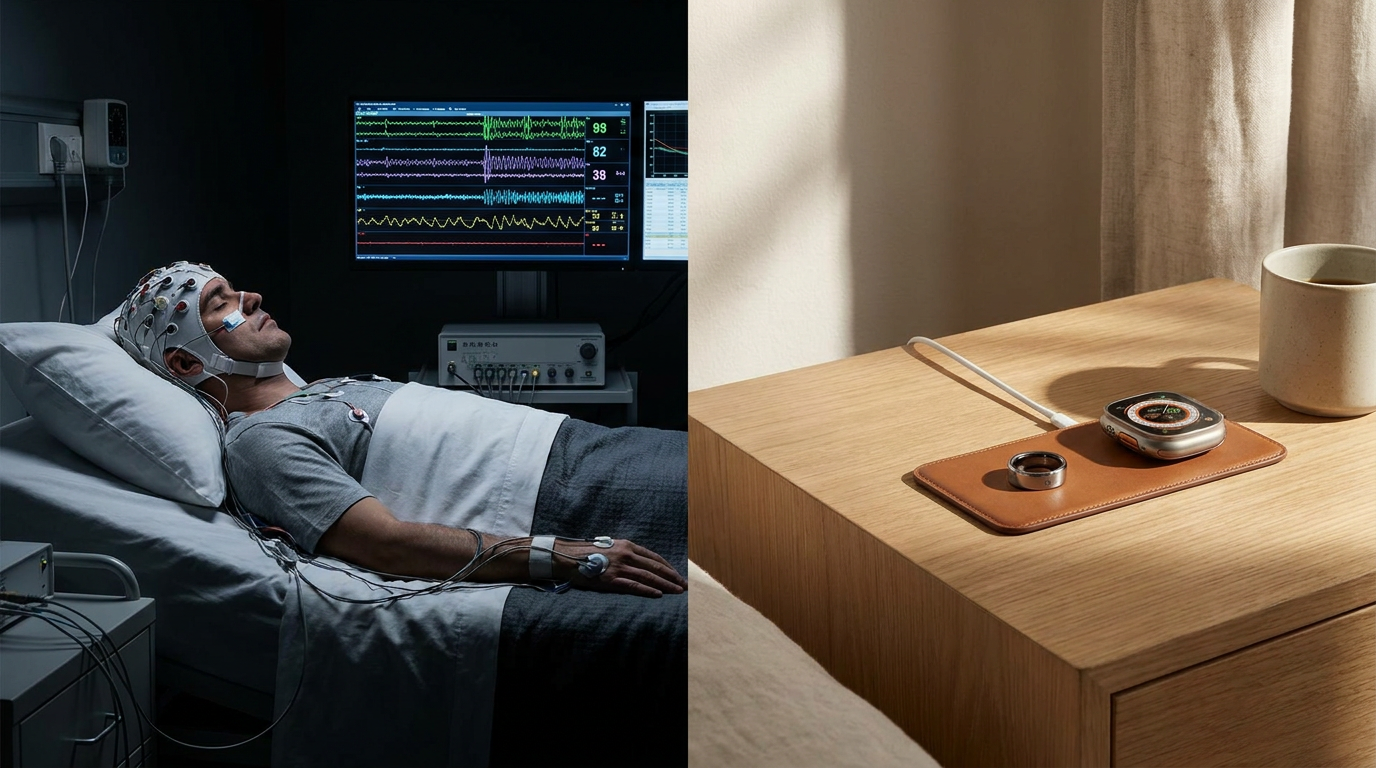
How Accurate Is Your Sleep Tracker? A Review of the Clinical Evidence
6 sources
Every angle. Every day.
Get shopping stories with full source coverage and perspective breakdowns delivered to your inbox.