
How Vacant Big-Box Stores Are Becoming Hubs for the Creator Economy
A $24,000 investment to turn an empty Joann store into an interactive craft festival highlights a growing national trend of adaptive retail reuse.
By Factlen Editorial Team
- Experiential Retailers
- Argue that the future of brick-and-mortar relies on offering interactive, community-driven experiences rather than just passive shopping.
- Commercial Real Estate
- Focus on adaptive reuse as a vital strategy to fill massive big-box vacancies and drive secondary foot traffic to shopping centers.
- Independent Creators
- Value physical pop-up spaces as a necessary evolution from digital-only sales, allowing them to build deeper audience loyalty.
What's not represented
- · Former employees of bankrupt big-box retailers
- · Local municipal zoning and permitting officials
Why this matters
As traditional retail chains collapse, the adaptive reuse of empty storefronts offers a sustainable physical footprint for independent creators, revitalizing local economies and shifting consumer habits from passive buying to active participation.
Key points
- An events producer invested $24,000 to turn a vacant California Joann store into an interactive craft festival.
- The event highlights a shift toward 'experiential retail,' where consumers pay to participate in workshops rather than just buy goods.
- The closure of over 500 Joann stores has left massive commercial vacancies, prompting developers to embrace adaptive reuse.
- Physical pop-ups offer digital creators a vital way to build real-world community and diversify their income streams.
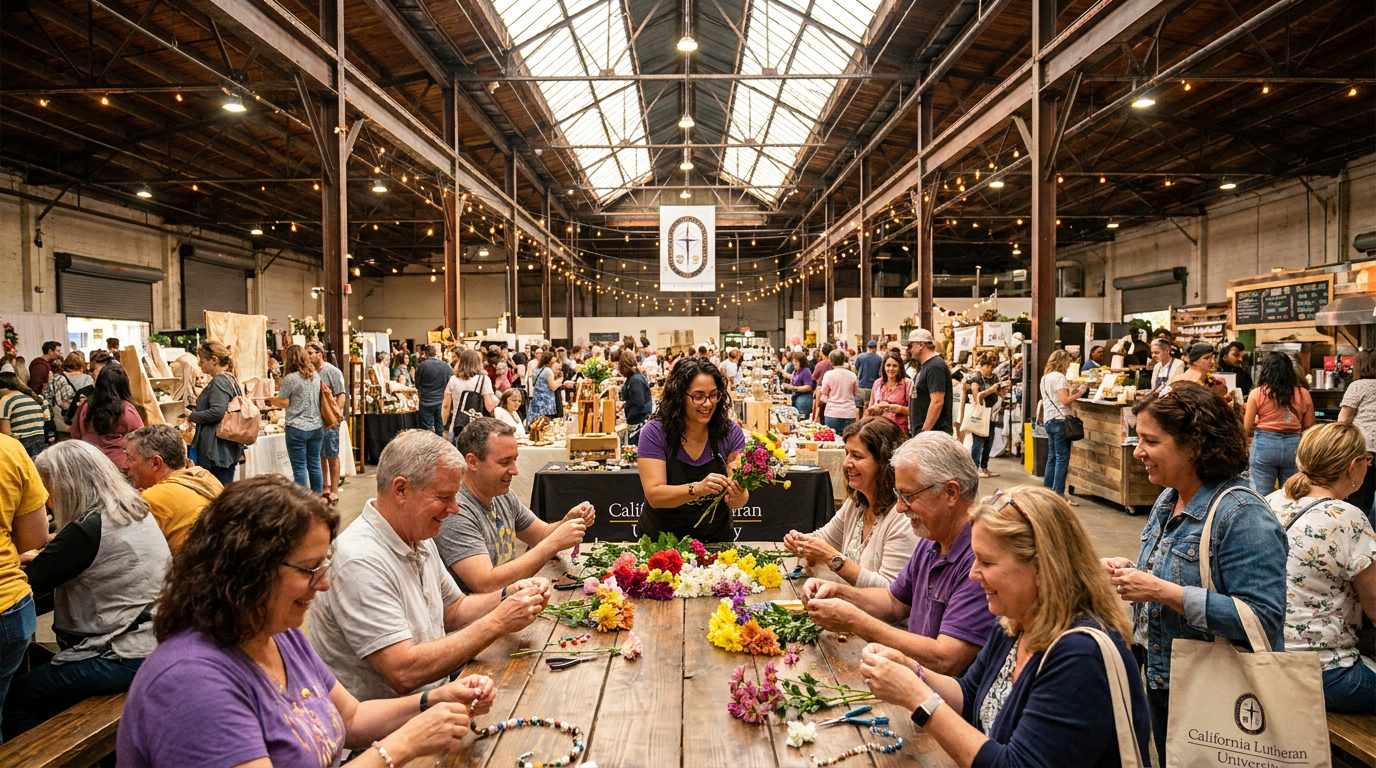
In the Del Amo Fashion Center in Torrance, California, a sprawling retail space that once housed a Joann fabric and craft store has been given a vibrant second life. Lauren Tetef, a 40-year-old veteran events producer, poured $24,000 of her own savings into transforming the vacant big-box shell into the "Open House Creative Fest." Rather than a traditional retail environment, the space has been reimagined as a bustling hub where independent artisans and consumers interact directly.[1]
The concept represents a sharp departure from standard flea markets or craft fairs. "This is my dream come true," Tetef explained, noting her desire to build an environment where attendees actively participate rather than just browse. At Open House, visitors do not just walk past tables of finished goods; they sit down with the makers to learn the process, participating in guided workshops that range from floral arranging to charm making.[1]
Tetef’s localized success story highlights a much larger structural shift currently reshaping the American commercial landscape. Over the past few years, traditional brick-and-mortar craft retailers have faced severe headwinds. Joann, a legacy brand that supplied hobbyists for decades, filed for Chapter 11 bankruptcy protection twice between early 2024 and early 2025.[2]
Those financial struggles culminated in the announcement that Joann would shutter roughly 500 of its 800 locations nationwide, leaving massive commercial vacancies in strip malls and shopping centers across the country. For commercial real estate developers, these sudden, large-scale vacancies present a daunting challenge, as traditional anchor tenants are increasingly difficult to secure in an era dominated by e-commerce.[2]

Enter the concept of "adaptive reuse" and the pop-up economy. Rather than letting prime retail real estate sit empty and deteriorate, property owners are increasingly turning to temporary activations to generate foot traffic and cash flow. Pop-up shops and experiential events breathe life into dormant spaces, transforming forgotten corners into vibrant community hubs while allowing emerging brands to test physical retail without the crushing liability of a long-term lease.[5]
Enter the concept of "adaptive reuse" and the pop-up economy.
This real estate pivot perfectly intersects with the explosive growth of the "creator economy." Historically, independent artists, makers, and digital creators relied heavily on online platforms—from Etsy to TikTok and Patreon—to monetize their skills. Today, the creator economy is a massive economic engine, estimated to be worth well over $100 billion globally, encompassing millions of individuals who have bypassed traditional corporate gatekeepers to build their own audiences.[4]
However, the digital-only model has its limits. As online customer acquisition costs soar and social media algorithms become increasingly unpredictable, creators are recognizing the urgent need to forge physical, real-world connections with their communities. A physical presence allows makers to demonstrate their expertise, build deeper brand loyalty, and cut through the digital noise.[6]
Tetef’s Open House model provides a blueprint for how this physical transition can work sustainably. The festival employs a hybrid revenue model: general admission for shopping is free, but attendees can purchase a "creative passport" for $40 to $50. This passport grants access to the various interactive workshops and a free-creation zone stocked with materials, effectively monetizing the experience of making rather than just the final product.[1]

This shift from transaction to interaction is the defining characteristic of "experiential retail." Modern consumers, particularly younger demographics, increasingly prioritize memorable experiences over the simple acquisition of goods. By embedding the purchase of a handmade item within a hands-on educational workshop, creators significantly increase the perceived value of their work and foster a lasting emotional bond with the buyer.[6]
The economic ripple effects of these creative gatherings are substantial. The broader nonprofit arts and culture sector alone generates an estimated $151.7 billion in economic activity annually in the United States. This includes billions in direct spending by organizations and event-related expenditures by audiences, supporting millions of jobs and revitalizing local neighborhoods.[3]
When a vacant storefront is activated by a creative festival, the benefits spill over to the surrounding ecosystem. The influx of hundreds of engaged, lingering visitors drives secondary foot traffic to neighboring restaurants, cafes, and traditional retailers within the same shopping center. It transforms a distressed property from a community liability into an economic catalyst.[5]

Ultimately, the transformation of a bankrupt Joann store into a thriving, interactive creator festival is more than just a clever use of empty space. It signals a fundamental realignment in how communities value retail. As the digital and physical worlds continue to merge, the future of the American storefront may look less like a warehouse of mass-produced goods and more like a classroom, a studio, and a gathering place.[6]
How we got here
2021–2022
The creator economy surges during the pandemic, reaching an estimated $100 billion in global value as millions monetize digital content.
March 2024
Legacy craft retailer Joann files for Chapter 11 bankruptcy for the first time, struggling with debt and waning post-pandemic demand.
January 2025
Joann files for bankruptcy a second time, announcing the closure of roughly 500 stores nationwide and leaving massive retail vacancies.
June 2026
Lauren Tetef launches the Open House Creative Fest in a vacant Torrance, California Joann store, signaling a new model for retail reuse.
Viewpoints in depth
Experiential Retailers
The shift from transaction to interaction is the only way to beat e-commerce.
For experiential event producers, the traditional retail model is fundamentally broken because it tries to compete with the internet on convenience and price—a losing battle. Instead, they argue that physical spaces must offer what the internet cannot: tactile learning, human connection, and a sense of community. By charging for 'passports' to participate in workshops, these organizers monetize the time and experience of the consumer, turning the creation of the product into the primary draw.
Commercial Real Estate Developers
Adaptive reuse is a necessary survival tactic for distressed properties.
Property owners and developers view the collapse of legacy anchor tenants like Joann and Bed Bath & Beyond as a crisis that requires immediate, flexible solutions. Rather than holding out for another massive corporate lease, forward-thinking developers are embracing pop-ups and multi-tenant creative festivals. These temporary activations not only generate immediate cash flow but also act as a proof-of-concept for the neighborhood, driving foot traffic that benefits adjacent restaurants and smaller permanent retailers.
Independent Creators
Physical spaces are the next frontier for the digital creator economy.
While platforms like Etsy, TikTok, and Patreon democratized the ability to sell art and build an audience, creators are increasingly frustrated by rising digital acquisition costs and opaque algorithms. For these independent makers, physical pop-ups are a strategic move to diversify their income. Meeting customers face-to-face allows them to demonstrate their expertise, justify premium pricing for handmade goods, and convert passive online followers into dedicated, real-world patrons.
What we don't know
- Whether short-term pop-up leases can generate enough consistent revenue to fully replace the lost rent of legacy anchor tenants.
- How traditional commercial real estate zoning laws might adapt long-term to accommodate hybrid retail-and-manufacturing spaces.
Key terms
- Adaptive Reuse
- The process of repurposing an existing building or commercial space for a use other than its original intended purpose.
- Creator Economy
- The financial ecosystem built by independent content creators, artists, and makers who monetize their skills directly to audiences, often bypassing traditional corporate gatekeepers.
- Experiential Retail
- A retail strategy that prioritizes offering consumers immersive, interactive, and memorable experiences rather than simply selling them physical goods.
- Pop-up Shop
- A temporary retail space or event designed to generate buzz, test a new market, or utilize vacant commercial real estate for a short period.
Frequently asked
Why did Joann close so many of its stores?
Joann faced mounting debt, supply chain issues, and a drop in discretionary spending, leading to two bankruptcy filings between 2024 and 2025 and the closure of roughly 500 locations.
What is an experiential retail passport?
Instead of just buying finished goods, customers purchase a 'passport' or ticket that grants them access to sit down and participate in hands-on crafting workshops led by artisans.
How big is the creator economy?
The global creator economy is estimated to be worth over $100 billion, encompassing millions of independent makers, artists, and digital content producers.
How does adaptive reuse help local economies?
By filling vacant storefronts with pop-up events, adaptive reuse drives foot traffic to shopping centers, which boosts sales for neighboring restaurants and businesses.
Sources
Source coverage
6 outlets
3 viewpoints surfaced






[1]CNBCExperiential Retailers
She saved $24,000 to launch a craft festival in an old Joann store: 'This is my dream come true'
Read on CNBC →[2]CBS NewsCommercial Real Estate
Joann fabrics store closing list: Where 500 locations are shutting down
Read on CBS News →[3]ForbesIndependent Creators
Arts & Economic Prosperity: The $150 Billion Impact
Read on Forbes →[4]Fast CompanyIndependent Creators
The Creator Economy is geographically clustered
Read on Fast Company →[5]Retail StrategiesCommercial Real Estate
Pop Up Shops: Reviving Vacant Spaces and Boosting City Economies
Read on Retail Strategies →[6]Factlen Editorial TeamExperiential Retailers
Synthesis by Factlen editorial team
Read on Factlen Editorial Team →
Every angle. Every day.
Get business stories with full source coverage and perspective breakdowns delivered to your inbox.