
Packed Stadiums and $110M Buy-Ins: How Women's Soccer Made 2026 Its Biggest Year Yet
From a record-shattering 63,000 fans in Denver to unprecedented expansion fees, women's soccer has firmly transitioned from a niche market to a premier sports business asset.
By Factlen Editorial Team
- Sports Business Analysts
- Focus on the shift from philanthropic support to highly profitable enterprise.
- Player Advocates
- Emphasize the need for equitable distribution of new revenues and higher minimum salaries.
- League & Club Management
- Focus on sustainable growth, infrastructure development, and expanding the global footprint.
What's not represented
- · Grassroots youth soccer organizations
- · Local city planners managing stadium infrastructure
Why this matters
The explosive growth of women's soccer proves that investing in women's sports is no longer a charitable endeavor, but a highly lucrative business model. This shift is creating sustainable careers for female athletes and transforming the global sports entertainment landscape.
Key points
- The Denver Summit broke the NWSL attendance record with 63,004 fans at Mile High Stadium.
- The USWNT drew 55,744 fans in Brazil, setting a regional women's sports attendance record.
- NWSL expansion fees have surged, highlighted by Denver's $110 million buy-in.
- A record 138 NWSL players were called up for international duty in June 2026.
- Collegiate programs like the University of Georgia are moving games to massive football stadiums to chase records.
The summer of 2026 is cementing a new reality for women's soccer: the era of playing in undersized, secondary venues is rapidly coming to an end. Earlier this month, the United States Women's National Team (USWNT) traveled to Fortaleza, Brazil, for a friendly match that felt more like a World Cup final. A wildly partisan crowd of 55,744 fans packed the Arena Castelão to watch the USWNT secure a hard-fought 1-0 victory. The massive turnout didn't just provide a spectacular atmosphere; it shattered the all-time women's sports attendance record for the city and the entire Northeast region of Brazil.[2][6]
That international milestone is just one data point in a year defined by explosive, record-breaking growth across the sport. Domestically, the National Women's Soccer League (NWSL) has transformed into a commercial juggernaut. When the 2026 season kicked off in March, the league drew 129,202 fans across eight matches—averaging over 16,150 per game and setting a new opening weekend benchmark. Seven of those eight matches hosted crowds exceeding 10,000, a stark contrast to the league's early years when drawing 5,000 fans was considered a massive success.[3][6]
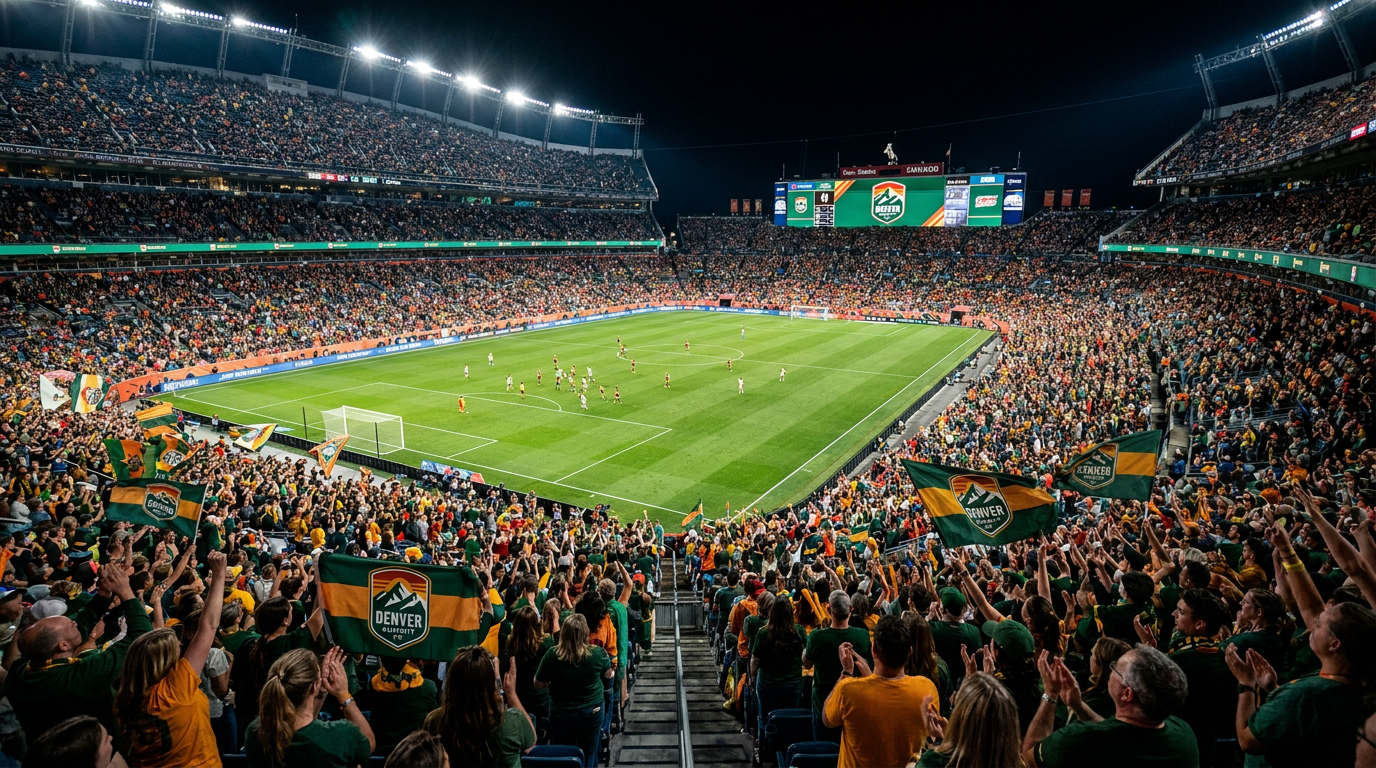
The crown jewel of this attendance boom belongs to the league's newest expansion franchise. The Denver Summit, playing their inaugural home match at Mile High Stadium, smashed the NWSL's all-time single-game attendance record by drawing an astonishing 63,004 fans. The massive crowd easily eclipsed the previous record of 40,091 set by Bay FC at Oracle Park the year prior, proving that in the right markets, women's club soccer can consistently fill NFL-sized stadiums.[1][6]

This surge in fan interest is intrinsically linked to a massive influx of institutional capital. The Denver Summit didn't just break attendance records; their ownership group paid a staggering $110 million expansion fee to enter the league. To put that into perspective, just a few years ago, NWSL expansion fees hovered around $2 million to $5 million. The exponential jump reflects a fundamental shift in how investors view women's sports—no longer as a philanthropic community project, but as a premium, high-growth asset class.[1][6]
With higher valuations comes a demand for world-class infrastructure. Denver's ownership has already closed on land at Santa Fe Yards to build a dedicated, soccer-specific stadium in downtown Denver, slated for completion by the 2028 season. In the interim, they will move to a temporary 12,000-seat facility. This mirrors a league-wide trend pioneered by the Kansas City Current, who opened the first-ever stadium built specifically for a women's professional sports team, CPKC Stadium, fundamentally changing the standard for player facilities and fan experience.[1][6]

With higher valuations comes a demand for world-class infrastructure.
The financial boom is also elevating the on-field product. The NWSL is increasingly able to attract and retain elite global talent. During the June 2026 FIFA international window, a record-breaking 138 NWSL players were called up to represent 34 different countries. This unprecedented volume of international call-ups underscores the league's depth and its status as a premier destination for the world's best players, rather than just a domestic development league.[4][6]
Even the collegiate ranks are feeling the ripple effects of this cultural shift. The University of Georgia recently announced that its women's soccer team will play its 2026 home opener against James Madison at the 92,000-seat Sanford Stadium—the first time the women's team has played in the school's iconic football venue. The program is explicitly aiming to break the all-time women's college soccer attendance record of 14,410, set back in 1999.[5][6]
Broadcasters and corporate sponsors are eagerly capitalizing on the momentum. The 2026 NWSL Championship is set to be staged at Audi Field in Washington, D.C., and will air in primetime on the CBS Television Network for the fifth consecutive season. The league's landmark media rights deals, distributed across multiple major networks including Prime Video and ESPN, have provided unprecedented visibility, creating a virtuous cycle of viewership, sponsorship revenue, and franchise valuation.[6]

Sports business analysts point out that this is the "flywheel effect" in action. For decades, women's sports suffered from a lack of investment, which led to lower production values, which in turn justified lower media rights fees. The current wave of ownership groups has aggressively broken that cycle by front-loading capital into marketing, stadium infrastructure, and player salaries, proving that the audience was always there—they just needed a product presented with the respect it deserved.[6]
While the top-line numbers are universally celebrated, the rapid commercialization does present growing pains. Player advocates emphasize the need to ensure that the influx of cash benefits the entire roster, not just marquee international stars. Minimum salaries and travel accommodations have improved significantly under recent collective bargaining agreements, but the gap between the highest and lowest earners remains a point of negotiation as league revenues soar.[6]
Furthermore, legacy clubs that helped build the league in its leaner years are now under immense pressure to keep pace with deep-pocketed expansion teams. The arms race for state-of-the-art training facilities and analytics departments means that simply fielding a competitive team is no longer enough; clubs must operate as sophisticated, multi-million-dollar entertainment brands to survive in the modern NWSL.[6]
Despite these operational challenges, the trajectory is undeniably positive. As the global soccer community begins to look ahead to the 2027 FIFA Women's World Cup, the milestones achieved in the first half of 2026 serve as a powerful statement of intent. Women's soccer has definitively crossed the threshold from a burgeoning movement to a dominant force in the global sports economy.[6]
How we got here
March 2026
The NWSL opening weekend sets a new attendance record with 129,202 fans across eight matches.
April 2026
The expansion Denver Summit draws 63,004 fans, shattering the NWSL single-game attendance record.
June 9, 2026
The USWNT defeats Brazil in Fortaleza in front of 55,744 fans, a regional record.
June 2026
A record 138 NWSL players are called up to represent 34 different countries during the FIFA international window.
Viewpoints in depth
Sports Business Analysts
Focus on the shift from philanthropic support to highly profitable enterprise.
Financial analysts view the 2026 season as the definitive tipping point for women's soccer as an asset class. For years, investments in women's sports were often framed as 'doing the right thing' or corporate social responsibility. Today, the narrative is strictly about return on investment. The $110 million expansion fee paid by Denver, coupled with massive local attendance and lucrative national media rights deals, proves that the 'flywheel effect' is fully operational. Analysts argue that front-loading investment into marketing and infrastructure has successfully unlocked a massive, previously underserved consumer base.
Player Advocates
Emphasize the need for equitable distribution of new revenues.
While celebrating the packed stadiums and soaring franchise valuations, player advocates and union representatives are focused on ensuring these windfalls reach the athletes. They point out that while marquee players are signing historic, multi-million-dollar contracts, the minimum salaries for roster players must continue to rise proportionally. Advocates are pushing for improved travel standards, better post-career healthcare, and a larger share of media rights revenue, arguing that the players who are driving this unprecedented growth deserve a direct stake in the league's financial success.
Legacy Club Management
Highlight the operational pressure of keeping up with deep-pocketed expansion teams.
For the clubs that helped build the NWSL during its leaner, less profitable years, the current boom presents a unique challenge. Legacy ownership groups are finding themselves in an arms race against new, billionaire-backed expansion franchises. To remain competitive, these older clubs are being forced to rapidly upgrade their infrastructure, build dedicated training facilities, and expand their analytics and scouting departments. Management at these clubs emphasizes the importance of sustainable growth, warning against a spending bubble while simultaneously racing to modernize their operations.
What we don't know
- Whether legacy NWSL clubs can financially keep pace with the massive spending of new expansion franchises.
- How the upcoming 2027 FIFA Women's World Cup will further impact domestic league valuations and media rights.
Key terms
- Expansion Fee
- The price an ownership group pays to a sports league for the right to establish a new franchise.
- Flywheel Effect
- A business concept where early investments (like marketing and infrastructure) generate momentum that naturally fuels further growth and revenue.
- FIFA International Window
- Designated periods during the calendar year when domestic clubs must release their players to compete for their national teams.
Frequently asked
What is the current NWSL attendance record?
The record is 63,004 fans, set by the Denver Summit during their inaugural home match at Mile High Stadium in 2026.
How much did the Denver Summit pay to join the NWSL?
The Denver Summit ownership group paid a record $110 million expansion fee to enter the league.
Are college teams also seeing attendance growth?
Yes. For example, the University of Georgia is moving its 2026 season opener to its 92,000-seat football stadium in an attempt to break the women's college soccer attendance record.
Sources
Source coverage
6 outlets
3 viewpoints surfaced






[1]The GuardianLeague & Club Management
Denver Summit smash NWSL attendance record with 63,004 fans at Mile High Stadium
Read on The Guardian →[2]U.S. SoccerLeague & Club Management
U.S. Women's National Team Defeats Brazil 1-0 in Front of Record Crowd of 55,744 in Fortaleza
Read on U.S. Soccer →[3]NWSLLeague & Club Management
NWSL Sets Opening Weekend Attendance Record to Kick Off 2026 Season
Read on NWSL →[4]Equalizer SoccerPlayer Advocates
2026 NWSL Summer Transfer Tracker and Midseason Review
Read on Equalizer Soccer →[5]College Soccer NewsLeague & Club Management
Georgia's Women's Team Looking to Break Records at Sanford Stadium
Read on College Soccer News →[6]Factlen Editorial TeamSports Business Analysts
Synthesis by Factlen editorial team
Read on Factlen Editorial Team →
More in sports
See all 11 stories →Injury
Major NFL Stars Defy Timelines in Uplifting June Injury Returns
6 sources
Women's Soccer
NWSL Shatters Attendance Records as 2026 Expansion Teams Redefine Women's Soccer
9 sources

Standings
Edmonton Elks Surge to Undefeated Start as 2026 CFL Standings Take Early Shape
6 sources

Sports Science
How AI and Biomechanics Are Revolutionizing Elite Badminton Training
6 sources

Every angle. Every day.
Get sports stories with full source coverage and perspective breakdowns delivered to your inbox.