
Tokenized Real-World Assets Cross $30 Billion as Wall Street Moves On-Chain
Major financial institutions are rapidly shifting traditional assets like Treasury bills and private credit onto public blockchains, pushing the tokenized asset market past $30 billion in mid-2026. The milestone signals a transition from experimental crypto projects to regulated, institutional-grade financial infrastructure.
By Factlen Editorial Team
- Institutional Asset Managers
- View tokenization as a massive efficiency upgrade for global capital.
- Blockchain Infrastructure Providers
- See real-world assets as the catalyst for mainstream blockchain adoption.
- Financial Regulators
- Prioritize investor protection and systemic stability over technological novelty.
What's not represented
- · Retail Investors
- · Traditional Clearinghouses
Why this matters
The tokenization of traditional financial assets promises to eliminate days of settlement delays and reduce intermediary fees, fundamentally rewiring how global capital moves. For everyday investors, this infrastructure shift is paving the way for fractional ownership of previously inaccessible asset classes like private credit and commercial real estate.
Key points
- The market for tokenized real-world assets (RWAs) surpassed $30 billion in mid-2026.
- Major funds from BlackRock, Franklin Templeton, and Circle now manage billions in tokenized Treasuries.
- Blockchain infrastructure allows for 24/7 trading and near-instant settlement, eliminating traditional delays.
- Regulatory clarity from the SEC and the 2025 GENIUS Act has accelerated institutional adoption.
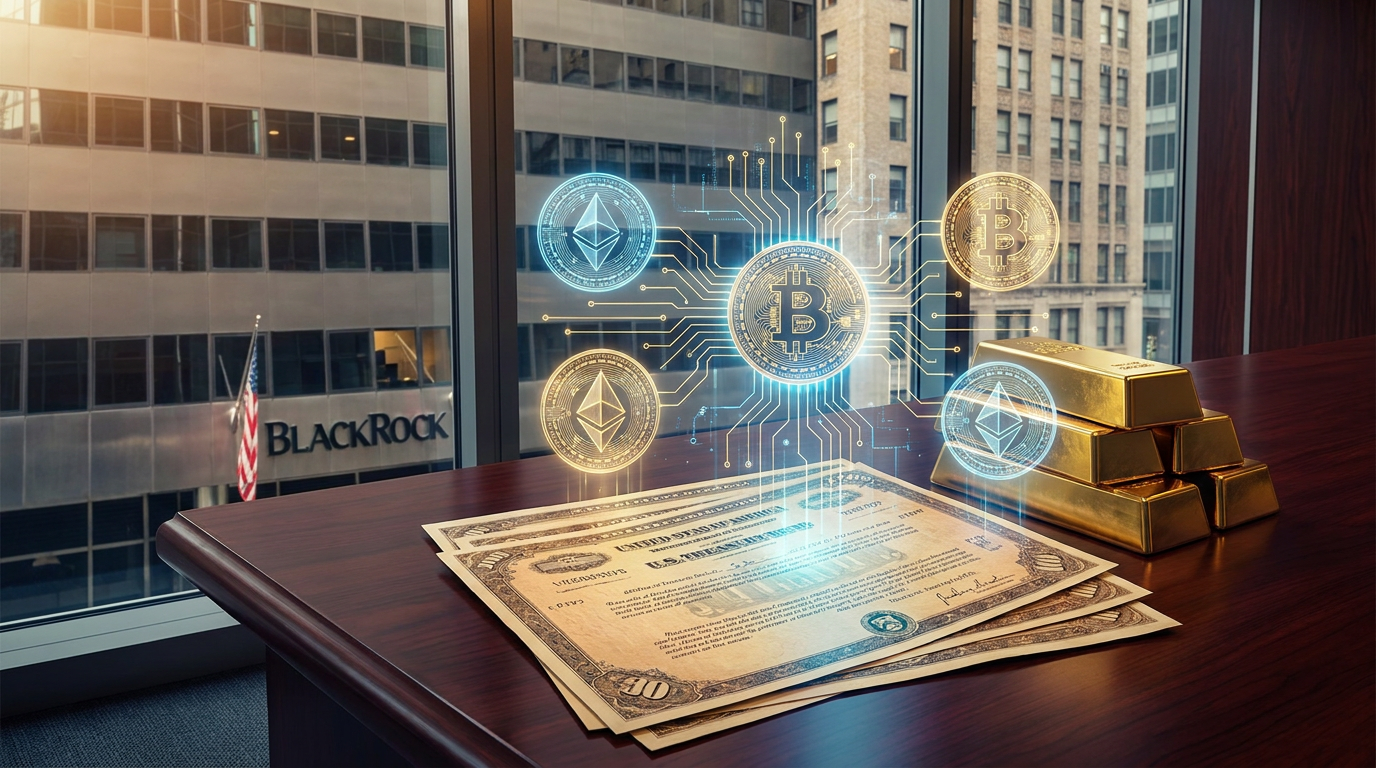
The digital asset industry crossed a major threshold in mid-2026, with the market for tokenized real-world assets (RWAs) surpassing $30 billion in on-chain value. This milestone marks a decisive shift in how traditional capital interacts with blockchain technology. Rather than focusing on speculative cryptocurrencies, the world's largest financial institutions are now using public ledgers to issue, manage, and trade traditional instruments like U.S. Treasury bills, private credit facilities, and money market funds.[2][4]
Tokenization is the process of creating a digital representation of a traditional asset on a distributed ledger. The underlying asset continues to exist in the traditional financial system—held by a regulated custodian—while the digital token represents a legal claim on that asset. This digital wrapper allows the asset to be transferred globally, 24 hours a day, seven days a week, with near-instant settlement.[1][2][4]
The appeal of these efficiencies has driven massive institutional adoption over the past year. Asset managers are no longer merely experimenting with blockchain technology; they are deploying regulated products at scale. BlackRock's USD Institutional Digital Liquidity Fund (BUIDL), which offers exposure to short-duration U.S. Treasuries, reached approximately $2.4 billion in assets under management by May 2026.[2][4]
Competitors are matching that pace. Franklin Templeton's OnChain U.S. Government Money Fund, represented by the BENJI token, reached $2.47 billion in total asset value. Meanwhile, Circle's USYC tokenized Treasury product grew to roughly $3 billion, overtaking BUIDL as the largest single tokenized Treasury fund by mid-2026.[1]

For financial institutions, blockchains offer vastly superior infrastructure compared to legacy systems. Traditional financial assets suffer from settlement delays—often taking one to two business days for equities and even longer for real estate or private credit. By placing these workflows on a shared digital infrastructure, tokenization eliminates the need for multiple intermediary registries, reducing costs and operational friction.[1][2][4]
This infrastructure upgrade is fundamentally changing who uses blockchains. According to blockchain data firm Chainalysis, the explosive growth of the RWA market has created a market inversion. Throughout late 2025 and early 2026, data showed a massive spike in institutional wallets created specifically to hold tokenized assets. For this new cohort of users, regulated real-world assets are the primary reason to come on-chain in the first place.[1]
This infrastructure upgrade is fundamentally changing who uses blockchains.
The surge in adoption follows a period of significant regulatory clarification. In July 2025, the passage of the GENIUS Act provided a crucial foundation by establishing a federal framework and standardized settlement infrastructure for digital assets. This legislation gave traditional financial institutions the legal certainty required to scale their tokenization efforts.[1][5]
Further clarity arrived in January 2026, when the U.S. Securities and Exchange Commission (SEC) issued a joint statement confirming that securities represented on blockchains are subject to existing federal securities laws. The SEC clarified that the technological wrapper does not change the legal nature of the underlying asset; if an asset is a security off-chain, it remains a security when tokenized.[1]
While the regulatory framework has solidified, the technological landscape is diversifying. Ethereum remains the dominant network for RWA tokenization, benefiting from its mature smart contract infrastructure and deep liquidity. However, its market share declined from roughly 65% in early 2026 to approximately 50% by May, as competing chains like Solana, Polygon, and Avalanche gained traction.[2]

BlackRock's BUIDL fund, for example, is now deployed across eight different blockchain networks, ensuring that institutional capital can flow seamlessly regardless of the underlying protocol. This multi-chain approach mitigates the risk of relying on a single network and allows asset managers to tap into different digital ecosystems.[2]
Despite the institutional boom, retail access to tokenized assets remains limited. The bulk of current tokenized offerings are restricted to qualified investors and require minimum investments of up to $1 million. However, retail investors are beginning to gain exposure through specialized platforms like Securitize and tZERO, which facilitate the buying and selling of tokenized stocks and exchange-traded products.[3]
Regulators continue to warn about the unique risks introduced by this new infrastructure. Beyond standard market volatility, tokenized assets face technical vulnerabilities, including potential flaws in the smart contracts that govern their transfer and yield distribution. The SEC has also highlighted third-party custody risks, noting that a failure in the underlying market infrastructure could amplify losses for token holders.[3]

Nevertheless, the trajectory of the market suggests that tokenization is becoming a permanent fixture of global finance. By consolidating onboarding, registry maintenance, servicing, and reporting into a single environment, digital assets are reshaping the foundations of capital markets. As standards and market practices continue to evolve, the integration of blockchain rails into mainstream financial infrastructure appears increasingly inevitable.[4][6]
How we got here
July 2025
Passage of the GENIUS Act establishes a federal framework for digital settlement.
December 2025
JPMorgan launches a tokenized money market fund on the Ethereum blockchain.
January 2026
The SEC issues a joint statement confirming tokenized assets are subject to existing securities laws.
May 2026
The tokenized RWA market officially surpasses $30 billion in total value.
Viewpoints in depth
Institutional Asset Managers
View tokenization as a massive efficiency upgrade for global capital.
Firms like BlackRock and Franklin Templeton argue that blockchain rails are vastly superior to legacy systems. They emphasize that 24/7 market access, automated compliance via smart contracts, and instant settlement will eventually replace the fragmented, intermediary-heavy plumbing of traditional finance.
Blockchain Infrastructure Providers
See real-world assets as the catalyst for mainstream blockchain adoption.
Data firms and network developers point out that RWAs are driving a new wave of institutional wallet creation. Rather than speculative crypto trading, they argue that the guaranteed yield and stability of tokenized Treasuries are providing the necessary 'top-of-funnel' utility to bring traditional finance fully on-chain.
Financial Regulators
Prioritize investor protection and systemic stability over technological novelty.
Agencies like the SEC maintain that the technological wrapper does not change the fundamental nature of a financial product. They warn that while blockchains offer efficiency, they also introduce novel third-party risks, such as smart contract vulnerabilities and custody complications, which require strict adherence to existing securities laws.
What we don't know
- How traditional clearinghouses and legacy intermediaries will adapt their business models as settlement moves on-chain.
- Whether retail investors will gain broader access to institutional-grade tokenized funds currently restricted to accredited buyers.
- How smart contract vulnerabilities might impact the market in the event of a major technical exploit.
Key terms
- Real-World Asset (RWA)
- A traditional financial instrument, such as a bond or real estate, represented as a digital token on a blockchain.
- Tokenization
- The process of converting rights to an asset into a digital token on a distributed ledger.
- Smart Contract
- Self-executing code on a blockchain that automatically enforces the terms of an agreement, such as yield distribution.
- T+1 Settlement
- The traditional finance standard where a trade settles one business day after execution, compared to blockchain's near-instant settlement.
Frequently asked
Can retail investors buy tokenized real-world assets?
Yes, though options are currently limited. Retail investors can access certain tokenized stocks and funds through specialized platforms like Securitize and tZERO, though many products still require accredited investor status.
Are tokenized assets regulated?
Yes. The SEC clarified in early 2026 that if an underlying asset is a security off-chain, it remains a security when tokenized, subjecting it to standard federal securities laws.
Why put a Treasury bill on a blockchain?
Tokenization allows the asset to be traded 24/7 with near-instant settlement, eliminating the multi-day delays and intermediary costs associated with traditional financial plumbing.
Sources
Source coverage
6 outlets
3 viewpoints surfaced






[1]ChainalysisBlockchain Infrastructure Providers
The New Rails: How Digital Assets Are Reshaping the Foundations of Finance
Read on Chainalysis →[2]Spark MoneyBlockchain Infrastructure Providers
Exploring the $30B+ tokenized RWA market
Read on Spark Money →[3]Charles SchwabInstitutional Asset Managers
Tokenization: Real-World Assets on the Blockchain
Read on Charles Schwab →[4]InvestaxInstitutional Asset Managers
Real-World Asset Tokenization Overview
Read on Investax →[5]Federal ReserveFinancial Regulators
Payment Stablecoins and Cross Border Payments
Read on Federal Reserve →[6]Factlen Editorial TeamFinancial Regulators
Synthesis by Factlen editorial team
Read on Factlen Editorial Team →

Every angle. Every day.
Get finance stories with full source coverage and perspective breakdowns delivered to your inbox.