
How AI Coding Agents Are Empowering Non-Programmers to Build Software
The rise of autonomous AI coding agents and "vibe coding" is democratizing software development, allowing non-technical users to build applications using natural language while shifting the role of traditional engineers toward system architecture.
By Factlen Editorial Team
- Citizen Developers
- Non-technical founders and domain experts who view AI agents as an empowering tool to build software without learning syntax.
- Professional Engineers
- Traditional developers who use AI to accelerate boilerplate and prototyping, but emphasize the need for human architectural oversight.
- AI Researchers & Educators
- Academics and industry researchers concerned with code quality, security vulnerabilities, and the degradation of foundational learning.
What's not represented
- · Cybersecurity professionals auditing the influx of AI-generated applications.
- · Venture capitalists evaluating the long-term technical debt of AI-built startups.
Why this matters
The ability to create custom software is no longer restricted to those who have spent years learning complex programming languages. This shift allows anyone with domain expertise—from accountants to educators—to build digital tools that solve their specific problems, dramatically lowering the cost and time required to launch new businesses.
Key points
- AI coding agents allow non-programmers to build functional software using natural language prompts.
- Professional developers are experiencing massive productivity gains, completing tasks up to 55% faster.
- The role of the software engineer is shifting from writing syntax to designing system architecture and security.
- Over-reliance on AI tools can lead to "cognitive offloading," reducing a developer's foundational mastery of programming concepts.
For more than half a century, the act of creating software was gated behind a steep barrier to entry: the mastery of strict, unforgiving programming syntax. If you wanted a machine to perform a task, you had to speak its language. But by mid-2026, that paradigm has fundamentally shifted. The most widely adopted programming language in the world is no longer Python, JavaScript, or C++—it is plain English.[1][6]
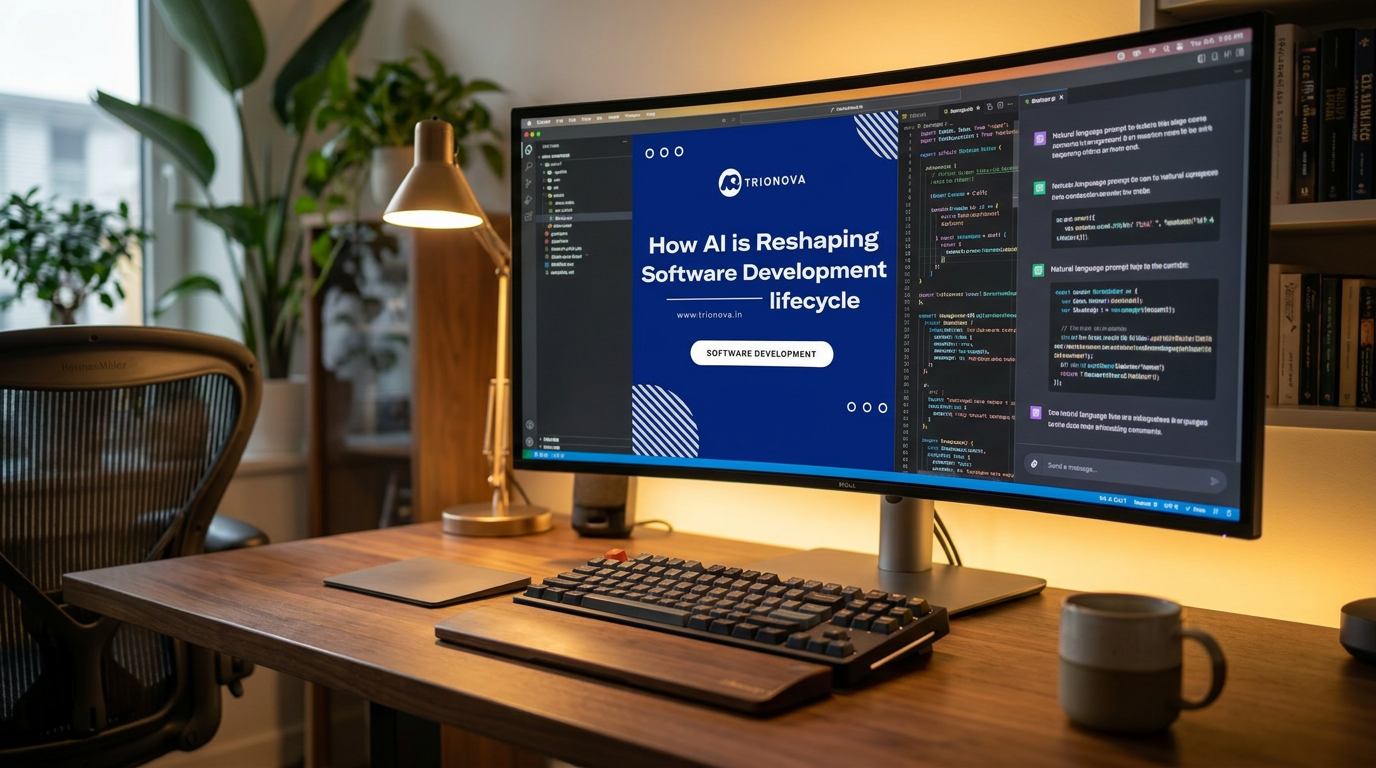
This transformation is being driven by a new generation of artificial intelligence coding agents. Unlike earlier tools that merely auto-completed lines of code as a developer typed, modern platforms like Cursor, Windsurf, and Devin operate with a profound degree of autonomy. Users can now describe a desired application in natural language, and the AI agent will architect the system, write the code, run tests, and debug errors across multiple files simultaneously.[3][5]
The industry has affectionately dubbed this practice "vibe coding," a term coined in early 2025 to describe the process of iterating on software through conversational prompts rather than manual typing. It represents a leap from code generation to intent-based development. The developer—or increasingly, the non-developer—acts as a director, providing the vision and the constraints, while the AI handles the mechanical execution of the syntax.[1][6]
The implications for democratization are staggering. Historically, a founder with a strong idea but limited engineering resources faced months of development time and significant financial hurdles to build a minimum viable product. Today, AI-native platforms allow solo entrepreneurs and domain experts to prototype, iterate, and deploy functional applications in a matter of hours.[3][5]

This accessibility extends far beyond the startup ecosystem. Accountants are building custom financial reporting tools, designers are deploying interactive web experiences, and educators are creating specialized learning applications—all without writing a single line of traditional code. By lowering the barrier to entry, AI agents are unlocking a massive reservoir of human creativity, allowing those closest to a business problem to directly architect its digital solution.[1][2]
Professional software engineers are also experiencing a profound shift in their daily workflows. As of 2026, industry surveys indicate that 85% of developers regularly use AI coding tools, and an estimated 41% of all newly written code is AI-generated. The productivity gains are undeniable, with studies showing that developers complete tasks 26% to 55% faster when assisted by AI, depending on the complexity of the project.[1][6]
For seasoned engineers, these tools function like an infinitely patient junior developer. They excel at accelerating the known: generating boilerplate code, translating between programming languages, synthesizing documentation, and implementing standard design patterns. This allows senior developers to offload tedious, repetitive tasks and focus their cognitive energy on complex logic and system architecture.[2][5]
For seasoned engineers, these tools function like an infinitely patient junior developer.
Consequently, the role of the software engineer is evolving rapidly. The profession is transitioning from the manual labor of writing code to the higher-order work of system orchestration. Developers are becoming reviewers and architects, responsible for defining security boundaries, evaluating trade-offs, and ensuring that the AI-generated components integrate seamlessly into a cohesive, scalable whole.[1][5]

However, this rapid acceleration is not without significant friction and systemic risk. While AI agents can flawlessly generate a beautiful user interface or wire up a functional database, they frequently fail to implement crucial security primitives unless explicitly instructed to do so by a knowledgeable human.[2]
The democratization of software creation means that non-technical builders are routinely deploying applications without the architectural wisdom to recognize these omissions. Research indicates that a substantial percentage of AI-generated code contains security vulnerabilities, and code quality can degrade over time if complex systems are built entirely through conversational prompts without rigorous human oversight.[1][2]
Furthermore, the reliance on AI coding assistants is sparking intense debate about the future of skill development. A 2026 randomized controlled trial conducted by Anthropic examined how quickly software developers picked up a new programming skill with and without AI assistance. While the AI-assisted group completed the task slightly faster, they scored 17% lower on a subsequent test of their mastery of the concepts.[4]

This phenomenon, known as cognitive offloading, suggests a troubling trade-off: the productivity increases from AI assistance may actively undermine foundational skill development. If junior developers rely entirely on AI to solve problems, they may never develop the deep, intuitive understanding of software architecture required to debug emergent behavior in distributed systems or optimize performance at the hardware level.[2][4]
The industry is currently grappling with this "skill gap compression." AI tools allow junior developers to produce work that once required mid-level experience, but it comes with the risk of deploying systems built without the depth of understanding that comes from having built them the hard way. The traditional apprenticeship model of software engineering is being forced to adapt to an environment where the easiest tasks are entirely automated.[1][2]

Despite these challenges, the trajectory of software development is clear. AI coding agents are not a passing trend; they are a fundamental abstraction layer, much like the transition from punch cards to high-level programming languages decades ago. They will not replace the need for human judgment, but they will permanently alter how that judgment is applied.[6]
Ultimately, the future of software belongs to those who can effectively orchestrate these powerful tools. While the mechanical act of writing syntax has been commoditized, the ability to define a problem, design a resilient architecture, and rigorously evaluate an AI's output has never been more valuable. The barrier to entry has fallen, but the ceiling for what a single human can build has never been higher.[3][5][6]
How we got here
Early 2024
The first autonomous AI software engineer, Devin, is introduced, demonstrating the ability to plan and execute multi-step coding tasks.
February 2025
The term "vibe coding" is coined to describe the shift toward natural language programming and intent-based software creation.
Late 2025
Major AI models achieve massive context windows, allowing coding agents to analyze and refactor entire enterprise codebases simultaneously.
Mid-2026
Industry data reveals that 85% of developers regularly use AI coding tools, and over 40% of newly written global code is AI-generated.
Viewpoints in depth
Citizen Developers
Non-programmers view AI agents as a democratizing force that removes the technical barriers to entry.
For domain experts, educators, and non-technical founders, the steep learning curve of programming languages has historically been a massive roadblock to innovation. This camp embraces AI coding agents as an equalizing technology. By allowing users to describe their desired outcomes in plain English, these tools enable individuals to build custom internal workflows, prototype consumer applications, and validate business ideas without needing to raise capital to hire an engineering team.
Professional Engineers
Veterans see AI as a powerful acceleration tool that still requires rigorous human architectural oversight.
Professional software developers largely welcome the productivity gains brought by AI agents, utilizing them to eliminate the drudgery of writing boilerplate code and translating between languages. However, they emphasize that building scalable, secure, and maintainable enterprise software requires a deep understanding of system architecture. From this perspective, the AI is an infinitely fast typist, but the human must remain the "head chef" who dictates the security boundaries, data models, and long-term technical trade-offs.
AI Researchers & Educators
Academics focus on the risks of cognitive offloading, technical debt, and security vulnerabilities.
Researchers studying the impact of AI on learning and software quality raise concerns about the long-term consequences of "vibe coding." They point to studies demonstrating that relying on AI to solve problems can prevent junior developers from building the foundational mastery required to debug complex, emergent issues. Furthermore, this camp warns that the rapid deployment of AI-generated applications by non-technical users is introducing a massive wave of unseen security vulnerabilities and technical debt into the broader digital ecosystem.
What we don't know
- How the traditional "apprenticeship" model for junior developers will adapt when entry-level coding tasks are entirely automated.
- The long-term security implications of millions of applications deployed by non-technical users without formal architectural review.
- Whether the productivity gains of AI coding will lead to smaller engineering teams or simply an explosion in the sheer volume of software produced.
Key terms
- Vibe Coding
- The practice of developing software by describing the desired outcome in natural language and allowing an AI to generate the underlying code.
- AI Coding Agent
- An autonomous artificial intelligence system capable of planning, writing, testing, and debugging code across multiple files without line-by-line human prompting.
- Cognitive Offloading
- The psychological phenomenon where individuals rely on external tools (like AI) to solve problems, potentially reducing their own foundational learning and mastery.
- Boilerplate Code
- Standardized, repetitive sections of code that must be included in many places with little or no alteration, which AI tools excel at generating instantly.
Frequently asked
Can I build an app without knowing how to code?
Yes. Modern AI coding agents allow users to describe what they want in plain English, and the AI handles the syntax and deployment, though complex apps still require human oversight.
Will AI replace software engineers?
No. While AI automates the mechanical act of writing code, engineers are transitioning into "system architects" who orchestrate the AI, define security boundaries, and manage complex logic.
What is "vibe coding"?
A term popularized in 2025 to describe the process of building software by conversing with an AI in natural language, iterating on the "vibe" or intent rather than manually typing syntax.
Is AI-generated code secure?
Not inherently. AI agents can introduce security vulnerabilities if not explicitly guided, making human review and architectural planning crucial for production-level software.
Sources
Source coverage
6 outlets
3 viewpoints surfaced






[1]NewlyCitizen Developers
What is Vibe Coding in 2026?
Read on Newly →[2]UX CollectiveProfessional Engineers
AI writes the code and humans still write the rules
Read on UX Collective →[3]ForbesCitizen Developers
AI Agents And The Democratization Of Software Development
Read on Forbes →[4]AnthropicAI Researchers & Educators
Does AI assistance undermine skill development?
Read on Anthropic →[5]The Corporate WorldProfessional Engineers
Cursor's AI-first approach
Read on The Corporate World →[6]Factlen Editorial Team
Synthesis by Factlen editorial team
Read on Factlen Editorial Team →

More in ai
See all 6 stories →Content Provenance
How Content Provenance and AI Watermarking Are Actually Working in 2026
8 sources
Local AI
How Local AI Became Mainstream: Running LLMs on Your Own Hardware in 2026
8 sources
Large Action Models
The Rise of Large Action Models: How AI Agents Are Automating the Digital World
8 sources
On-Device AI
The Rise of On-Device AI: How Small Language Models Are Putting Chatbots in Your Pocket
7 sources
Every angle. Every day.
Get ai stories with full source coverage and perspective breakdowns delivered to your inbox.