
Why Public Libraries Are Now Lending Power Drills, Cooktops, and Telescopes
Public libraries across the globe are rapidly expanding their 'Library of Things' collections, transforming into hubs for the circular economy by lending out tools, appliances, and recreational gear.
By Factlen Editorial Team
- Circular Economy Advocates
- Focus on the environmental necessity of transitioning from individual ownership to community access.
- Public Library Administrators
- Focus on adapting library services to meet modern community needs while managing operational logistics.
- Municipal Sustainability Planners
- Focus on leveraging trusted public institutions to accelerate the adoption of green technology.
- Independent Analysts
- Focus on the broader societal shift toward the sharing economy and its long-term viability.
What's not represented
- · Traditional hardware and appliance retailers who may see a marginal decrease in sales of rarely used items.
- · Low-income residents in underfunded library districts who do not yet have access to these expanded services.
Why this matters
By shifting from a model of individual ownership to community access, the 'Library of Things' saves households money, democratizes access to expensive tools, and significantly reduces the environmental impact of manufacturing and landfill waste.
Key points
- Public libraries globally are expanding their collections to include power tools, kitchen appliances, and recreational gear.
- The 'Library of Things' model promotes the circular economy by prioritizing community access over individual ownership.
- Sharing networks have demonstrated massive environmental benefits, diverting hundreds of tonnes of waste from landfills.
- Municipalities are using these collections to help residents test green technologies, such as induction cooktops, risk-free.
- Library administrators are adapting to the logistical challenges of storing, maintaining, and verifying multi-part physical items.
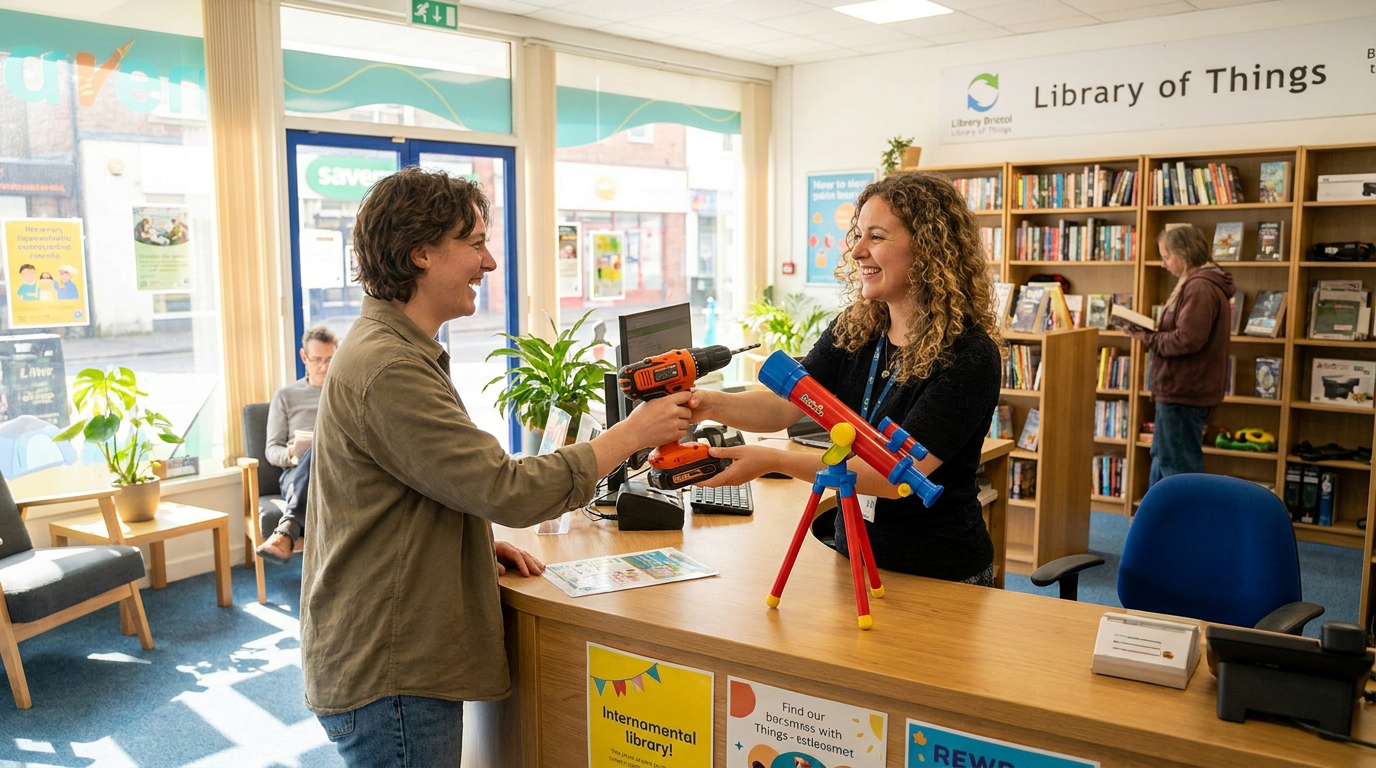
A quiet revolution is taking place at the circulation desks of public libraries across the globe in 2026. Instead of simply sliding a stack of hardcover novels across the scanner, librarians are increasingly handing over power drills, kids' telescopes, and portable public address systems.[7]
This transformation is the hallmark of the "Library of Things" movement, an initiative that is rapidly redefining the role of the modern public library. Driven by a combination of cost-of-living pressures and urgent municipal climate goals, communities are embracing a model that prioritizes access over individual ownership.[5][7]
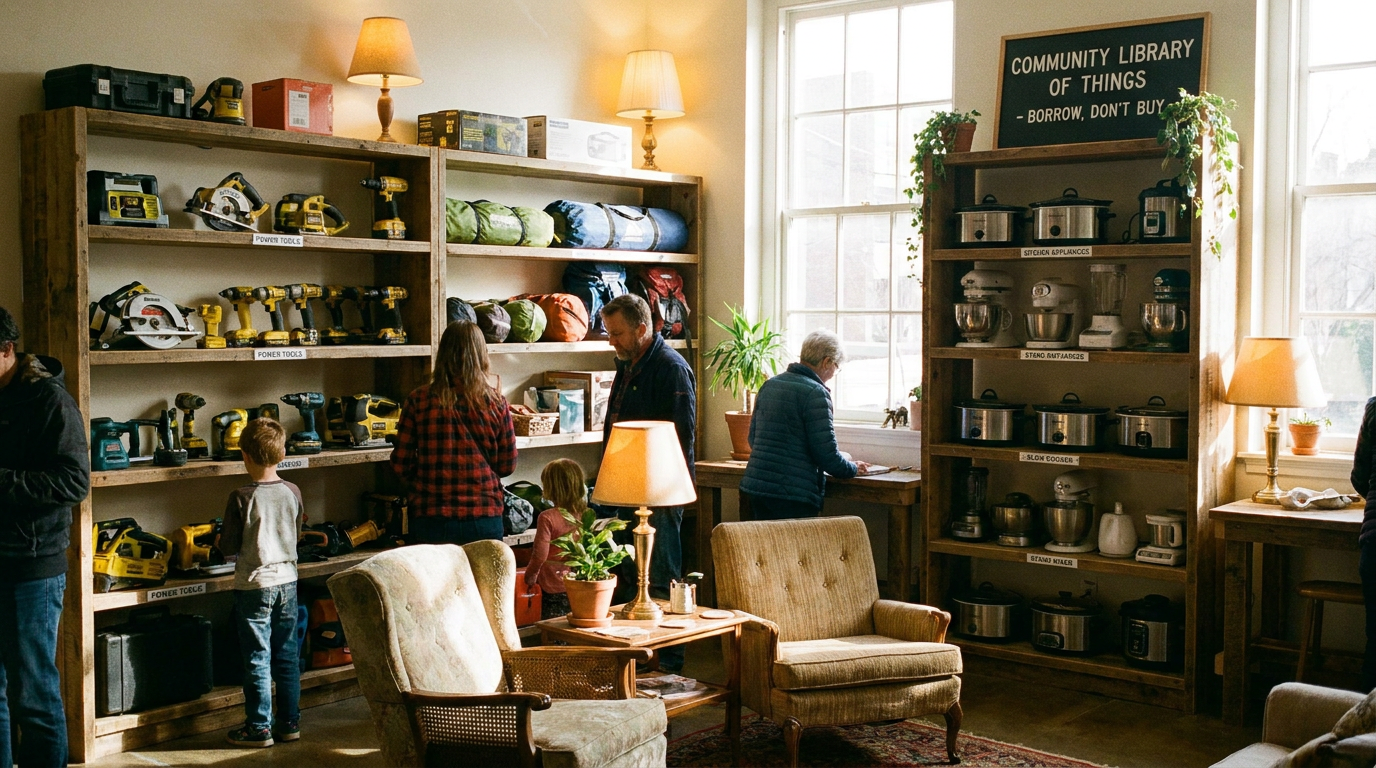
The fundamental premise is as simple as it is disruptive: households do not need to own every piece of equipment they occasionally use. By centralizing rarely used items in a trusted public institution, neighborhoods can dramatically reduce their collective consumption while simultaneously expanding what residents can afford to do.[5]
The trend has officially moved from a niche grassroots experiment to a mainstream civic service. In April 2026, the Amarillo Public Library in Texas officially launched its own Library of Things, carving out dedicated storage space in its downtown branch to house the new collection.[6]
Amarillo's initial rollout was deliberately curated to test the logistical waters, featuring items that are highly useful but often cumbersome to store or expensive to buy for a single project. Patrons can now check out automotive OBD code readers, plein air painting easels, and knitting machines using their standard library cards.[6]

In other municipalities, the selection process has become a highly anticipated civic event. In Hillsboro, Oregon, library administrators turned to the community to determine exactly what should be added to their expanding collection for the 2026 calendar year.[2]
More than 1,500 Hillsboro residents cast votes across dozens of potential items. The winning additions, which hit the shelves in early 2026, included document scanners, hedge trimmers, and kids' percussion sets, proving that the demand spans from practical home maintenance to creative play.[2]
This shift in collection strategy aligns perfectly with the evolving ethos of the profession. The American Library Association has recently elevated sustainability to a core value of librarianship, and the Library of Things is widely viewed as the most direct operationalization of that principle.[1]
The environmental math underpinning the movement is staggering. Circular economy advocates point out that the traditional linear economic model—extract, manufacture, purchase, and eventually discard—is responsible for massive greenhouse gas emissions and biodiversity loss.[5]
The environmental math underpinning the movement is staggering.
The absurdity of hyperconsumption is perhaps best illustrated by the power drill. Research indicates that the average power drill is used for a mere 15 minutes over its entire lifespan, spending the rest of its existence gathering dust in a garage before ending up in a landfill.[5]

When a single drill is shared among a hundred households, the reduction in manufacturing demand, packaging waste, and shipping emissions is profound. This is the exact model being scaled by organizations like the UK-based social enterprise Library of Things, which operates a network of sharing hubs across London.[4][5]
The UK network's impact reports for the mid-2020s highlight the tangible benefits of the sharing economy. By facilitating the rental of over 60,000 items, the organization estimates it has saved its members £8.6 million while diverting 423 tonnes of electrical waste from municipal dumps.[4]
Recognizing these dual economic and environmental benefits, local governments are increasingly partnering with libraries to advance their own climate action plans. The library has become a strategic asset for municipal sustainability planners looking to change consumer behavior at the neighborhood level.[3][7]
In California, systems like the Marin County Free Library and the Santa Barbara Public Library have introduced induction cooktop kits into their circulating collections. These kits come complete with compatible magnetic cookware and instructions for use.[3]
The goal of the cooktop program is highly specific: to help residents transition away from fossil-fuel appliances. By allowing patrons to test the energy-efficient technology in their own kitchens for free, local governments are removing the financial risk that often prevents households from adopting green technology.[3][7]

Beyond the environmental and financial metrics, the Library of Things is quietly rebuilding local social capital. Many of these collections are paired with community workshops, repair cafes, and skill-sharing events where neighbors teach each other how to sew, fix electronics, or preserve fruit.[4][5]
However, the transition is not without its operational hurdles. Library administrators acknowledge that lending physical equipment introduces a level of programmatic complexity that books and digital media do not.[1][6]
Checking in a 50-piece tool set or a complex board game requires staff to verify that every component has been returned intact. Furthermore, libraries must navigate the logistics of maintenance, storage space, and the inevitable wear and tear that comes with heavy community use.[6][7]

To manage these challenges, libraries are implementing specialized checkout procedures, requiring liability waivers for certain tools, and starting with smaller, manageable collections before scaling up based on patron feedback.[6]
How we got here
1943
The first recorded tool library opens in Grosse Pointe Farms, Michigan, to offer training and resources to young people.
2014
The modern 'Library of Things' movement gains grassroots momentum with a highly successful community experiment in London.
2024
The American Library Association increasingly emphasizes sustainability as a core value, encouraging non-traditional collections.
April 2026
Amarillo Public Library officially launches its Library of Things, reflecting the mainstreaming of the trend across the United States.
June 2026
Major municipal sharing networks report millions in community savings and massive reductions in electrical waste.
Viewpoints in depth
Circular Economy Advocates
Focus on the environmental necessity of transitioning from individual ownership to community access.
Advocates for the circular economy argue that the traditional 'extract-make-use-dispose' model is fundamentally incompatible with global climate goals. By centralizing the ownership of rarely used items, communities can drastically reduce the manufacturing demand, packaging waste, and shipping emissions associated with hyperconsumption. They view the Library of Things not just as a cost-saving measure, but as a critical infrastructure upgrade for a sustainable future.
Public Library Administrators
Focus on adapting library services to meet modern community needs while managing operational logistics.
For library directors and staff, the expansion into physical objects is a natural evolution of their mandate to provide equitable access to resources. However, they must balance this enthusiasm with the practical realities of tight budgets and limited storage space. Administrators emphasize the need for careful curation, specialized checkout procedures to verify multi-part items, and ongoing funding to maintain or replace equipment that undergoes heavy public use.
Municipal Sustainability Planners
Focus on leveraging trusted public institutions to accelerate the adoption of green technology.
Local government officials see public libraries as the perfect vehicle for grassroots climate action. By funding the inclusion of items like induction cooktops, energy monitors, and electric bicycles in library collections, municipalities can help residents overcome the upfront financial barriers to green technology. Planners argue that allowing citizens to test these appliances risk-free is one of the most effective ways to drive long-term behavioral change.
What we don't know
- How libraries will secure long-term funding to maintain and replace expensive equipment as it undergoes heavy community use.
- Whether the liability and insurance costs associated with lending power tools will force some smaller library branches to scale back their offerings.
- How the rise of AI and digital collections will compete for budget space against physical 'Library of Things' expansions.
Key terms
- Library of Things (LoT)
- A collection of non-traditional items—such as tools, electronics, and recreational gear—available for loan at a public library or community center.
- Circular Economy
- An economic model aimed at eliminating waste and the continual use of resources by sharing, leasing, reusing, repairing, and recycling existing materials.
- Hyperconsumption
- The consumption of goods for non-functional purposes and the associated pressure to constantly buy new products, leading to excessive waste.
- Induction Cooktop
- An energy-efficient cooking appliance that uses electromagnetic energy to heat pots and pans directly, increasingly loaned by libraries to promote green technology.
- OBD Code Reader
- An automotive diagnostic tool that plugs into a car's computer system to read error codes, allowing users to identify mechanical issues without visiting a mechanic.
Frequently asked
Do I need a special membership to borrow these items?
In most public library systems, you only need a standard library card in good standing. However, some libraries require borrowers to be 18 or older and sign a liability waiver for certain tools.
What happens if a tool breaks while I am using it?
Libraries expect normal wear and tear and typically cover basic maintenance. Borrowers are usually only responsible for replacement costs if an item is lost or damaged due to negligence.
Why are libraries lending out induction cooktops?
Local governments partner with libraries to lend induction cooktops so residents can test the energy-efficient technology with their own cookware before committing to purchasing one.
How long can I keep an item from the Library of Things?
Borrowing periods vary by municipality and item type, but most libraries allow patrons to check out tools and equipment for one to three weeks, similar to a standard book loan.
Sources
Source coverage
7 outlets
4 viewpoints surfaced






[1]The Digital LibrarianPublic Library Administrators
Library Tech Trends for 2026
Read on The Digital Librarian →[2]City of HillsboroPublic Library Administrators
New Library of Things Items Coming in 2026: Community Voting Results
Read on City of Hillsboro →[3]Marin County Free LibraryMunicipal Sustainability Planners
Library of Things: Good Things Ahead!
Read on Marin County Free Library →[4]Library of Things UKCircular Economy Advocates
Making borrowing better than buying: 2024/25 Impact Report
Read on Library of Things UK →[5]Active SustainabilityCircular Economy Advocates
The Library of Things where you can borrow anything you need
Read on Active Sustainability →[6]Amarillo Public LibraryPublic Library Administrators
APL Library of Things Ready to Launch
Read on Amarillo Public Library →[7]Factlen Editorial TeamIndependent Analysts
Synthesis by Factlen editorial team
Read on Factlen Editorial Team →
Every angle. Every day.
Get community stories with full source coverage and perspective breakdowns delivered to your inbox.