
US and Iran Sign 60-Day Ceasefire Framework, Reopening the Strait of Hormuz
The United States and Iran have digitally signed a 14-point memorandum of understanding to halt military operations and begin negotiations on a permanent peace agreement. The deal temporarily lifts key sanctions on Tehran and ends the US naval blockade in exchange for nuclear concessions and the immediate resumption of commercial shipping through the Strait of Hormuz.
By Factlen Editorial Team

- US Administration
- Frames the memorandum as a pragmatic pause that leverages military dominance to force Iranian nuclear concessions and stabilize global markets.
- Iranian Leadership
- Views the agreement as a sovereign victory that lifts a crippling economic blockade and secures massive reconstruction funding.
- US Congressional Critics
- Argues the framework is a dangerous concession that rewards Tehran with billions in sanctions relief without permanently dismantling its nuclear program.
- Global Energy Markets
- Focused entirely on the immediate resumption of oil and LNG transit through the Strait of Hormuz to ease the historic supply crisis.
What's not represented
- · Lebanese civilians affected by the cessation of hostilities
- · Israeli government officials excluded from the bilateral memorandum
Why this matters
This framework pauses a four-month conflict that severely disrupted global energy markets and threatened to engulf the broader Middle East. By reopening the Strait of Hormuz, the agreement immediately eases the greatest energy supply crisis in modern history, though the political stakes of the impending 60-day negotiation window remain extraordinarily high.
Key points
- The US and Iran digitally signed a 14-point memorandum to establish a 60-day ceasefire.
- Iran agreed to reopen the Strait of Hormuz to commercial shipping and halt its pursuit of nuclear weapons.
- The US agreed to lift its naval blockade, waive key sanctions, and help facilitate a $300 billion reconstruction fund.
- Global oil prices dropped 4 percent as Saudi supertankers resumed transit through the Gulf.
- President Trump warned that military strikes will resume if a final deal is not reached within 60 days.
- Initial negotiations to implement the framework will begin Friday in Switzerland.
The United States and Iran have officially entered a 60-day ceasefire, pausing a devastating four-month conflict that paralyzed global energy markets and reshaped Middle Eastern geopolitics. The "Islamabad Memorandum of Understanding" was digitally signed late Wednesday by US President Donald Trump and Iranian President Masoud Pezeshkian, bypassing a traditional in-person ceremony. The 14-point framework, brokered primarily by Pakistan with assistance from Qatar and Oman, mandates an immediate end to military operations across all fronts, including Lebanon.[1][3][4]
The agreement's most immediate global impact is the reopening of the Strait of Hormuz. The narrow waterway, which normally facilitates roughly 20 percent of the world's seaborne oil trade and liquefied natural gas (LNG), had been effectively closed by Iran since late February following US and Israeli airstrikes. In exchange for Iran allowing toll-free commercial navigation to resume, the United States has agreed to lift its naval blockade of Iranian ports within 30 days and issue waivers for the export of Iranian crude oil and petroleum products.[4][5][6]

Energy markets reacted instantly to the diplomatic breakthrough. The price of Brent crude dropped 4 percent to roughly $83 per barrel, hitting a three-month low as traders priced in the return of Gulf exports. President Trump celebrated the maritime reopening on social media, declaring, "Ships of the World, start your engines. Let the oil flow!" By Thursday morning, data analytics firms confirmed that at least 12 named tankers—including three Saudi supertankers carrying millions of barrels of crude—had successfully transited the strait or the former US blockade line.[2][6]
Beyond maritime access, the memorandum outlines a sweeping, albeit temporary, economic and nuclear compromise. Iran has agreed to maintain the "status quo" of its nuclear program and abandon the pursuit of nuclear weapons. In return, the US and its regional partners have pledged to develop a mutually agreed plan to provide at least $300 billion for Iran's postwar reconstruction and economic development. The mechanism for this massive financial injection is slated to be finalized during the 60-day negotiation window.[1][4]

Beyond maritime access, the memorandum outlines a sweeping, albeit temporary, economic and nuclear compromise.
Despite the relief in global markets, the framework has ignited fierce domestic backlash in Washington. Several prominent Republican lawmakers have condemned the memorandum, arguing it surrenders critical leverage. Senator Bill Cassidy labeled the agreement the "worst foreign policy blunder in decades," while Senator Ted Cruz and others criticized the administration for offering billions in sanctions relief without securing the permanent, verifiable dismantling of Tehran's nuclear infrastructure or addressing its regional proxy networks.[7]
President Trump, who signed the document during a dinner at the Palace of Versailles following the G7 summit in France, defended the deal as a pragmatic victory but maintained a combative posture regarding the upcoming talks. "If it doesn't get done in 60 days, that's all right—we go back to bombing," Trump stated. "I don't want to do that, because it's so good, but we might have to."[1][2]
In Tehran, the agreement is being framed as a sovereign triumph that successfully broke a crippling economic siege. Iranian officials emphasized that the memorandum formally recognizes the Islamic Republic's political sovereignty and includes commitments to withdraw US forces from Iran's immediate vicinity. President Pezeshkian publicly shared the document, describing it as a "historical document and a message from a powerful Iran," while lead negotiator Mohammad Bagher Ghalibaf asserted that diplomacy had secured far more for the country than military action could have.[3][4]

While the immediate threat of regional war has subsided, energy analysts caution that the physical oil market will remain tight in the near term. US crude inventories are currently below seasonal norms, and the logistical backlog of tankers waiting to transit the Gulf will take weeks to clear. Initial negotiations to implement the framework's complex financial and security provisions are scheduled to begin Friday at the Buergenstock mountaintop resort in Switzerland.[3][5]
How we got here
Feb 28, 2026
US and Israeli military strikes on Iran trigger the closure of the Strait of Hormuz.
April 13, 2026
The United States imposes a naval blockade on Iranian ports.
June 12, 2026
Pakistani mediators announce that the US and Iran have reached an agreed-upon text for a ceasefire.
June 17, 2026
President Trump and President Pezeshkian digitally sign the Islamabad Memorandum of Understanding.
June 18, 2026
Commercial oil tankers resume transit through the Strait of Hormuz as global oil prices tumble.
Viewpoints in depth
US Administration's View
The White House views the framework as a pragmatic use of military leverage to force Iranian concessions.
The Trump administration is framing the Islamabad Memorandum as a decisive victory that achieved its primary goals: halting Iran's nuclear ambitions and reopening the world's most critical energy artery. By agreeing to a 60-day pause rather than a permanent treaty, the administration maintains that it has kept its military options fully on the table. Officials emphasize that the proposed $300 billion reconstruction fund is contingent upon strict Iranian compliance, arguing that the temporary lifting of the naval blockade is a necessary concession to stabilize the global economy while final terms are hammered out.
Iranian Leadership's View
Tehran portrays the agreement as a sovereign triumph that successfully broke a Western economic and military siege.
For the Iranian government, the memorandum is being celebrated as a historic validation of its resilience. Lead negotiators highlight that the agreement formally recognizes Iran's political sovereignty and forces the withdrawal of US forces from its immediate vicinity. By securing waivers on oil exports and banking transactions, Tehran has achieved its most desperate domestic priority: economic relief. Iranian officials argue that their willingness to maintain the nuclear "status quo" was a calculated trade-off to secure the $300 billion reconstruction pledge and end what they describe as an unprovoked war of aggression.
Congressional Critics' View
Republican lawmakers argue the deal prematurely surrenders US leverage and enriches a hostile state.
A vocal coalition of US lawmakers is condemning the framework as a dangerous appeasement strategy. Critics point out that the memorandum requires the US to immediately waive sanctions and lift its naval blockade, providing Tehran with instant revenue streams before a permanent nuclear dismantling is verified. Lawmakers like Senator Ted Cruz and Senator Bill Cassidy argue that the $300 billion reconstruction pledge effectively rewards Iran for closing the Strait of Hormuz, warning that the unfrozen assets could be redirected to regional proxy networks once the immediate threat of US military action subsides.
What we don't know
- Whether the US and Iran can successfully negotiate a permanent, binding peace treaty within the strict 60-day window.
- The exact mechanisms by which the proposed $300 billion reconstruction fund will be raised, managed, and monitored.
- How Israel, which was not a signatory to the bilateral memorandum, will respond to the framework's implementation.
Key terms
- Islamabad Memorandum
- The 14-point framework agreement, brokered primarily by Pakistan, that establishes a 60-day ceasefire between the US and Iran.
- Strait of Hormuz
- A narrow maritime chokepoint between the Persian Gulf and the Gulf of Oman, through which roughly a fifth of the world's oil supply passes.
- Naval Blockade
- A military operation used by the US to interdict ships entering or departing Iranian ports during the conflict, which is being lifted under the new agreement.
- Brent Crude
- A major trading classification of sweet light crude oil that serves as a benchmark price for purchases of oil worldwide.
Frequently asked
What triggered the 2026 Iran War?
The conflict escalated in late February 2026 following US and Israeli military strikes on Iran, which prompted Tehran to close the Strait of Hormuz to commercial shipping.
Does this memorandum mean the war is permanently over?
Not yet. The agreement establishes a 60-day ceasefire and negotiation window to finalize the terms of a permanent peace treaty.
Why are some US lawmakers criticizing the deal?
Critics argue the framework provides Iran with massive economic relief, including sanctions waivers and a proposed $300 billion reconstruction fund, without securing the permanent, verifiable destruction of its nuclear infrastructure.
How does this affect global gas prices?
The reopening of the Strait of Hormuz allows roughly 20 percent of the world's seaborne oil to flow again, which immediately caused Brent crude prices to drop to a three-month low of $83 per barrel.
Sources
Source coverage
7 outlets
4 viewpoints surfaced







[1]Fox NewsUS Administration
US-Iran deal takes immediate effect; nuclear talks ongoing after Trump signs MOU
Read on Fox News →[2]The GuardianGlobal Energy Markets
Donald Trump posts 'Let the oil flow' as US-Iran peace deal sparks immediate drop for Brent crude
Read on The Guardian →[3]Tasnim News AgencyIranian Leadership
Switzerland Says Talks Planned for Friday between Iran, US
Read on Tasnim News Agency →[4]Arab Center Washington DCIranian Leadership
The Full Text of the Memorandum of Understanding between the United States and Iran
Read on Arab Center Washington DC →[5]BNN BloombergGlobal Energy Markets
Higher oil prices likely to stick even with eventual reopening of Hormuz: experts
Read on BNN Bloomberg →[6]Anadolu AgencyGlobal Energy Markets
Strait of Hormuz reopening gradually as 12 tankers transit after US-Iran framework deal
Read on Anadolu Agency →[7]Westfair Business JournalUS Congressional Critics
Trump releases text of MOU with Iran
Read on Westfair Business Journal →
More in news politics
See all 8 stories →US-Iran Deal
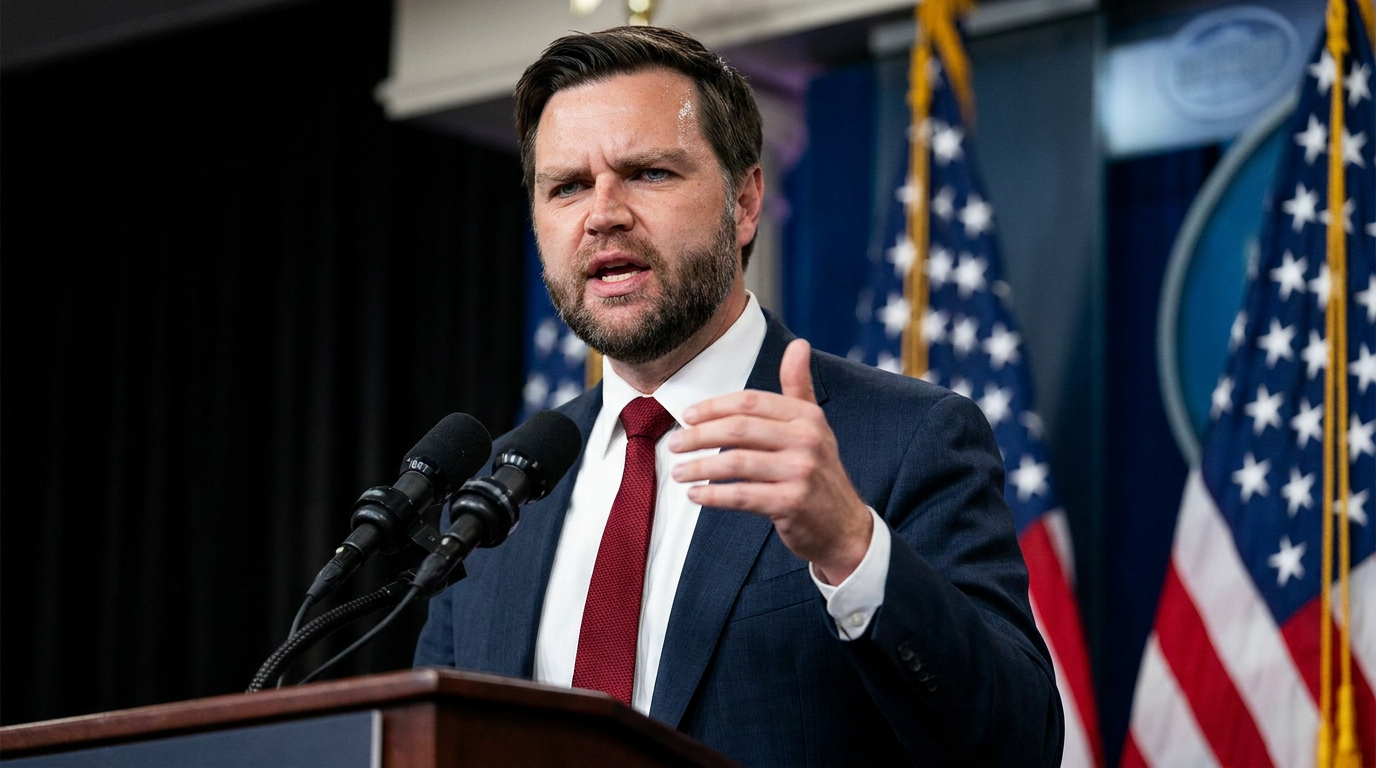
U.S. and Iran Sign Agreement to End War; Vance Lashes Out at Israeli Critics
7 sources
U.S.-Iran Deal
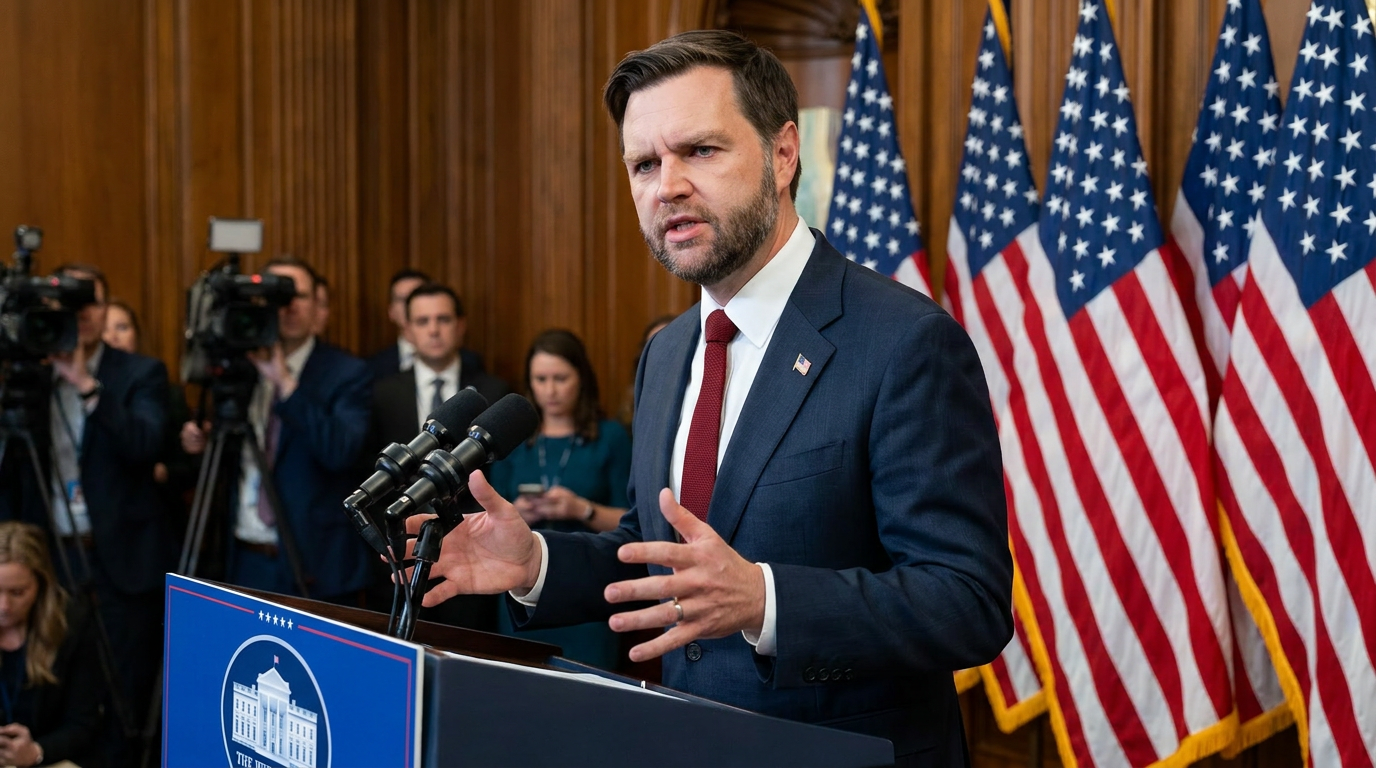
U.S. and Iran Sign 14-Point Agreement to End War, Sparking Fierce Backlash from Israel
6 sources

U.S.-Iran Relations
Vance Rebukes Israeli Critics of U.S.-Iran Peace Agreement, Warning Against Alienating 'Only Powerful Ally'
8 sources
Cognitive Defense
The Science of 'Prebunking': How Psychological Inoculation is Defeating Misinformation
6 sources

Every angle. Every day.
Get news politics stories with full source coverage and perspective breakdowns delivered to your inbox.